Table Read Studio
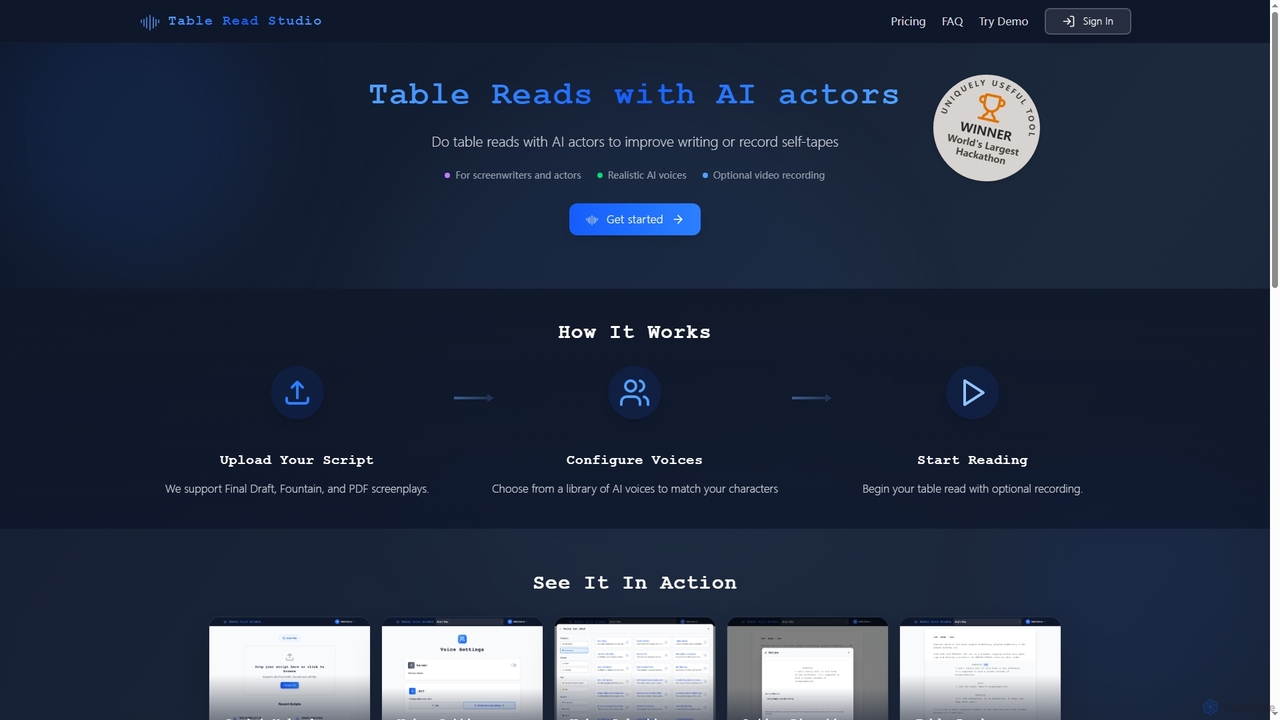
Table Read Studio is an AI-powered platform designed for screenwriters and actors to conduct virtual table reads. It …
Table Read Studio is an AI-powered platform designed for screenwriters and actors to conduct virtual table reads. It helps screenwriters refine their scripts with realistic AI voices and enables actors to record self-tapes for auditions, offering a unique tool for script development and performance practice.
About Acting
AI Acting tools are a specialized category of AI-powered software designed to generate realistic and expressive performances for virtual characters. These tools leverage advanced artificial intelligence, including natural language processing, machine learning, and motion synthesis, to animate digital avatars with human-like emotions, gestures, and synchronized speech. They enable creators to bring virtual personalities to life efficiently, transforming static models into dynamic, interactive entities for various digital media.
Core Features
- Emotion Synthesis: Generates a wide range of realistic facial expressions and emotional cues based on input text or audio.
- Gesture & Body Language Control: Animates natural and context-appropriate body movements, postures, and hand gestures.
- Voice & Lip-sync: Synchronizes AI-generated or pre-recorded voices with precise lip movements for seamless dialogue delivery.
- Character Personalization: Allows customization of character appearance, voice, and behavioral traits to match specific roles or brands.
- Real-time Interaction: Enables virtual characters to respond dynamically and expressively in live or interactive environments.
Applicable Scenarios
AI Acting tools are invaluable for professionals in digital content creation, game development, and virtual communication. They are used by animators to accelerate character performance generation, by game designers to create more engaging non-player characters (NPCs), and by marketing teams to develop expressive virtual influencers or brand ambassadors. Additionally, educators and trainers utilize these tools for interactive simulations and e-learning modules.
How to Choose
When selecting an AI Acting tool, consider the desired level of realism and expressiveness, the range of emotions and gestures supported, and its compatibility with existing animation or game development pipelines. Evaluate the ease of use, customization options for characters, and the quality of voice synthesis and lip-sync. Pricing models and the availability of pre-built character libraries are also important factors for making an informed decision.

ActingUse Cases
Creating Realistic Game NPCs
Game developers utilize AI acting tools to imbue non-player characters (NPCs) with dynamic emotions, natural movements, and context-aware dialogue. This significantly reduces manual animation time, allowing for more immersive game worlds where characters react realistically to player interactions and story events, enhancing overall player engagement.
Developing Virtual Influencers & Brand Ambassadors
Marketing and branding teams leverage AI acting technology to design and animate virtual personalities for social media campaigns, digital advertisements, and online events. These tools ensure consistent, expressive performances, enabling brands to maintain a strong, engaging digital presence without the complexities of human talent management.
Producing Animated Explainer Videos & E-learning
Content creators and educators employ AI acting tools to quickly animate characters for educational modules, corporate training videos, and promotional explainers. By converting scripts into expressive character performances with synchronized voice and gestures, these tools streamline production, making complex information more engaging and accessible.
Simulating Interactive Training Scenarios
Corporate trainers and HR departments use AI-driven virtual actors to create realistic role-playing simulations for customer service, sales, or soft skills training. These interactive scenarios provide employees with a safe environment to practice responses and interactions, receiving immediate feedback from AI characters that mimic human behavior.
Enhancing Digital Storytelling & Pre-visualization
Filmmakers, animators, and storytellers integrate AI acting tools into their pre-production workflows to rapidly prototype character performances, explore different emotional arcs, and generate background crowd animations. This accelerates the pre-visualization process, allowing for quicker iterations and more informed creative decisions before full production.
Personalized Interactive Avatars for Customer Service
Developers build AI-powered virtual assistants or chatbots with advanced acting capabilities for customer support, healthcare, or financial services. These expressive avatars offer more engaging and human-like interactions, improving user experience by conveying empathy and understanding through visual cues alongside verbal responses.