Pismo
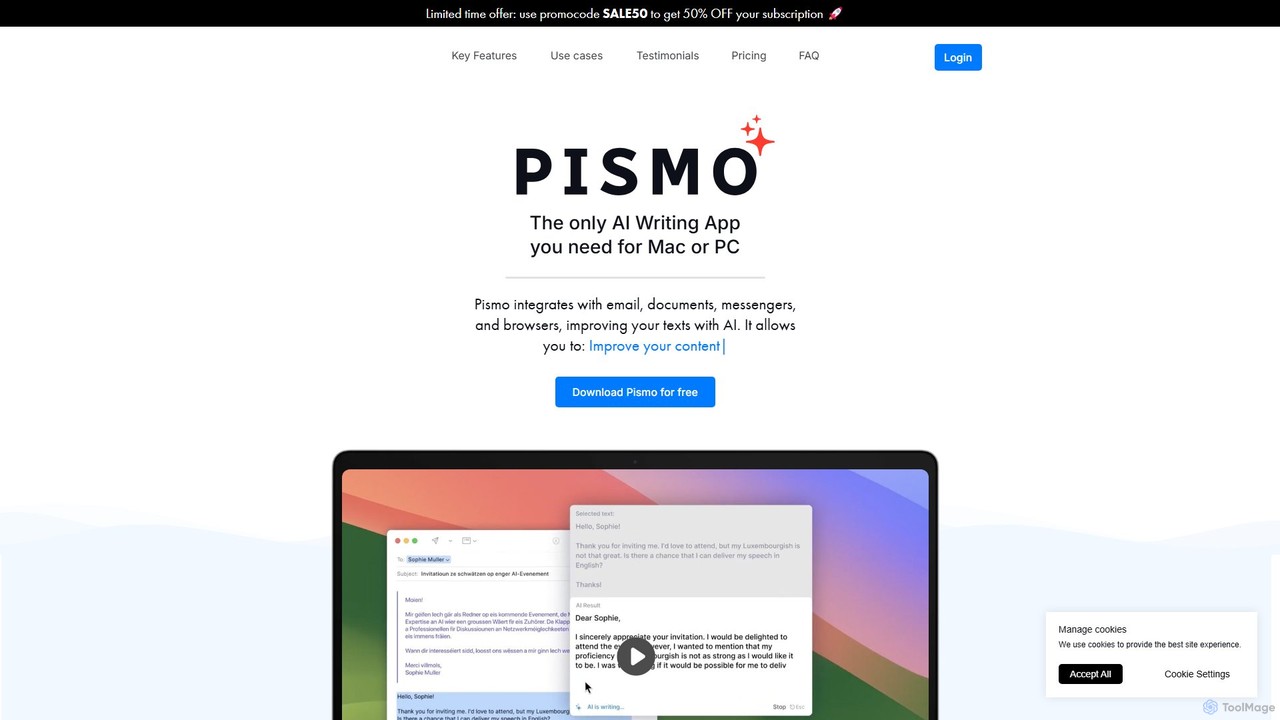
Pismo is a native AI writing assistant for Mac and Windows. It integrates seamlessly into any application, allowing …
Pismo is a native AI writing assistant for Mac and Windows. It integrates seamlessly into any application, allowing you to improve writing, fix grammar, translate text, change tone, and use custom prompts with hotkeys to boost your productivity.
About Paraphraser
Paraphraser tools are AI-powered applications designed to rewrite existing text while preserving its original meaning. These tools leverage advanced natural language processing (NLP) to analyze content, understand context, and generate alternative phrasings, sentence structures, and vocabulary. They are invaluable for enhancing clarity, adjusting tone, and ensuring originality across various writing tasks, making them a key component within the broader General Writing category.
Core Features
- Contextual Rewriting: Intelligently rephrases sentences and paragraphs based on the surrounding text to maintain coherence.
- Tone Adjustment: Allows users to modify the writing style, such as making text more formal, informal, academic, or creative.
- Plagiarism Avoidance: Generates unique versions of text to help writers avoid unintentional plagiarism while citing sources.
- Fluency & Readability Enhancement: Improves sentence flow, grammar, and vocabulary to make content easier to read and understand.
- Multiple Output Options: Provides several rephrased versions, giving users choices to best fit their needs.
Use Cases
Paraphraser tools are widely used by students, content creators, marketers, and professionals to refine their written communication. They assist in transforming complex academic papers into simpler language, adapting marketing copy for different audiences, or quickly generating variations of existing content for SEO purposes.
How to Choose
When selecting a paraphraser tool, consider the quality and naturalness of its output, the range of tone and style options available, and its ability to handle different text lengths. Evaluate its language support, integration capabilities with other writing platforms, and pricing model to ensure it meets your specific writing and budget requirements.
ParaphraserUse Cases
Refining Academic Papers
Students and researchers often use paraphraser tools to rephrase complex academic concepts, ensuring their essays and theses are clear, concise, and free from unintentional plagiarism. By inputting original source material, they can generate unique interpretations that demonstrate understanding while adhering to academic integrity standards.
Optimizing SEO Content
SEO specialists and content marketers utilize paraphrasers to create multiple unique versions of existing articles or product descriptions. This helps in targeting various keywords, avoiding duplicate content penalties, and refreshing older content for better search engine visibility without significant manual rewriting effort.
Enhancing Professional Communication
Business professionals and communicators employ paraphrasing tools to refine emails, reports, and presentations. They can adjust the tone to be more formal or persuasive, improve sentence structure for clarity, and ensure messages are impactful and professional, saving time on manual editing.
Overcoming Writer's Block
Content creators and writers facing writer's block can input their initial drafts or fragmented ideas into a paraphraser. The tool provides fresh perspectives and alternative phrasings, helping to jumpstart creativity and develop content further, transforming rough ideas into polished prose.
Adapting Content for Different Audiences
Marketers and educators frequently need to adapt content for diverse target audiences. A paraphraser allows them to take a core message and rewrite it for a younger demographic, a technical audience, or a general public, ensuring the language and complexity are appropriate for each group.
Summarizing and Simplifying Complex Information
While primarily for rewriting, paraphrasers can also be used to simplify dense technical or legal documents. By rephrasing complex jargon into more accessible language, users can create summaries or explanations that are easier for a broader audience to understand, improving comprehension and accessibility.