Government Best in category 1 results Knowledge Management AI Tool

Popular AI tools in the Knowledge Management field of Government include Ordinal for Gov, etc., helping you quickly improve efficiency.

Ordinal for Gov

Ordinal for Gov

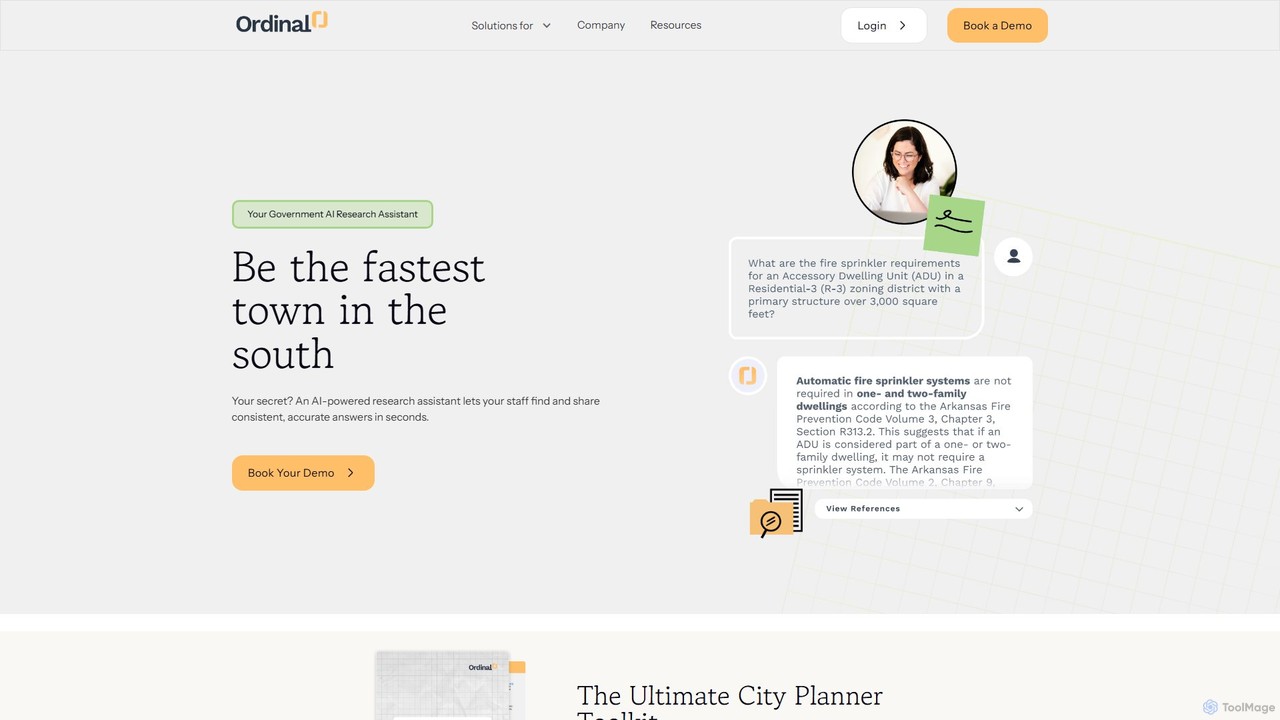
Ordinal for Gov is an AI-powered research and knowledge management platform designed specifically for government teams. It transforms …

5.8K

About Knowledge Management

AI Knowledge Management tools for government are specialized platforms designed to capture, organize, and retrieve vast amounts of institutional information within public sector agencies. They utilize artificial intelligence, such as natural language processing (NLP) and machine learning, to analyze unstructured data from documents, emails, and databases. This enables government bodies to streamline policy research, improve decision-making, and enhance the delivery of public services. These tools are distinct for their focus on high security, regulatory compliance, and the ability to manage complex, inter-departmental information flows.

Core Features

  • Semantic Search: Instantly find relevant policies, regulations, and case files based on conceptual meaning, not just keywords.
  • Automated Data Classification: Automatically tag and categorize documents based on sensitivity levels and government retention schedules.
  • Expertise Locator: Identify and connect with subject matter experts across different departments based on their documented work and contributions.
  • Knowledge Graph Creation: Visually map relationships between policies, people, and projects to uncover hidden insights and connections.
  • Secure Information Sharing: Facilitate controlled, auditable sharing of information between agencies while adhering to strict data governance protocols.

Use Cases

These tools are critical for legislative bodies conducting policy research, administrative offices managing public records requests, and large agencies seeking to preserve institutional knowledge from retiring employees. They are also used to build centralized training portals for civil servants and to support cross-agency collaboration on complex issues like public health or emergency response.

How to Choose

When selecting a tool, government agencies should prioritize solutions with robust security certifications (e.g., FedRAMP, ISO 27001). Evaluate the tool's ability to integrate with existing legacy systems and its support for data residency requirements. Also consider the scalability to handle nationwide data volumes and the user-friendliness for non-technical staff to ensure wide adoption.

Knowledge ManagementUse Cases

1

Streamlining Legislative Research and Policy Analysis

Policy analysts and legislative aides are often tasked with reviewing thousands of pages of existing laws, historical documents, and public feedback to inform new policies. Using an AI Knowledge Management tool, they can employ semantic search to find conceptually related precedents and impact analyses, not just keyword matches. The system can automatically summarize lengthy reports and identify recurring themes in public comments, reducing research time from weeks to days and leading to more evidence-based policymaking.

2

Automating Public Information Requests (FOIA/RTI)

Municipal clerks and public records officers handle a high volume of Freedom of Information Act (FOIA) or Right to Information (RTI) requests. An AI tool can automate the initial stages of this process by understanding the request's context, searching across multiple databases and document repositories for relevant information, and redacting sensitive data automatically. This significantly speeds up response times, reduces manual labor, and ensures compliance with statutory deadlines.

3

Building a Centralized Agency Knowledge Hub

Large government departments often suffer from information silos, where valuable knowledge is trapped in individual emails or local drives. An AI Knowledge Management system can create a unified "source of truth." It automatically ingests and indexes standard operating procedures (SOPs), training materials, and internal memos. New civil servants can then ask the system natural language questions to quickly find answers, accelerating their onboarding and improving operational consistency across the agency.

4

Identifying Internal Subject Matter Experts

When a new inter-departmental project arises, such as a digital transformation initiative, finding the right personnel with specific expertise can be challenging. An AI tool can analyze project reports, publications, and internal communications to build a dynamic map of employee skills and knowledge. A project manager can search for "experts in public cloud security" and instantly get a list of qualified individuals across the entire organization, facilitating rapid team formation.

5

Preserving Institutional Memory from Retiring Staff

When experienced civil servants retire, they take decades of invaluable, often undocumented, knowledge with them. A knowledge management system can help capture this expertise. Through structured interviews prompted by an AI assistant or by analyzing the employee's documents and emails, the system can create a detailed knowledge base. This repository can then be used to train new staff and provide context for future decisions, mitigating the impact of "brain drain."

6

Enhancing Emergency Response Coordination

During a public crisis, such as a natural disaster or pandemic, multiple agencies must collaborate and share information rapidly. A secure AI knowledge management platform provides a central repository for real-time updates, response protocols, and resource allocation data. Field commanders and public officials can access the latest verified information from any device, query the system for specific protocols (e.g., "What is the evacuation procedure for Zone B?"), and ensure a coordinated, effective response.

Knowledge ManagementFrequently Asked Questions