RiskRegister
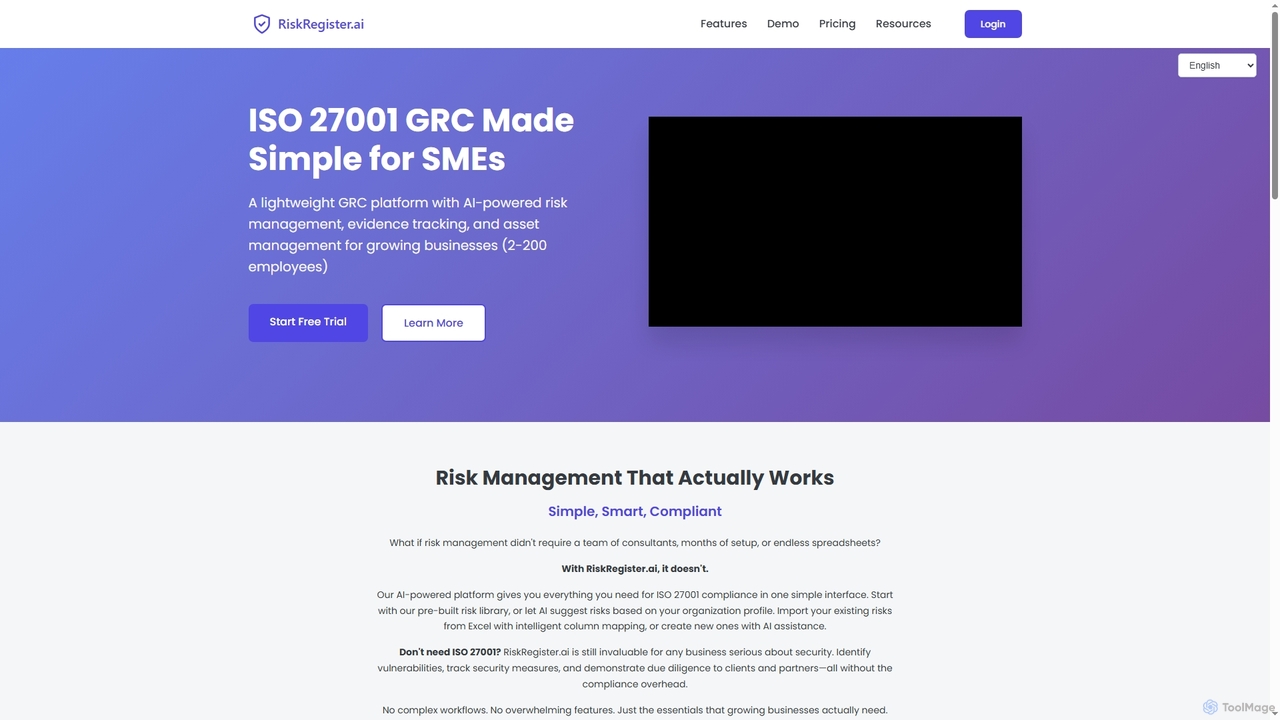
RiskRegister is an AI-powered GRC platform designed for SMEs to simplify ISO 27001 compliance and risk management. It …
RiskRegister is an AI-powered GRC platform designed for SMEs to simplify ISO 27001 compliance and risk management. It offers comprehensive features for risk assessment, treatment plans, compliance reporting, and secure collaboration, including AI-driven insights for gap analysis and risk enrichment.
About Grc
Grc (Governance, Risk, and Compliance) AI tools are a class of AI-powered solutions designed to automate, enhance, and streamline an organization's processes related to governance, risk management, and regulatory compliance. These tools leverage advanced AI techniques like machine learning, natural language processing, and predictive analytics to identify, assess, and mitigate risks, monitor policy adherence, and ensure regulatory conformity. They provide proactive insights, reduce manual effort, and improve decision-making across complex operational and legal frameworks.
Core Features
- AI-Driven Risk Assessment: Automatically identifies, evaluates, and prioritizes potential risks across various operational areas.
- Automated Policy Monitoring: Continuously monitors internal policies and external regulations for adherence and potential violations.
- Compliance Reporting & Auditing: Generates comprehensive reports and supports audit trails for regulatory bodies.
- Anomaly Detection: Pinpoints unusual patterns or behaviors that may indicate fraud, non-compliance, or security breaches.
- Regulatory Intelligence: Tracks changes in laws and regulations, providing insights into their potential impact on the organization.
Applicable Scenarios
Grc AI tools are indispensable for highly regulated industries such as finance, healthcare, and legal services, where managing vast amounts of data and complex regulatory landscapes is critical. They are used by compliance officers, risk managers, internal auditors, and legal teams to maintain integrity, avoid penalties, and protect organizational reputation.
How to Choose
When selecting Grc AI tools, consider the breadth of regulatory coverage, the explainability and transparency of the AI models, and their integration capabilities with existing enterprise systems. Evaluate the tool's ability to adapt to evolving regulations, its data security features, and the level of customization offered to fit specific organizational policies and risk appetites.
GrcUse Cases
Automated Compliance Monitoring for Financial Services
A compliance officer at a large bank uses Grc AI tools to continuously monitor millions of transactions and communications for potential violations of financial regulations like AML (Anti-Money Laundering) or KYC (Know Your Customer). The AI automatically flags suspicious activities, analyzes patterns, and generates alerts, significantly reducing the time spent on manual reviews and ensuring adherence to complex regulatory frameworks, thereby minimizing fines and reputational damage.
AI-Powered Risk Assessment in Healthcare
A hospital's risk management team deploys Grc AI tools to analyze patient data, operational logs, and incident reports to proactively identify potential risks such as medical errors, equipment failures, or data breaches. The AI's predictive capabilities help prioritize high-risk areas, allowing the team to implement preventative measures, improve patient safety, and ensure compliance with HIPAA and other healthcare regulations, thereby enhancing overall operational resilience.
Ethical AI Governance for Tech Companies
A technology company developing AI products uses Grc AI tools to establish and enforce ethical AI guidelines. These tools analyze AI models for bias, fairness, and transparency, ensuring that algorithms adhere to internal ethical standards and external regulations like the EU AI Act. This helps the company build trustworthy AI systems, mitigate reputational risks, and avoid legal challenges related to discriminatory or non-transparent AI decisions, fostering responsible innovation.
Streamlining Data Privacy (GDPR/CCPA) Compliance
A global e-commerce company leverages Grc AI tools to manage and ensure compliance with complex data privacy regulations like GDPR and CCPA. The AI automatically maps data flows, identifies personal identifiable information (PII), monitors data access, and automates data subject requests (e.g., right to be forgotten). This significantly reduces the manual burden of privacy compliance, minimizes the risk of data breaches, and helps avoid hefty regulatory fines, ensuring customer trust and legal adherence.
Internal Audit Anomaly Detection
An internal audit department uses Grc AI tools to analyze vast datasets from financial transactions, employee expenses, and operational records. The AI identifies subtle anomalies and deviations from established norms that might indicate fraud, waste, or abuse, which would be difficult for human auditors to detect. This enhances the efficiency and effectiveness of internal audits, allowing auditors to focus on high-risk areas and provide more strategic insights to management, strengthening corporate governance.
Regulatory Change Impact Analysis
A legal and compliance team in a multinational corporation uses Grc AI tools to monitor global regulatory updates and assess their potential impact on the company's operations. The AI automatically scans legal databases, news feeds, and government publications, then analyzes the relevance and implications of new or changed regulations. This enables the team to proactively adapt policies, update procedures, and communicate changes across the organization, ensuring continuous compliance and minimizing disruption from evolving legal landscapes.