
deathclock
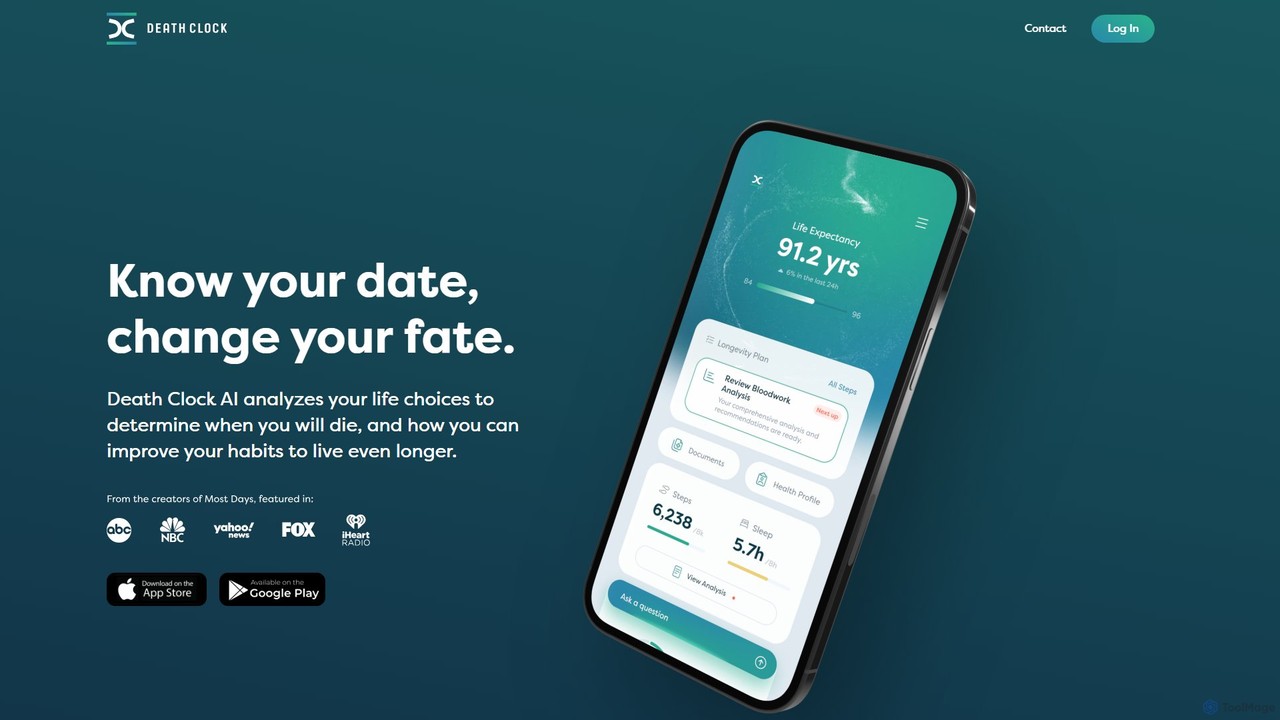
deathclock is an AI-powered longevity application that analyzes your lifestyle, habits, and health data to predict your potential …
deathclock is an AI-powered longevity application that analyzes your lifestyle, habits, and health data to predict your potential lifespan. Using advanced algorithms and CDC data, it provides a "death date" to motivate positive change and offers personalized recommendations to help you improve your habits and live a longer, healthier life.
About Health Tracking
AI Health Tracking tools are applications that use artificial intelligence to analyze personal health data from wearables and other sources. They process metrics like sleep patterns, heart rate variability, and activity levels to uncover trends and correlations that are not obvious from raw data. The primary value of these tools is their ability to provide personalized insights, predict potential health risks, and offer actionable recommendations for improving overall well-being. This moves beyond simple data logging to offer a proactive approach to personal health management.
Core Features
- Personalized Insights: Analyzes your unique data to provide tailored advice on sleep, exercise, and stress management.
- Predictive Health Alerts: Identifies long-term trends that may indicate potential health risks, such as sleep apnea patterns or cardiac irregularities.
- Data Synthesis: Aggregates and harmonizes data from multiple sources like smartwatches, smart scales, and manual inputs into a single, coherent view.
- Symptom & Lifestyle Correlation: Helps users understand the relationship between their daily habits (e.g., diet, caffeine) and reported symptoms (e.g., fatigue, headaches).
- Behavioral Pattern Recognition: Discovers recurring habits and routines, highlighting how they impact specific health goals.
Use Cases
These tools are widely used by individuals for proactive wellness management, athletes for performance and recovery optimization, and people managing chronic conditions to better understand the impact of their lifestyle choices. They serve as a data-driven companion for anyone looking to make more informed decisions about their health.
How to Choose
When selecting an AI Health Tracking tool, consider its compatibility with your existing devices (e.g., Apple Watch, Garmin, Oura). Evaluate the depth and actionability of the insights provided—does it offer specific advice or just data summaries? Also, carefully review the platform's data privacy policy and consider whether its subscription model aligns with the value it offers.
Health TrackingUse Cases
Optimizing Athletic Performance and Recovery
For competitive athletes and fitness enthusiasts, AI Health Tracking tools analyze data from wearables like smartwatches and heart rate monitors. By correlating training load, sleep quality, and Heart Rate Variability (HRV), the AI can predict recovery status and suggest optimal training intensity. This helps prevent overtraining injuries and ensures the athlete is in peak condition for competitions. The tool might generate a daily 'readiness score' and provide specific recommendations, such as suggesting a light recovery day instead of a high-intensity workout when data indicates fatigue.
Proactive Management of Chronic Conditions
Individuals managing chronic conditions like diabetes or hypertension can use these tools for continuous monitoring. By tracking metrics such as blood glucose levels, blood pressure, diet, and physical activity, the AI can identify patterns that lead to adverse events. For example, it might highlight how a specific meal consistently causes a blood sugar spike or how stress impacts blood pressure. These insights empower users and their healthcare providers to make more informed, timely adjustments to their management plan, potentially reducing complications.
Improving Sleep Quality and Hygiene
For users struggling with poor sleep, AI tools analyze sleep stages (light, deep, REM), interruptions, and duration from data collected by a smartwatch or sleep tracker. The AI then correlates this data with daytime activities, caffeine intake, and screen time logged by the user. It can identify specific behaviors that negatively impact sleep, such as a late-afternoon coffee leading to less deep sleep. Based on these findings, the tool provides personalized recommendations, like suggesting an earlier cutoff time for caffeine or a relaxing pre-bed routine to improve overall sleep quality.
Monitoring Stress and Mental Well-being
Mental health professionals and individuals can use AI tracking tools to monitor physiological indicators of stress, such as resting heart rate and Heart Rate Variability (HRV). The tool can identify periods of high stress by detecting deviations from the user's baseline. When combined with self-reported mood logs, the AI can help users recognize their personal stress triggers. In response to detecting a high-stress state, the application might proactively suggest a guided breathing exercise or a short walk, providing a timely intervention to help manage stress levels throughout the day.
Personalized Nutrition Recommendations
A user aiming for weight management or specific dietary goals can connect their AI health tracker with a food logging app. The AI analyzes their activity levels, metabolic rate estimates, and sleep data to provide dynamic calorie and macronutrient targets. Unlike static plans, the AI adjusts these recommendations daily based on the user's actual energy expenditure. For instance, after a particularly intense workout, the tool might recommend a higher protein and carbohydrate intake for optimal recovery, helping the user align their nutrition precisely with their body's changing needs.
Identifying Long-Term Health Trends
A long-term user of an AI health tracker can gain insights into their health trajectory over months or years. The AI can visualize trends such as a gradual increase in resting heart rate or a decline in sleep quality, which might otherwise go unnoticed. These macro-level insights can serve as an early warning system, prompting the user to consult a healthcare professional or make significant lifestyle changes before a potential issue becomes more serious. This transforms personal health data from a daily snapshot into a valuable longitudinal record for preventative care.