myitura
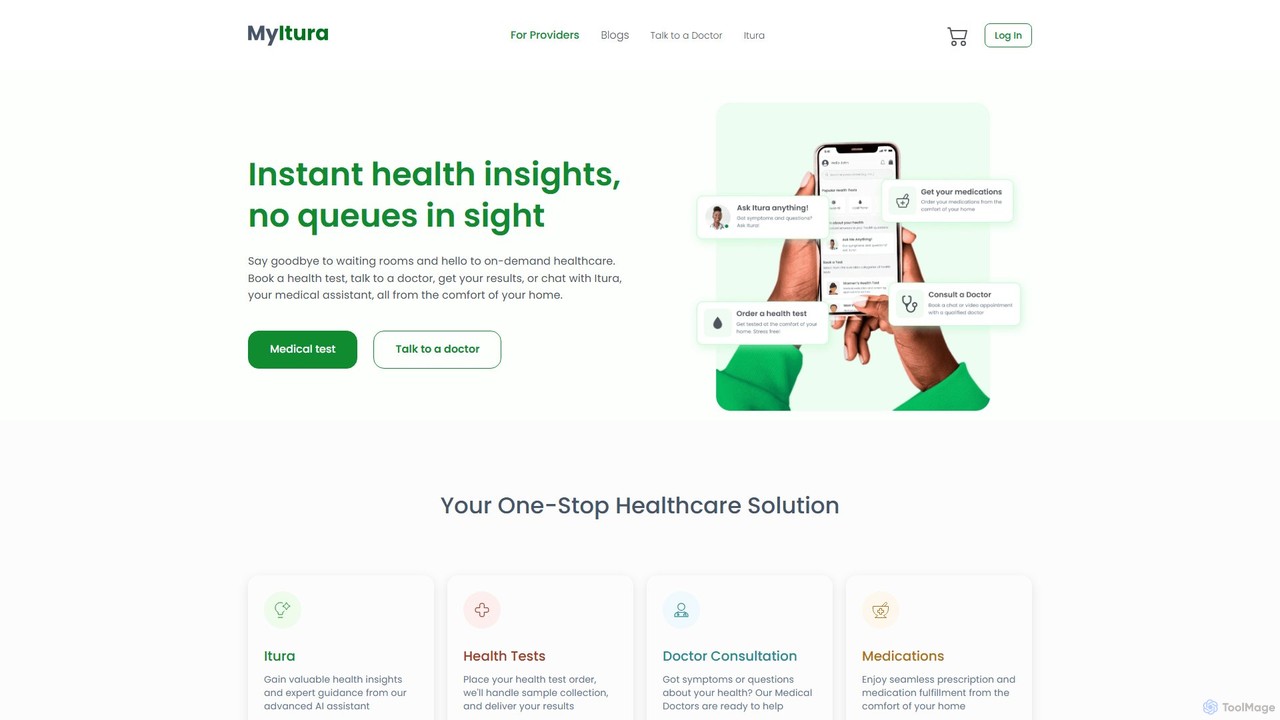
MyItura is an all-in-one digital healthcare platform offering convenient access to medical services. It features an AI-powered health …
MyItura is an all-in-one digital healthcare platform offering convenient access to medical services. It features an AI-powered health assistant for instant insights, virtual consultations with qualified doctors, at-home lab testing with sample collection, and seamless medication delivery. It aims to make healthcare accessible, efficient, and private for everyone.
Heal
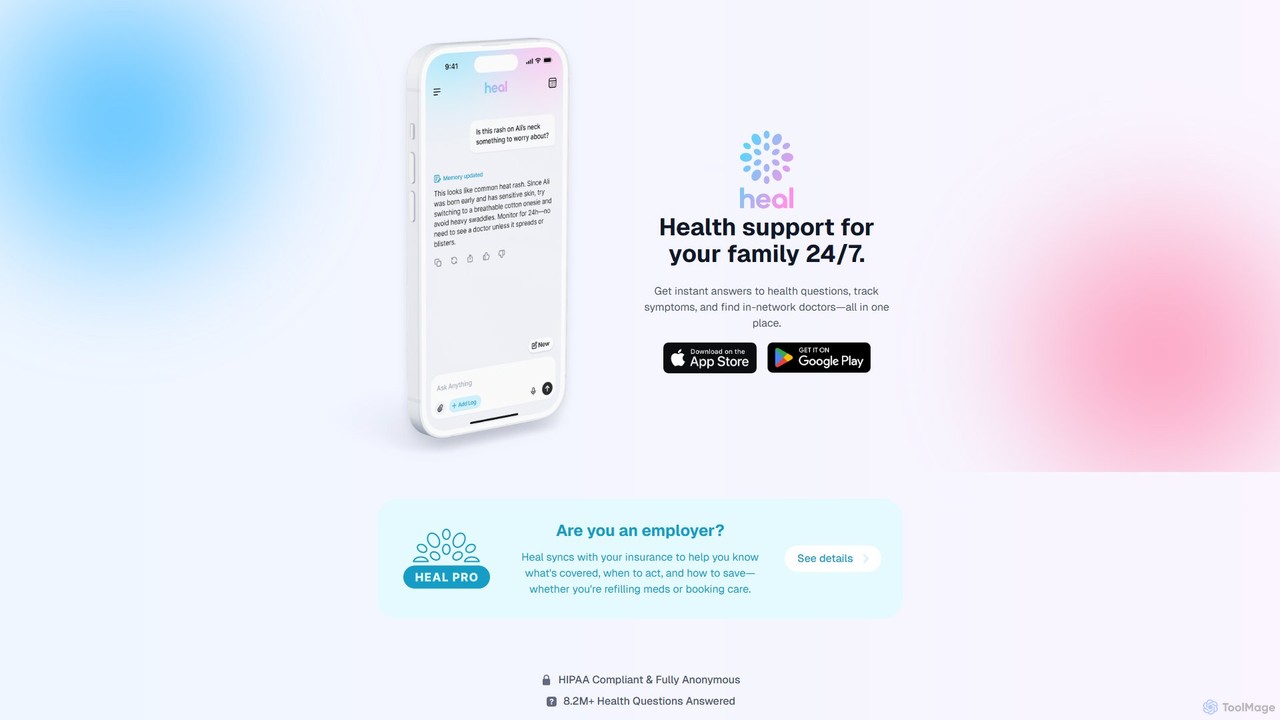
Heal is an AI-powered health guide providing 24/7 support for families and employees. It offers instant answers to …
Heal is an AI-powered health guide providing 24/7 support for families and employees. It offers instant answers to health questions, symptom tracking, and insurance-aware guidance to help users find in-network doctors and save on healthcare costs. It serves both individuals and employers as a comprehensive healthcare navigation platform.
OpenEvidence
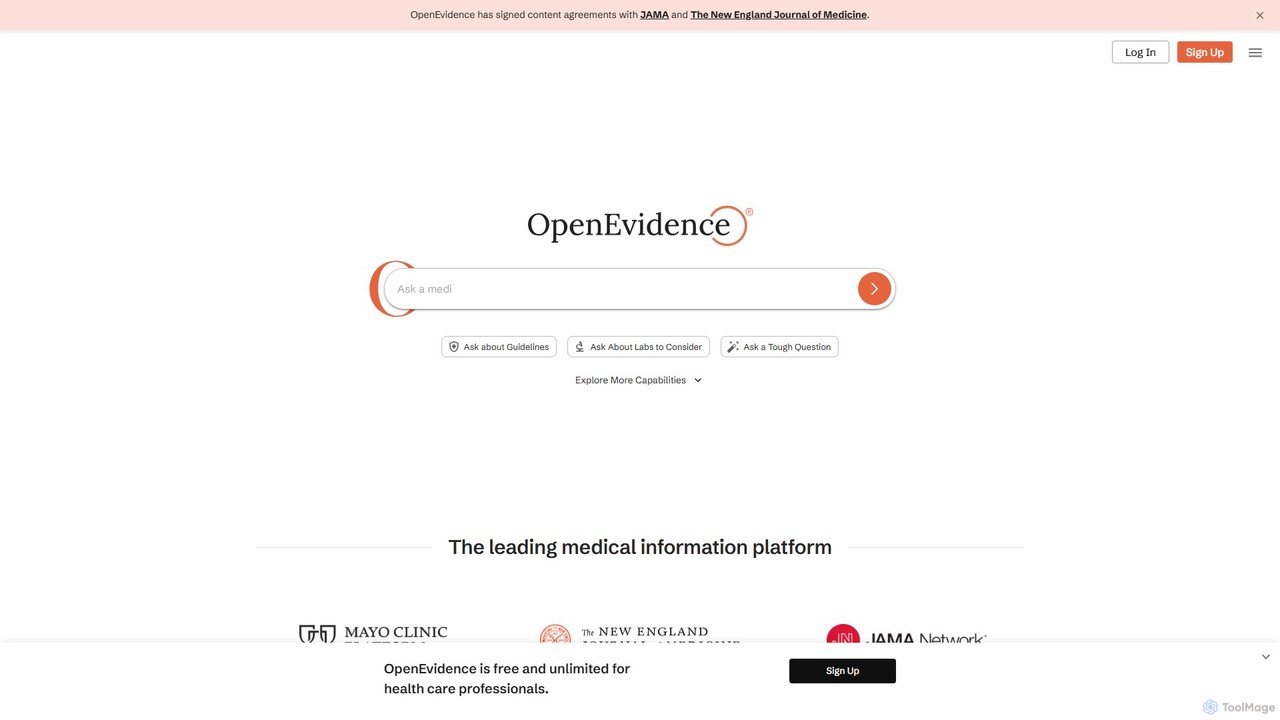
OpenEvidence is a leading AI-powered medical information platform designed for healthcare professionals. It synthesizes vast medical literature from …
OpenEvidence is a leading AI-powered medical information platform designed for healthcare professionals. It synthesizes vast medical literature from top-tier sources like NEJM and JAMA to provide instant, evidence-based answers for clinical decision-making. The platform is HIPAA compliant, offers CME credits, and is free for verified U.S. healthcare providers.
Dr. Gupta
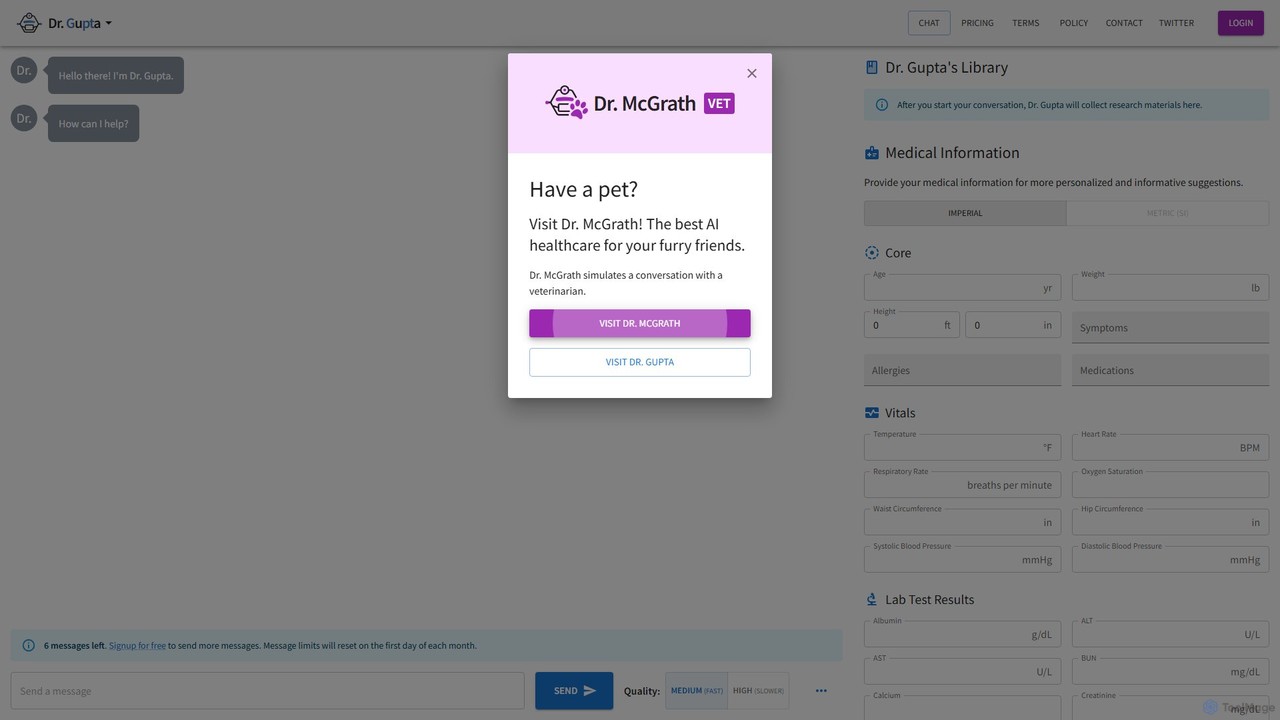
Dr. Gupta is an AI-powered physician chatbot providing instant, confidential information on human and pet health. Ask about …
Dr. Gupta is an AI-powered physician chatbot providing instant, confidential information on human and pet health. Ask about symptoms, conditions, and medications. It features a dedicated veterinary AI, Dr. McGrath, for pet-related queries. The tool is designed for informational purposes and offers both free and premium plans for users.
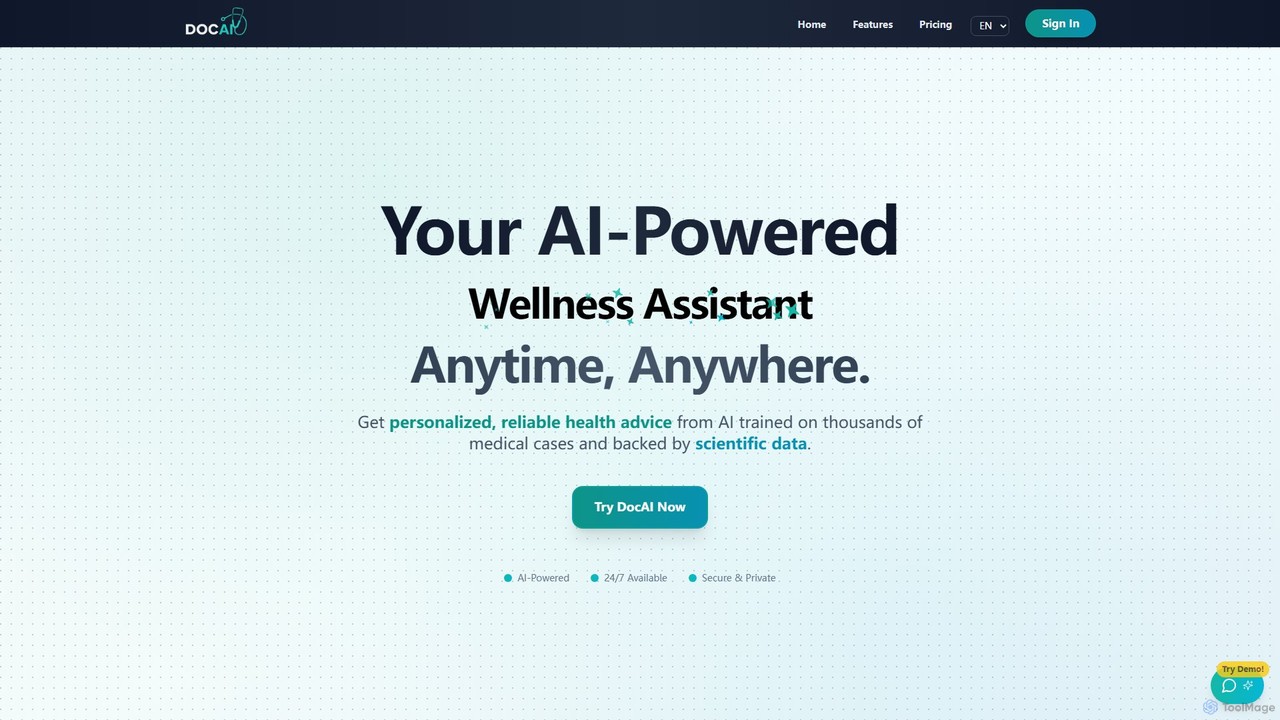
DocAI
DocAI is an AI-powered wellness assistant providing personalized health advice 24/7. Securely upload your medical records, lab tests, …
DocAI is an AI-powered wellness assistant providing personalized health advice 24/7. Securely upload your medical records, lab tests, and symptoms to chat with an AI trained on thousands of medical cases. It offers instant insights, holistic recommendations blending Western and Ayurvedic medicine, and tracks your progress. It empowers users with accessible, evidence-based health information and plans to integrate one-tap connections to licensed providers.
About Medical Assistant
Medical Assistant AI tools are advanced software solutions designed to support healthcare professionals in various clinical, administrative, and research tasks. Leveraging artificial intelligence, these tools process vast amounts of medical data, provide insights, and automate routine operations, thereby enhancing efficiency and accuracy in healthcare delivery. They serve as intelligent aids, helping to streamline workflows, improve diagnostic processes, and optimize patient care management within the broader health sector.
Core Features
- Clinical Decision Support: Offers evidence-based recommendations for diagnosis, treatment plans, and medication management by analyzing patient data and medical literature.
- Automated Medical Record Processing: Summarizes patient histories, extracts key information from Electronic Health Records (EHRs), and assists with documentation.
- Patient Interaction & Triage: Provides initial patient assessments, answers common health queries, and guides patients to appropriate care pathways.
- Administrative Task Automation: Manages appointment scheduling, billing, insurance claims processing, and inventory management, reducing manual workload.
- Medical Research & Data Analysis: Helps researchers analyze large datasets, identify trends, and review scientific literature more efficiently.
Applicable Scenarios
AI Medical Assistants are invaluable across diverse healthcare settings. Physicians can utilize them for rapid access to diagnostic information and treatment guidelines, while nurses can leverage automated patient monitoring and communication tools. Hospital administrators benefit from streamlined operational tasks like scheduling and resource allocation, and medical researchers can accelerate literature reviews and data interpretation for new discoveries.
How to Choose
Selecting an AI Medical Assistant requires careful consideration of several factors. Prioritize tools with high accuracy in clinical recommendations and robust data security measures (e.g., HIPAA compliance). Evaluate its integration capabilities with existing Electronic Medical Record (EMR) or EHR systems. Assess the user interface for ease of use and ensure the tool's specific medical domain expertise aligns with your practice's needs. Finally, consider scalability and the vendor's support and update policies.
Medical AssistantUse Cases
Enhancing Diagnostic Accuracy for Clinicians
Physicians can utilize AI Medical Assistants to cross-reference patient symptoms, medical history, and lab results against extensive medical databases. The AI provides a ranked list of potential diagnoses and relevant evidence, helping to confirm or refine initial assessments. This significantly reduces diagnostic errors and ensures more precise and timely treatment plans, especially in complex or rare cases.
Automating Patient Triage and Initial Assessment
Healthcare providers can deploy AI Medical Assistants as a first point of contact for patients. The AI can ask structured questions about symptoms, medical history, and urgency, guiding patients to the most appropriate care level—whether it's self-care advice, a virtual consultation, or an emergency room visit. This reduces the burden on human staff, improves patient flow, and ensures critical cases receive prompt attention.
Streamlining Medical Record Summarization
Medical professionals often spend considerable time reviewing lengthy patient charts. AI Medical Assistants can quickly process and summarize complex Electronic Health Records (EHRs), highlighting key information such as allergies, chronic conditions, current medications, and recent treatments. This allows doctors and nurses to grasp essential patient details rapidly, improving efficiency during consultations and handovers.
Optimizing Prescription Management and Drug Interaction Checks
Pharmacists and prescribing physicians can use AI Medical Assistants to verify prescriptions. The AI automatically checks for potential drug-drug interactions, contraindications based on patient allergies or existing conditions, and appropriate dosages. This proactive approach minimizes medication errors, enhances patient safety, and ensures adherence to best practice guidelines, reducing adverse drug events.
Automating Administrative Tasks in Clinics
Clinic administrators can leverage AI Medical Assistants to automate time-consuming administrative duties. This includes managing appointment schedules, sending patient reminders, processing billing and insurance claims, and handling inventory for medical supplies. By offloading these repetitive tasks, the AI frees up human staff to focus on direct patient care and more complex administrative challenges, improving overall clinic operations.
Accelerating Medical Research and Literature Review
Medical researchers can employ AI Medical Assistants to rapidly sift through vast amounts of scientific literature, clinical trial data, and research papers. The AI can identify relevant studies, extract key findings, and synthesize information on specific topics or diseases. This significantly accelerates the literature review process, helps in identifying research gaps, and supports evidence-based medical advancements.