

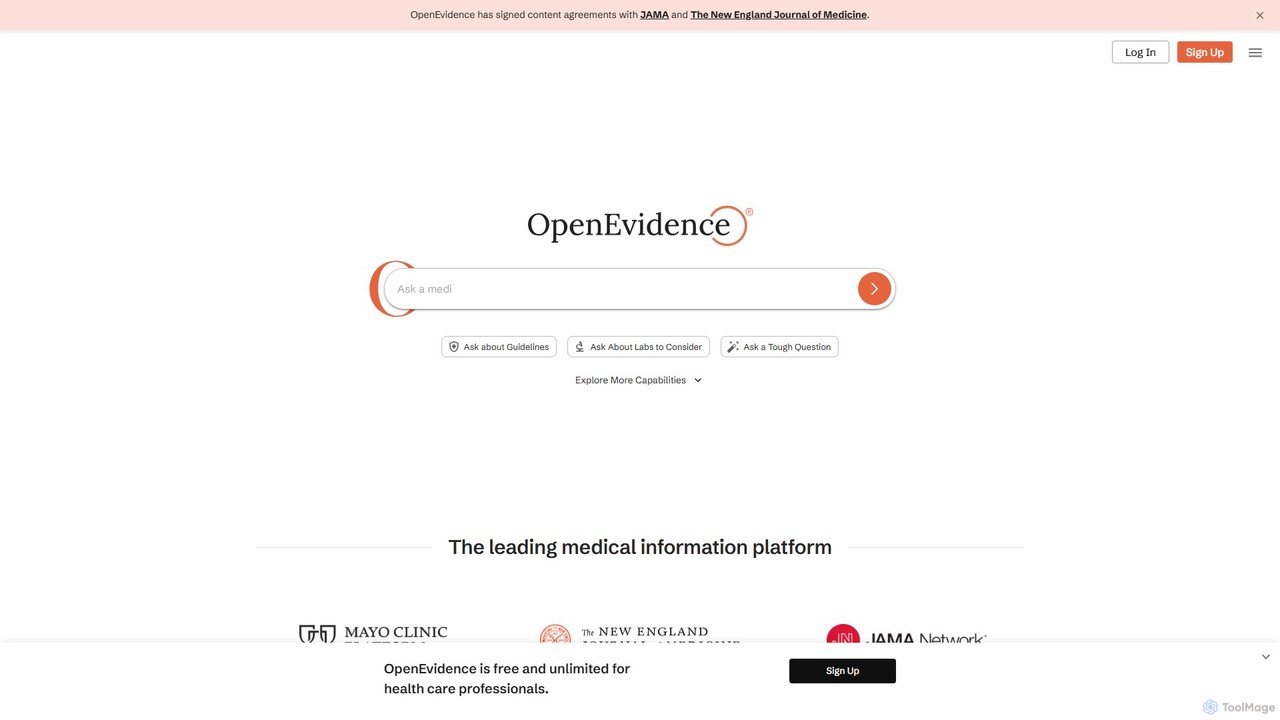
OpenEvidence Overview
OpenEvidence is a revolutionary medical information platform that leverages advanced artificial intelligence to organize and expand the world's collective medical knowledge. Launched from the Mayo Clinic Platform Accelerate program, its mission is to combat the overwhelming information overload faced by medical professionals today. With the volume of medical research doubling every few years, OpenEvidence provides a crucial tool to help physicians, researchers, and healthcare professionals stay current with the latest clinical evidence, ultimately improving patient outcomes.
The platform is trusted by medical professionals at over 10,000 care centers across the United States and is backed by leading investors such as Sequoia, Google Ventures, and the Mayo Clinic. It distinguishes itself by integrating multimedia and clinical findings directly from the most prestigious medical journals, including The New England Journal of Medicine (NEJM) and the JAMA Network.
How to use OpenEvidence
Using OpenEvidence is designed to be intuitive and seamlessly integrate into a clinician's workflow. Verified healthcare professionals can sign up for a free account and immediately begin querying the platform with natural language questions. The process is straightforward:
- Ask a Clinical Question: Users can type specific questions related to patient care. The platform is optimized for queries such as constructing a diagnostic workup, asking about the latest treatment options for a specific condition, or inquiring about precise drug dosing and interactions.
- Receive Synthesized Evidence: Instead of a list of links, OpenEvidence provides a synthesized, easy-to-read summary of the most relevant, up-to-date evidence. The AI analyzes and aggregates data from millions of research papers and clinical trials in seconds.
- Explore Sources: Every piece of information is backed by citations from reputable sources. Users can utilize the "Why Was This Source Cited?" feature to understand the context and relevance of each source, ensuring full transparency and trust in the answers provided.
- Stay Updated: Users can opt-in to receive notifications when new, relevant evidence emerges regarding a previous question, ensuring their knowledge remains current.
Core Features of OpenEvidence
- AI-Powered Synthesis: Aggregates and synthesizes vast amounts of medical literature to provide concise, actionable answers.
- Prestigious Content Integration: Features clinical findings and multimedia content from The New England Journal of Medicine (NEJM) and the JAMA Network.
- Comprehensive Query Capabilities: Supports a wide range of clinical questions, including diagnostic workups, treatment options, and drug dosing.
- HIPAA Compliance: Built with stringent security measures to protect data, fully complying with HIPAA Privacy, Security, and Breach Notification Rules. Data is encrypted in transit and at rest.
- Continuing Medical Education (CME): Offers CME credits, allowing professionals to learn while staying compliant with their educational requirements.
- High Accuracy: The underlying AI became the first in history to score above 90% on the United States Medical Licensing Examination (USMLE), demonstrating its deep medical knowledge.
- Mobile Accessibility: Available as a website and on dedicated iOS and Android apps, providing access anytime, anywhere.
Use Cases for OpenEvidence
OpenEvidence is versatile and can be used in various clinical and research settings:
- Point-of-Care Decisions: A primary care physician can quickly verify the latest guidelines for managing hypertension in a patient with comorbidities.
- Complex Case Consultation: A specialist can explore cutting-edge or experimental treatment options for a rare disease by querying the latest research.
- Medical Education and Research: A medical resident can use the platform to build a differential diagnosis for a complex case, while a researcher can rapidly synthesize existing literature for a new study.
- Pharmacist Support: A pharmacist can check for complex drug-drug interactions or find evidence for off-label drug use.
Advantages of OpenEvidence
The primary advantage of OpenEvidence is its ability to deliver trusted, evidence-based medical information with unparalleled speed and efficiency. It saves clinicians valuable time that would otherwise be spent manually searching through databases and journals. By providing synthesized answers from top-tier sources, it enhances the quality of clinical decision-making and supports better patient care. Its backing by the Mayo Clinic and top investors, along with its strong security posture (HIPAA compliance), builds a foundation of trust. Furthermore, being free for verified U.S. HCPs makes this powerful tool accessible to all who need it.
Pricing and Plans
OpenEvidence is completely free and offers unlimited access for all verified U.S. health care professionals (HCPs). Users can sign up on the website to get started.
Traffic
Latest traffic
Status
Monthly traffic trend
- 2025-9: 6.7M
- 2026-1: 8.1M
- 2026-2: 8.2M
- 2026-3: 9.8M
- 2026-4: 11.0M
- 2026-5: 11.4M
Geography
Top 5 countries / regions
- 🇺🇸United States85.4%
- 🇨🇦Canada6.4%
- 🇧🇷Brazil4.1%
- 🇲🇽Mexico2.2%
- 🇨🇭Switzerland1.9%
Traffic sources
| Source type | Percentage |
|---|---|
Direct | 96.2% |
Referral | 2.6% |
Email | 1.2% |
Top keywords
| Keyword | Cost per click |
|---|---|
| open evidence | $0.88 |
| openevidence | $0.89 |
| open evidence ai | $1.24 |
| openevidence ai | $1.26 |
| open evidence login | $0.64 |
OpenEvidence Videos on YouTube

SpeakMD w/Dr. Ajay Balaram,MD
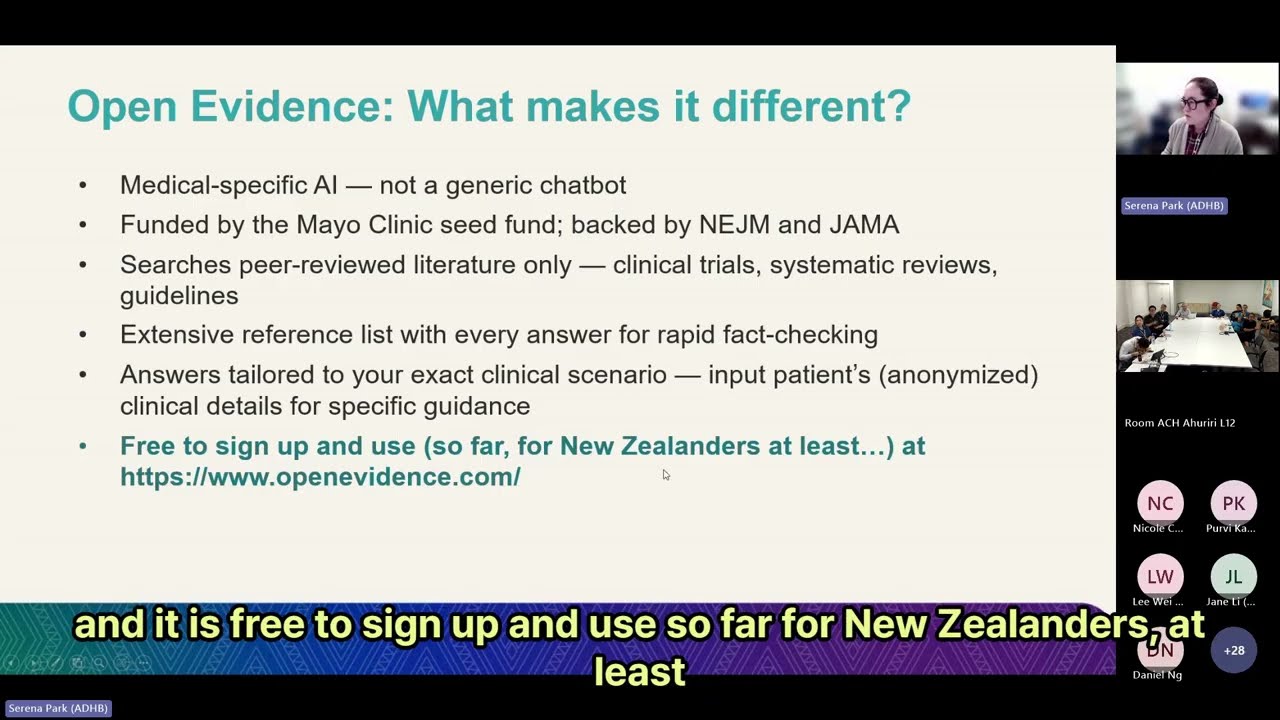
Dr Serena Park - AI as Your Pathology Superpower

roupen odabashian



Dr. Ashkan Nasr DO; MPH

BioInfo Tips

Bloomberg Television
OpenEvidence Alternatives
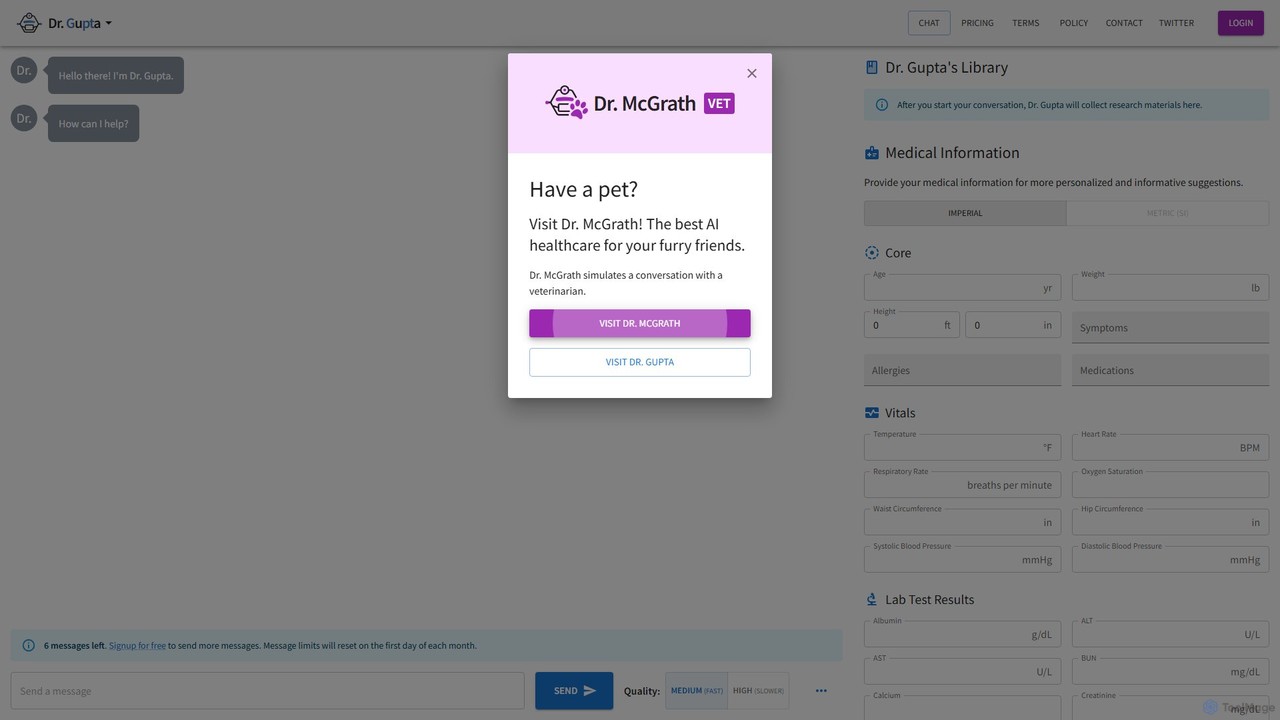
Dr. Gupta
Dr. Gupta is an AI-powered physician chatbot providing instant, confidential information on human and pet health. Ask about symptoms, conditions, and medications. It features a dedicated veterinary AI, Dr. McGrath, for pet-related queries. The tool is designed for informational purposes and offers both free and premium plans for users.
Medical Assistant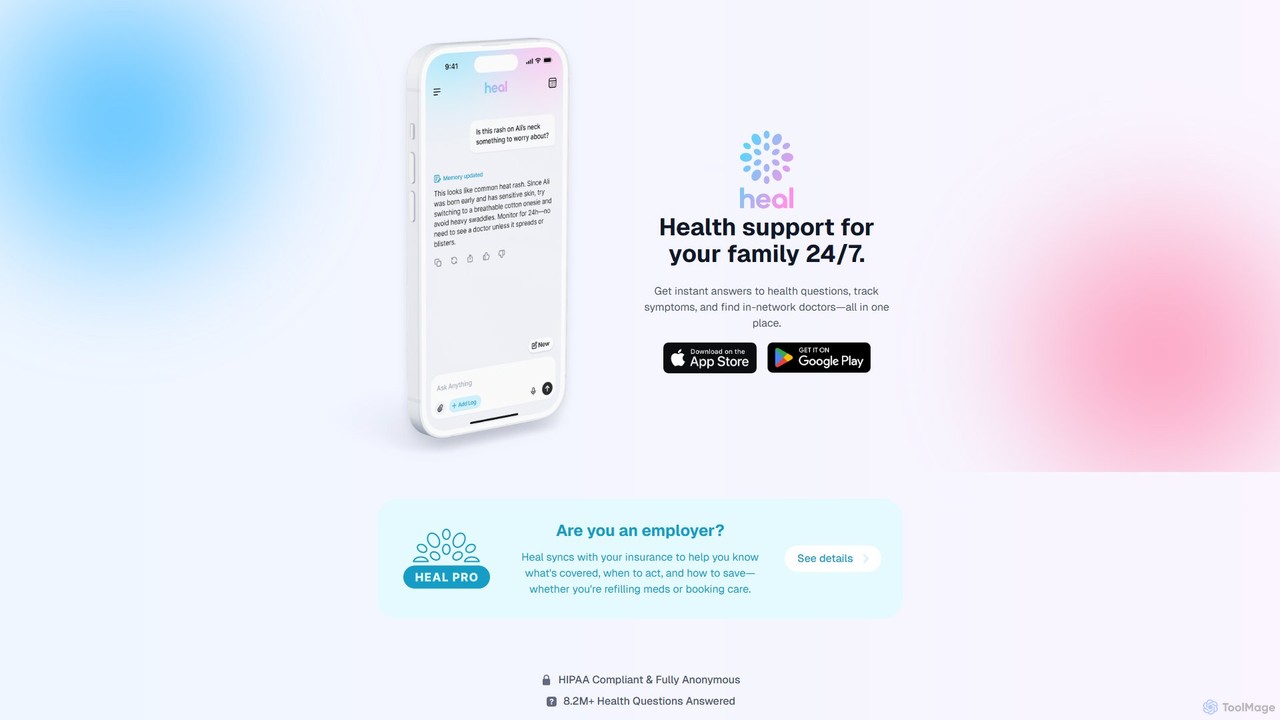
Heal
Heal is an AI-powered health guide providing 24/7 support for families and employees. It offers instant answers to health questions, symptom tracking, and insurance-aware guidance to help users find in-network doctors and save on healthcare costs. It serves both individuals and employers as a comprehensive healthcare navigation platform.
Medical Assistant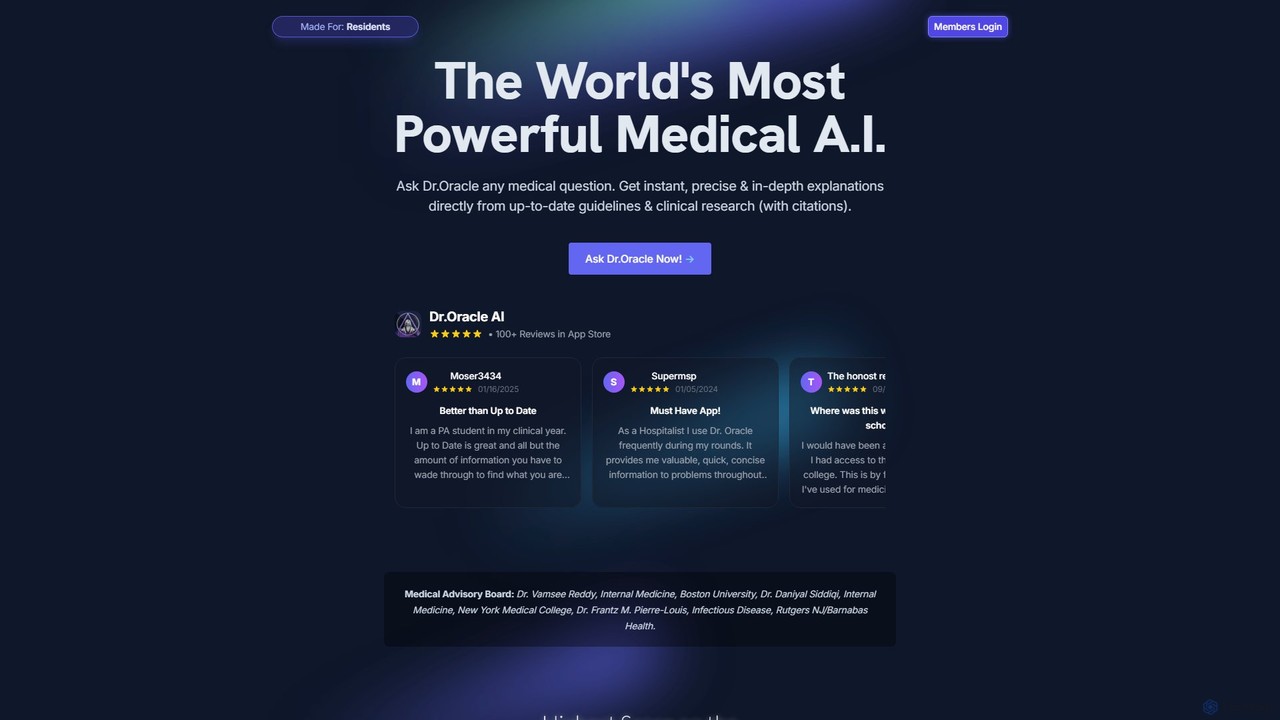
droracle
Dr.Oracle is an advanced medical AI platform designed for healthcare professionals. It provides instant, evidence-based answers to complex medical questions, drawing from up-to-date clinical guidelines and research. It helps clinicians double-check decisions, reduce errors, and stay current with medical literature.
Learning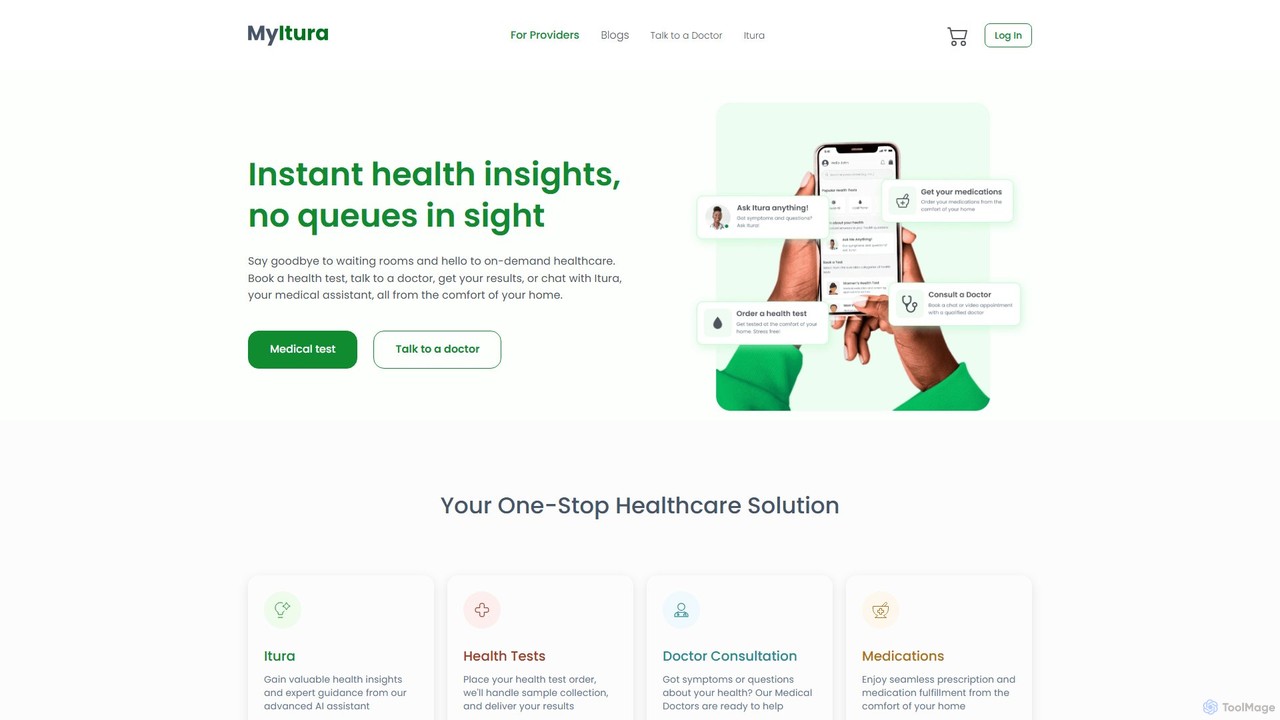
myitura
MyItura is an all-in-one digital healthcare platform offering convenient access to medical services. It features an AI-powered health assistant for instant insights, virtual consultations with qualified doctors, at-home lab testing with sample collection, and seamless medication delivery. It aims to make healthcare accessible, efficient, and private for everyone.
Medical Assistant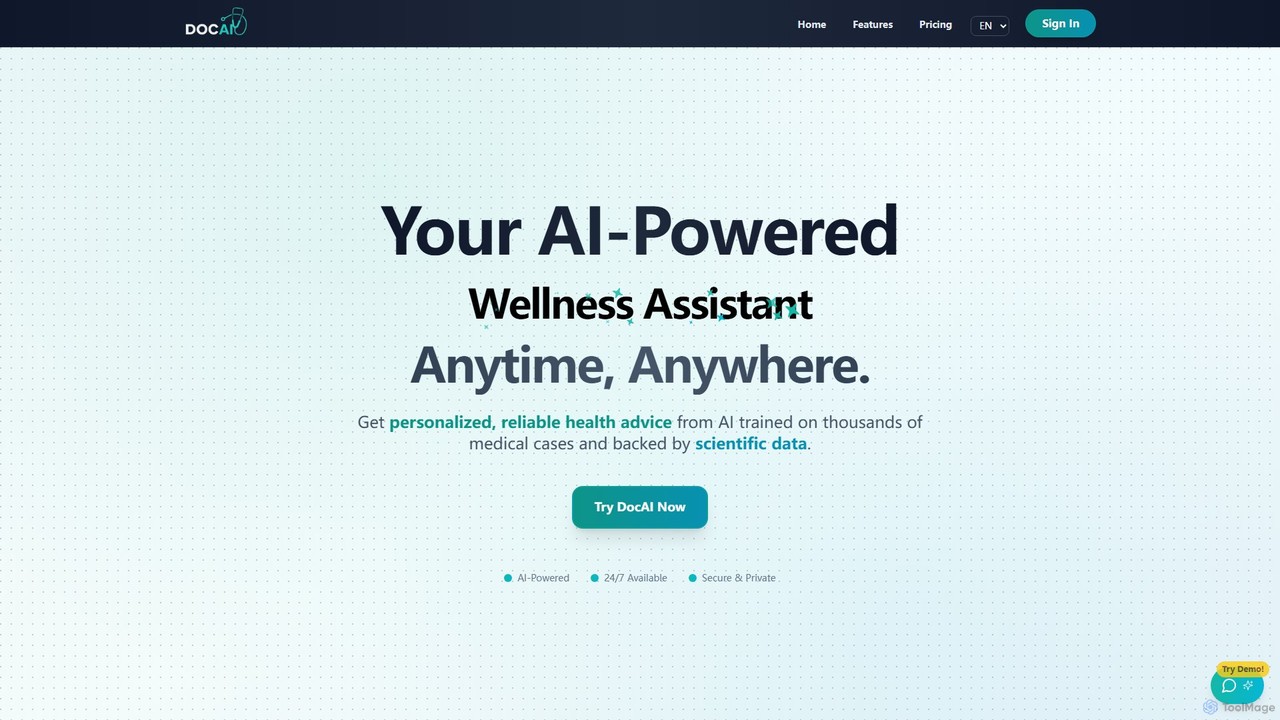
DocAI
DocAI is an AI-powered wellness assistant providing personalized health advice 24/7. Securely upload your medical records, lab tests, and symptoms to chat with an AI trained on thousands of medical cases. It offers instant insights, holistic recommendations blending Western and Ayurvedic medicine, and tracks your progress. It empowers users with accessible, evidence-based health information and plans to integrate one-tap connections to licensed providers.
Medical AssistantOpenEvidence Categories
OpenEvidence Embed Widget
Copy this embed code to place the badge on your blog, article, or product site and send readers directly to this ToolMage detail page.

Related AI tools
droracle
Dr.Oracle is an advanced medical AI platform designed for healthcare professionals. It provides instant, evidence-based answers to complex medical questions, drawing from up-to-date clinical guidelines and research. It helps clinicians double-check decisions, reduce errors, and stay current with medical literature.
Learning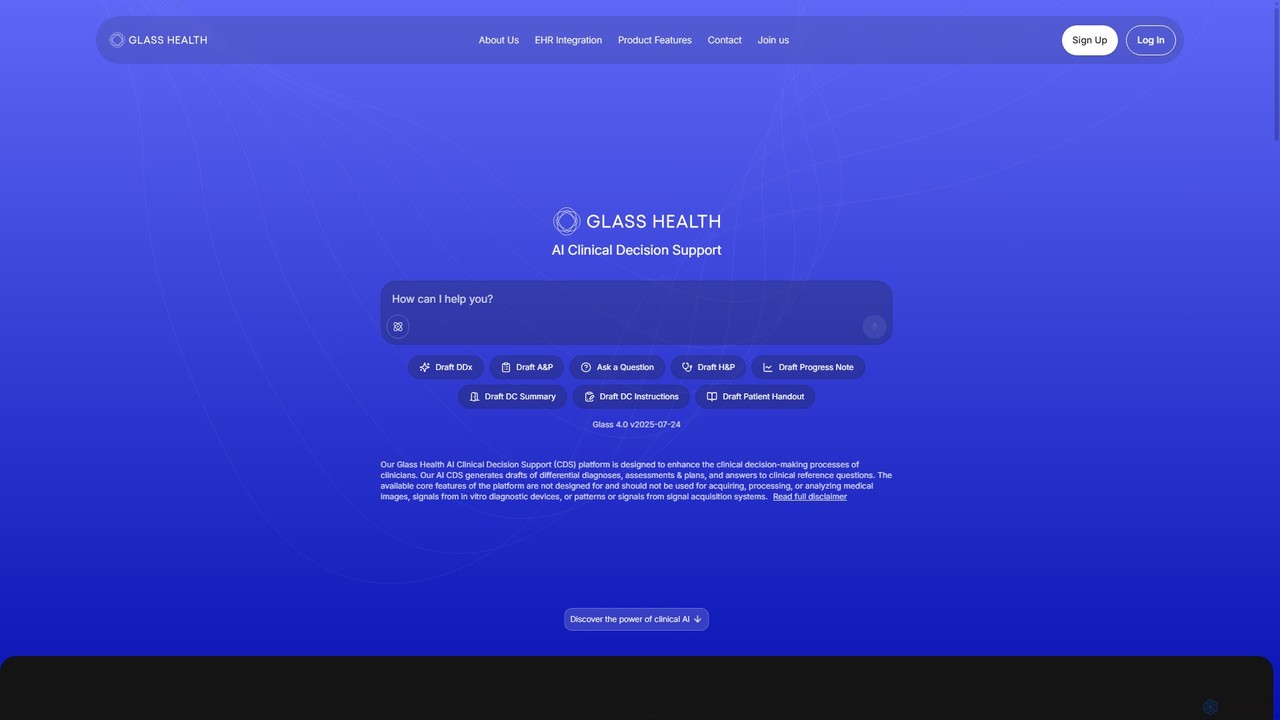
Glass
Glass is an AI-powered clinical decision support (CDS) platform designed by clinicians for clinicians. It assists medical professionals in generating differential diagnoses, drafting evidence-based clinical plans, and automating comprehensive medical documentation to enhance diagnostic accuracy and streamline workflows.
Medical Reference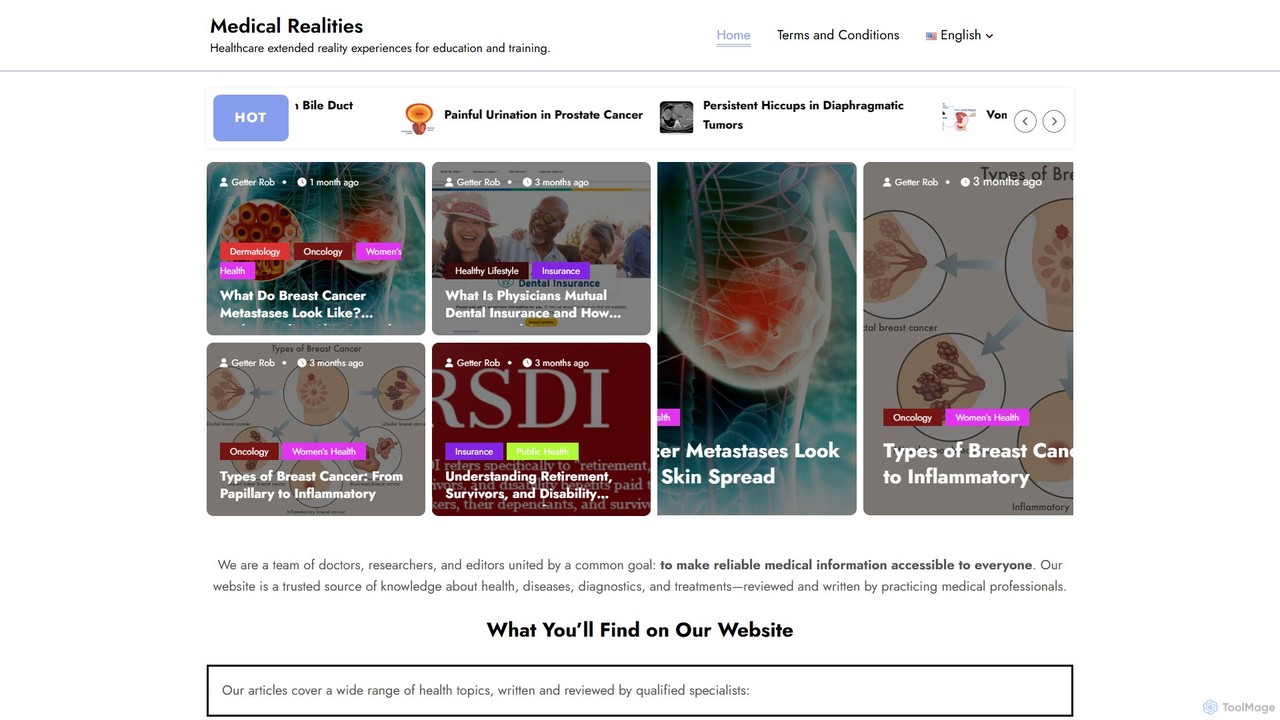
Medical Realities
Medical Realities is an expert-driven medical information platform. It provides comprehensive, accessible articles on diseases, diagnostics, and treatments, with a special focus on oncology and the integration of AI in modern healthcare. All content is written and reviewed by practicing medical professionals to ensure accuracy and reliability.
Research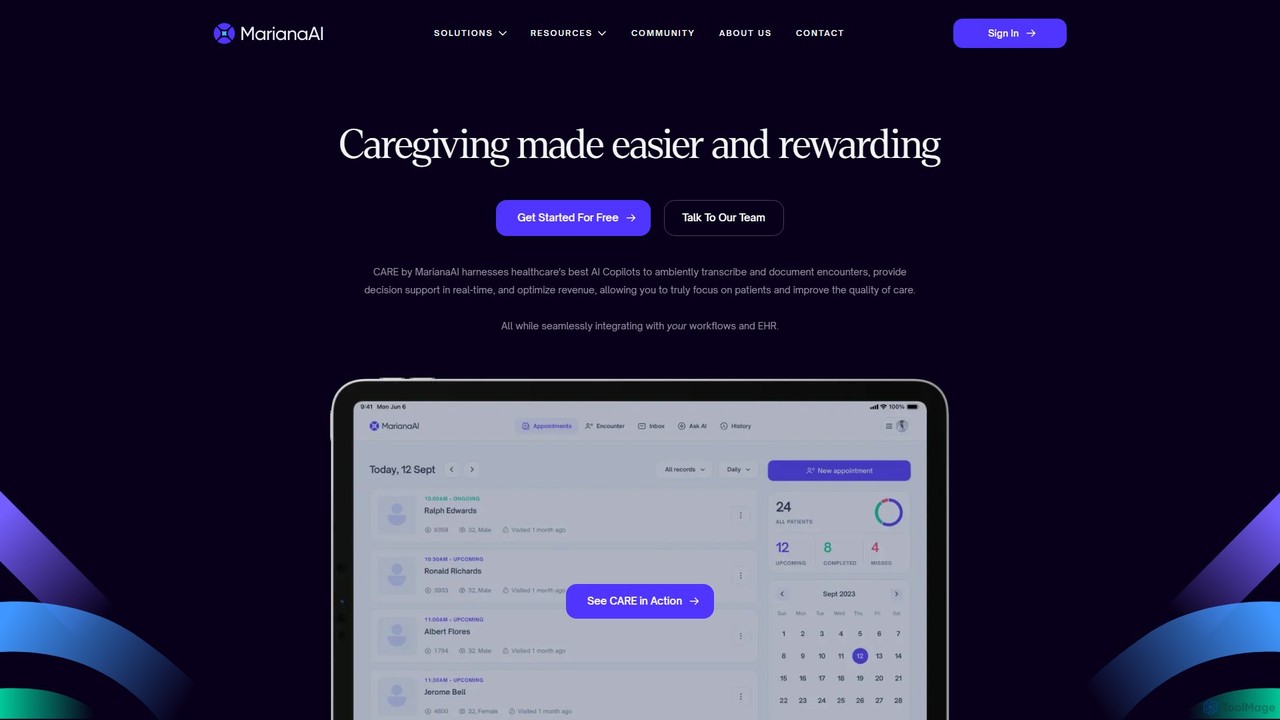
MarianaAI
MarianaAI is an all-in-one AI-powered clinical automation platform designed for healthcare providers. It features a multilingual medical scribe, autonomous coding, and clinical decision support to reduce administrative burnout, enhance revenue, and improve patient care by seamlessly integrating with existing EHR systems.
Clinical Documentation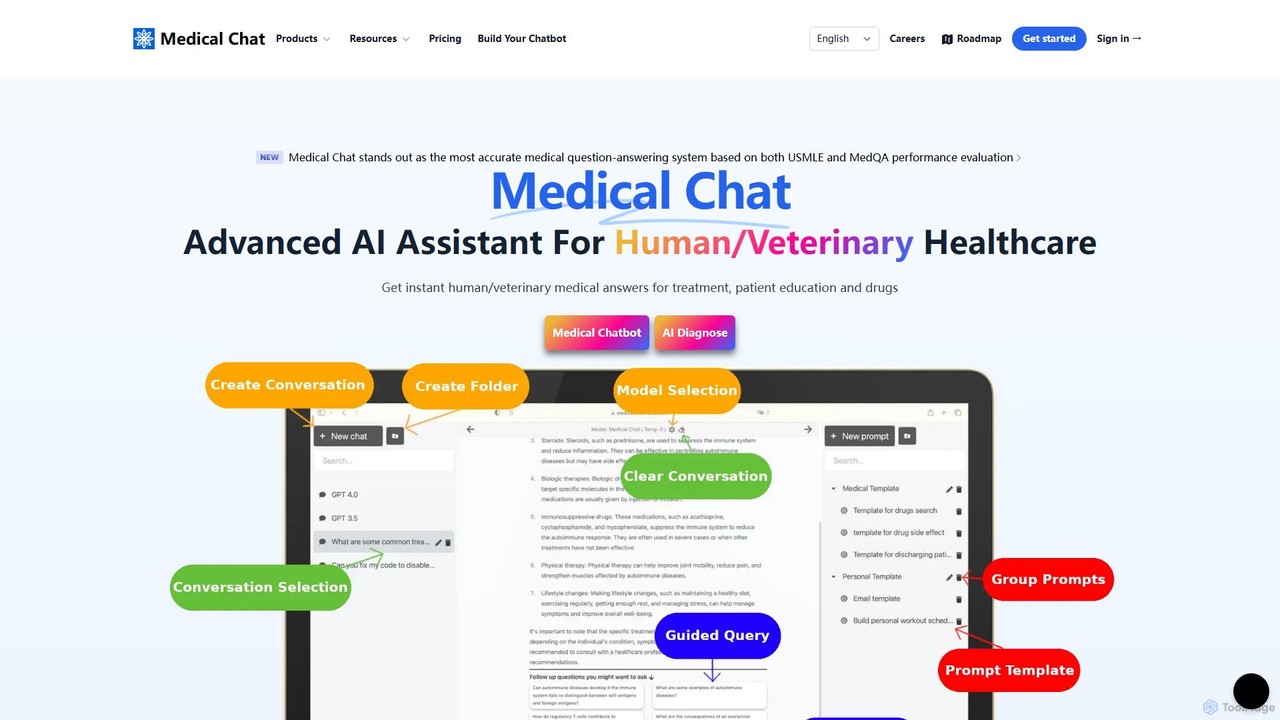
Medical Chat
Medical Chat is an advanced, HIPAA-compliant AI assistant for human and veterinary healthcare professionals. It provides instant, evidence-based answers, generates differential diagnosis reports, creates clinical plans, and integrates with PubMed. Its high accuracy is validated by USMLE and MedQA performance evaluations.
Learning
Synic AI
Synic AI is a premier medical AI platform designed for clinicians, offering real-time AI assistance, comprehensive clinical documentation, and intelligent medical coding. It streamlines healthcare workflows, enhances patient care, and ensures HIPAA compliance.
Ai Assistant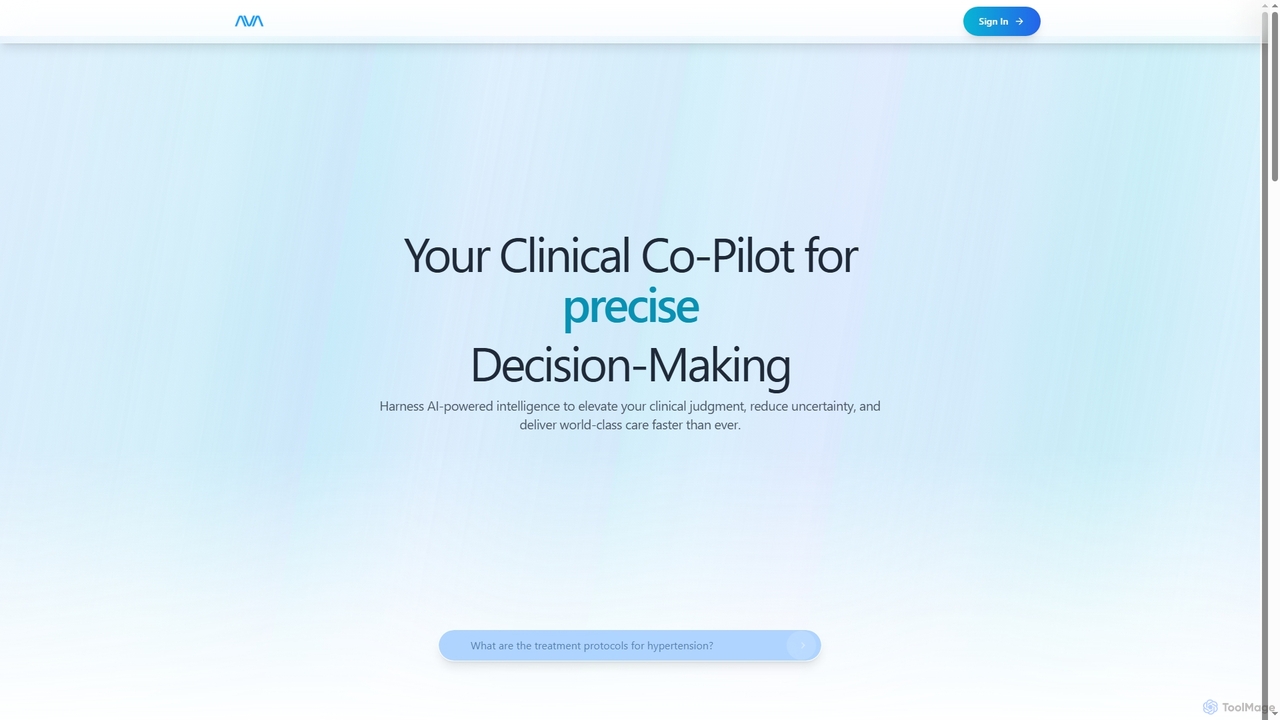
AVA
AVA is an AI-powered clinical co-pilot designed for medical professionals to enhance decision-making with intelligent, evidence-based, and precise insights. It synthesizes the latest medical literature from trusted sources, providing instant support for diagnostics, treatment protocols, and personalized patient care.
Medical Assistant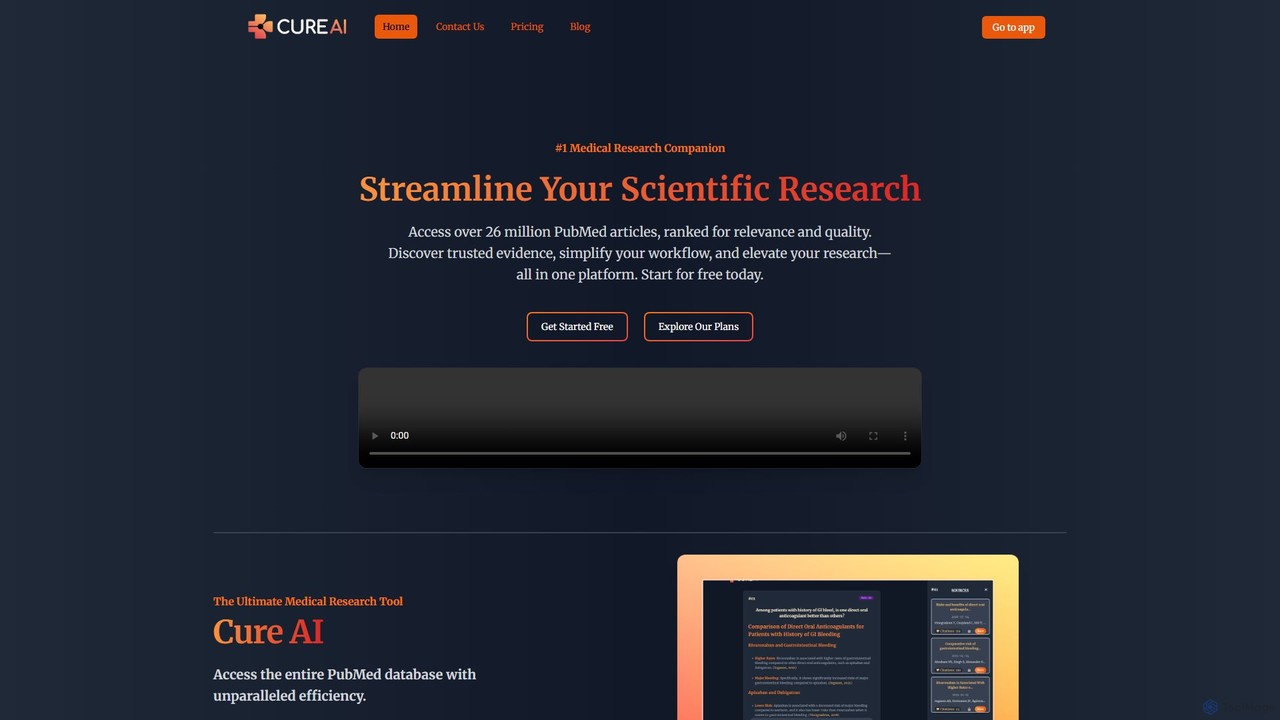
Cure AI
Cure AI is an AI-powered medical research companion that streamlines scientific literature review. It provides access to over 26 million PubMed articles, using AI to rank evidence, generate insights, and simplify the research workflow from query to citation.
Academic Research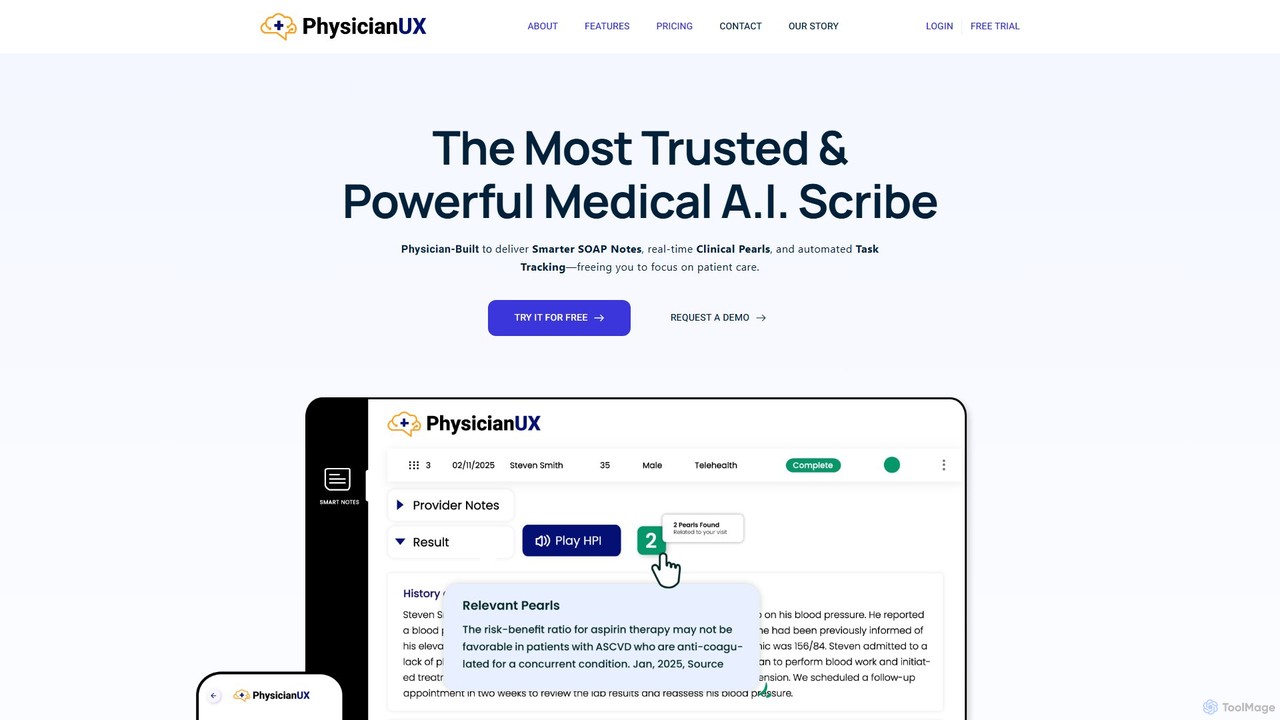
Physician UX
Physician UX is an AI-powered clinical documentation tool designed by a practicing physician to combat burnout. It functions as an intelligent medical scribe, automating SOAP note creation, providing real-time clinical insights, and streamlining workflows. By operating independently of EMRs, it ensures high performance, security, and rapid feature updates, helping clinicians save time and focus on patient care.
Clinical Assistance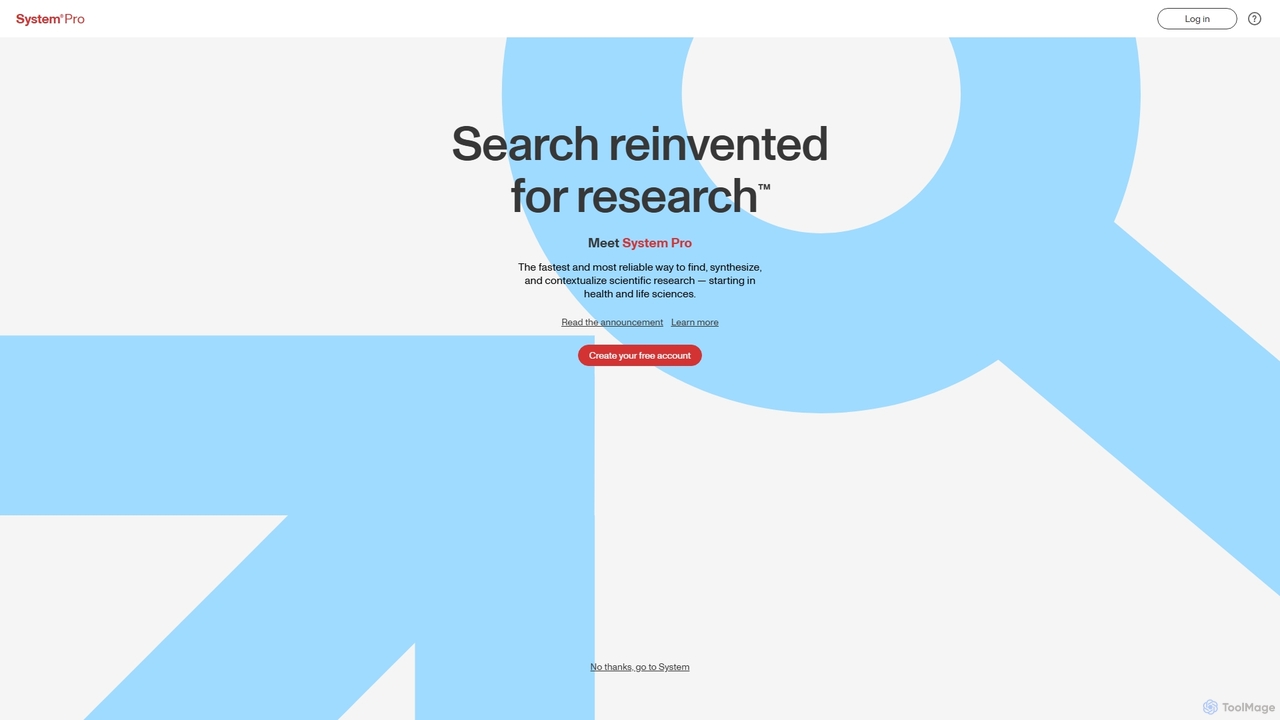
System Pro
System Pro is an AI-powered search engine designed to reinvent scientific research, initially focusing on health and life sciences. It offers the fastest, most reliable way to find, synthesize, and contextualize complex research papers, helping researchers and professionals accelerate their literature review process and uncover critical insights from a vast body of scientific knowledge.
Medical Information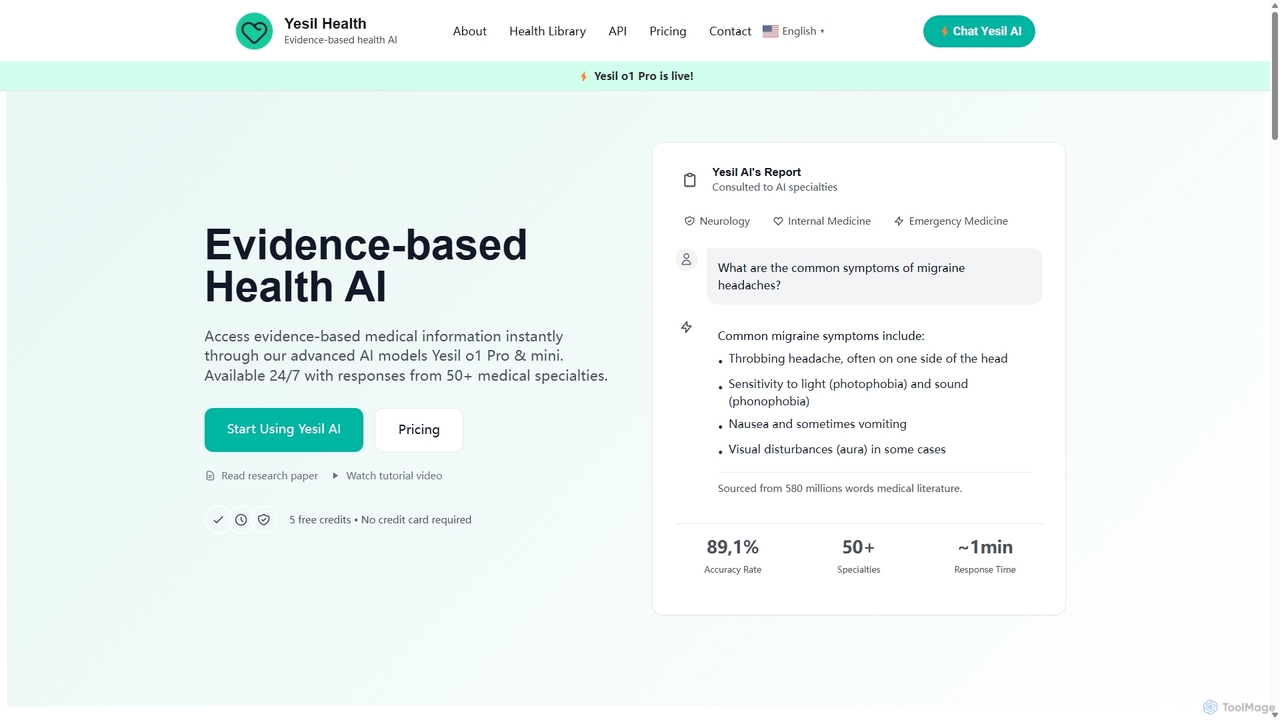
Yesil Health
Yesil Health is an evidence-based medical AI assistant providing instant access to reliable health information. Powered by advanced AI models trained on peer-reviewed literature, it covers over 50 medical specialties. Users can ask health-related questions 24/7 and receive accurate, data-backed responses, making medical knowledge more accessible for everyone.
Api
MedHeed
MedHeed is an AI-powered platform for healthcare professionals, designed to accelerate medical research and clinical decision-making. It uses advanced NLP to analyze and synthesize vast amounts of medical literature, clinical trial data, and treatment guidelines, providing users with curated, evidence-based insights in real-time.
Medical Research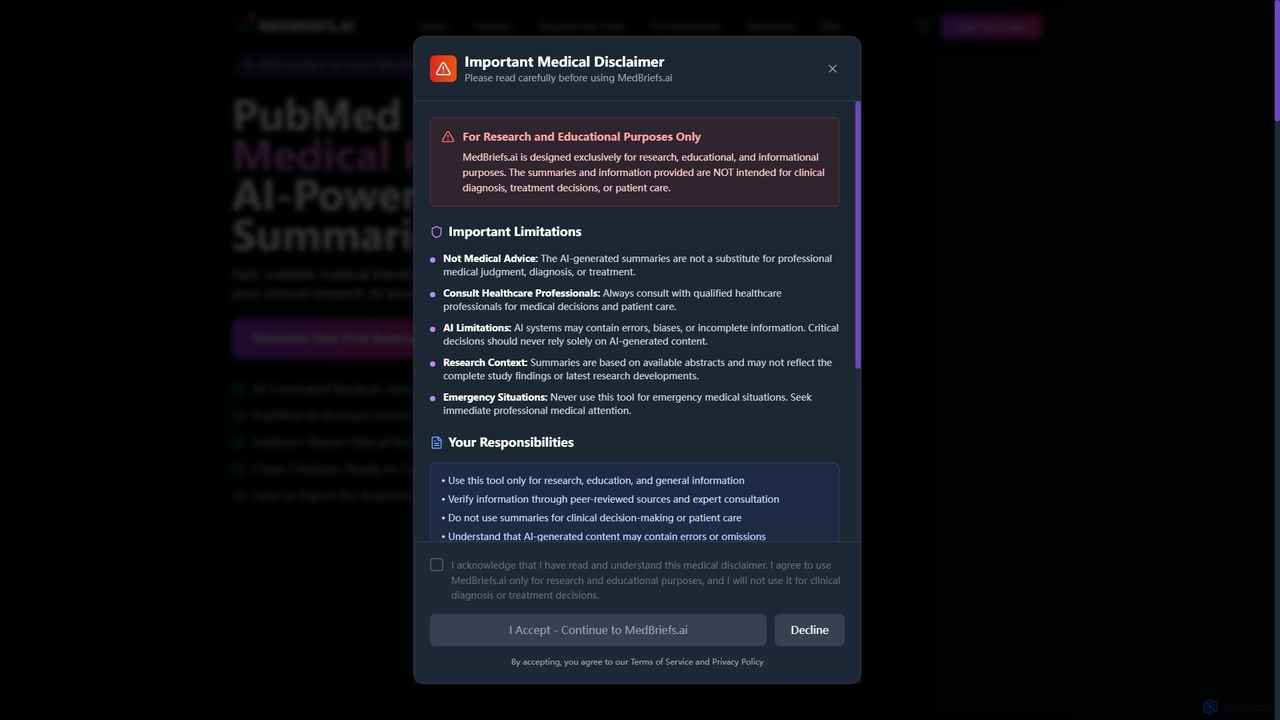
Medbriefs
Medbriefs is an AI-powered research assistant that generates fast, credible summaries of medical literature from PubMed abstracts. It streamlines the research process for clinicians, academics, and students by providing clear insights and formatted citations in seconds.
Academic ResearchDr. Gupta
Dr. Gupta is an AI-powered physician chatbot providing instant, confidential information on human and pet health. Ask about symptoms, conditions, and medications. It features a dedicated veterinary AI, Dr. McGrath, for pet-related queries. The tool is designed for informational purposes and offers both free and premium plans for users.
Medical AssistantHeal
Heal is an AI-powered health guide providing 24/7 support for families and employees. It offers instant answers to health questions, symptom tracking, and insurance-aware guidance to help users find in-network doctors and save on healthcare costs. It serves both individuals and employers as a comprehensive healthcare navigation platform.
Medical Assistant
OpenEvidence Comments (0)
Sign in to comment.
Sign inNo comments yet.