

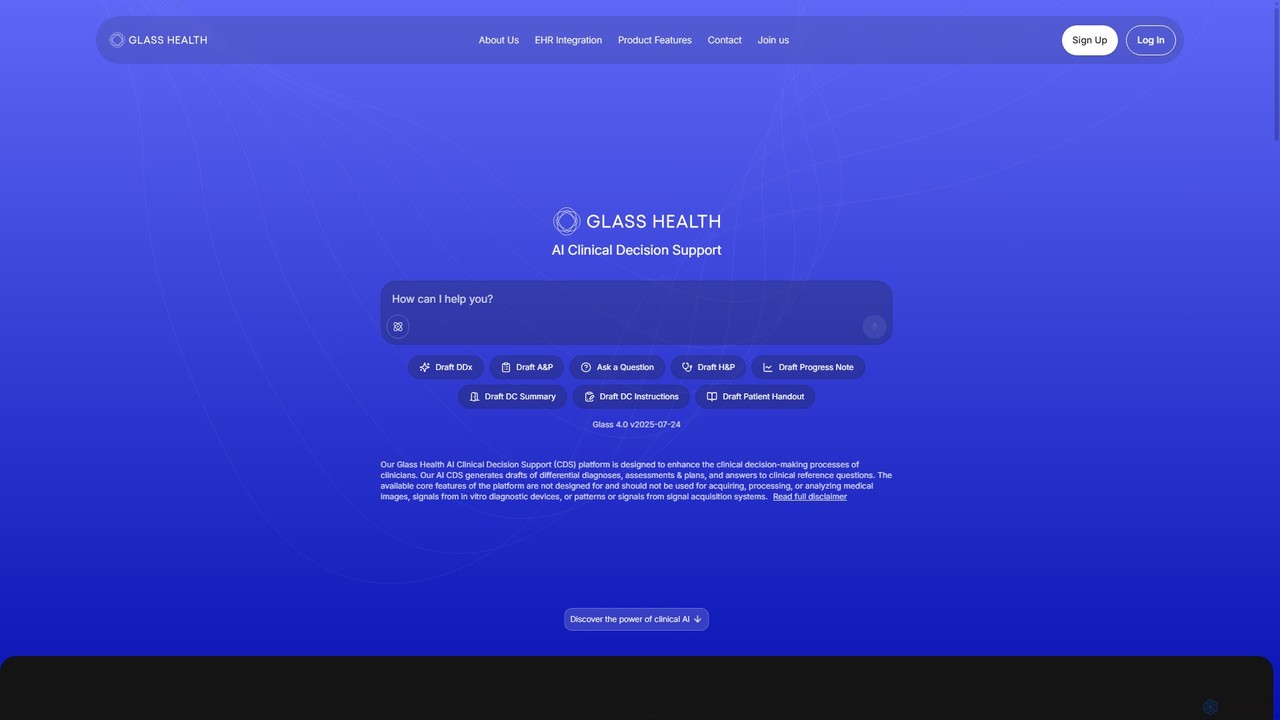
Glass Overview
Glass is a cutting-edge AI platform dedicated to enhancing clinical decision-making for healthcare professionals. Developed by a team of experienced clinicians, Glass serves as an intelligent co-pilot, designed to augment, not replace, the expertise of doctors. It combines the power of advanced large language models with a continuously updated, peer-reviewed medical knowledge base. This unique fusion allows the platform to provide nuanced, evidence-based guidance for a wide range of clinical scenarios, from routine documentation to complex diagnostic challenges. The platform is built with a deep commitment to safety, ethics, and security, being fully HIPAA compliant to ensure the protection of sensitive patient data.
How to use Glass
Using Glass is designed to be intuitive and seamlessly integrate into clinical workflows. A clinician begins by inputting patient-specific information, which can include the chief complaint, history of present illness, past medical history, lab results, and physical exam findings. Based on this summary, the user can direct the AI to perform several tasks:
- Ask a Clinical Question: Use the 'Consult' feature to ask direct questions, such as 'What is the definition of neutropenic fever?' Glass provides a direct, evidence-based answer with inline citations from authoritative literature.
- Generate a Differential Diagnosis (DDx): If facing a complex case, a clinician can request a DDx. Glass analyzes the patient data and provides a structured list of potential diagnoses, categorized into 'Most Likely,' 'Expanded Differential,' and critical 'Can’t Miss' conditions, along with supporting and opposing evidence for each.
- Draft a Clinical Plan: Request an 'Assessment & Plan' (A&P). The AI will generate a comprehensive, problem-oriented draft that includes a clinical impression, diagnostic recommendations (Dx), treatment plans (Tx), and follow-up items, all linked to their evidence base.
- Automate Documentation: The platform can draft various clinical notes, including History & Physical (H&P), Progress Notes, and Discharge Summaries, by structuring the provided patient data. It can also create patient-facing documents like Discharge Instructions and Handouts in plain language.
- Use Deep Reasoning: For particularly ambiguous or high-stakes cases, clinicians can activate 'Deep Reasoning' mode. This allocates more computational resources for a more thorough analysis, yielding deeper insights at the cost of slightly longer processing time.
Core Features of Glass
- AI-Powered Clinical Decision Support: Generates differential diagnoses, drafts assessment and treatment plans, and answers clinical reference questions with evidence-based citations.
- Comprehensive Documentation Automation: Drafts a full suite of clinical documents, including H&P notes, progress notes, discharge summaries, and patient-friendly discharge instructions and handouts.
- EHR Integration: Seamlessly integrates with existing Electronic Health Record (EHR) systems using SMART on FHIR technology, allowing for a secure and frictionless flow of patient data.
- Deep Reasoning Mode: An advanced feature for complex cases that provides higher-accuracy guidance, scoring exceptionally well on clinical benchmarks like USMLE (97%) and NEJM CPCs (90%).
- Evidence-Based & Citable: All outputs, from answers to clinical plans, include inline citations that link back to peer-reviewed research and consensus guidelines.
- Workspace Dashboard: A unified interface to view, organize, and edit all generated files for a patient encounter, with features like inline editing and version history.
- HIPAA Compliance: Meticulously designed to meet HIPAA standards, ensuring robust protection of Protected Health Information (PHI).
Use Cases for Glass
For Hospital Physicians: An internist managing a patient with subacute progressive dyspnea can use Glass to quickly generate a differential diagnosis, consider 'can't miss' diagnoses like pulmonary embolism, and draft a structured assessment and plan based on the latest guidelines.
For Emergency Room Doctors: In a high-pressure ER setting, a doctor can input the vitals and symptoms of a patient with acute chest pain to get an instant, structured differential, helping to rapidly distinguish between NSTEMI, unstable angina, and other critical conditions.
For Residents and Medical Students: As a learning and efficiency tool, a resident can use Glass to draft daily progress notes, freeing up time to focus on patient care and learning. It also serves as an educational resource for understanding clinical reasoning pathways.
For Health Systems: A hospital network can integrate Glass into its EHR to standardize the quality of care, reduce diagnostic errors, lower readmission rates, and ultimately improve patient outcomes and operational efficiency across the institution.
Advantages of Glass
Built by Clinicians, for Clinicians: The platform is designed with a deep understanding of clinical workflows and challenges.
Improves Diagnostic Accuracy: By providing a structured and broad differential, it helps clinicians avoid cognitive biases and reduces the risk of diagnostic errors.
Saves Significant Time: Automating the drafting of documentation and plans can save clinicians hours per shift, reducing burnout and improving job satisfaction.
Promotes Evidence-Based Medicine: By integrating guidelines and citations directly into the workflow, it ensures that clinical decisions are grounded in the latest research.
Secure and Trustworthy: Full HIPAA compliance and a commitment to data security make it a trusted partner for handling sensitive patient information.
Pricing and Plans
Glass offers tailored solutions for different users. While specific pricing details are available on the official website, the model generally includes:
- Individual Plans: Subscriptions for individual clinicians, residents, and medical students who want to use the platform for their personal workflow enhancement and learning.
- Enterprise Solutions: Custom pricing for health systems, hospitals, and clinics seeking to integrate Glass into their EHR. This includes full integration support, enhanced security features, and institutional-level analytics. Interested organizations are encouraged to contact the Glass Health team directly for a consultation and quote.
Traffic
Latest traffic
Status
Monthly traffic trend
- 2025-9: 84.7K
- 2026-1: 123.3K
- 2026-2: 99.7K
- 2026-3: 87.0K
- 2026-4: 95.7K
- 2026-5: 174.6K
Geography
Top 5 countries / regions
- 🇺🇸United States40.7%
- 🇦🇲Armenia37.9%
- 🇷🇺Russia9.6%
- 🇹🇭Thailand6.5%
- 🇨🇦Canada5.3%
Traffic sources
| Source type | Percentage |
|---|---|
Direct | 94.3% |
Referral | 4.9% |
Email | 0.7% |
Top keywords
| Keyword | Cost per click |
|---|---|
| glass ai | $1.41 |
| glass health | $2.50 |
| glass health ai | $0.00 |
| glass health login | $0.00 |
| glass ia | $0.00 |
Glass Videos on YouTube

GetD Glasses

NewEyes AI

Louise's Reviews



Skyline Kid!

Glass Alternatives
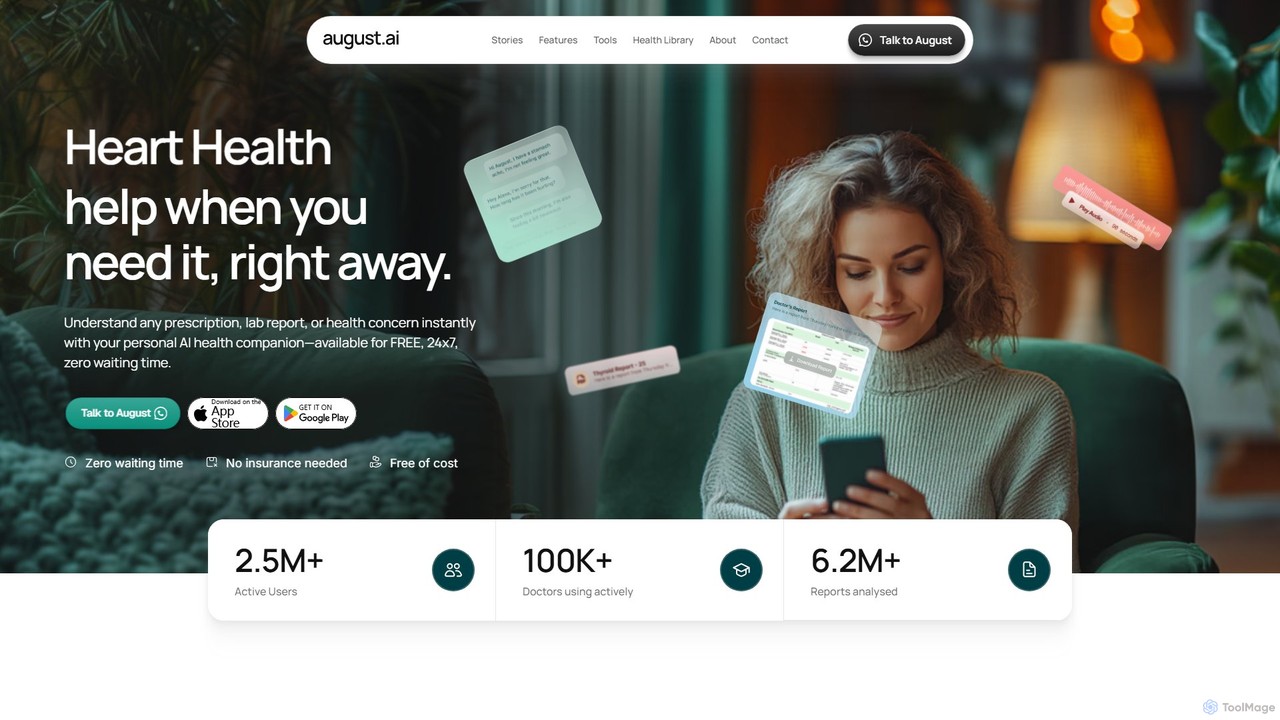
meetaugust
August is a free, 24/7 AI health assistant designed to provide instant medical guidance. It helps users understand lab reports, check symptoms, analyze prescriptions, and receive personalized wellness plans. Accessible via app and WhatsApp, it offers a secure, private, and immediate way to manage your health without appointments or insurance.
Medical
Sully.ai
Sully.ai provides enterprise-grade AI agentic teams for healthcare organizations. It automates clinical operations, including medical documentation, patient scheduling, and billing codes, by integrating with existing EMR systems. This helps reduce clinician burnout, improve operational efficiency, and enhance patient care.
Virtual Assistant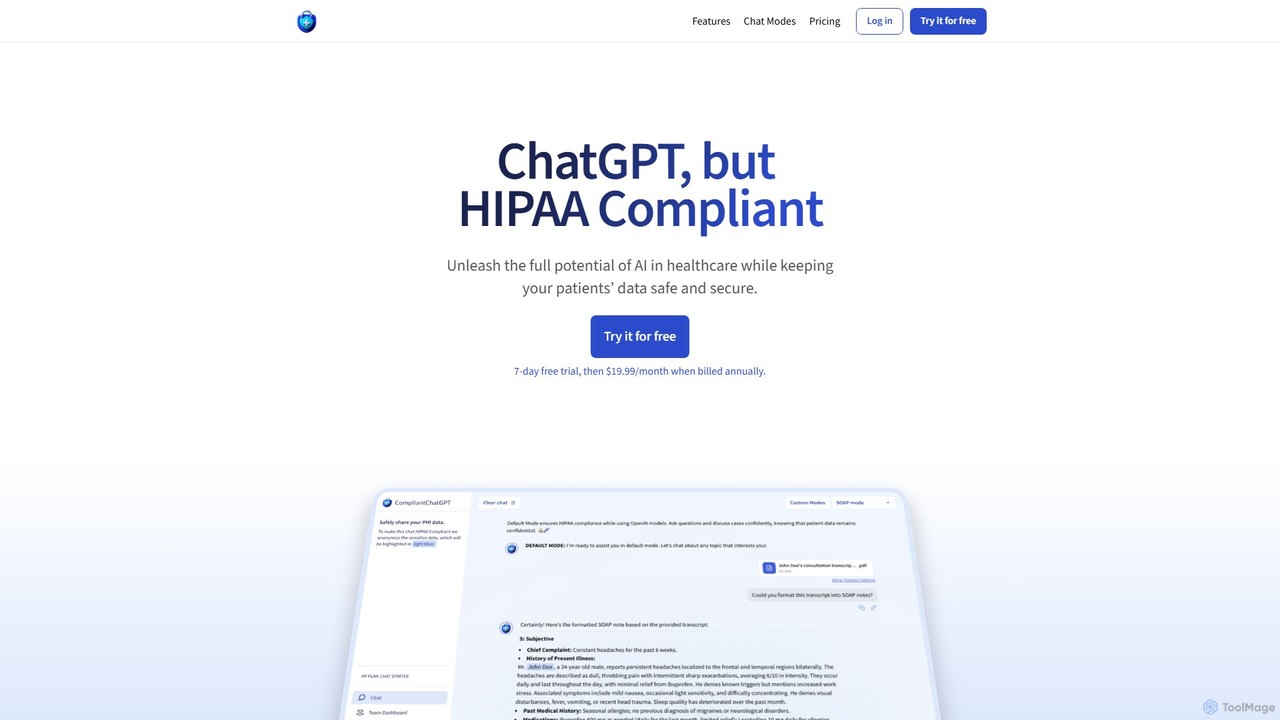
CompliantChatGPT
CompliantChatGPT is a HIPAA-compliant AI chat assistant designed for healthcare professionals. It leverages AI to streamline clinical workflows by securely handling tasks like generating SOAP notes, analyzing bloodwork, and creating treatment plans. By anonymizing Protected Health Information (PHI), it ensures patient data privacy and helps organizations avoid costly data breaches, enhancing both productivity and security in a clinical setting.
Medical Assistant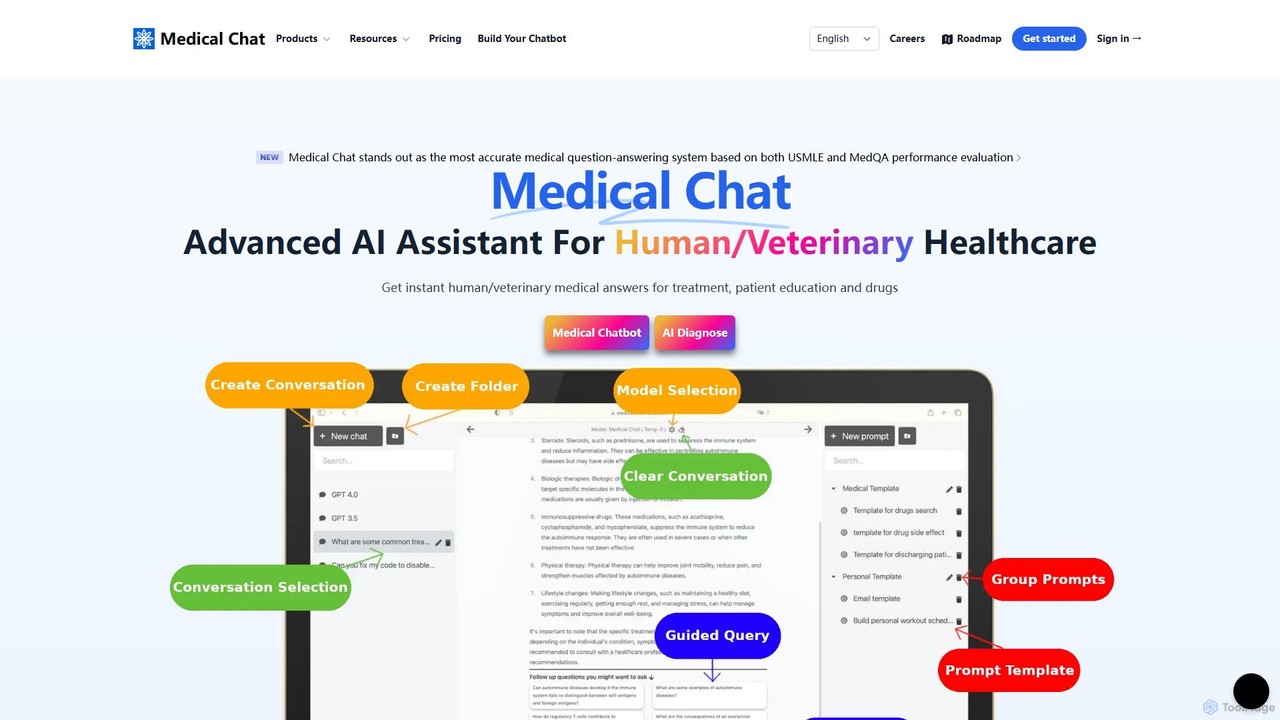
Medical Chat
Medical Chat is an advanced, HIPAA-compliant AI assistant for human and veterinary healthcare professionals. It provides instant, evidence-based answers, generates differential diagnosis reports, creates clinical plans, and integrates with PubMed. Its high accuracy is validated by USMLE and MedQA performance evaluations.
Learning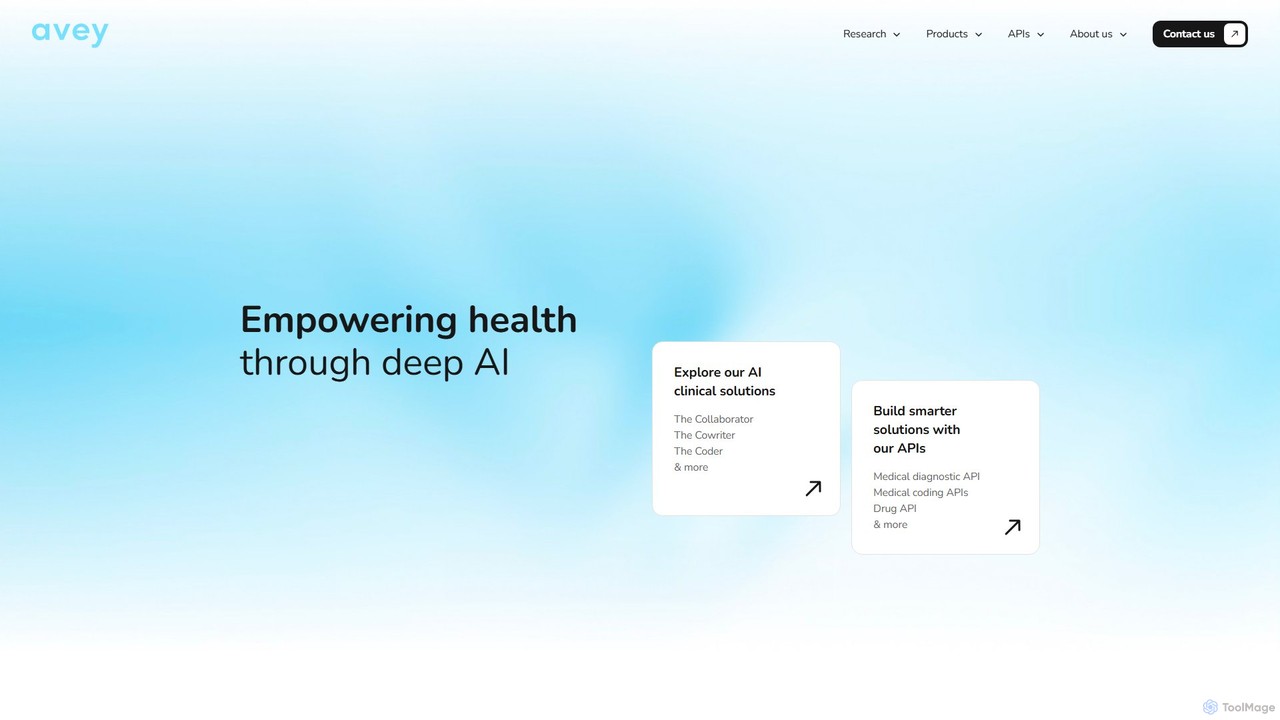
Avey
Avey is a comprehensive AI platform for healthcare, offering a suite of tools (C-Suite) to assist clinicians with diagnostics (Collaborator), automate clinical documentation (Cowriter), and streamline medical billing and coding (Coder). Avey also provides powerful APIs for developers to build custom healthcare solutions.
Healthcare ApisGlass Categories
Glass Embed Widget
Copy this embed code to place the badge on your blog, article, or product site and send readers directly to this ToolMage detail page.

Related AI tools
Hippo Scribe
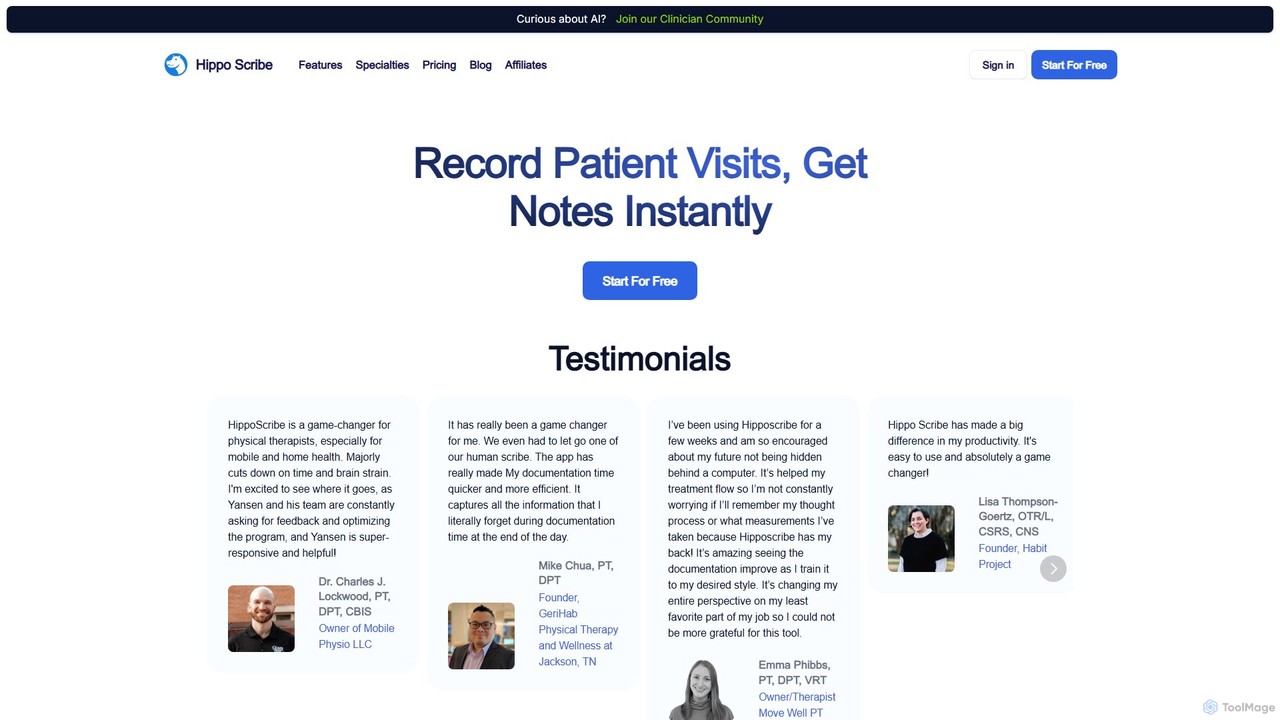
Hippo Scribe is an AI-powered medical scribe for healthcare professionals like physical therapists, OTs, and SLPs. It uses ambient listening to record patient visits and automatically generates HIPAA-compliant clinical notes in seconds. By integrating with EMR systems via a Chrome extension and offering customizable templates, it drastically reduces documentation time, minimizes burnout, and allows practitioners to focus entirely on patient care. It's a game-changer for improving efficiency and workflow in clinical settings.
Medical Scribe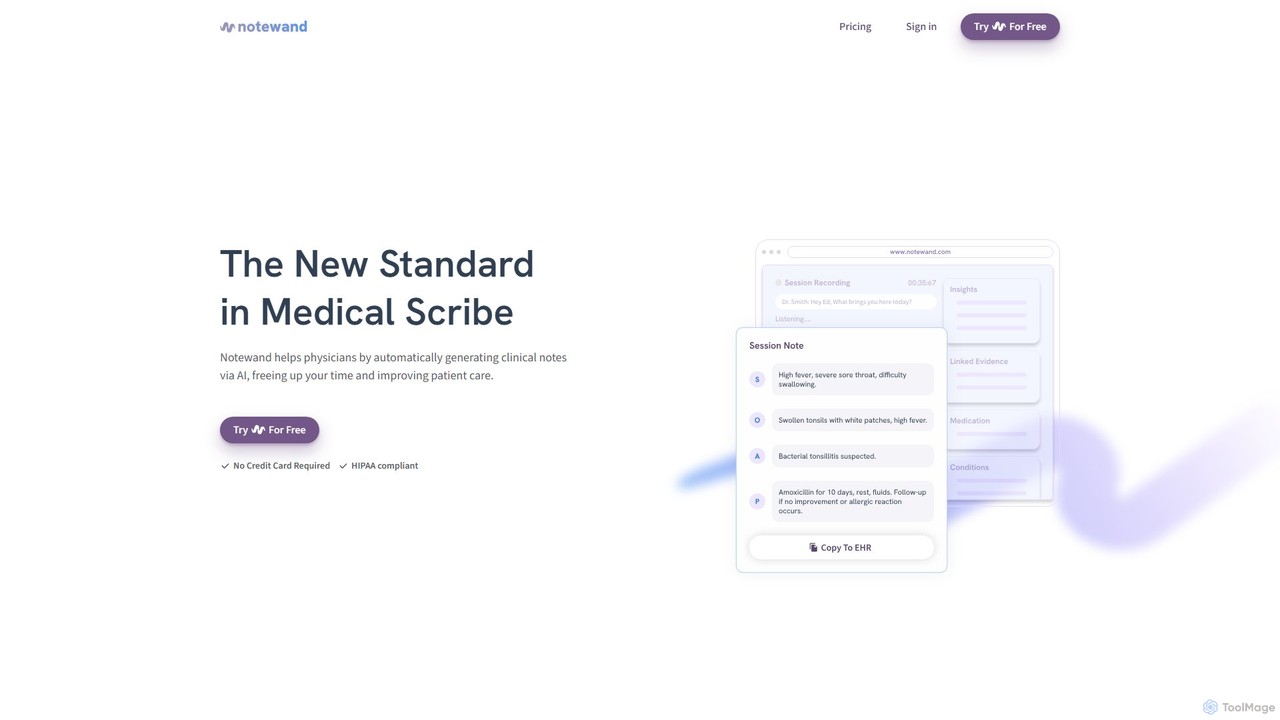
Notewand
Notewand is an AI-powered medical scribe that listens to doctor-patient conversations and automatically generates structured clinical notes in real-time. Designed for physicians, it helps reduce documentation time, minimize burnout, and improve the quality of patient care. The platform is HIPAA and GDPR compliant, ensuring the highest level of data security for sensitive patient information.
Clinical Documentationmeetaugust
August is a free, 24/7 AI health assistant designed to provide instant medical guidance. It helps users understand lab reports, check symptoms, analyze prescriptions, and receive personalized wellness plans. Accessible via app and WhatsApp, it offers a secure, private, and immediate way to manage your health without appointments or insurance.
MedicalSully.ai
Sully.ai provides enterprise-grade AI agentic teams for healthcare organizations. It automates clinical operations, including medical documentation, patient scheduling, and billing codes, by integrating with existing EMR systems. This helps reduce clinician burnout, improve operational efficiency, and enhance patient care.
Virtual Assistant
Jyek
Jyek is an AI agent platform that understands objectives, creates execution plans, uses tools, and delivers verifiable results for complex, multi-step tasks.
AutomationCompliantChatGPT
CompliantChatGPT is a HIPAA-compliant AI chat assistant designed for healthcare professionals. It leverages AI to streamline clinical workflows by securely handling tasks like generating SOAP notes, analyzing bloodwork, and creating treatment plans. By anonymizing Protected Health Information (PHI), it ensures patient data privacy and helps organizations avoid costly data breaches, enhancing both productivity and security in a clinical setting.
Medical AssistantMedical Chat
Medical Chat is an advanced, HIPAA-compliant AI assistant for human and veterinary healthcare professionals. It provides instant, evidence-based answers, generates differential diagnosis reports, creates clinical plans, and integrates with PubMed. Its high accuracy is validated by USMLE and MedQA performance evaluations.
LearningAvey
Avey is a comprehensive AI platform for healthcare, offering a suite of tools (C-Suite) to assist clinicians with diagnostics (Collaborator), automate clinical documentation (Cowriter), and streamline medical billing and coding (Coder). Avey also provides powerful APIs for developers to build custom healthcare solutions.
Healthcare Apis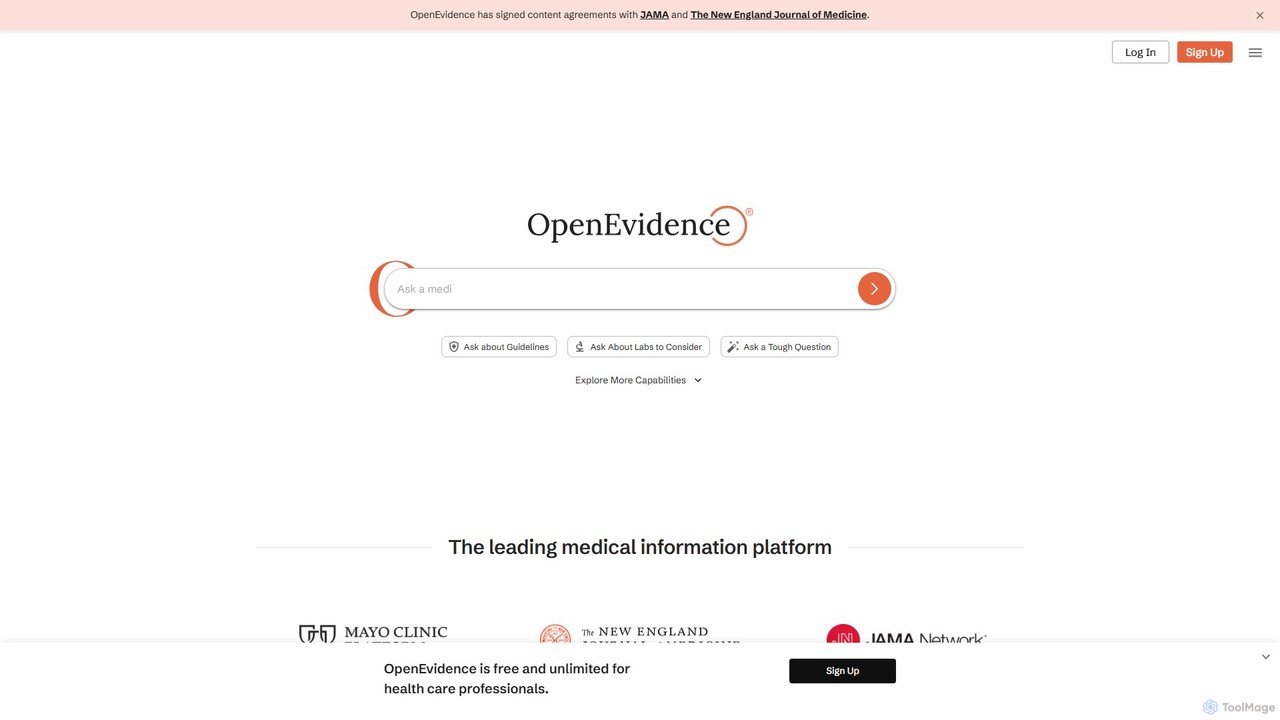
OpenEvidence
OpenEvidence is a leading AI-powered medical information platform designed for healthcare professionals. It synthesizes vast medical literature from top-tier sources like NEJM and JAMA to provide instant, evidence-based answers for clinical decision-making. The platform is HIPAA compliant, offers CME credits, and is free for verified U.S. healthcare providers.
Continuing Education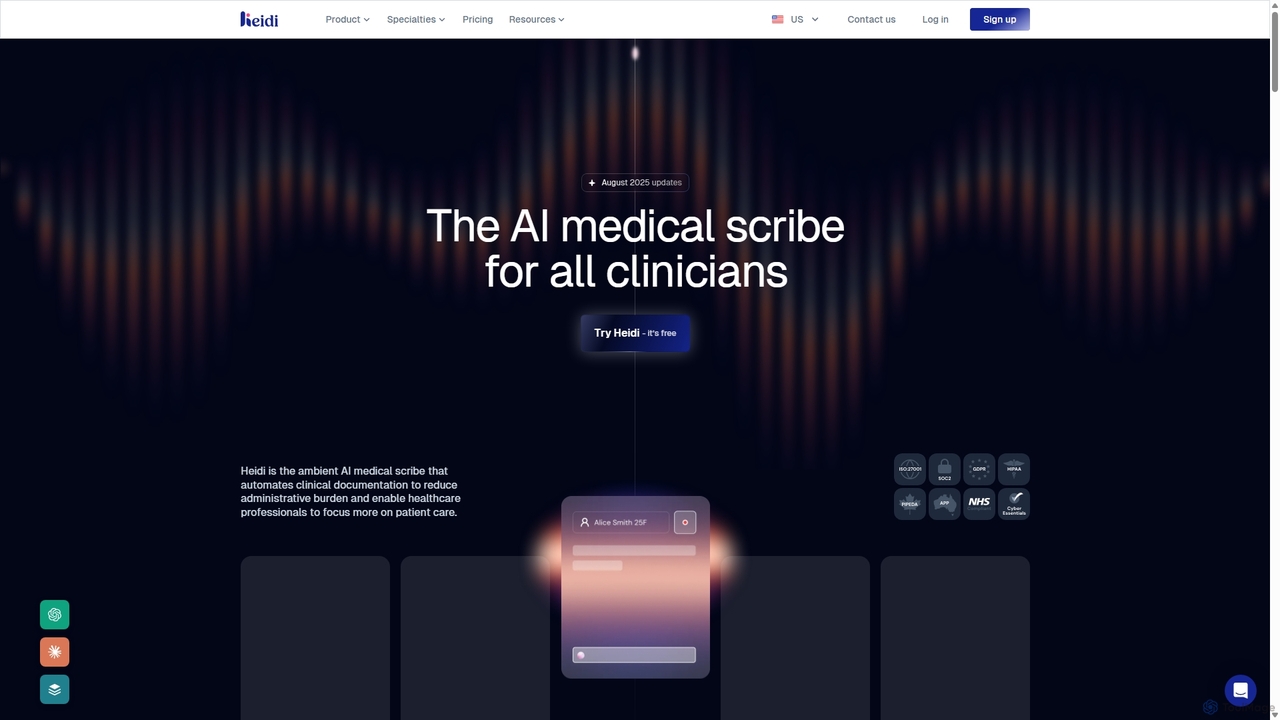
Heidi Health
Heidi Health is an advanced AI medical scribe designed for clinicians to automate clinical documentation. It transcribes patient consultations in real-time, generates structured notes, referral letters, and summaries, significantly reducing administrative burden. This allows healthcare professionals to focus more on patient care, reduce burnout, and improve work-life balance.
Medical Documentation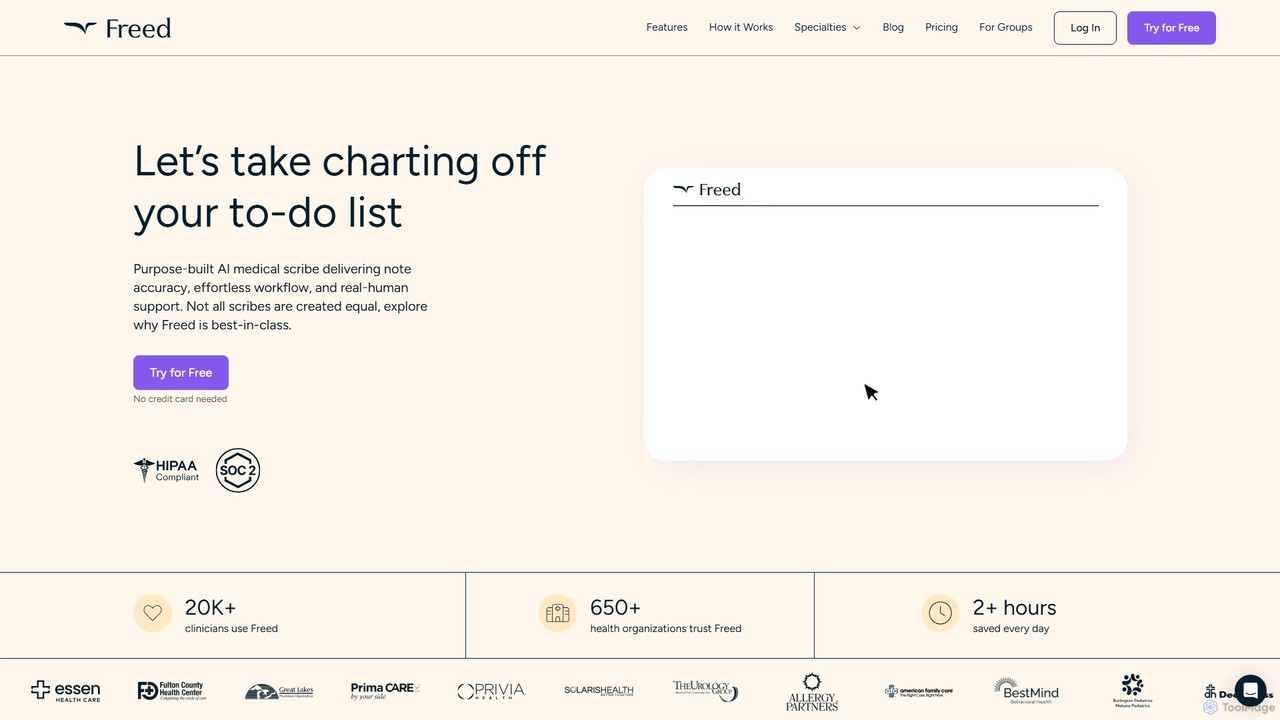
Freed
Freed is an AI-powered medical scribe designed for clinicians to eliminate charting fatigue. It securely records patient visits, transcribes the conversation, and automatically generates accurate, EHR-ready clinical notes. This allows healthcare professionals to focus on patient care, save hours on documentation, and improve their work-life balance.
Clinical Documentation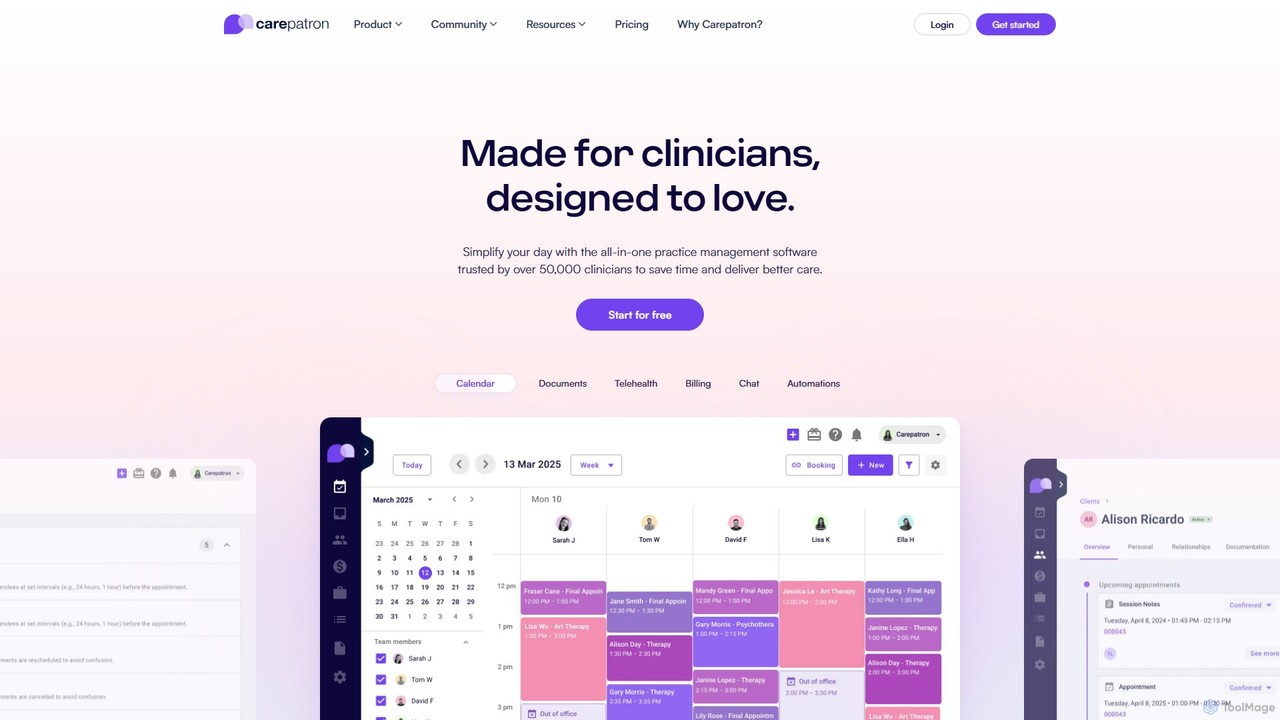
Carepatron
Carepatron is an all-in-one, AI-powered practice management software designed for healthcare clinicians. Trusted by over 50,000 practitioners, it simplifies daily workflows with tools for scheduling, telehealth, billing, clinical documentation, and secure client communication. By automating administrative tasks and centralizing patient information, Carepatron helps clinicians save time, reduce administrative burden, and deliver better, more collaborative patient care. Its modern, intuitive interface makes it a preferred choice for various health and wellness professionals.
Crm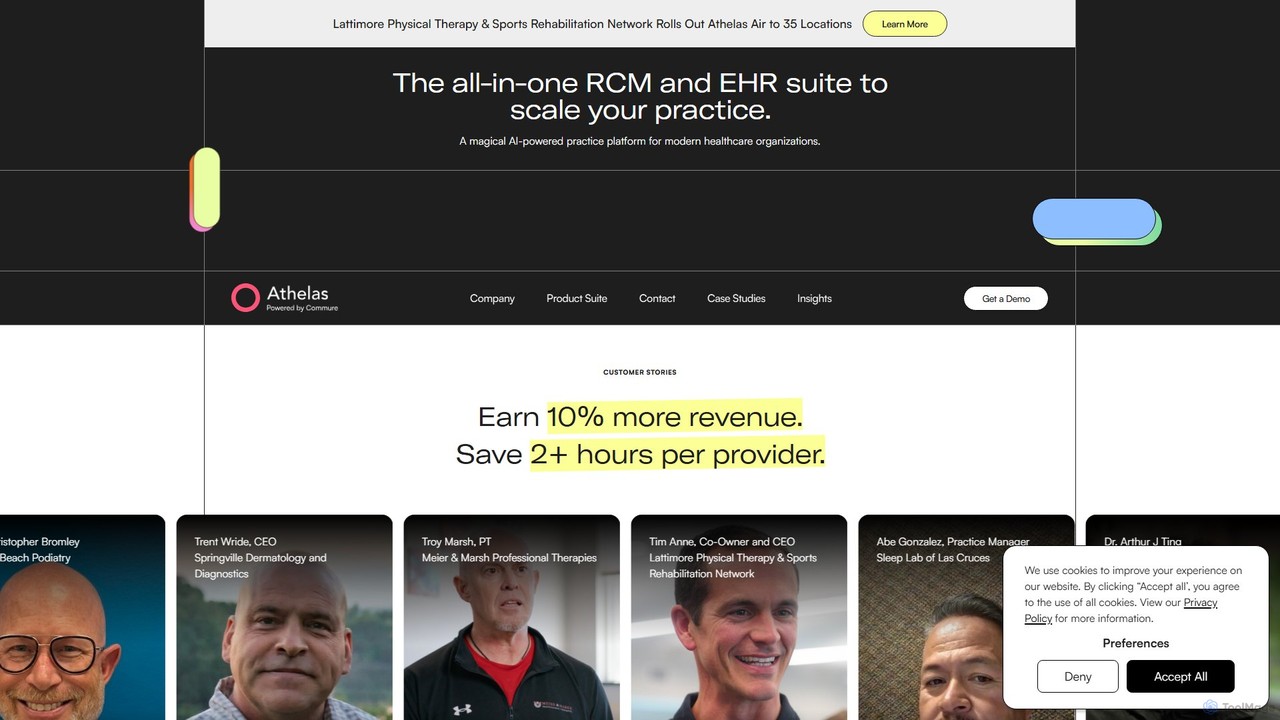
Athelas
Athelas is an AI-powered platform designed to streamline healthcare operations. It combines an all-in-one Revenue Cycle Management (RCM) and Electronic Health Record (EHR) suite with advanced tools like an Ambient AI Scribe, autonomous coding, and an AI receptionist. The platform helps medical practices increase revenue, save clinician time, reduce administrative burdens, and improve patient care by automating documentation, billing, and scheduling.
Revenue Cycle Management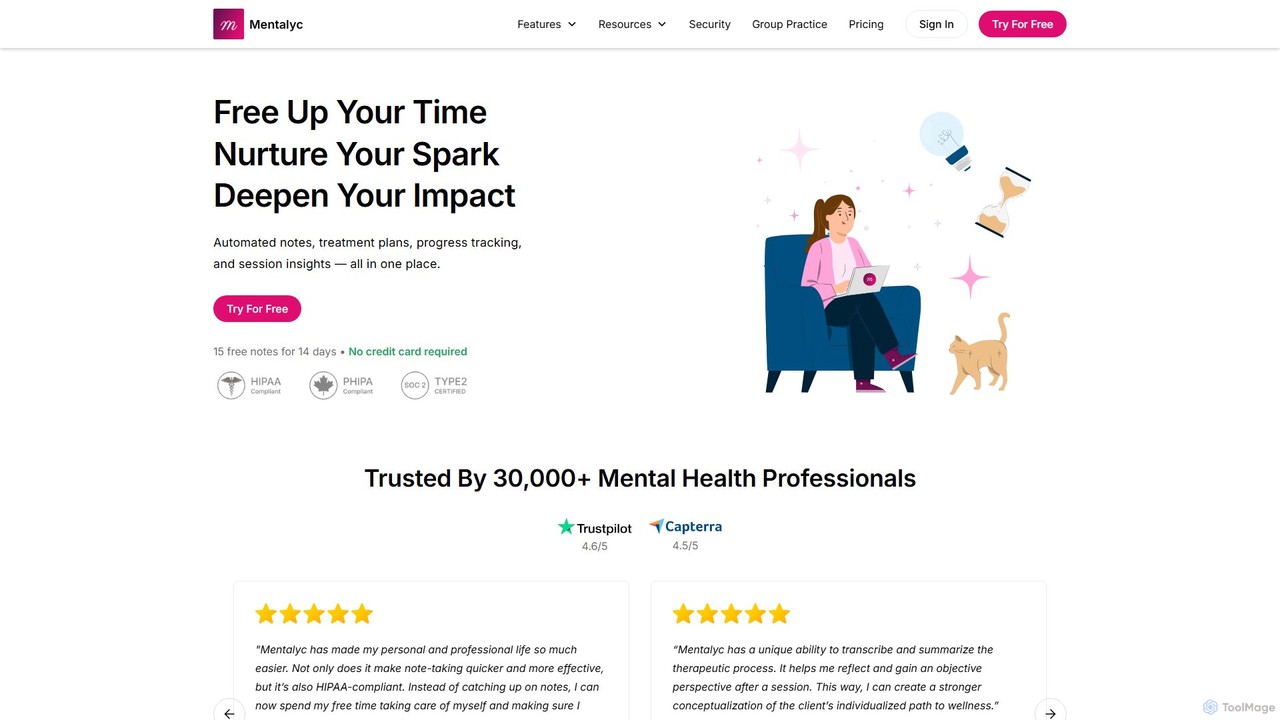
Mentalyc
Mentalyc is a HIPAA-compliant AI clinical intelligence platform for mental health professionals. It automates therapy note-taking (SOAP, DAP, etc.), generates smart treatment plans, and provides supervisor-like feedback to reduce administrative burnout. Trusted by over 30,000 clinicians, it helps save time, enhance client presence, and gain deeper therapeutic insights.
Clinical Administration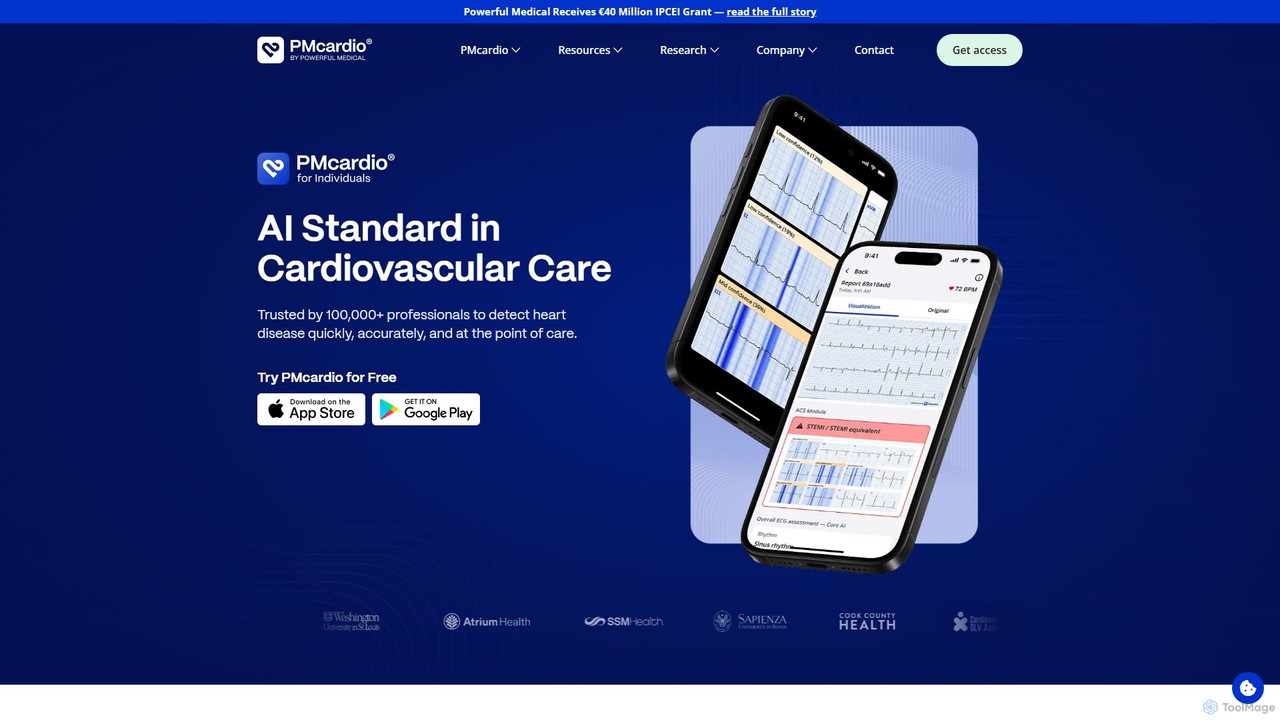
PMcardio
PMcardio is a CE-certified, AI-powered medical device that provides instant, accurate interpretation of any 12-lead ECG. Trusted by over 100,000 clinicians, it helps medical professionals detect over 40 cardiovascular conditions, including life-threatening heart attacks like OMIs, in seconds. By simply taking a photo of an ECG, users get a reliable diagnosis, explainable results, and a powerful second opinion, improving patient outcomes and streamlining clinical workflows.
Medical Diagnostics
Glass Comments (0)
Sign in to comment.
Sign inNo comments yet.