MediScribe Pro
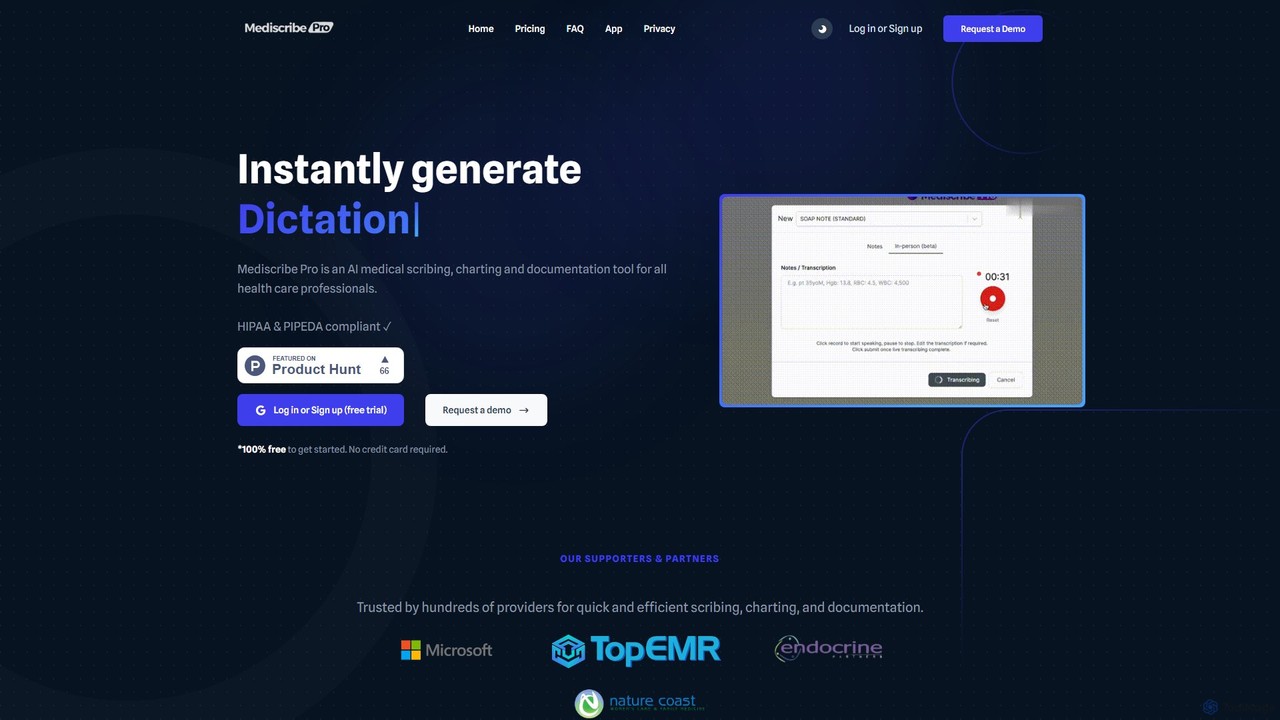
MediScribe Pro is an advanced AI-powered medical scribe for healthcare professionals. It automates clinical documentation by transcribing patient …
MediScribe Pro is an advanced AI-powered medical scribe for healthcare professionals. It automates clinical documentation by transcribing patient conversations, dictations, or text inputs into structured clinical notes. The tool extracts medical codes (ICD-10), generates referral letters, and integrates with EMR systems to significantly reduce administrative burden, save time, and combat clinician burnout.
Mentalyc
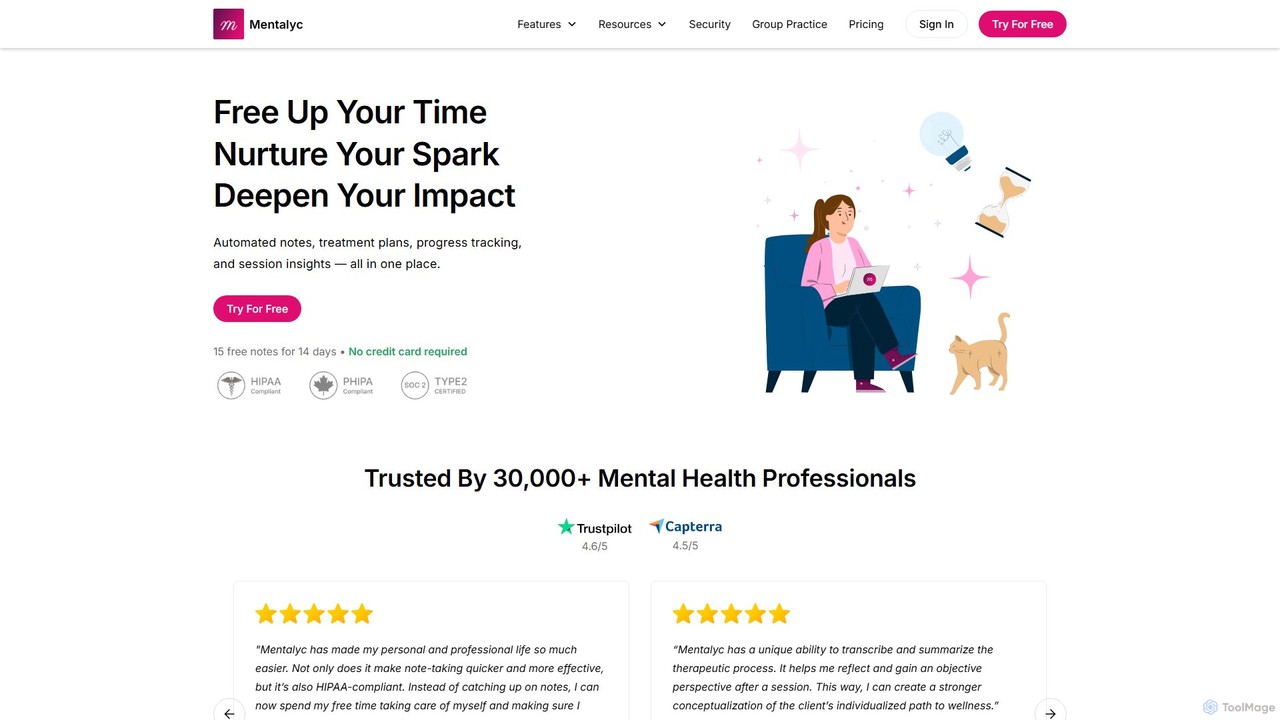
Mentalyc is a HIPAA-compliant AI clinical intelligence platform for mental health professionals. It automates therapy note-taking (SOAP, DAP, …
Mentalyc is a HIPAA-compliant AI clinical intelligence platform for mental health professionals. It automates therapy note-taking (SOAP, DAP, etc.), generates smart treatment plans, and provides supervisor-like feedback to reduce administrative burnout. Trusted by over 30,000 clinicians, it helps save time, enhance client presence, and gain deeper therapeutic insights.
About Clinical Administration
Clinical Administration AI tools are specialized artificial intelligence solutions designed to automate and optimize the complex administrative workflows within healthcare settings. Leveraging machine learning and natural language processing, these tools enhance efficiency in areas such as patient scheduling, medical billing, electronic health record (EHR) management, and resource allocation. They aim to reduce operational costs, minimize human error, and free up clinical staff to focus more on patient care, thereby improving overall healthcare delivery and compliance.
Core Features
- Automated Scheduling: Intelligently manages patient appointments, staff rotas, and resource booking, reducing conflicts and wait times.
- Medical Billing & Coding: Automates the processing of claims, verifies insurance, and assists with accurate medical coding to accelerate reimbursement.
- EHR Data Management: Facilitates efficient data entry, retrieval, and analysis within electronic health records, ensuring data integrity and accessibility.
- Compliance Monitoring: Continuously monitors administrative processes against regulatory standards like HIPAA, ensuring adherence and reducing risk.
- Resource Optimization: Uses predictive analytics to forecast demand for staff, equipment, and supplies, optimizing their allocation.
Use Cases
Healthcare providers, hospital administrators, and clinic managers utilize Clinical Administration AI tools to streamline daily operations. For instance, a large hospital might deploy these tools to manage thousands of patient appointments daily, automatically sending reminders and optimizing clinic room usage. Smaller clinics can leverage them for automated billing and insurance verification, significantly reducing administrative overhead and improving cash flow.
How to Choose
When selecting Clinical Administration AI tools, prioritize solutions with robust data security and compliance features (e.g., HIPAA, GDPR). Evaluate their integration capabilities with existing EHR systems and other healthcare platforms. Consider the scope of administrative tasks they cover, from scheduling to billing, and assess their scalability to meet future demands. Finally, review user-friendliness and vendor support to ensure smooth adoption and ongoing operational efficiency.

Clinical AdministrationUse Cases
Automating Patient Appointment Scheduling
Clinic administrators can use AI tools to automatically manage patient appointments, including initial booking, rescheduling, and sending personalized reminders via SMS or email. This reduces manual workload, minimizes no-shows, and optimizes the clinic's daily patient flow, leading to improved patient satisfaction and operational efficiency.
Streamlining Patient Intake and Registration
Hospitals and clinics can deploy AI-powered systems to automate the patient intake process. Patients can complete digital forms, upload documents, and verify insurance details before arrival, reducing wait times and administrative burden at the front desk. This ensures accurate data capture and a smoother patient journey from the outset.
Optimizing Medical Billing and Claims Processing
Medical billing departments leverage AI tools to automate the complex process of coding diagnoses and procedures, submitting claims, and tracking reimbursements. The AI can identify potential coding errors, verify patient eligibility, and flag denied claims for faster resolution, significantly accelerating the revenue cycle and reducing financial losses.
Enhancing Electronic Health Record (EHR) Data Management
Clinical staff can utilize AI to assist with data entry, retrieval, and organization within EHR systems. AI can transcribe dictated notes, extract key information from unstructured text, and ensure data consistency across records. This improves data accuracy, saves time for clinicians, and supports better clinical decision-making.
Predictive Resource Allocation for Clinical Operations
Hospital operations managers use AI to forecast patient demand, predict staffing needs, and optimize the allocation of medical equipment and facility resources. By analyzing historical data and real-time metrics, AI helps prevent understaffing or overbooking, ensuring that resources are efficiently utilized and patient care is not compromised.
Ensuring Regulatory Compliance and Audit Preparedness
Healthcare organizations employ AI tools to continuously monitor administrative processes for adherence to regulatory standards such as HIPAA, GDPR, and local healthcare laws. The AI can automatically flag non-compliant activities, generate audit trails, and provide insights into potential risks, thereby reducing legal exposure and ensuring robust data governance.