PMcardio
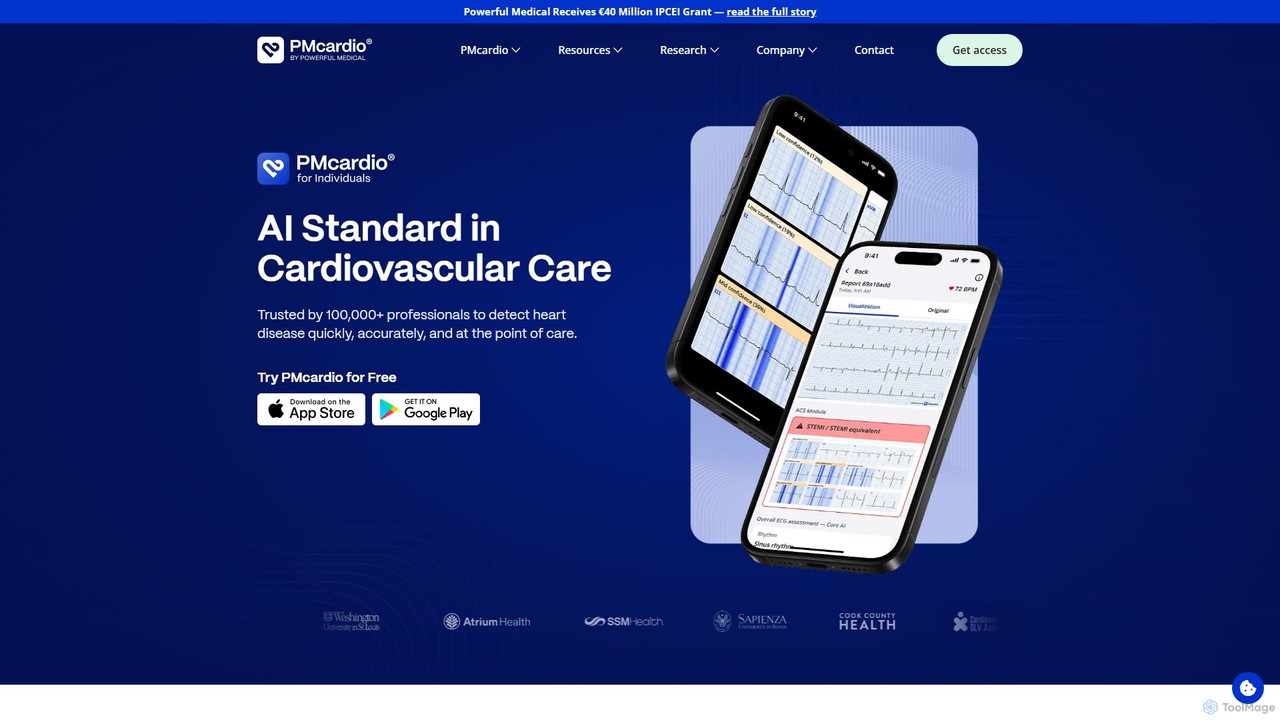
PMcardio is a CE-certified, AI-powered medical device that provides instant, accurate interpretation of any 12-lead ECG. Trusted by …
PMcardio is a CE-certified, AI-powered medical device that provides instant, accurate interpretation of any 12-lead ECG. Trusted by over 100,000 clinicians, it helps medical professionals detect over 40 cardiovascular conditions, including life-threatening heart attacks like OMIs, in seconds. By simply taking a photo of an ECG, users get a reliable diagnosis, explainable results, and a powerful second opinion, improving patient outcomes and streamlining clinical workflows.
nuraaihealthscreening
Nura provides advanced AI-powered health screening services in India. Utilizing ultra-low-dose CT scans and AI-enhanced image analysis, Nura …
Nura provides advanced AI-powered health screening services in India. Utilizing ultra-low-dose CT scans and AI-enhanced image analysis, Nura offers comprehensive, rapid, and safe detection of early-stage cancers, heart conditions, and lifestyle diseases. The entire process, from screening to a doctor's consultation, is completed within 120 minutes, focusing on preventive care and early diagnosis with minimal radiation exposure.
proudP
proudP is a revolutionary AI-powered mobile app that allows users to track their urine flow at home. Using …
proudP is a revolutionary AI-powered mobile app that allows users to track their urine flow at home. Using advanced sound analysis technology, it non-invasively measures key urological metrics to help monitor symptoms of conditions like Benign Prostatic Hyperplasia (BPH). The app provides objective data, progress tracking, and shareable reports, empowering users and their doctors to make more informed decisions about prostate and bladder health.
About Medical Diagnostics
Medical Diagnostics AI tools leverage artificial intelligence to analyze complex medical data, aiding in the detection, prediction, and monitoring of diseases. These advanced systems enhance diagnostic accuracy and efficiency by processing information from medical images, lab results, and patient records. They empower clinicians to make more informed and timely decisions, ultimately improving patient outcomes within the broader health sector.
Core Features
- Image Analysis: Automatically identifies anomalies in radiology (X-ray, CT, MRI) and pathology slides.
- Predictive Analytics: Assesses disease risk and progression based on patient data and genetic markers.
- Natural Language Processing (NLP): Extracts critical information from unstructured clinical notes and patient histories.
- Genomic Data Interpretation: Analyzes complex genetic sequencing to identify disease-causing variants.
- Early Disease Detection: Flags subtle indicators of conditions often missed by the human eye.
Applicable Scenarios
Medical Diagnostics AI tools are invaluable in various clinical settings. Radiologists use them to prioritize urgent cases and detect subtle lesions in scans. Pathologists apply AI for faster and more consistent analysis of tissue samples. Clinicians leverage these tools for personalized risk assessment, guiding preventive care and treatment strategies based on individual patient profiles and vast datasets.
How to Choose
Selecting the right Medical Diagnostics AI tool requires careful consideration of several factors. Prioritize solutions with high accuracy validated by clinical trials and regulatory approvals (e.g., FDA, CE Mark). Evaluate data privacy and security protocols to ensure patient confidentiality. Consider integration capabilities with existing Electronic Health Record (EHR) systems and the level of interpretability or explainability of the AI's findings. Finally, assess the vendor's support, training, and ongoing model updates.
Medical DiagnosticsUse Cases
Automated Radiology Image Analysis for Lesion Detection
Radiologists utilize AI tools to automatically scan medical images like X-rays, CTs, and MRIs for subtle anomalies or lesions. The AI highlights suspicious areas, helping to prioritize urgent cases and reduce the time spent on manual review. This leads to faster detection of conditions such as early-stage cancers or fractures, improving diagnostic throughput and accuracy, especially in high-volume settings.
Predictive Risk Assessment for Chronic Disease Development
Clinicians employ AI to analyze vast datasets of patient health records, genetic information, and lifestyle factors to predict an individual's risk of developing chronic diseases like diabetes, cardiovascular disease, or Alzheimer's. This proactive approach allows for early intervention strategies, personalized preventive care plans, and lifestyle modifications, potentially delaying onset or mitigating the severity of these conditions.
Genomic Data Interpretation for Personalized Treatment
Geneticists and oncologists leverage AI tools to interpret complex genomic sequencing data from patients with cancer or rare diseases. The AI identifies specific genetic mutations or biomarkers that influence disease progression and treatment response. This enables the selection of highly targeted therapies (precision medicine), optimizing treatment efficacy and minimizing adverse effects for individual patients based on their unique genetic profile.
Early Detection of Ocular Diseases from Retinal Scans
Ophthalmologists use AI-powered systems to analyze high-resolution retinal scans, identifying early signs of conditions such as diabetic retinopathy, glaucoma, or macular degeneration. The AI can detect subtle changes in blood vessels or optic nerve structure that might be missed during a manual examination. This facilitates timely diagnosis and intervention, helping to prevent vision loss and preserve eye health for patients.
Automated Analysis of Pathology Slides for Cancer Diagnosis
Pathologists employ AI tools to analyze digitized microscope slides of tissue biopsies, automatically identifying cancerous cells, tumor margins, and specific pathological patterns. This significantly speeds up the diagnostic process, reduces inter-observer variability, and helps pathologists detect subtle features that might indicate malignancy. The AI acts as a powerful assistant, enhancing the accuracy and consistency of cancer diagnoses.
Real-time Monitoring of Patient Vitals for Deterioration
Intensive care units (ICUs) deploy AI systems to continuously monitor patient vital signs, lab results, and other physiological data. The AI analyzes these streams in real-time to detect subtle patterns or deviations that may indicate impending clinical deterioration, such as sepsis or cardiac arrest. This enables medical staff to receive early alerts, allowing for proactive intervention and potentially saving lives by preventing critical events.