MyBabyGuide
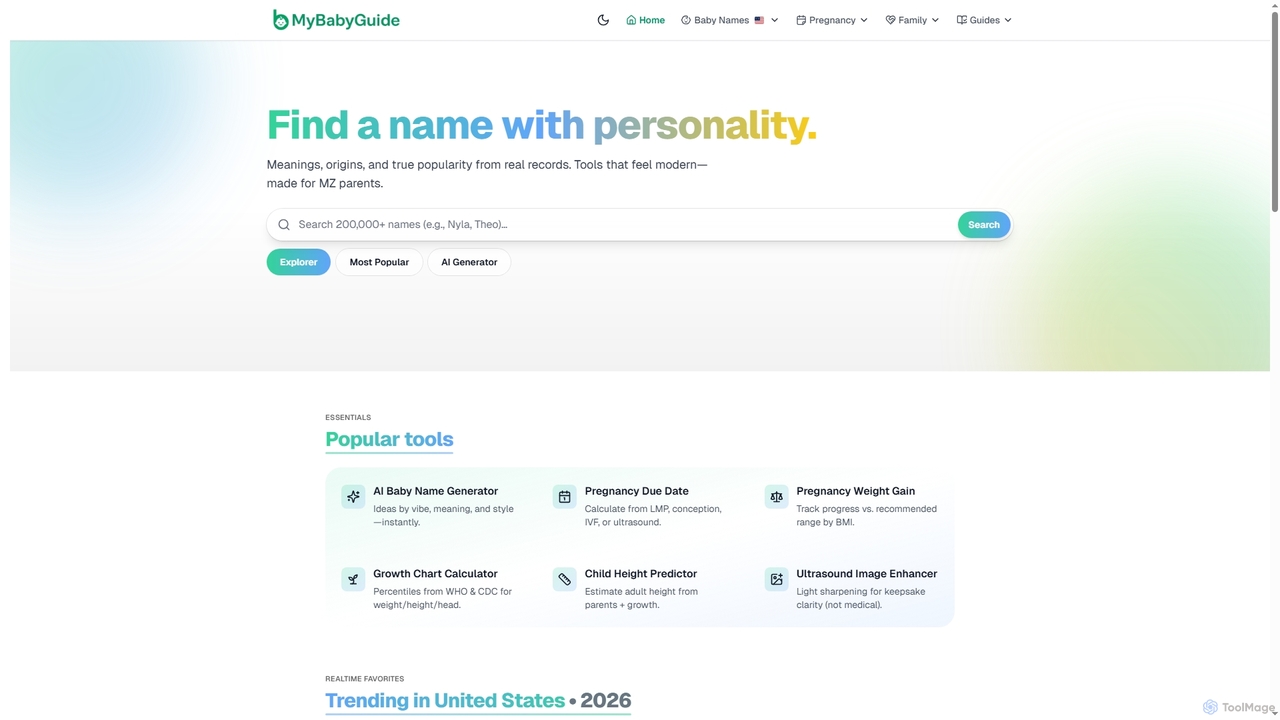
MyBabyGuide is an AI-powered platform offering comprehensive baby naming tools, including an AI name generator, popularity rankings, and …
MyBabyGuide is an AI-powered platform offering comprehensive baby naming tools, including an AI name generator, popularity rankings, and detailed name insights. It also provides essential pregnancy and parenting calculators like due date, weight gain, and growth charts, designed for modern parents seeking data-driven guidance.
About Calculators
AI Health Calculators are specialized tools designed to estimate various health and fitness metrics based on user-provided data. These tools utilize established formulas and algorithms to process inputs like age, weight, height, and activity level, providing instant calculations for key health indicators. They serve as valuable resources for individuals seeking to monitor their health, set fitness goals, or understand potential health risks. By translating complex health data into understandable figures, these calculators empower users to make more informed decisions about their lifestyle and wellness journey.
Core Features
- Body Composition Analysis: Calculate metrics such as Body Mass Index (BMI), Basal Metabolic Rate (BMR), and ideal body weight to assess overall physical health.
- Nutritional Requirement Estimation: Determine daily calorie, macronutrient (protein, carbs, fat), and water intake needs based on personal goals like weight loss or muscle gain.
- Health Risk Assessment: Provide preliminary risk scores for certain conditions, such as heart disease or diabetes, based on lifestyle and biometric data.
- Fertility & Pregnancy Tracking: Offer tools like ovulation predictors and pregnancy due date calculators to assist with family planning and monitoring.
Use Cases
These calculators are widely used by fitness enthusiasts for meal planning and workout calibration, individuals managing their weight, and prospective parents tracking fertility cycles. Nutritionists and personal trainers also leverage these tools to create personalized plans for their clients, providing a data-driven foundation for health recommendations.
How to Choose
When selecting a health calculator, prioritize tools that cite their sources or the formulas used, ensuring scientific backing. Check for a clear privacy policy, as you will be entering sensitive personal data. Also, consider the user interface's simplicity and whether the tool provides context or explanations for the results, rather than just numbers.

CalculatorsUse Cases
Setting Weight Management Goals
An individual planning to lose weight uses a Basal Metabolic Rate (BMR) and Total Daily Energy Expenditure (TDEE) calculator. They input their age, gender, height, weight, and activity level. The tool calculates their maintenance calories (e.g., 2200 kcal/day). Based on this, they can set a realistic daily calorie deficit (e.g., 1700 kcal/day for a 500 kcal deficit) to achieve a sustainable weight loss of approximately 1 pound per week, providing a clear, data-driven target for their diet.
Planning a Muscle-Building Diet
A bodybuilder or fitness enthusiast uses a macronutrient calculator to support their muscle gain goals. After determining their daily calorie target (e.g., 3000 kcal), they use the calculator to get a recommended split of protein, carbohydrates, and fats. For instance, the tool might suggest a 40/40/20 split, translating to 300g of carbs, 300g of protein, and 67g of fat. This allows them to structure their meal plan precisely to optimize muscle repair and growth.
Estimating Pregnancy Due Date
An expecting couple uses a pregnancy due date calculator to get an estimated delivery date. By inputting the first day of the mother's last menstrual period (LMP), the calculator applies Naegele's rule or a similar algorithm to predict the due date, typically 280 days (40 weeks) later. This provides them with a crucial timeline for planning prenatal care, preparing for the baby's arrival, and tracking developmental milestones throughout the pregnancy.
Initial Health Risk Screening
A health-conscious individual uses a cardiovascular disease risk calculator for a preliminary self-assessment. They input non-invasive data such as age, smoking status, systolic blood pressure, and total cholesterol levels. The tool provides a 10-year risk percentage score. While not a diagnosis, a high-risk score (e.g., >15%) serves as a strong indicator to schedule a consultation with a healthcare professional for a comprehensive evaluation and to discuss preventive measures.
Assessing Body Mass Index (BMI)
A user at the beginning of their health journey uses a BMI calculator to get a quick snapshot of their weight status. By simply entering their height and weight, the calculator provides a number and categorizes it (e.g., Underweight, Normal, Overweight, Obesity). For someone who is unsure where they stand, seeing a result of '28.5 - Overweight' can be a motivating first step to research healthier eating habits and consult a doctor or nutritionist for personalized advice.
Optimizing Hydration for Athletes
A long-distance runner uses a hydration calculator to determine their fluid needs for a marathon. They input their body weight, the expected duration of the race, and the environmental conditions (temperature and humidity). The calculator estimates their total fluid loss and provides a recommended intake schedule, such as drinking a specific amount of water and electrolytes every 20 minutes. This helps the athlete prevent dehydration and maintain peak performance during the event.