Synic AI
Synic AI is a premier medical AI platform designed for clinicians, offering real-time AI assistance, comprehensive clinical documentation, …
Synic AI is a premier medical AI platform designed for clinicians, offering real-time AI assistance, comprehensive clinical documentation, and intelligent medical coding. It streamlines healthcare workflows, enhances patient care, and ensures HIPAA compliance.
Pieces Technologies
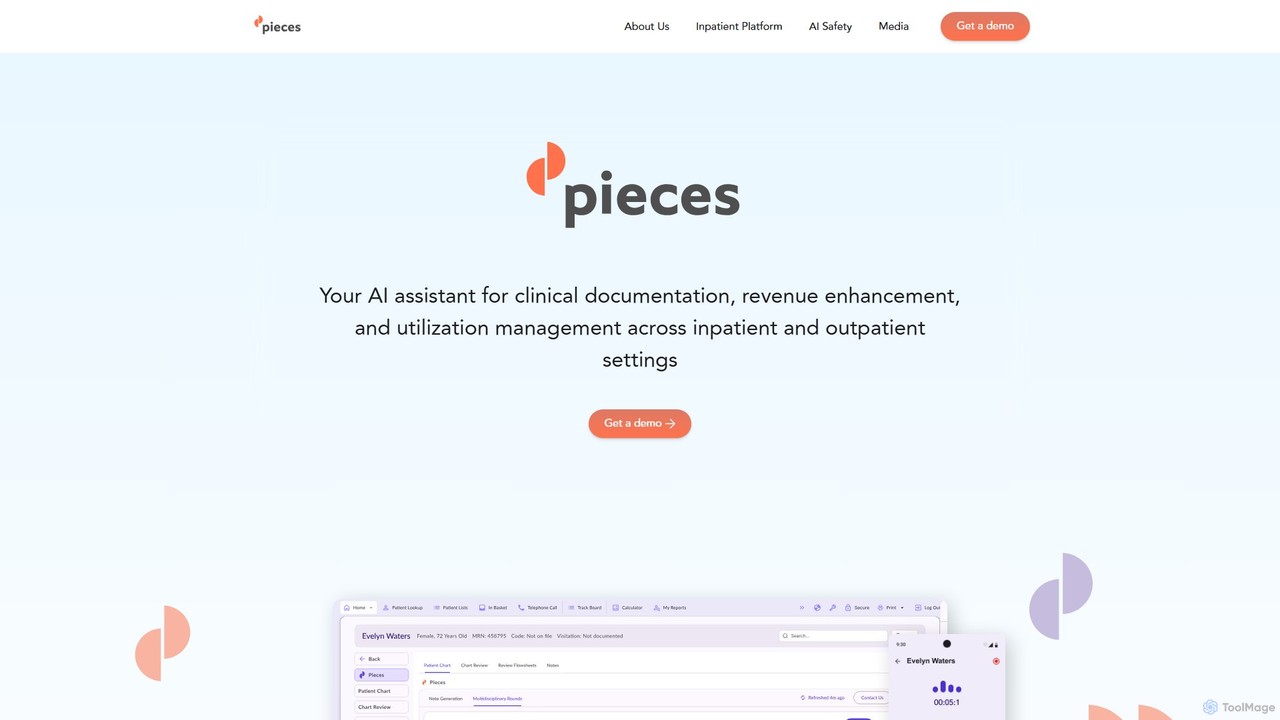
Pieces Technologies is a physician-led AI company providing a secure, generative AI assistant for clinical documentation. It helps …
Pieces Technologies is a physician-led AI company providing a secure, generative AI assistant for clinical documentation. It helps healthcare teams streamline workflows, improve patient outcomes, and reduce administrative burden. Its patented SafeRead system ensures the accuracy and safety of AI-generated content.
Sunoh.ai
Sunoh.ai is an advanced AI medical scribe that listens to patient-provider conversations and automatically generates accurate clinical notes. …
Sunoh.ai is an advanced AI medical scribe that listens to patient-provider conversations and automatically generates accurate clinical notes. Designed for physicians, it streamlines documentation, integrates with EHR systems, and is HIPAA compliant, saving doctors hours daily and reducing burnout.
MarianaAI
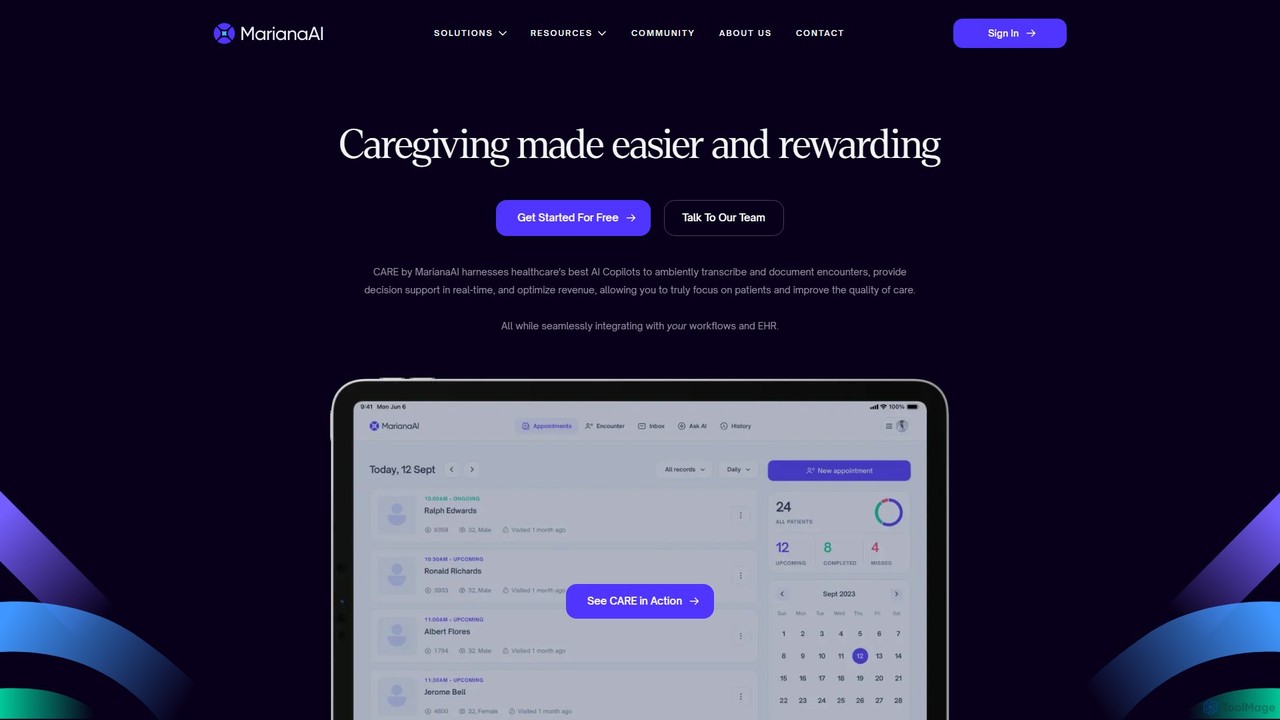
MarianaAI is an all-in-one AI-powered clinical automation platform designed for healthcare providers. It features a multilingual medical scribe, …
MarianaAI is an all-in-one AI-powered clinical automation platform designed for healthcare providers. It features a multilingual medical scribe, autonomous coding, and clinical decision support to reduce administrative burnout, enhance revenue, and improve patient care by seamlessly integrating with existing EHR systems.
Notewand
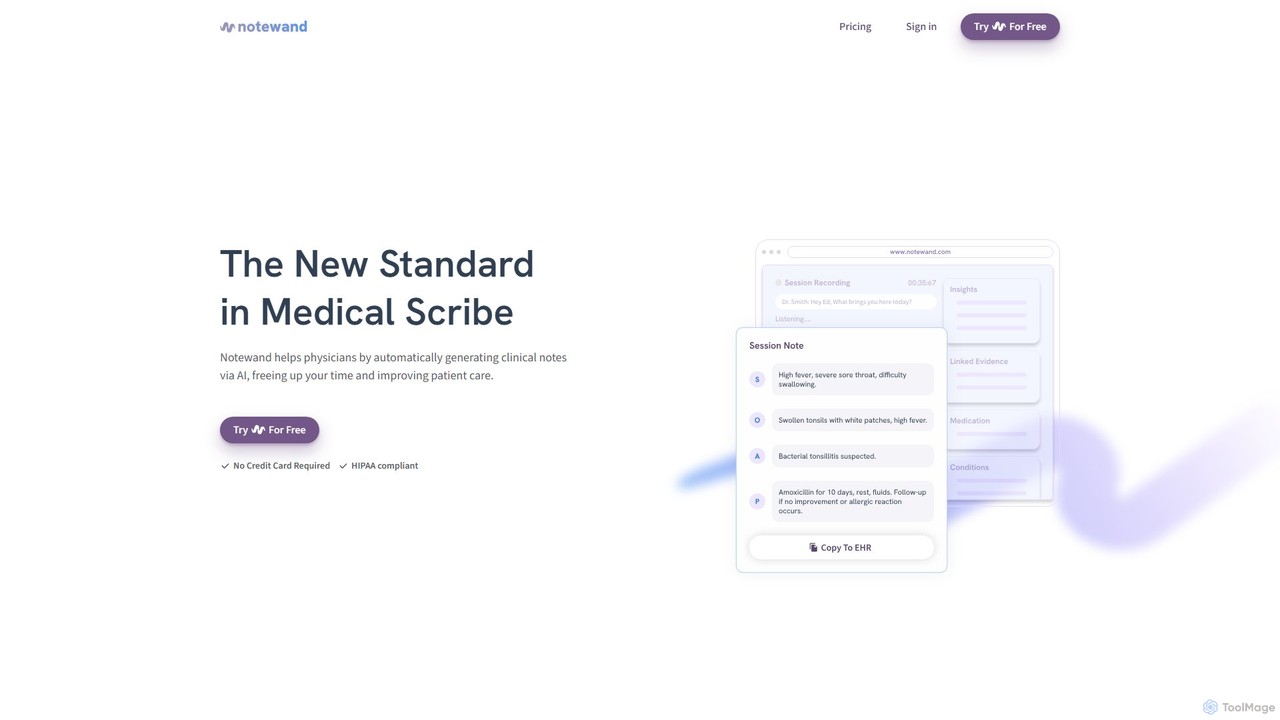
Notewand is an AI-powered medical scribe that listens to doctor-patient conversations and automatically generates structured clinical notes in …
Notewand is an AI-powered medical scribe that listens to doctor-patient conversations and automatically generates structured clinical notes in real-time. Designed for physicians, it helps reduce documentation time, minimize burnout, and improve the quality of patient care. The platform is HIPAA and GDPR compliant, ensuring the highest level of data security for sensitive patient information.
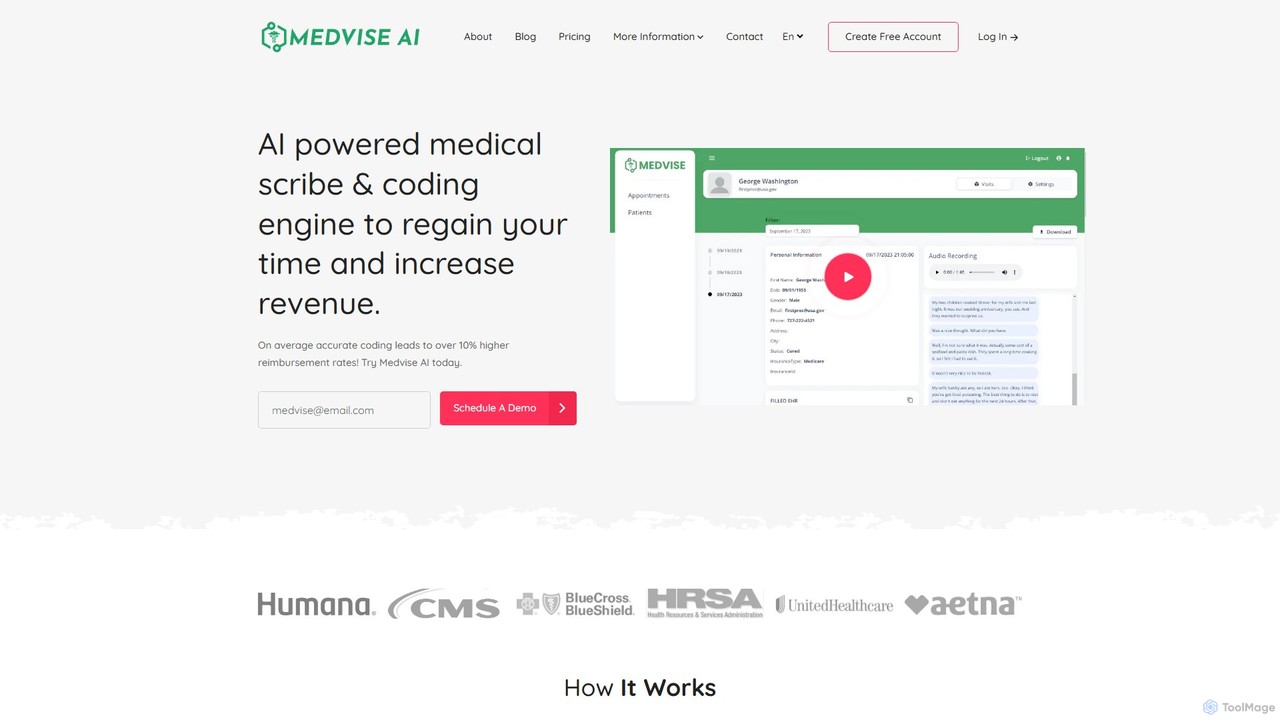
Medvise
Medvise is an AI-powered medical scribe that automates clinical documentation by transcribing patient-provider conversations in real-time. It generates …
Medvise is an AI-powered medical scribe that automates clinical documentation by transcribing patient-provider conversations in real-time. It generates accurate clinical notes, suggests medical codes (HCC/CPT), and integrates with EHR systems, freeing healthcare professionals to focus on patient care while ensuring HIPAA compliance.
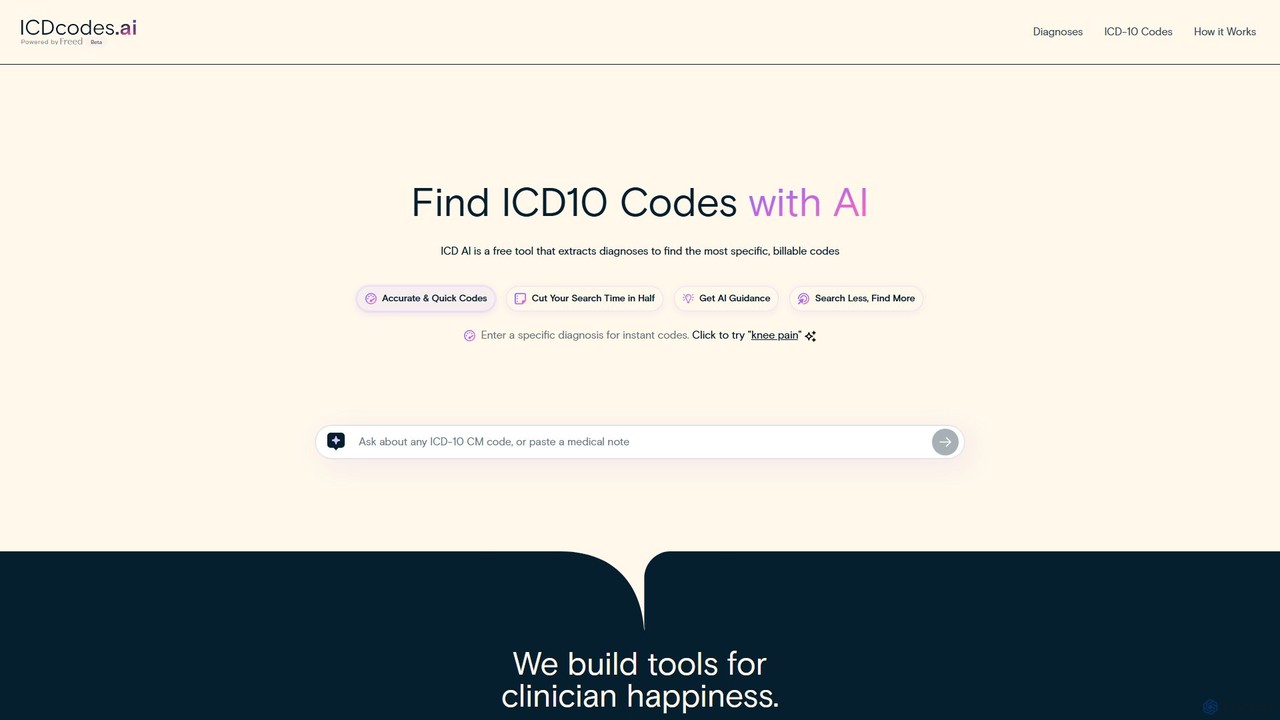
ICDcodes.ai
ICDcodes.ai is a free, AI-powered tool designed for healthcare professionals to quickly and accurately find ICD-10-CM diagnosis codes. …
ICDcodes.ai is a free, AI-powered tool designed for healthcare professionals to quickly and accurately find ICD-10-CM diagnosis codes. By entering a diagnosis, symptoms, or pasting a clinical note, users can instantly receive specific, billable code suggestions, significantly reducing search time and improving coding accuracy.
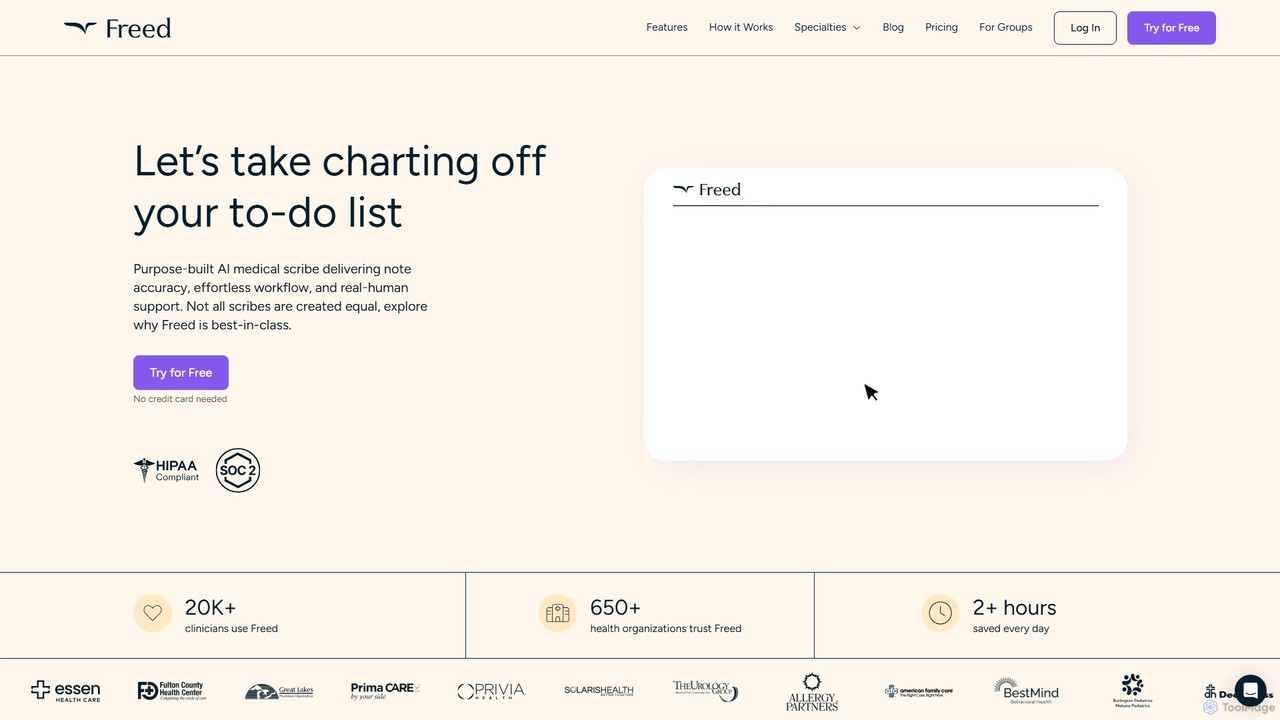
Freed
Freed is an AI-powered medical scribe designed for clinicians to eliminate charting fatigue. It securely records patient visits, …
Freed is an AI-powered medical scribe designed for clinicians to eliminate charting fatigue. It securely records patient visits, transcribes the conversation, and automatically generates accurate, EHR-ready clinical notes. This allows healthcare professionals to focus on patient care, save hours on documentation, and improve their work-life balance.
Apollo Health AI
Apollo Health AI is a HIPAA-compliant, AI-powered medical scribe designed for healthcare professionals. It automates the creation of …
Apollo Health AI is a HIPAA-compliant, AI-powered medical scribe designed for healthcare professionals. It automates the creation of clinical notes, such as SOAP notes, by transcribing and structuring patient encounters. This allows clinicians to reduce administrative burdens, combat burnout, and focus more on direct patient care, improving both efficiency and the quality of medical documentation.
About Clinical Documentation
Clinical Documentation AI tools are specialized solutions designed to streamline and enhance the creation, management, and analysis of patient records and medical notes within healthcare settings. Leveraging natural language processing (NLP) and machine learning, these tools automate repetitive tasks, extract key information, and generate comprehensive clinical summaries. Their primary value lies in reducing administrative burden on healthcare professionals, improving documentation accuracy, and ensuring compliance with regulatory standards, ultimately allowing more focus on patient care.
Core Features
- Automated Note Generation: Converts spoken or dictated clinical encounters into structured, comprehensive medical notes.
- Clinical Summary Creation: Extracts critical information from various sources to generate concise patient summaries for handoffs or reviews.
- Coding Assistance: Identifies relevant medical codes (e.g., ICD-10, CPT) based on documented diagnoses and procedures, improving billing accuracy.
- Data Extraction & Structuring: Automatically pulls key data points (e.g., vital signs, lab results, medication lists) from unstructured text into structured formats.
- Compliance & Quality Checks: Flags potential documentation gaps, inconsistencies, or non-compliance issues with clinical guidelines or regulations.
Applicable Scenarios
Physicians and nurses use these tools during patient consultations to automatically transcribe conversations and generate visit notes, reducing post-encounter documentation time. Medical coders leverage AI to suggest appropriate billing codes, enhancing efficiency and accuracy in claims processing. Healthcare administrators utilize AI to audit documentation for completeness and adherence to regulatory standards, minimizing risks.
How to Choose
When selecting Clinical Documentation AI tools, consider the level of integration with existing Electronic Health Record (EHR) systems, ensuring seamless data flow. Evaluate the accuracy of its natural language processing for medical terminology and accents. Assess the tool's ability to customize templates and workflows to match specific clinical specialties. Finally, prioritize solutions with robust data security and compliance certifications (e.g., HIPAA) to protect sensitive patient information.
Clinical DocumentationUse Cases
Automating Physician Visit Notes
During patient consultations, physicians use AI-powered clinical documentation tools to transcribe spoken dialogue in real-time. The AI automatically identifies key medical terms, diagnoses, treatments, and patient history, then structures this information into a comprehensive visit note, reducing the need for manual typing and allowing physicians to focus entirely on the patient. This can save up to 70% of documentation time per encounter.
Generating Discharge Summaries
Hospitalists and discharge planners utilize AI to quickly compile accurate discharge summaries. The tool integrates data from various sources within the EHR, including physician notes, lab results, imaging reports, and medication lists, to create a concise summary for follow-up care. This ensures critical information is not missed and streamlines the patient's transition out of the hospital.
Enhancing Medical Coding Accuracy
Medical coders employ AI to review clinical documentation and suggest appropriate ICD-10 and CPT codes. The AI analyzes the text for diagnoses, procedures, and services rendered, highlighting potential discrepancies or missing information that could lead to coding errors or claim denials. This significantly improves coding efficiency and financial accuracy for healthcare providers.
Streamlining Nursing Shift Handoffs
Nurses use AI tools to generate concise, critical patient summaries for shift changes. The AI extracts the most relevant updates on patient status, vital signs, medication changes, and care plans from the electronic health record, presenting it in an easily digestible format. This ensures seamless information transfer between shifts, improving patient safety and continuity of care.
Auditing Documentation for Compliance
Healthcare compliance officers leverage AI to automatically audit clinical documentation for adherence to regulatory standards like HIPAA and internal hospital policies. The AI can identify incomplete records, missing consent forms, or non-compliant phrasing, providing actionable insights to improve documentation quality and reduce legal risks. This proactive approach helps maintain high standards of care and regulatory compliance.
Creating Specialized Clinical Reports
Specialists, such as cardiologists or oncologists, use AI to generate highly specific clinical reports from complex patient data. The AI can synthesize information from multiple diagnostic tests, treatment protocols, and progress notes to produce detailed reports required for research, multidisciplinary team meetings, or insurance approvals. This reduces the manual effort in report generation and ensures data consistency.