Healthcare Best in category 1 results Api & Integration AI Tool

Popular AI tools in the Api & Integration field of Healthcare include Vital, etc., helping you quickly improve efficiency.

Vital

Vital

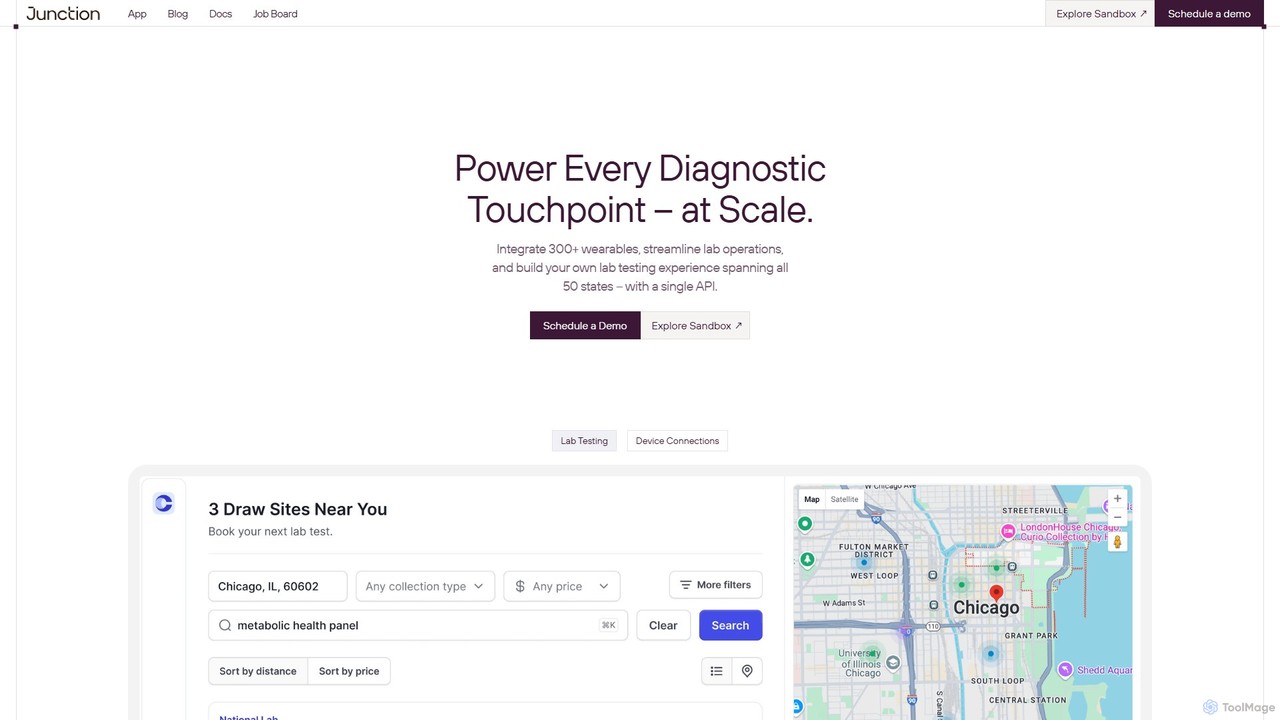
Vital offers a unified API for healthcare companies to integrate at-home lab testing and data from over 300 …

29.4K

About Api & Integration

AI APIs & Integration tools for healthcare are specialized solutions that provide programmatic access to AI models and data services tailored for the medical field. These tools function as secure bridges, enabling developers to connect disparate systems like Electronic Health Records (EHRs), medical imaging archives (PACS), and patient management software. They allow for the seamless embedding of advanced AI capabilities, such as diagnostic analysis or predictive modeling, directly into existing clinical workflows. This integration facilitates data interoperability and accelerates the development of innovative digital health applications.

Core Features

  • Medical Data Processing APIs: Provide access to AI models for analyzing unstructured clinical notes, interpreting lab results, or detecting anomalies in medical images (e.g., X-rays, MRIs).
  • EHR/EMR Integration Connectors: Offer pre-built modules for secure and efficient data exchange with major electronic health record systems like Epic, Cerner, and others.
  • Healthcare Data Standards Compliance: Ensure support for interoperability standards such as FHIR (Fast Healthcare Interoperability Resources), HL7, and DICOM for consistent data formatting.
  • HIPAA/GDPR Compliant Endpoints: Guarantee that all data transmission and processing adhere to strict patient data privacy and security regulations.

Use Cases

These tools are primarily used by healthcare software developers, hospital IT departments, clinical researchers, and digital health startups. Common applications include building AI-powered diagnostic aids that integrate with PACS, automating administrative tasks by connecting billing systems to EHRs, or developing patient-facing apps that pull data from multiple health sources.

How to Choose

When selecting a tool, prioritize regulatory compliance (HIPAA, GDPR certification). Evaluate its support for essential healthcare data standards like FHIR and DICOM. Assess the API's performance, reliability, and scalability for handling sensitive, high-volume data. Finally, review the quality of developer documentation and technical support, as healthcare integrations can be complex.

Api & IntegrationUse Cases

1

Integrating AI for Preliminary Radiology Report Generation

A hospital's IT department aims to reduce the reporting workload for radiologists. They use an integration platform to create a workflow where medical images (e.g., chest X-rays) from the PACS are automatically sent to a diagnostic AI API. The API analyzes the image and generates a preliminary report highlighting potential findings like nodules or fractures. This draft report is then pushed into the radiologist's worklist within the EHR system. The radiologist reviews, edits, and finalizes the AI-generated report, significantly reducing the initial drafting time and allowing them to focus on complex cases.

2

Automating Patient Intake with a Clinical NLP API

A digital health startup is building a new telehealth platform. To streamline patient onboarding, they integrate a healthcare-specific Natural Language Processing (NLP) API. When a new patient registers, they can describe their symptoms and medical history in free text via a chatbot. The API processes this text, automatically extracting structured data such as symptoms, medications, allergies, and past conditions. This structured information is then formatted according to the FHIR standard and used to pre-populate the patient's new electronic health record, saving significant manual data entry time for clinical staff.

3

Connecting Wearable Device Data to an EHR System

A cardiology clinic wants to monitor patients with chronic heart conditions remotely. They use an integration platform that provides APIs for both popular wearable devices and their EHR system. The platform securely pulls daily data—such as heart rate, ECG readings, and activity levels—from the patients' smartwatches. It then transforms this data into a standardized FHIR format and pushes it directly into the corresponding patient's record in the EHR. This allows clinicians to view real-time, longitudinal data within their existing workflow, enabling proactive intervention if abnormal trends are detected.

4

Streamlining Clinical Trial Data Collection

A pharmaceutical research organization is conducting a multi-site clinical trial. To ensure data consistency and efficiency, they deploy an integration solution. This solution uses APIs to connect the various data sources, including the sites' different EHR systems, lab information systems (LIS), and patient-reported outcome (PRO) apps. The platform automatically aggregates, de-identifies, and normalizes the data into a single, standardized format required for analysis. This eliminates countless hours of manual data consolidation and reduces the risk of human error, accelerating the trial's progress.

5

Powering a Predictive Analytics Dashboard for Hospital Operations

A hospital administration team wants to predict patient admission rates and resource needs. They use an integration tool to pull real-time data from multiple sources via APIs: the EHR for current patient loads, the scheduling system for upcoming surgeries, and public health feeds for local flu activity. This aggregated data is fed into a predictive AI model. The model's output—projected admission numbers and required staffing levels—is then visualized on a dashboard. This API-driven integration allows hospital managers to make proactive staffing and bed allocation decisions, optimizing resource utilization.

6

Automating Insurance Prior Authorization Requests

A large clinic spends significant administrative time on prior authorizations for procedures and medications. They implement an integration solution that connects their EHR system directly to the APIs of major insurance payers. When a physician orders a procedure requiring authorization, the system automatically pulls the necessary clinical documentation from the patient's record in the EHR. It then populates and submits the authorization request electronically via the payer's API. This API-driven automation replaces manual faxes and phone calls, drastically reducing processing times and administrative overhead.

Api & IntegrationFrequently Asked Questions