
Healthcare Best in category 1 results Clinical Intelligence AI Tool

Popular AI tools in the Clinical Intelligence field of Healthcare include lavaa, etc., helping you quickly improve efficiency.

lavaa

lavaa

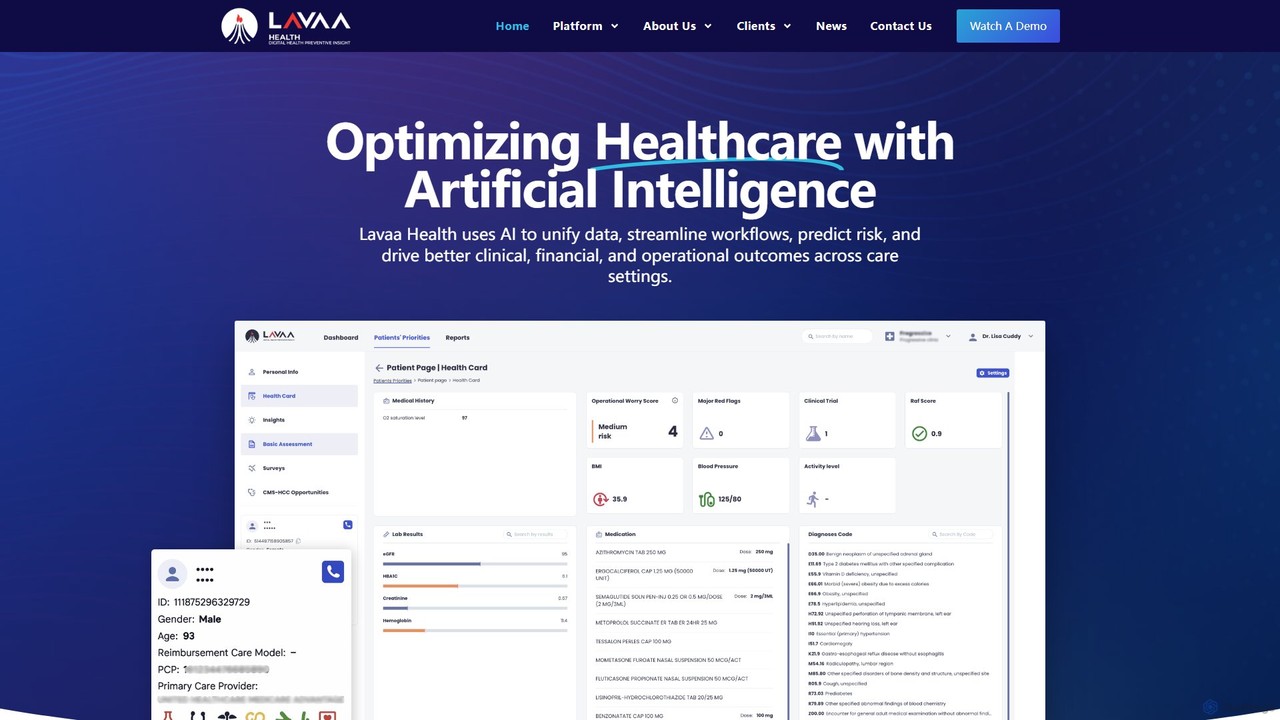
lavaa is an AI-powered clinical intelligence platform for healthcare teams. It integrates with EMR systems to predict patient …

3.3K

About Clinical Intelligence

Clinical Intelligence tools are AI-powered platforms that analyze complex health data to support clinical decision-making. They leverage machine learning and natural language processing to extract actionable insights from sources like electronic health records (EHRs), medical imaging, and genomic data. This enables healthcare providers to improve patient outcomes, optimize treatment pathways, and enhance operational efficiency in clinical settings. These systems are distinct from general healthcare analytics by focusing specifically on patient-level data to inform direct medical care.

Core Features

  • Predictive Analytics: Identifies at-risk patients, forecasts disease progression, and predicts treatment responses.
  • Real-World Evidence (RWE) Analysis: Processes unstructured data from clinical notes and reports to evaluate treatment effectiveness.
  • Clinical Trial Optimization: Automates patient cohort identification and streamlines recruitment processes for studies.
  • Decision Support Systems: Provides evidence-based recommendations for diagnosis and treatment plans at the point of care.

Use Cases

Primarily used in hospitals, pharmaceutical companies, and clinical research organizations. For example, a hospital might use it for population health management to reduce readmission rates, while a pharma company could leverage it to accelerate drug discovery and post-market surveillance.

How to Choose

Key factors include the tool's ability to integrate with existing EHR systems, its compliance with regulations like HIPAA and GDPR, the transparency and validation of its AI models, and its specialization in relevant medical fields such as oncology or cardiology.

Clinical IntelligenceUse Cases

1

Predicting Patient Readmission Risk

Hospital administrators and care managers use Clinical Intelligence platforms to proactively identify patients at high risk of readmission. The tool analyzes historical and real-time data from EHRs, including diagnoses, lab results, and previous hospitalizations. By applying predictive models, it flags high-risk individuals upon admission, allowing care teams to implement personalized discharge plans and allocate resources more effectively. This data-driven approach helps reduce costly readmissions and improve the continuity of patient care.

2

Optimizing Clinical Trial Recruitment

Clinical research coordinators at pharmaceutical companies leverage these tools to accelerate trial recruitment. The system scans millions of anonymized patient records to find individuals who match complex eligibility criteria. It uses Natural Language Processing (NLP) to understand unstructured data in doctors' notes, identifying suitable candidates far more quickly and accurately than manual searches. This significantly shortens the recruitment phase, reduces trial costs, and helps bring new therapies to market faster.

3

Personalizing Cancer Treatment Plans

Oncologists in specialized cancer centers utilize Clinical Intelligence to develop personalized treatment strategies. The tools integrate genomic data, pathology reports, and clinical history to create a comprehensive patient profile. They then compare this profile against vast databases of clinical trials and treatment guidelines. The system can suggest tailored therapies and predict a patient's likely response to different regimens, supporting a precision medicine approach.

4

Analyzing Real-World Evidence for Drug Efficacy

Health economics and outcomes research (HEOR) teams in pharmaceutical companies use Clinical Intelligence to analyze Real-World Evidence (RWE). These platforms process large-scale, anonymized data from sources like insurance claims and EHRs to understand how a drug performs in a diverse, real-world patient population. This analysis provides crucial insights into long-term effectiveness and side effects, which is essential for regulatory submissions and market access negotiations.

5

Automating Clinical Documentation and Coding

Healthcare providers and medical coders use Clinical Intelligence to streamline documentation workflows. AI-powered tools can listen to patient-doctor conversations (ambient clinical intelligence) and automatically generate structured clinical notes. They also analyze existing documentation to suggest accurate medical codes (e.g., ICD-10) for billing purposes. This reduces the administrative burden on physicians, minimizes coding errors, and allows clinicians to focus more on patient interaction.

6

Early Disease Detection from Medical Imaging

Radiologists use Clinical Intelligence tools integrated with their imaging systems (PACS) for faster and more accurate diagnoses. The AI algorithms are trained to detect subtle patterns in X-rays, CT scans, or MRIs that may indicate early signs of diseases like cancer or neurological disorders. The system can highlight suspicious areas for the radiologist's review and prioritize urgent cases. This acts as a powerful second opinion, improving diagnostic accuracy and enabling earlier intervention for patients.

Clinical IntelligenceFrequently Asked Questions