ToolMage
Sign in

Best 4 Medical Assistant for Healthcare

Popular Medical Assistant in Healthcare include CompliantChatGPT, hathr.ai, MultiAI, and AVA, helping you work more efficiently.

MultiAI
Freemium

MultiAI

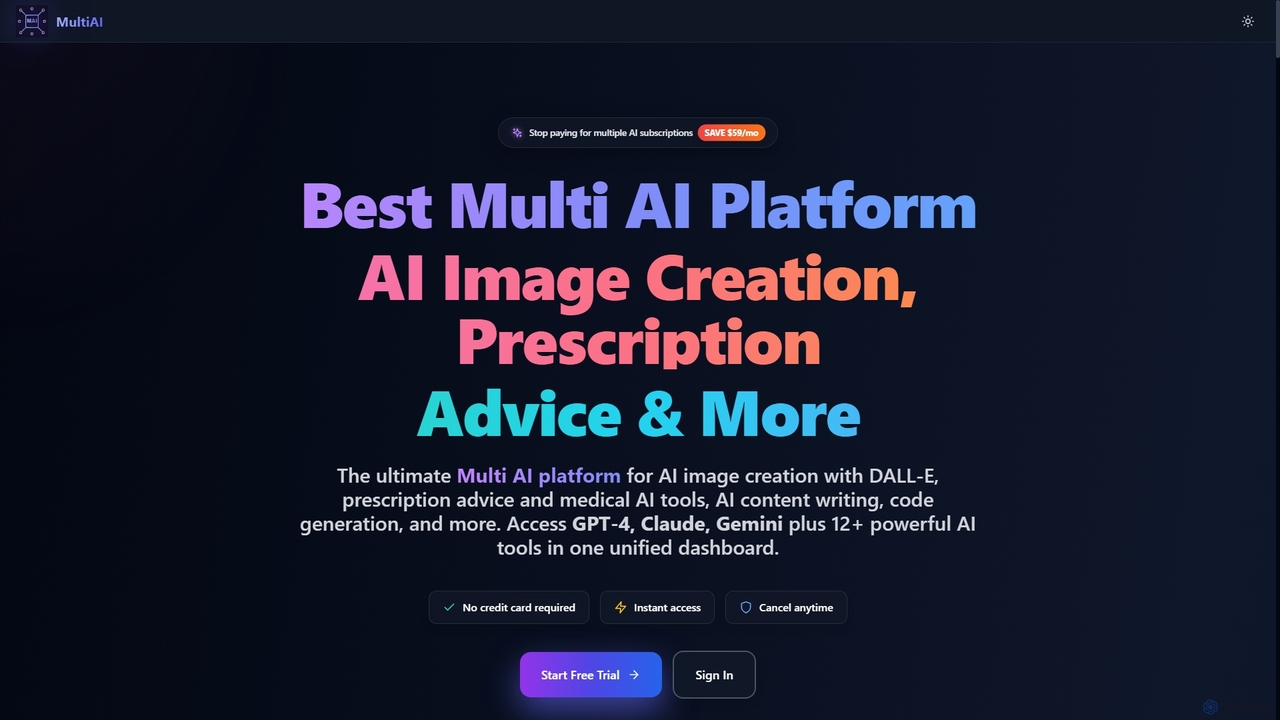
MultiAI is a comprehensive AI platform that unifies access to leading AI models like GPT-4, Claude, and Gemini, alongside 12+ specialized tools for image creation, medical advice, content writing, and code generation. It helps professionals save money and time by consolidating multiple AI subscriptions into one powerful, secure, and unlimited dashboard, enhancing productivity and creativity across various domains.

Writing Assistant
Visits 7.8KFavorites 93Likes 104
AVA

AVA

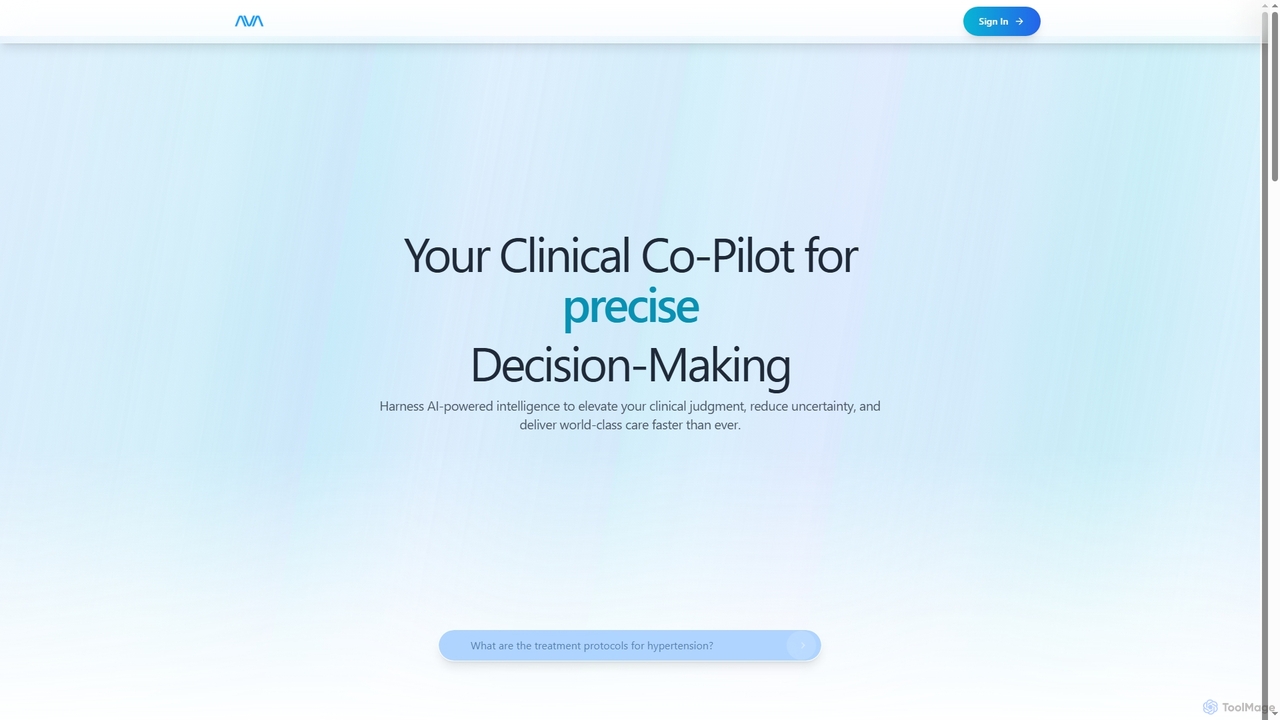
AVA is an AI-powered clinical co-pilot designed for medical professionals to enhance decision-making with intelligent, evidence-based, and precise insights. It synthesizes the latest medical literature from trusted sources, providing instant support for diagnostics, treatment protocols, and personalized patient care.

Medical Assistant
Visits 7.6KFavorites 122Likes 133
hathr.ai
Freemium

hathr.ai

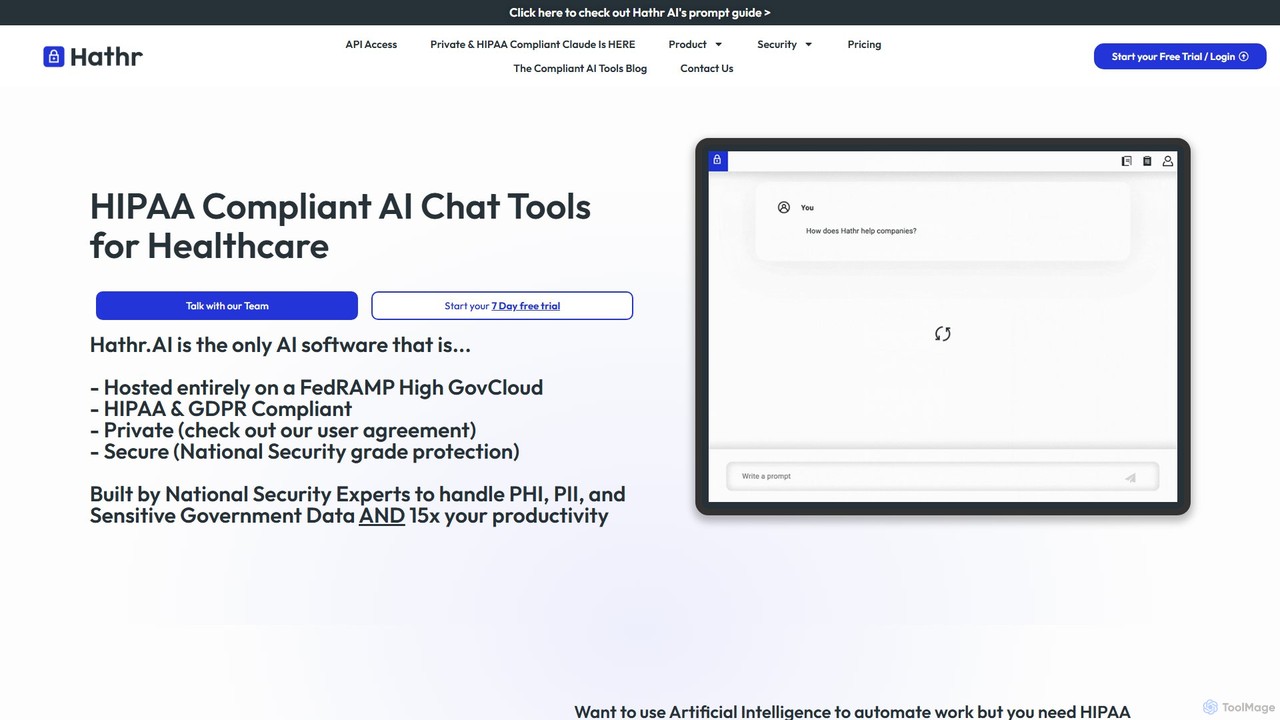
Hathr.AI provides HIPAA-compliant AI tools, powered by Claude, for healthcare and regulated industries. Hosted on AWS GovCloud (FedRAMP High), it ensures top-tier security and privacy for sensitive data like PHI and PII. The platform offers an AI chat, a developer API, and custom solutions to automate workflows such as medical record analysis, billing automation, and secure document review, boosting productivity by up to 35x while maintaining strict compliance.

Api
Visits 17.6KFavorites 94Likes 99
CompliantChatGPT
Freemium

CompliantChatGPT

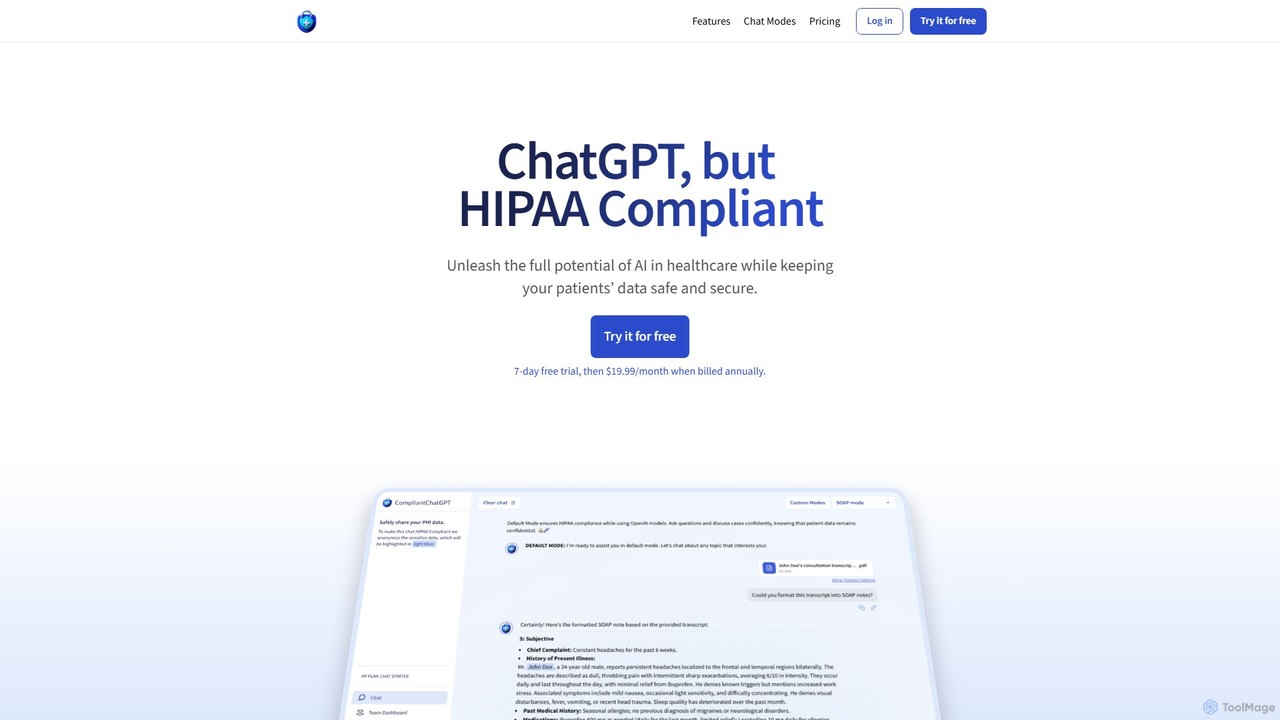
CompliantChatGPT is a HIPAA-compliant AI chat assistant designed for healthcare professionals. It leverages AI to streamline clinical workflows by securely handling tasks like generating SOAP notes, analyzing bloodwork, and creating treatment plans. By anonymizing Protected Health Information (PHI), it ensures patient data privacy and helps organizations avoid costly data breaches, enhancing both productivity and security in a clinical setting.

Medical Assistant
Visits 23KFavorites 129Likes 128

About Medical Assistant

AI Medical Assistants are specialized software tools that leverage artificial intelligence to support healthcare professionals with clinical and administrative tasks. These tools utilize technologies like Natural Language Processing (NLP) to understand patient encounters and machine learning to analyze medical data. Their primary purpose is to automate documentation, streamline workflows, and provide data-driven insights, ultimately reducing burnout and improving the quality of patient care. They act as an intelligent layer on top of existing healthcare systems, enhancing efficiency and accuracy.

Core Features

  • Automated Clinical Documentation: Automatically transcribes patient-doctor conversations into structured clinical notes (e.g., SOAP notes) directly within the EHR.
  • Diagnostic Decision Support: Analyzes medical images, lab results, and patient data to identify patterns and suggest potential diagnoses for review by a clinician.
  • Administrative Automation: Manages appointment scheduling, automates medical coding and billing, and handles patient pre-screening questionnaires.
  • Intelligent Patient Communication: Deploys AI chatbots to answer patient queries, provide post-visit instructions, and send medication reminders.

Use Cases

These tools are widely used in hospitals, private clinics, and specialized practices. Clinicians use them for real-time scribing during consultations, radiologists for preliminary image analysis, and administrative staff for optimizing patient flow and billing cycles. They are valuable in any healthcare setting aiming to reduce administrative overhead and enhance clinical decision-making.

How to Choose

When selecting an AI Medical Assistant, prioritize seamless integration with your existing Electronic Health Record (EHR) system. Verify its compliance with data privacy regulations like HIPAA. Assess the clinical accuracy and validation of its algorithms, especially for diagnostic support. Finally, consider whether the tool is designed for your specific medical specialty, such as cardiology or primary care.

Medical Assistant use cases

1

Automating Clinical Note Generation (AI Scribe)

For a primary care physician in a busy clinic, manually typing patient notes during or after consultations consumes significant time. By using an AI Medical Assistant with scribing capabilities, the physician can focus entirely on the patient conversation. The AI listens, transcribes the dialogue in real-time, and automatically structures the information into a compliant SOAP note format within the Electronic Health Record (EHR). This can save 10-15 minutes per patient encounter, allowing the physician to see more patients or reduce their administrative workload.

2

AI-Powered Preliminary Medical Image Analysis

Radiologists face an ever-increasing volume of medical images to interpret. An AI Medical Assistant specializing in radiology can act as a preliminary screening tool. It analyzes X-rays, CT scans, or MRIs and highlights potential areas of concern, such as nodules, fractures, or other anomalies. This doesn't replace the radiologist's final diagnosis but helps them prioritize cases, directing their attention to the most critical findings first. This workflow enhances diagnostic efficiency and can serve as a valuable second opinion, reducing the chance of human error.

3

Intelligent Patient Appointment Scheduling & Triage

Administrative staff at a hospital's outpatient department often spend hours on the phone scheduling appointments. An AI Medical Assistant, integrated into the hospital's website as a chatbot, can handle this process. It asks patients about their symptoms using a guided conversational flow, determines the urgency and the right specialist, and then checks the doctor's availability in the EHR to book an appointment. This automates routine scheduling, reduces phone call volume by up to 40%, and ensures patients are directed to the appropriate care pathway from the first point of contact.

4

Streamlining Medical Billing and Coding

Medical coding specialists in a healthcare provider's billing department must accurately translate diagnoses and procedures into standardized codes (like ICD-10). This is often a manual and error-prone process. An AI Medical Assistant can analyze a clinician's notes and patient records to automatically suggest the most accurate and specific billing codes. This reduces manual work, minimizes coding errors that lead to claim denials, and helps accelerate the revenue cycle for the healthcare organization by ensuring faster, more accurate claim submissions.

5

Personalized Patient Follow-up and Education

Care managers are responsible for ensuring patients adhere to their treatment plans after being discharged. An AI Medical Assistant can automate this process by sending personalized follow-up messages. Based on the patient's diagnosis in the EHR, it can send reminders to take medication, schedule follow-up appointments, and provide links to educational materials about their condition. It can also use NLP to analyze patient responses and flag any concerning messages (e.g., reports of severe side effects) for immediate review by a human nurse, ensuring timely intervention.

6

Assisting in Clinical Trial Matching

For researchers at a major cancer center, finding eligible patients for clinical trials is a complex and time-consuming manual process of reviewing patient records. An AI Medical Assistant can scan thousands of unstructured EHR records, including physician notes and lab reports. It uses NLP to understand the context and extract key data points, then compares this information against the complex eligibility criteria of multiple ongoing trials. This automates the initial screening, identifying a pool of potentially suitable candidates in hours instead of weeks, thereby accelerating medical research and access to novel treatments.

Medical Assistant FAQ

What is an AI Medical Assistant?

An AI Medical Assistant is a software application that uses artificial intelligence, particularly machine learning and natural language processing, to help healthcare professionals with their daily tasks. It is not a physical robot but a digital tool designed to reduce administrative burdens and support clinical decision-making. Key functions include automating clinical documentation, scheduling appointments, assisting with medical coding, and providing preliminary analysis of medical data for review by a human expert.

How do I choose the right AI Medical Assistant?

Choosing the right tool involves several key considerations. First, ensure it integrates seamlessly with your existing Electronic Health Record (EHR) system. Second, verify its compliance with data privacy regulations like HIPAA. Third, assess its accuracy and reliability, looking for clinical studies or peer-reviewed validation. Finally, select a tool that is specialized for your medical field (e.g., radiology, dermatology, primary care) to ensure it meets the specific needs of your workflow.

What's the difference between an AI Medical Assistant and a standard EHR system?

A standard Electronic Health Record (EHR) system is primarily a digital database for storing and retrieving patient information. It acts as a system of record. An AI Medical Assistant, in contrast, is an active, intelligent layer that works with the EHR. It doesn't just store data; it processes it to automate tasks (like writing notes into the EHR), analyzes it to provide insights (like suggesting a diagnosis), and interacts with users to streamline workflows. In short, an EHR stores information, while an AI assistant acts on that information.

Can AI Medical Assistants replace doctors or nurses?

No, AI Medical Assistants are designed to augment, not replace, healthcare professionals. They excel at handling repetitive, data-intensive tasks, which frees up clinicians to focus on what humans do best: complex critical thinking, patient empathy, and hands-on care. The goal is a human-AI collaboration where the technology acts as a powerful tool to enhance the capabilities of doctors and nurses, leading to better efficiency and improved patient outcomes.

Is my patient data safe with an AI Medical Assistant?

Data security is a top priority for reputable AI Medical Assistant providers. These tools must comply with strict healthcare data regulations, such as the Health Insurance Portability and Accountability Act (HIPAA) in the United States. This involves using robust security measures like end-to-end encryption, secure cloud storage, and strict access controls to protect sensitive patient health information (PHI). Before adopting any tool, always verify its compliance certifications and data security protocols.