Education Best in category 1 results Medical Reference AI Tool

Popular AI tools in the Medical Reference field of Education include Glass, etc., helping you quickly improve efficiency.

Glass

Glass

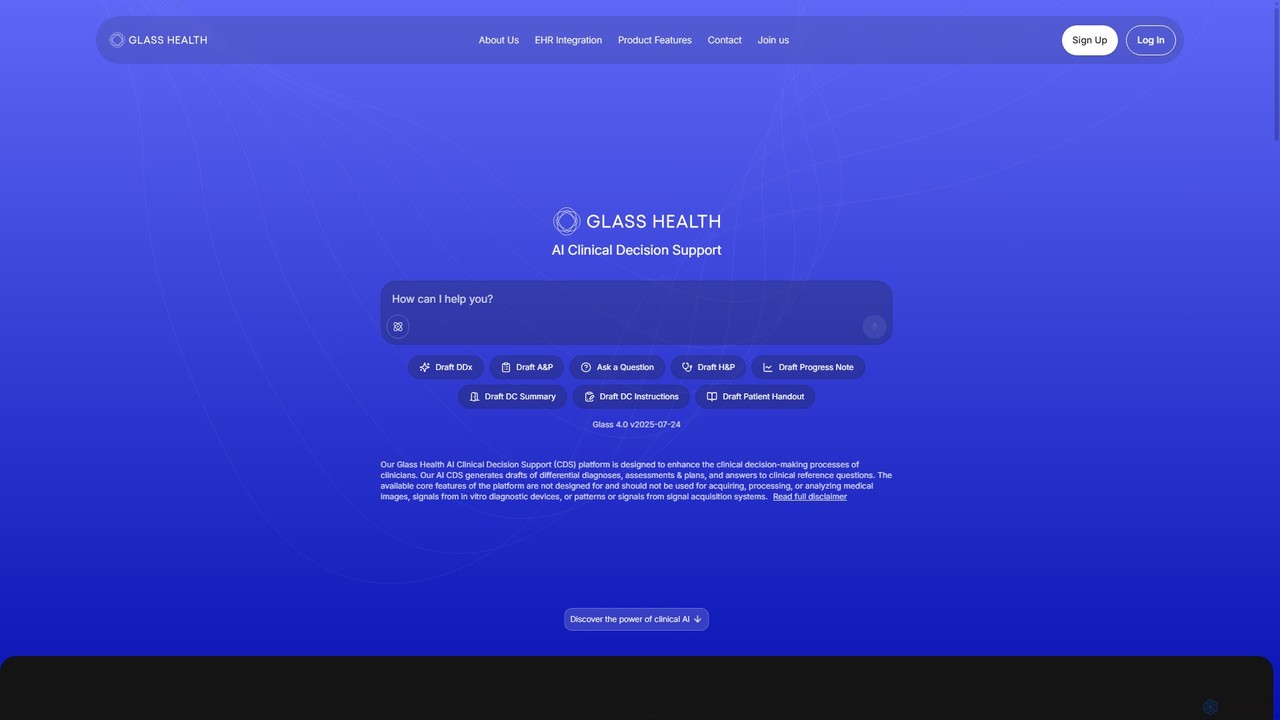
Glass is an AI-powered clinical decision support (CDS) platform designed by clinicians for clinicians. It assists medical professionals …

98.5K

About Medical Reference

AI Medical Reference tools are specialized platforms that use artificial intelligence to provide fast, evidence-based medical information. These tools analyze vast datasets of peer-reviewed journals, clinical guidelines, and medical textbooks to deliver synthesized answers and data insights. They are designed to support healthcare professionals and students in clinical decision-making, continuous learning, and research. By structuring complex medical knowledge, these tools significantly reduce the time needed to find critical information.

Core Features

  • Symptom Analysis: Input patient symptoms to receive a list of potential differential diagnoses based on clinical data.
  • Drug Information & Interaction Checking: Access detailed drug monographs and instantly check for potential adverse interactions between multiple medications.
  • Evidence-Based Literature Search: Rapidly search and summarize relevant articles, clinical trials, and case studies from medical databases like PubMed.
  • Clinical Guideline Access: Provides up-to-date, digestible summaries of practice guidelines from leading medical organizations.
  • Medical Terminology Clarification: Offers clear definitions and explanations of complex medical terms, conditions, and procedures.

Applicable Scenarios

These tools are integral for healthcare professionals such as doctors, nurses, and pharmacists for point-of-care decision support. Medical students and researchers also use them extensively for study, literature reviews, and staying current with the latest medical advancements. They are applied in clinical settings, academic institutions, and pharmaceutical research.

Selection Criteria

When choosing an AI Medical Reference tool, consider the credibility and citation of its data sources. Evaluate the frequency of updates to ensure the information is current. Assess its user interface for speed and ease of use in a time-sensitive environment. For clinical use, verify if the tool has any relevant regulatory clearances or certifications in your region.

Medical ReferenceUse Cases

1

Clinical Decision Support at Point-of-Care

A general practitioner encounters a patient with a complex set of symptoms not fitting a common diagnosis. Using an AI Medical Reference tool on a tablet, the doctor inputs the symptoms, patient's age, and relevant medical history. Within seconds, the tool provides a ranked list of potential differential diagnoses, including rare conditions, along with links to supporting evidence and recommended next steps for testing. This accelerates the diagnostic process and enhances clinical confidence.

2

Medical Student Case Study Preparation

A medical student is preparing for an exam on endocrinology. They use an AI reference tool to explore a virtual patient case of Cushing's syndrome. The student can ask the AI specific questions like 'What are the first-line treatments for this condition?' or 'Summarize the pathophysiology.' The tool provides concise, sourced answers, helping the student to quickly grasp complex concepts and reinforce their learning in an interactive way, far more efficiently than sifting through textbooks.

3

Pharmacist Verifying Drug Interactions

A pharmacist receives a prescription for a new medication for an elderly patient who is already on five other drugs. Before dispensing, the pharmacist inputs the patient's complete medication list into an AI reference tool's interaction checker. The system immediately flags a potentially severe interaction between the new drug and an existing one, providing details on the mechanism and suggesting safer alternatives. This proactive check prevents a potential adverse drug event.

4

Accelerating Medical Literature Reviews

A researcher is conducting a systematic review on new treatments for diabetes. Instead of manually screening thousands of articles from PubMed, they use an AI tool. They input their search criteria, and the AI not only retrieves the most relevant papers but also summarizes their abstracts, methodologies, and key findings into a structured table. This allows the researcher to quickly identify the handful of studies that meet their inclusion criteria, reducing the initial screening time by over 80%.

5

Generating Simplified Patient Education Materials

A nurse practitioner needs to explain a complex condition like Crohn's disease to a newly diagnosed patient. They use an AI medical reference tool to generate a patient-friendly summary. The tool transforms technical medical jargon into simple, easy-to-understand language, outlining what the disease is, common symptoms, and treatment options. This provides the patient with a reliable, clear, and easy-to-read document to take home, improving their health literacy and adherence to treatment.

6

Developing Continuing Medical Education (CME) Content

A medical educator is tasked with creating a new CME module on advancements in cardiology. They use an AI reference tool to quickly identify and summarize the landmark clinical trials and updated practice guidelines from the past year. The tool helps structure the presentation by highlighting key takeaways and generating citations in the required format. This allows the educator to focus on creating engaging learning materials rather than spending excessive time on foundational research, ensuring the content is both current and accurate.

Medical ReferenceFrequently Asked Questions