Healthcare Best in category 2 results Documentation AI Tool

Popular AI tools in the Documentation field of Healthcare include Everbility、SOAPNoteAI, etc., helping you quickly improve efficiency.

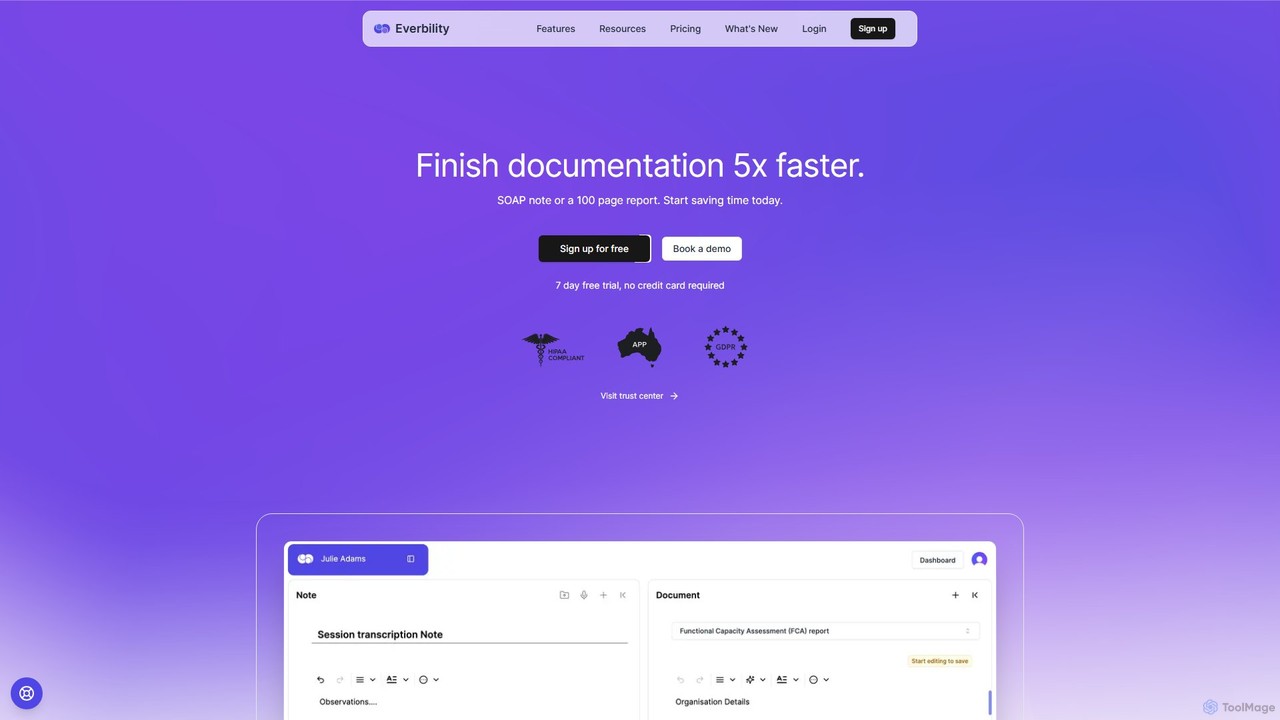
Everbility

Everbility

Everbility is an AI-powered documentation assistant designed for allied health professionals like occupational therapists, physiotherapists, and speech pathologists. …

38.5K
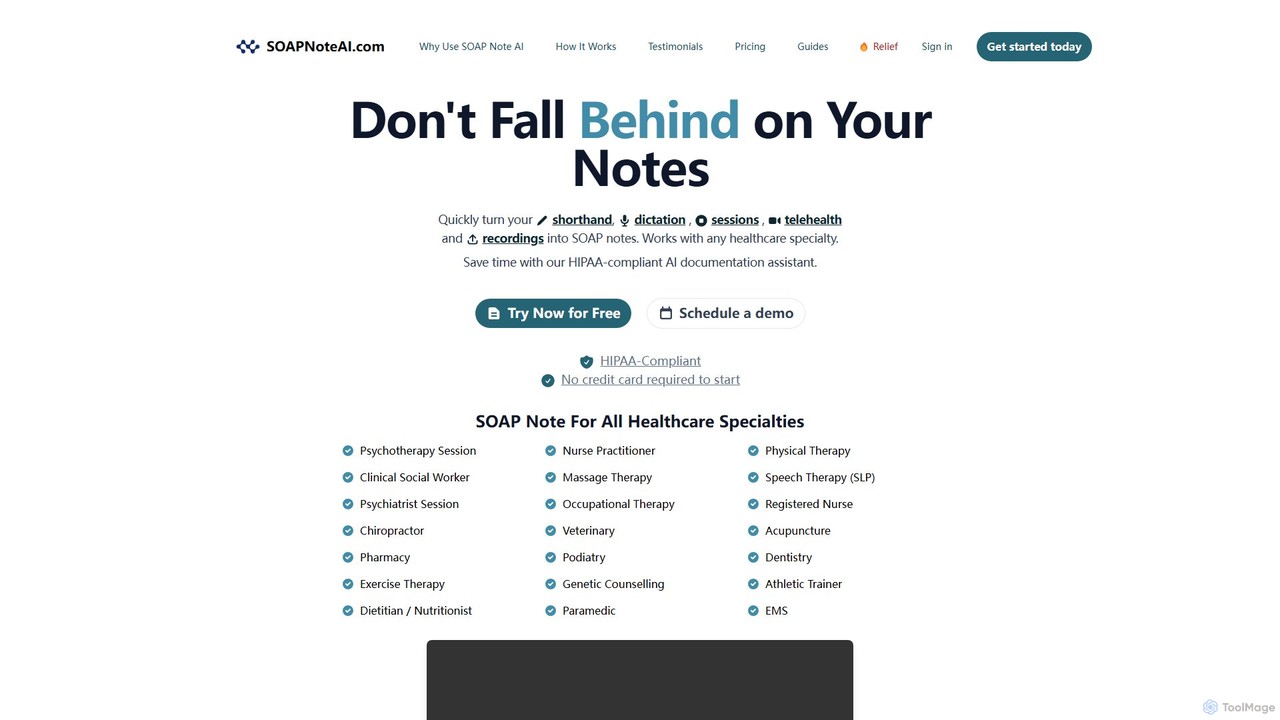
SOAPNoteAI

SOAPNoteAI

A HIPAA-compliant AI assistant for healthcare professionals that quickly generates detailed SOAP notes from shorthand, dictation, or session …

18.3K

About Documentation

AI Documentation tools in healthcare are specialized AI-powered solutions designed to streamline the creation, management, and optimization of medical records and clinical notes. Leveraging advanced Natural Language Processing (NLP) and speech-to-text technologies, these tools convert spoken or unstructured data into structured, accurate, and compliant documentation. Their primary value lies in reducing the administrative burden on healthcare professionals, enhancing data accuracy, and ensuring regulatory adherence, ultimately allowing more focus on patient care.

Core Features

  • Automated Clinical Note Generation: Converts physician dictation or patient interactions into structured, comprehensive clinical notes.
  • Smart Data Extraction: Identifies and extracts key medical information, such as diagnoses, treatments, and medications, from various text sources.
  • Compliance & Quality Assurance: Flags potential documentation errors, inconsistencies, or non-compliance with healthcare regulations like HIPAA.
  • Report & Summary Generation: Automatically compiles patient histories, discharge summaries, or research reports from disparate data points.
  • Medical Terminology Recognition: Accurately understands and processes complex medical jargon and abbreviations.

Applicable Scenarios

These tools are invaluable for physicians, nurses, and other clinical staff who spend significant time on documentation, enabling them to capture patient encounters efficiently. Medical coders and billers also benefit from automated data extraction, ensuring accuracy and accelerating billing cycles. Additionally, healthcare researchers can leverage these tools to quickly aggregate and analyze data from vast amounts of medical literature and patient records.

How to Choose

When selecting AI Documentation tools, prioritize solutions with high accuracy in speech recognition and NLP, especially for medical terminology. Ensure seamless integration with existing Electronic Health Record (EHR) or Electronic Medical Record (EMR) systems to avoid workflow disruptions. Robust data security and compliance features (e.g., HIPAA, GDPR) are non-negotiable. Finally, consider the tool's customization options to adapt to specific medical specialties or departmental needs, and evaluate its ability to provide actionable insights from documented data.

DocumentationUse Cases

1

Automated Clinical Note-Taking during Consultations

A physician uses an AI documentation tool to dictate patient encounters directly into the system during a consultation. The AI transcribes the speech, identifies key medical terms, and structures the information into a comprehensive clinical note, including diagnoses, treatments, and follow-up plans. This reduces manual typing, saves significant time, and ensures accurate, real-time record-keeping, allowing the doctor to maintain eye contact and focus more on the patient.

2

Streamlined Discharge Summary Creation

Hospital staff can leverage AI documentation tools to quickly generate comprehensive discharge summaries for patients. The AI automatically pulls relevant information from the patient's electronic health record, such as admission details, diagnoses, treatments received, medications prescribed, and follow-up instructions. This automation ensures all critical information is included, reduces the risk of human error, and significantly speeds up the discharge process, improving patient flow and administrative efficiency.

3

AI-Powered Medical Coding Assistance

Medical coders utilize AI documentation tools to enhance the accuracy and speed of coding patient records for billing and insurance purposes. The AI scans clinical notes, lab results, and other documentation to identify relevant diagnoses, procedures, and services, suggesting appropriate ICD-10 or CPT codes. This significantly reduces the time spent on manual coding, minimizes coding errors that can lead to claim denials, and ensures proper reimbursement for healthcare providers, improving revenue cycle management.

4

Extracting Research Data from Medical Literature

Medical researchers employ AI documentation tools to efficiently extract specific data points from vast amounts of scientific literature, clinical trial reports, and patient studies. The AI can quickly identify and compile information on drug efficacy, patient demographics, treatment outcomes, or adverse events across thousands of documents. This capability dramatically accelerates literature reviews, meta-analyses, and the identification of trends, enabling researchers to conduct studies more rapidly and make data-driven discoveries.

5

Generating Patient Education Materials

Healthcare providers can use AI documentation tools to transform complex medical information from patient records or clinical guidelines into easy-to-understand patient education materials. The AI can summarize diagnoses, treatment plans, medication instructions, and lifestyle recommendations into simplified language, often with visual aids or bullet points. This improves patient comprehension and adherence to treatment, reduces the burden on staff to explain complex concepts repeatedly, and enhances overall patient engagement and satisfaction.

6

Compliance Audit Support and Gap Identification

Healthcare organizations utilize AI documentation tools to support compliance audits and proactively identify potential gaps in their medical records. The AI can analyze large volumes of documentation to check for adherence to regulatory standards (e.g., HIPAA, Joint Commission guidelines), identify missing information, or flag inconsistencies that could lead to non-compliance issues. This helps ensure that all documentation meets legal and quality requirements, reducing audit risks and improving overall data governance and patient safety.

DocumentationFrequently Asked Questions