Health Best in category 1 results Medical Simulation AI Tool

Popular AI tools in the Medical Simulation field of Health include Hairgen.ai, etc., helping you quickly improve efficiency.

Hairgen.ai

Hairgen.ai

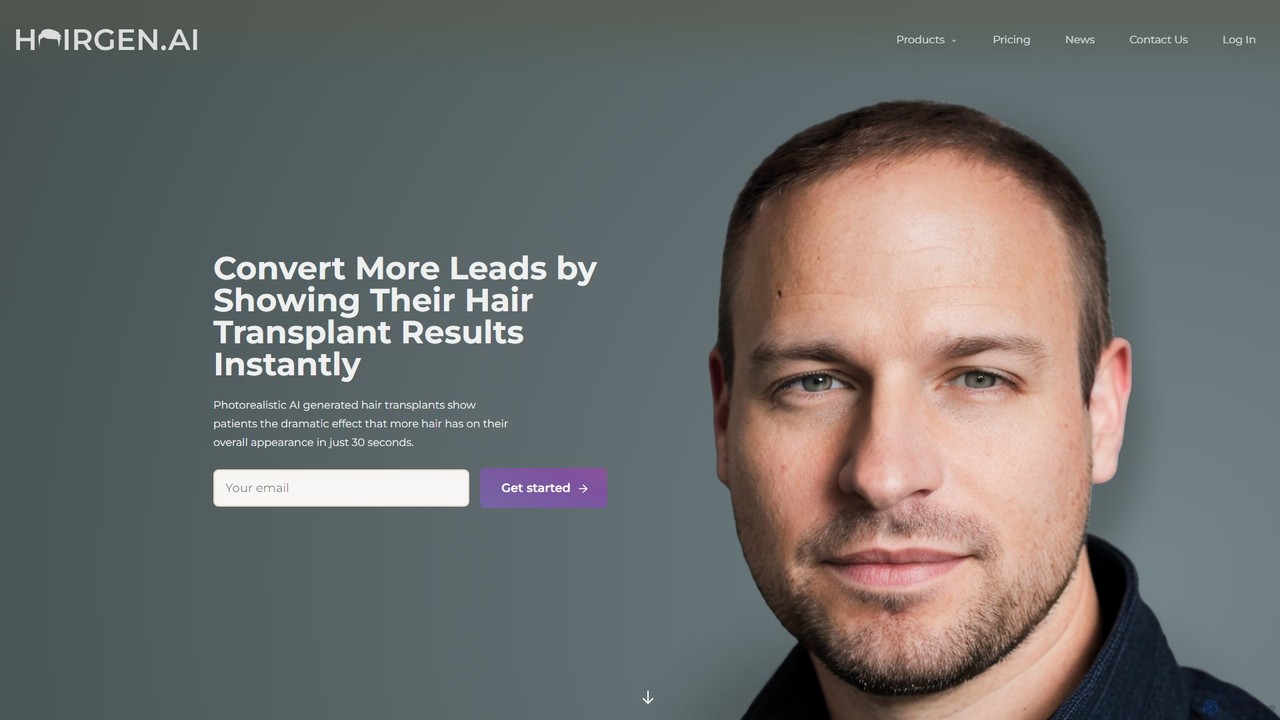
Hairgen.ai is an AI-powered platform for hair transplant clinics and individuals. It generates photorealistic previews of hair transplant …

4.8K

About Medical Simulation

AI Medical Simulation tools are a specialized category within Health AI that create virtual, interactive environments for medical training, research, and planning. These platforms use advanced algorithms, 3D modeling, and often virtual reality (VR) to replicate human anatomy, physiological responses, and complex clinical scenarios. This allows healthcare professionals and students to practice procedures, develop diagnostic skills, and test treatment protocols in a completely risk-free setting. The key value lies in providing repeatable, standardized, and measurable training experiences that are difficult to achieve with traditional methods.

Core Features

  • High-Fidelity Anatomical Models: Provides detailed and interactive 3D models of human organs, tissues, and systems for realistic practice.
  • Physiological Response Simulation: Dynamically models patient vitals like heart rate, blood pressure, and respiration in response to user actions.
  • Procedural Task Training: Offers step-by-step guidance and haptic feedback for specific medical procedures, from injections to complex surgeries.
  • Scenario Generation: Creates a wide range of clinical cases, including rare diseases and emergency situations, for comprehensive training.
  • Performance Analytics: Tracks user actions, measures accuracy, and provides detailed feedback to identify areas for improvement.

Use Cases

These tools are primarily used in medical schools, teaching hospitals, and research institutions. Surgeons use them to rehearse complex operations, medical students practice clinical decision-making, and emergency response teams drill for mass casualty incidents. Pharmaceutical companies also leverage simulation to model drug interactions and predict patient outcomes in virtual trials.

How to Choose

When selecting an AI Medical Simulation tool, consider the level of clinical fidelity and realism required for your training needs. Evaluate the range of available specialties and procedures. Assess hardware requirements, such as compatibility with VR headsets or haptic devices. Finally, examine the platform's performance tracking and analytics capabilities to ensure it supports your learning objectives.

Medical SimulationUse Cases

1

Surgical Procedure Rehearsal

A neurosurgery resident preparing for a complex tumor removal uses a VR-based medical simulation tool. They can load the patient's actual MRI/CT scans to create a patient-specific 3D model. In the virtual environment, the resident practices the surgical approach, navigates around critical blood vessels, and uses haptic feedback controllers to simulate the feel of surgical instruments. This allows them to rehearse the procedure multiple times, identify potential challenges, and build muscle memory, significantly increasing their confidence and preparedness before entering the actual operating room.

2

Emergency Response Team Training

An emergency medical services (EMS) team uses an AI simulation platform to train for a mass casualty incident, like a multi-car pile-up. The AI generates a dynamic scenario with multiple virtual patients, each with unique injuries and deteriorating vital signs. Team members must collaborate to perform triage, administer initial treatment, and coordinate transport. The AI adjusts patient outcomes in real-time based on the team's decisions and response times, providing a high-pressure, realistic training environment to improve communication and decision-making skills under stress.

3

Practicing Clinical Diagnosis Skills

A medical student interacts with an AI-powered virtual patient to hone their diagnostic skills. The student can ask questions in natural language, and the AI patient responds with a detailed medical history, symptoms, and emotional cues. The student can then order virtual lab tests and imaging scans, interpret the results, and formulate a diagnosis. The platform provides immediate feedback on their questioning technique, the appropriateness of the tests ordered, and the accuracy of their diagnosis, allowing for safe and iterative learning of the complex clinical reasoning process.

4

Medical Device Prototyping and Testing

A team of biomedical engineers is developing a new type of artificial heart valve. Instead of relying solely on animal testing, they use an advanced medical simulation tool that models the human cardiovascular system. They can insert their virtual valve prototype into a simulated heart, subjecting it to millions of cardiac cycles under various physiological conditions (e.g., high blood pressure, increased heart rate). This allows them to rapidly iterate on the design, test for material fatigue, and optimize blood flow dynamics before building a physical prototype, saving significant time and resources.

5

Virtual Drug Trial Simulation

A pharmaceutical research team uses an AI simulation platform to conduct an 'in silico' trial for a new hypertension drug. The platform contains a library of diverse virtual patients, each with unique genetics, comorbidities, and lifestyles. The researchers administer the virtual drug to this population and observe its effects on blood pressure, potential side effects, and interactions with other medications. This allows them to refine dosage, identify patient subgroups who might benefit most, and predict potential adverse events before committing to expensive and lengthy human clinical trials.

6

Patient Communication Skills Training

A junior doctor uses a simulation tool featuring an AI-driven avatar to practice delivering difficult news, such as a cancer diagnosis. The AI avatar can exhibit a range of emotions—from confusion and denial to anger and sadness—based on the doctor's word choice and tone. The system analyzes the conversation, providing feedback on the doctor's empathy, clarity of explanation, and ability to address patient concerns. This provides a safe space to develop crucial 'soft skills' that are vital for patient care but difficult to teach in a traditional classroom setting.

Medical SimulationFrequently Asked Questions