Gaize
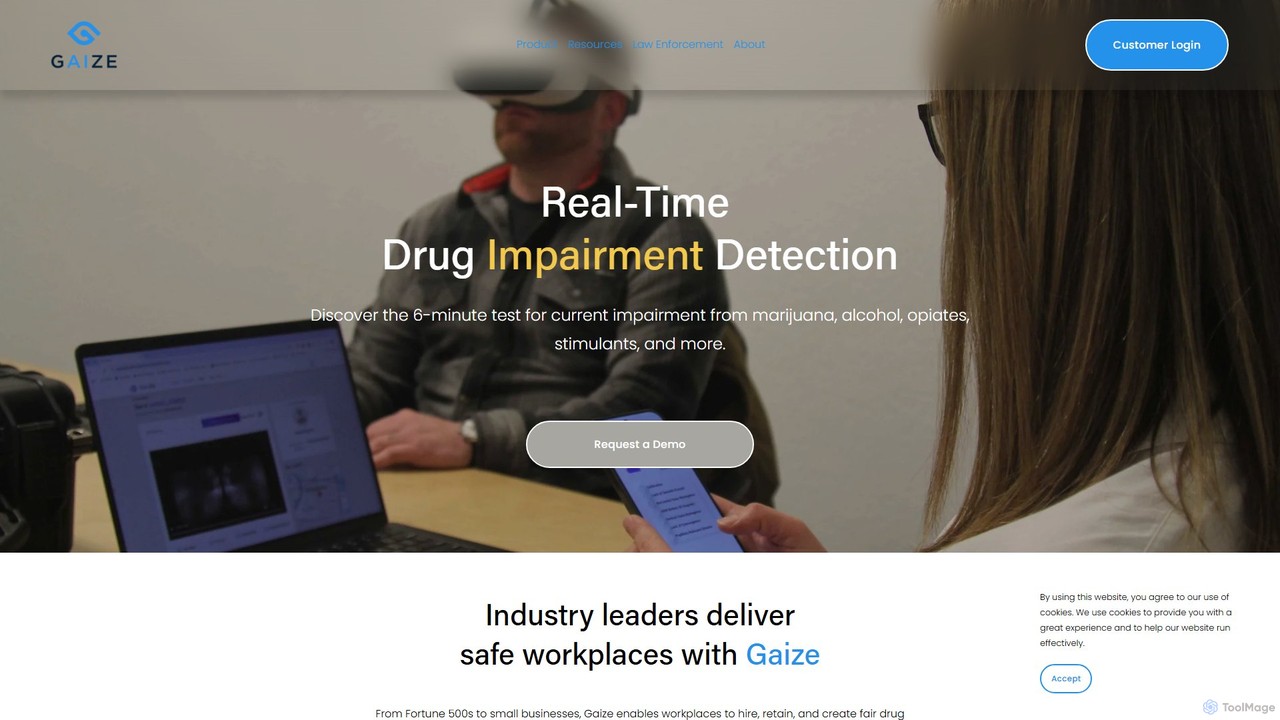
Gaize is an AI-powered impairment detection platform designed for workplace safety. It uses a rapid, 6-minute automated eye …
Gaize is an AI-powered impairment detection platform designed for workplace safety. It uses a rapid, 6-minute automated eye test to accurately detect real-time impairment from cannabis, alcohol, opiates, and other substances. The system provides objective, legally defensible evidence without requiring bodily fluids, helping companies maintain safety, implement fair drug policies, and retain valuable employees.
About Risk Management
Risk Management AI tools are advanced software solutions that leverage artificial intelligence to identify, assess, monitor, and mitigate potential risks across various organizational functions. These tools utilize machine learning, predictive analytics, and natural language processing to analyze vast datasets, uncover hidden patterns, and forecast future threats with greater accuracy and speed than traditional methods. They empower organizations to proactively address financial, operational, cybersecurity, and compliance risks, enhancing resilience and supporting data-driven strategic decision-making.
Core Features
- Automated Risk Identification: Scans diverse data sources (e.g., financial transactions, network logs, market data) to detect anomalies and emerging risk indicators.
- Predictive Risk Analytics: Forecasts the likelihood and potential impact of future risks based on historical data, real-time trends, and complex algorithms.
- Compliance Monitoring & Reporting: Continuously tracks regulatory changes, assesses adherence to policies, and generates automated compliance reports.
- Threat Intelligence Integration: Incorporates external threat feeds and geopolitical data to provide a comprehensive view of the risk landscape.
- Mitigation Strategy Recommendation: Suggests optimal risk response strategies and helps automate the implementation of mitigation controls.
Use Cases
These tools are crucial for sectors like finance for fraud detection, manufacturing for supply chain resilience, and cybersecurity for proactive threat analysis. They enable organizations to move from reactive problem-solving to proactive risk prevention, safeguarding assets and ensuring business continuity. From identifying subtle market shifts to flagging potential data breaches, AI risk management provides critical insights for informed action.
How to Choose
When selecting an AI Risk Management solution, consider its data integration capabilities with existing systems, scalability to handle growing data volumes, and the level of customization offered for specific risk models. Evaluate its regulatory compliance support, the clarity of its reporting and visualization features, and the user-friendliness of its interface. Prioritize solutions that offer robust security and transparent AI models for explainability.
Risk ManagementUse Cases
Cybersecurity Threat Prediction & Prevention
Cybersecurity analysts use AI Risk Management tools to proactively identify potential vulnerabilities and predict attack vectors. By analyzing network traffic, user behavior, and threat intelligence feeds, the AI can detect anomalous activities, prioritize critical alerts, and recommend preventative measures before a breach occurs, significantly reducing response times and potential damage.
Financial Fraud Detection & Anti-Money Laundering (AML)
Financial institutions deploy AI tools to monitor millions of transactions in real-time, identifying patterns indicative of fraud or money laundering. The AI learns from historical fraudulent activities, flags suspicious transactions that deviate from normal behavior, and provides risk scores, enabling compliance teams to investigate high-risk cases efficiently and prevent financial losses.
Operational Risk Assessment in Manufacturing
Manufacturing companies leverage AI to predict equipment failures, supply chain disruptions, or quality control issues. By analyzing sensor data, production logs, and supplier performance, AI can forecast potential operational bottlenecks, recommend maintenance schedules, or suggest alternative suppliers, ensuring smoother operations and minimizing downtime.
Regulatory Compliance & Governance Automation
Legal and compliance departments utilize AI Risk Management tools to continuously monitor changes in regulations (e.g., GDPR, HIPAA) and assess the organization's adherence. The AI can automatically scan internal policies and documents, identify areas of non-compliance, and generate audit-ready reports, significantly reducing manual effort and ensuring legal conformity.
Strategic Business Risk Forecasting
Executive leadership and strategic planning teams use AI to analyze macroeconomic indicators, market trends, competitor activities, and geopolitical events. The AI provides predictive insights into potential strategic risks (e.g., market downturns, new competitive threats), helping decision-makers adjust business strategies, diversify investments, and seize new opportunities.
Project Portfolio Risk Management
Project managers and portfolio leaders employ AI tools to assess and manage risks across multiple projects. By analyzing project data (timelines, budgets, resource allocation, historical performance), the AI can identify potential delays, cost overruns, or resource conflicts, providing early warnings and recommending corrective actions to keep projects on track and within budget.