Healthcare Best in category 1 results Data Anonymization AI Tool

Popular AI tools in the Data Anonymization field of Healthcare include deid, etc., helping you quickly improve efficiency.

deid

deid

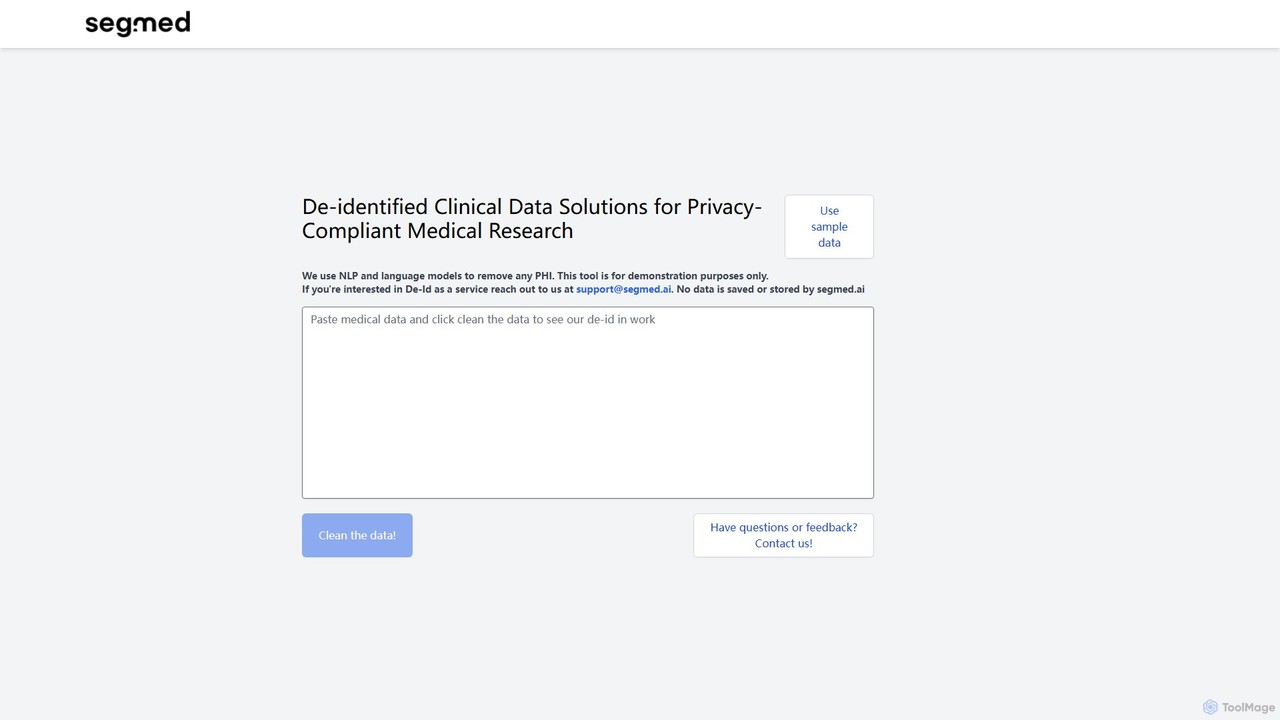
An AI-powered tool by Segmed for the de-identification of medical data. It uses NLP and language models to …

3.0K

About Data Anonymization

Data Anonymization tools are a class of AI-powered software designed to automatically identify and remove or mask personally identifiable information (PII) from datasets, particularly within the healthcare sector. These tools utilize advanced techniques like Named Entity Recognition (NER), generalization, and perturbation to transform sensitive data into a non-identifiable format. This process is crucial for enabling medical research, public health analysis, and AI model training while strictly adhering to privacy regulations like HIPAA and GDPR. AI-driven anonymization excels at handling unstructured data, such as clinical notes or medical reports, ensuring comprehensive privacy protection.

Core Features

  • Automated PII Detection: Employs Natural Language Processing (NLP) to automatically find and flag sensitive information like names, addresses, and medical record numbers in structured and unstructured text.
  • De-identification Techniques: Offers a range of methods including masking, pseudonymization, generalization, and suppression to remove identifiers while preserving data utility.
  • Re-identification Risk Analysis: Assesses the anonymized dataset to calculate and report on the statistical risk of re-identifying individuals, ensuring compliance with standards like k-anonymity.
  • Support for Healthcare Data Formats: Natively processes specific medical formats, such as DICOM for imaging and HL7 for electronic health records (EHRs).
  • Auditable Compliance Reporting: Generates detailed logs and reports that document the anonymization process, providing an audit trail for regulatory compliance.

Use Cases

These tools are essential for healthcare organizations, pharmaceutical companies, and medical research institutions. They are used to prepare clinical trial data for public sharing, create privacy-compliant datasets for training diagnostic AI models, and enable epidemiological studies using large-scale patient data without compromising confidentiality.

How to Choose

When selecting a Data Anonymization tool for healthcare, consider its compliance certifications (e.g., HIPAA, GDPR). Evaluate its ability to handle diverse medical data types, including unstructured text and DICOM images. Assess the sophistication of its de-identification methods and the configurability of its risk models. Finally, check its integration capabilities with existing EHR systems, data warehouses, and analytics platforms.

Data AnonymizationUse Cases

1

Preparing Clinical Trial Data for Publication

A pharmaceutical research team needs to share data from a multi-center clinical trial with academic partners for secondary analysis. To comply with privacy regulations and protect patient confidentiality, they use a data anonymization tool. The tool automatically scans patient records, clinical notes, and lab results to redact over 18 types of PII as defined by HIPAA's Safe Harbor method. It replaces direct identifiers with pseudonyms and generalizes quasi-identifiers like dates of birth into age ranges, effectively minimizing re-identification risk while preserving the dataset's statistical integrity for research.

2

Creating Datasets for Medical AI Model Training

An AI healthcare startup is developing a diagnostic algorithm using medical images. They need a large, diverse dataset from multiple hospitals but are prohibited from using raw patient data. They deploy a data anonymization tool that specifically handles DICOM files. The tool automatically scrubs all patient metadata from the file headers (name, patient ID, etc.) and uses pixel-level blurring to obscure any identifying information potentially burned into the images themselves, such as tattoos or text overlays. This creates a privacy-safe, large-scale dataset suitable for training and validating their machine learning model without legal or ethical risks.

3

Enabling Public Health Research and Epidemiology

A national public health agency needs to analyze electronic health records (EHRs) from across the country to track the spread of an infectious disease. To do this ethically, they use a data anonymization platform to process incoming data streams from various healthcare providers. The tool standardizes and de-identifies the data in real-time, removing patient names, addresses, and other direct identifiers while retaining crucial clinical information like symptoms, diagnosis codes, and treatment dates. This allows epidemiologists to perform large-scale population health analysis and build predictive models safely, contributing to public health policy without violating the privacy of millions of citizens.

4

Securing Internal Analytics and Quality Improvement

A hospital's quality improvement team wants to analyze patient outcomes to identify areas for improvement in care protocols. However, providing direct access to patient records poses an internal security risk. They create a de-identified data warehouse by processing all EHR data through an anonymization tool. The tool consistently replaces patient IDs with untraceable pseudonyms, allowing the team to track patient journeys over time without knowing their actual identities. This enables robust internal analysis and reporting, fostering data-driven decisions to enhance patient care while minimizing the risk of internal data misuse or breaches.

5

Sharing Genomic Data for Collaborative Research

A consortium of research institutions is conducting a large-scale genomic study that requires pooling genetic data with associated clinical information. To facilitate this collaboration securely, each institution uses a data anonymization tool before contributing data to the central repository. The tool applies advanced pseudonymization to patient identifiers and employs generalization techniques on demographic data like location (e.g., converting zip codes to larger regional areas). This process severs the link between the genomic sequence and the individual's identity, enabling powerful, collaborative research into genetic diseases while upholding the highest standards of participant privacy.

6

De-identifying Unstructured Clinical Notes for NLP Research

A university research group specializing in Natural Language Processing (NLP) wants to analyze thousands of unstructured pathology reports to develop new text-mining algorithms. These reports contain rich clinical details but are filled with PII. They use an AI-powered anonymization tool that leverages a pre-trained biomedical NER model. The tool accurately identifies and redacts not only standard identifiers like names and dates but also context-specific PII within the narrative text. This allows the researchers to work with the full clinical narrative of the reports, advancing NLP research in medicine without compromising the privacy of a single patient.

Data AnonymizationFrequently Asked Questions