Sunoh.ai
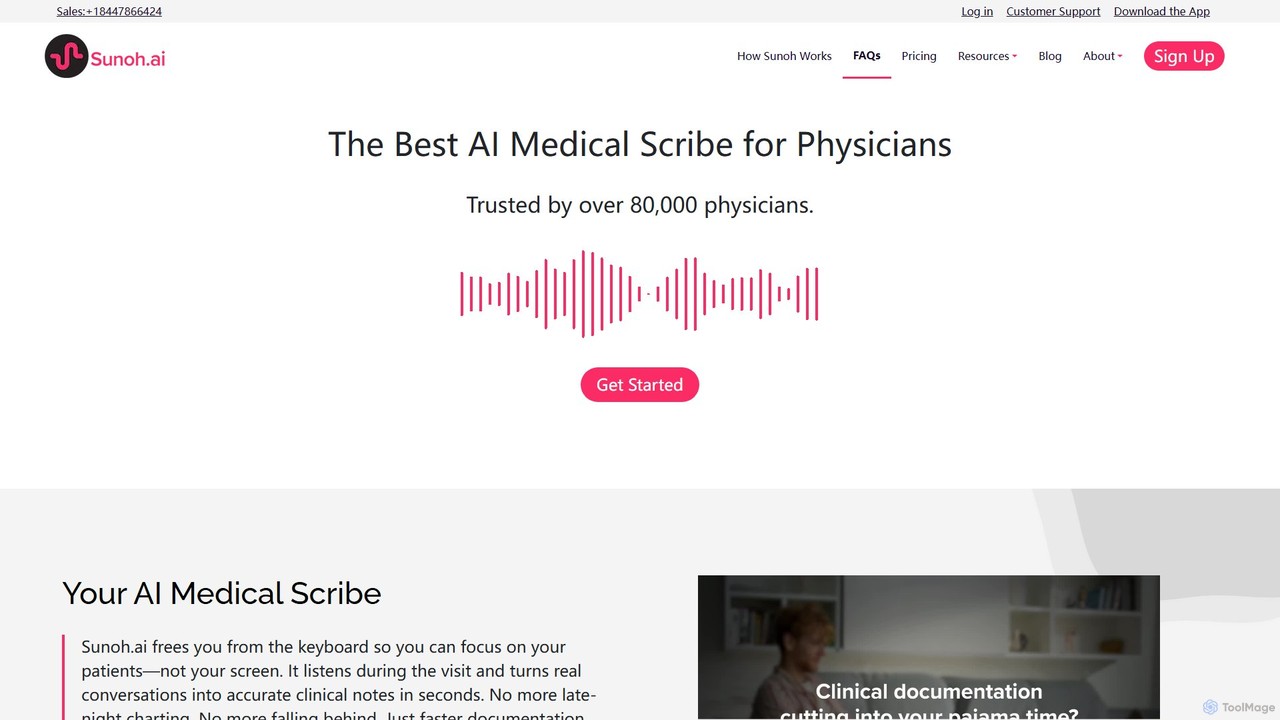
Sunoh.ai is an advanced AI medical scribe that listens to patient-provider conversations and automatically generates accurate clinical notes. …
Sunoh.ai is an advanced AI medical scribe that listens to patient-provider conversations and automatically generates accurate clinical notes. Designed for physicians, it streamlines documentation, integrates with EHR systems, and is HIPAA compliant, saving doctors hours daily and reducing burnout.
About Medical Scribe
AI Medical Scribe tools are specialized applications designed to automate clinical documentation by transcribing and structuring patient-clinician conversations in real-time. Leveraging advanced speech recognition and Natural Language Processing (NLP), these tools capture dialogue, identify relevant medical information, and populate electronic health records (EHRs). Their primary value is to significantly reduce the administrative burden on healthcare professionals, allowing them to focus more on patient care rather than data entry. This technology helps improve documentation accuracy, speed up charting, and mitigate physician burnout.
Core Features
- Real-Time Ambient Transcription: Automatically listens to and transcribes patient encounters as they happen, without requiring direct dictation.
- Clinical Data Structuring: Intelligently identifies and extracts key clinical information such as symptoms, diagnoses, medications, and treatment plans from conversations.
- EHR/EMR Integration: Seamlessly connects with major Electronic Health Record (EHR) and Electronic Medical Record (EMR) systems to auto-populate patient charts.
- Medical Coding Assistance: Suggests relevant ICD-10 and CPT codes based on the documented encounter, streamlining the billing process.
- HIPAA Compliance: Ensures all data is captured, transmitted, and stored securely in accordance with healthcare privacy regulations.
Use Cases
AI Medical Scribes are primarily used by physicians, physician assistants, and nurse practitioners across various specialties like primary care, cardiology, and orthopedics. They are deployed in clinical settings such as hospitals, private practices, and telehealth platforms to automate the creation of SOAP notes, referral letters, and patient summaries directly from conversations.
How to Choose
When selecting an AI Medical Scribe, consider its transcription accuracy, especially with medical terminology and accents. Evaluate the depth and reliability of its integration with your specific EHR system. Assess its compliance with security standards like HIPAA and its ability to adapt to your unique clinical workflows and templates. Finally, review the pricing model, whether it's per-provider or per-encounter, to ensure it aligns with your practice's budget.
Medical ScribeUse Cases
Automate Patient Encounter Documentation
A primary care physician uses an AI Medical Scribe during a routine check-up. The tool runs ambiently on a tablet, capturing the entire conversation with the patient. It automatically distinguishes between speakers, filters out non-clinical small talk, and transcribes the relevant medical dialogue. Post-encounter, the physician reviews a structured summary with sections for subjective complaints, objective findings, assessment, and plan (SOAP note). The tool has already populated the EHR with this data, saving the physician 10-15 minutes of manual charting per patient, reducing administrative work by over 70% and allowing for more direct patient interaction.
Streamline Telehealth Consultation Charting
A psychiatrist conducts a virtual therapy session using a telehealth platform integrated with an AI Medical Scribe. The tool securely transcribes the session, identifying key themes, patient-reported outcomes, and changes in mental state. It helps generate a concise progress note, highlighting critical information for the next session's planning. This allows the psychiatrist to remain fully engaged with the patient, providing empathetic care without the distraction of typing notes. The structured output also simplifies compliance and billing documentation for virtual care services.
Improve Emergency Department Charting Speed
In a fast-paced Emergency Department (ED), a physician uses a mobile-enabled AI Scribe. While assessing a patient with acute symptoms, the physician speaks their findings and treatment decisions aloud. The AI tool captures this information and instantly organizes it into the ED's charting template. This eliminates the need to step away and type up notes, allowing the physician to move to the next patient more quickly. The real-time documentation improves the accuracy of timestamps and interventions, leading to better handoffs between shifts and a more efficient patient flow through the ED.
Generate Accurate Referral Letters and Summaries
After a consultation with a patient needing specialized care, a cardiologist uses their AI Medical Scribe to generate a referral letter. The tool pulls structured data from the transcribed encounter—including patient history, diagnosis, and the reason for referral—and drafts a comprehensive letter addressed to a specialist. The cardiologist can quickly review, edit, and sign the letter electronically. This process reduces the time to create referral documentation from over 15 minutes to less than 3, ensuring faster communication between providers and quicker access to specialized care for the patient.
Assist in Surgical and Post-Operative Note-Taking
A surgeon uses an AI Medical Scribe immediately after a procedure to dictate their operative notes. Instead of typing a lengthy report, they can simply speak the details: procedure performed, findings, complications, and post-operative instructions. The AI tool transcribes the dictation and structures it into a standard operative report format within the hospital's EHR. This ensures that detailed and accurate records are created while the information is still fresh in the surgeon's mind, improving the quality of documentation and saving valuable time that can be reallocated to patient care.
Support Training for Medical Residents and Students
A medical training program equips its residents with AI Medical Scribes. As residents see patients, the tool documents the encounters, providing an accurate record for review by attending physicians. The structured output helps residents learn proper documentation and SOAP note formatting. It also frees up their time from clerical work, allowing them to focus more on clinical reasoning, patient interaction, and learning from senior physicians. The attending can efficiently review the AI-generated notes to provide feedback on both clinical decisions and documentation quality.