ToolMage
Sign in

Best 10 Medical Scribe AI tools for Healthcare

Popular Medical Scribe AI tools in Healthcare include Freed, Lyrebird Health, mdhub, SOAPNoteAI, Your Personal AI, Sunoh.ai, MarianaAI, Knowtex, Medvise, and Apollo Health AI, helping you work more efficiently.

Knowtex
Freemium

Knowtex

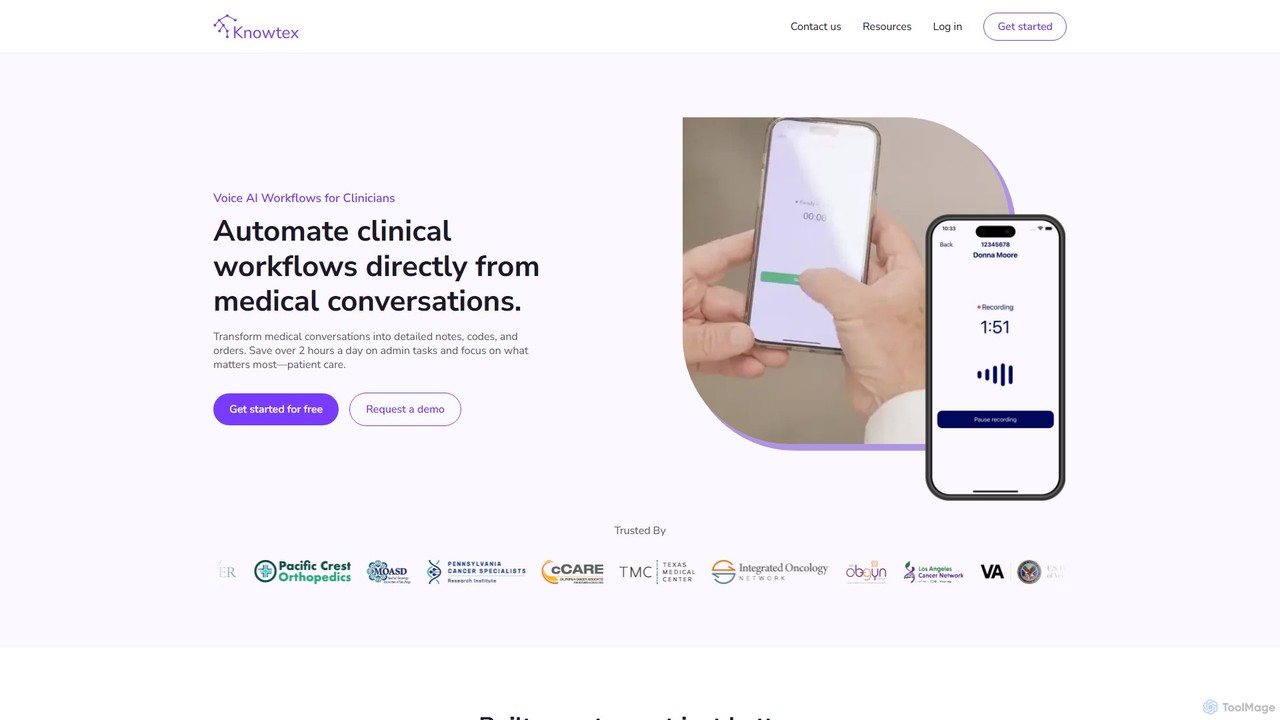
Knowtex is an advanced AI-powered clinical documentation tool for healthcare professionals. It uses voice recognition to automatically transform natural patient-doctor conversations into structured, detailed clinical notes, complete with accurate billing codes (ICD-10, CPT, E&M). By automating administrative tasks, Knowtex saves clinicians over two hours daily, reducing burnout and allowing them to focus on patient care. It supports over 99 languages, integrates with most EHR systems, and adapts to individual clinical styles.

Medical Scribe
Visits 11.5KFavorites 130Likes 127
Sunoh.ai
Paid

Sunoh.ai

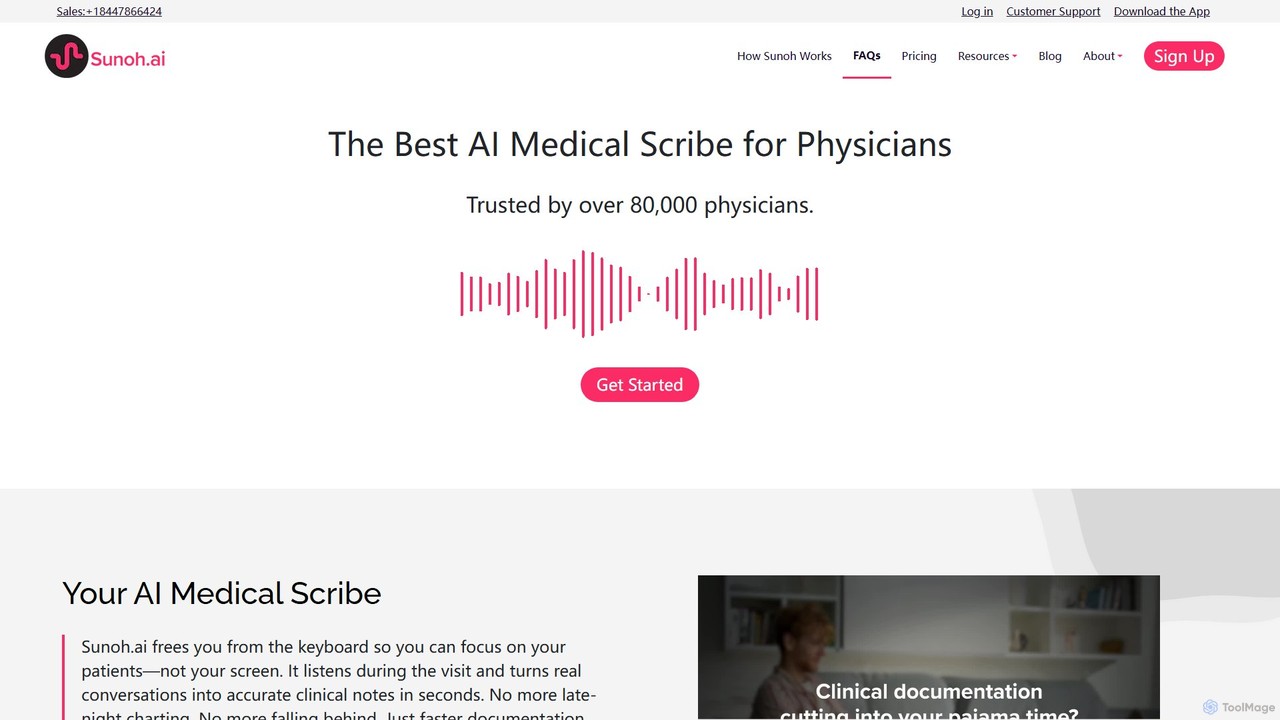
Sunoh.ai is an advanced AI medical scribe that listens to patient-provider conversations and automatically generates accurate clinical notes. Designed for physicians, it streamlines documentation, integrates with EHR systems, and is HIPAA compliant, saving doctors hours daily and reducing burnout.

Clinical Documentation
Visits 14.7KFavorites 135Likes 120
MarianaAI
Paid

MarianaAI

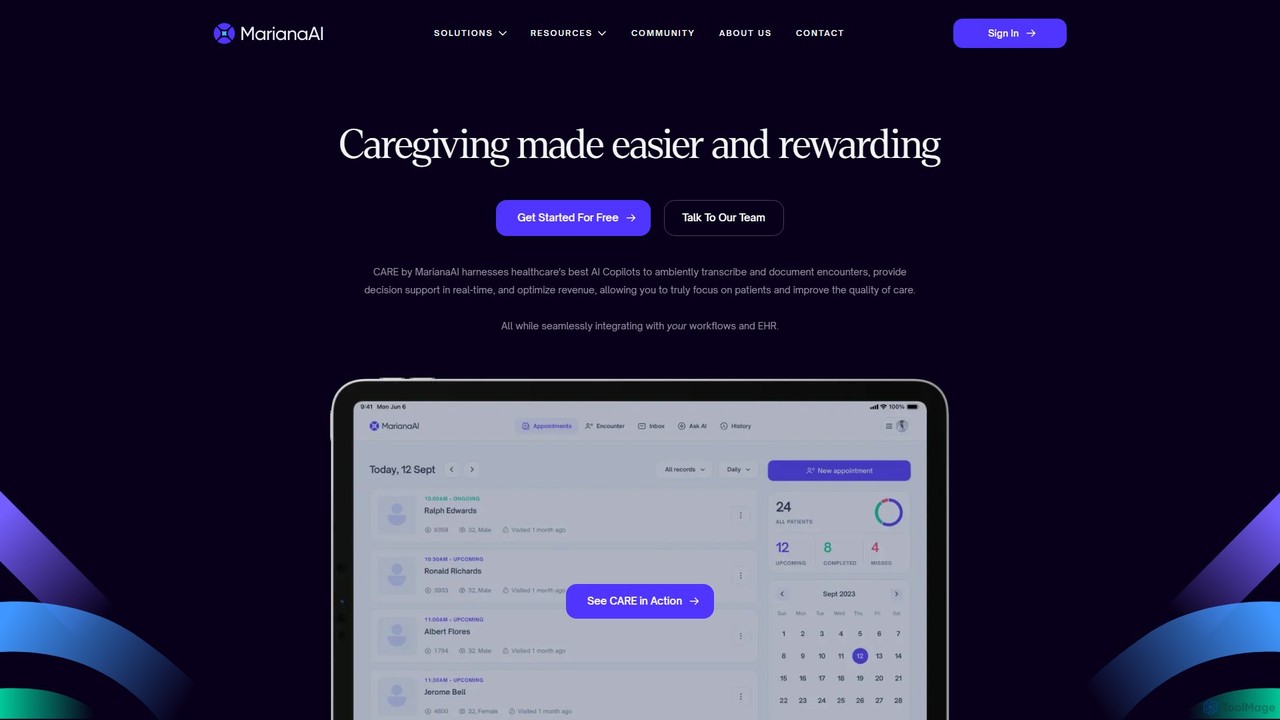
MarianaAI is an all-in-one AI-powered clinical automation platform designed for healthcare providers. It features a multilingual medical scribe, autonomous coding, and clinical decision support to reduce administrative burnout, enhance revenue, and improve patient care by seamlessly integrating with existing EHR systems.

Clinical Documentation
Visits 13.1KFavorites 139Likes 130
mdhub
Freemium

mdhub

mdhub is a clinical AI assistant designed for behavioral health clinicians. It automates documentation, saving over 2 hours daily. Key features include an AI Scribe for instant clinical notes, an AI Intake Coordinator for streamlining patient onboarding, and tools for creating treatment plans, session handouts, and managing billing codes. It's a HIPAA-compliant solution that integrates with EHRs to reduce administrative burnout and enhance patient care.

Medical Scribe
Visits 38.5KFavorites 152Likes 169
Medvise
Freemium

Medvise

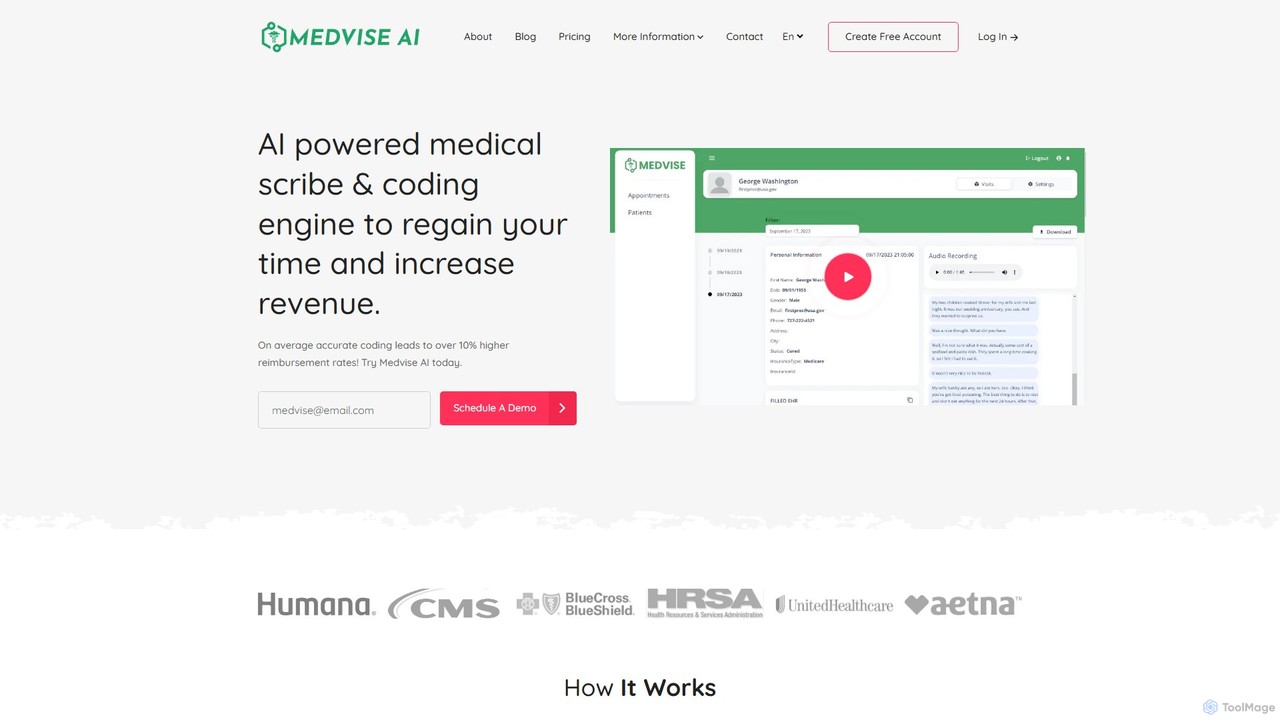
Medvise is an AI-powered medical scribe that automates clinical documentation by transcribing patient-provider conversations in real-time. It generates accurate clinical notes, suggests medical codes (HCC/CPT), and integrates with EHR systems, freeing healthcare professionals to focus on patient care while ensuring HIPAA compliance.

Clinical Documentation
Visits 8.9KFavorites 120Likes 124
Your Personal AI
Paid

Your Personal AI

Your Personal AI provides bespoke, enterprise-grade AI and machine learning solutions. They specialize in custom AI development, intelligent automation, predictive analytics, and comprehensive data services, including collection, annotation, and validation. With a strong focus on data security and industry-specific applications (like healthcare, finance, and automotive), they help businesses integrate and scale AI to drive efficiency, gain strategic insights, and achieve measurable ROI.

Ai Consulting
Visits 16.3KFavorites 137Likes 133
Freed
Freemium

Freed

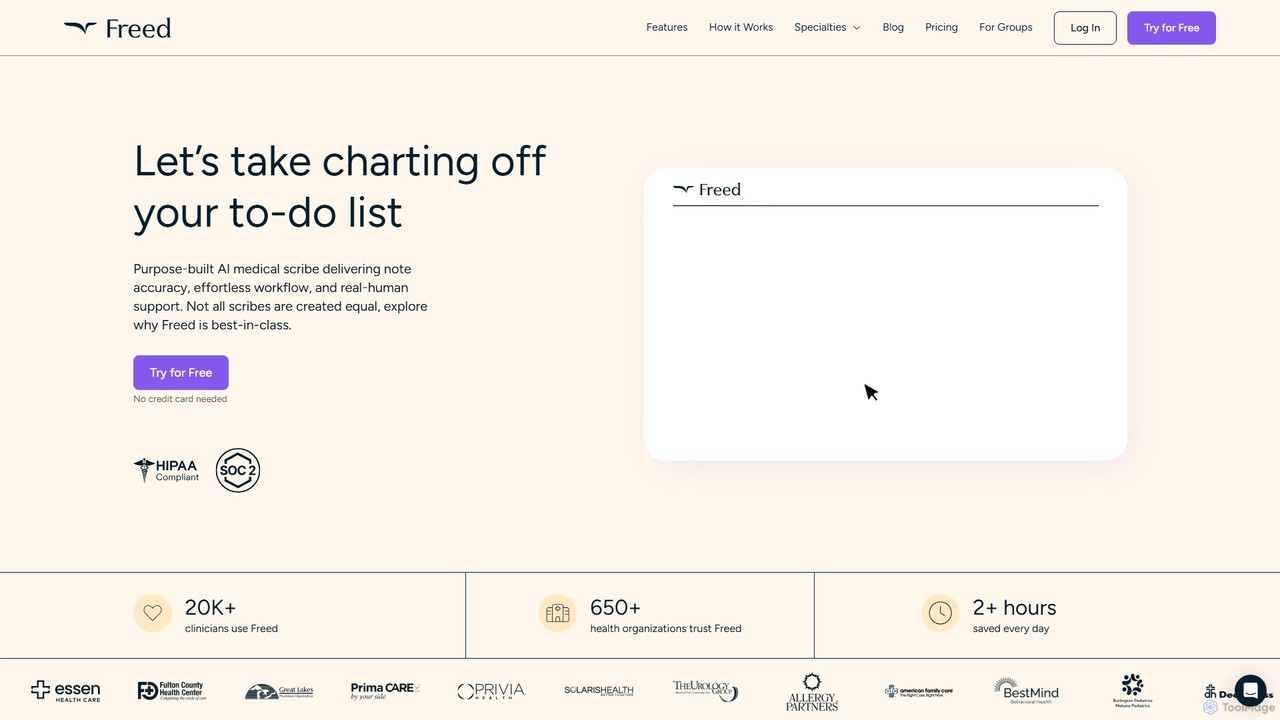
Freed is an AI-powered medical scribe designed for clinicians to eliminate charting fatigue. It securely records patient visits, transcribes the conversation, and automatically generates accurate, EHR-ready clinical notes. This allows healthcare professionals to focus on patient care, save hours on documentation, and improve their work-life balance.

Clinical Documentation
Visits 950.9KFavorites 158Likes 144
SOAPNoteAI
Freemium

SOAPNoteAI

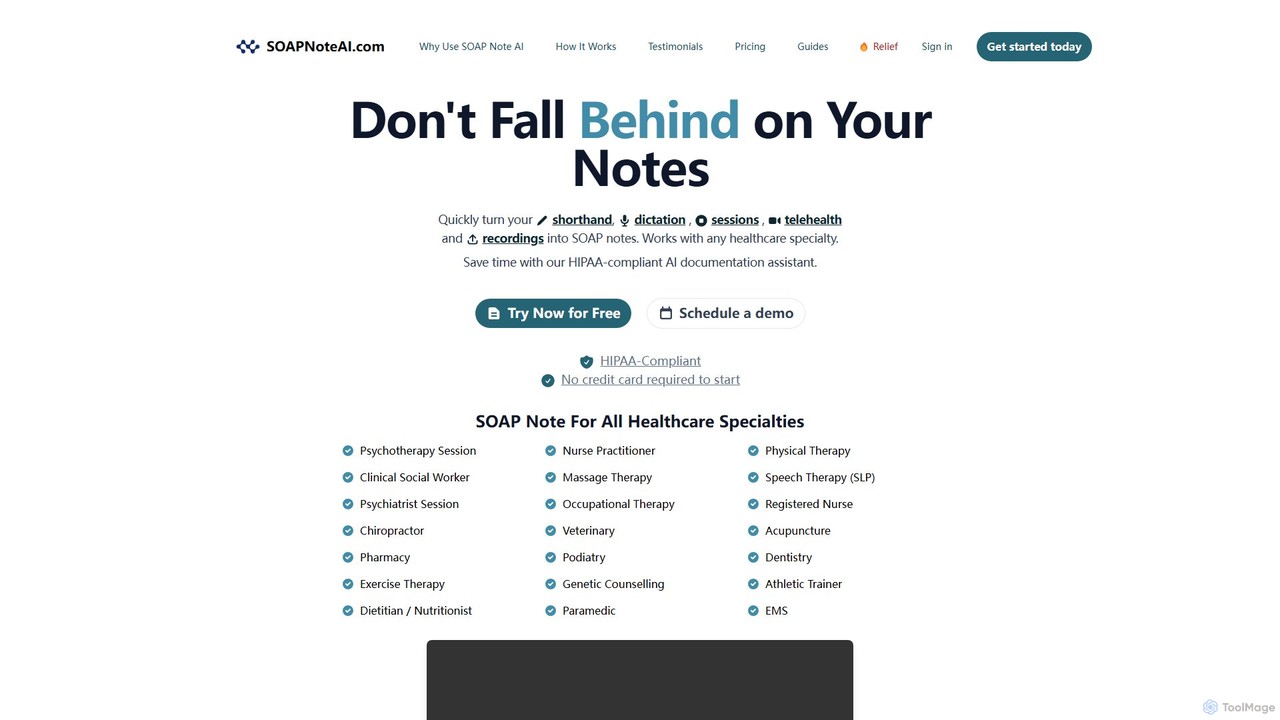
A HIPAA-compliant AI assistant for healthcare professionals that quickly generates detailed SOAP notes from shorthand, dictation, or session recordings. It supports numerous specialties, saving clinicians hours on documentation, reducing burnout, and improving note quality.

Documentation
Visits 20.1KFavorites 117Likes 104
Apollo Health AI
Freemium

Apollo Health AI

Apollo Health AI is a HIPAA-compliant, AI-powered medical scribe designed for healthcare professionals. It automates the creation of clinical notes, such as SOAP notes, by transcribing and structuring patient encounters. This allows clinicians to reduce administrative burdens, combat burnout, and focus more on direct patient care, improving both efficiency and the quality of medical documentation.

Clinical Documentation
Visits 6.9KFavorites 134Likes 136
Lyrebird Health
Freemium

Lyrebird Health

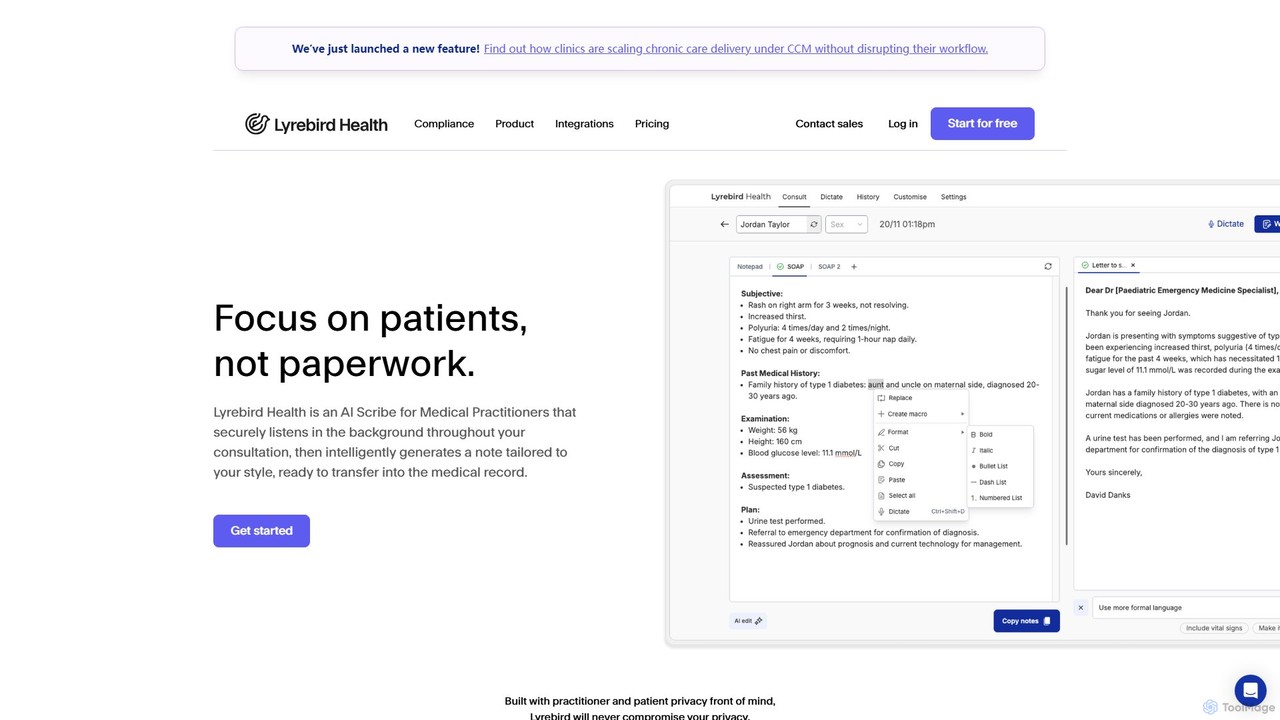
Lyrebird Health is an AI-powered medical scribe that automates clinical documentation for healthcare providers. It listens to patient consultations, generates accurate clinical notes, letters, and reports in seconds, and integrates with EMR systems. This allows clinicians to save hours on paperwork, reduce burnout, and focus more on patient care.

Medical Scribe
Visits 242.6KFavorites 116Likes 130

About Medical Scribe

AI Medical Scribe tools are specialized applications designed to automate clinical documentation by transcribing and structuring patient-clinician conversations in real-time. Leveraging advanced speech recognition and Natural Language Processing (NLP), these tools capture dialogue, identify relevant medical information, and populate electronic health records (EHRs). Their primary value is to significantly reduce the administrative burden on healthcare professionals, allowing them to focus more on patient care rather than data entry. This technology helps improve documentation accuracy, speed up charting, and mitigate physician burnout.

Core Features

  • Real-Time Ambient Transcription: Automatically listens to and transcribes patient encounters as they happen, without requiring direct dictation.
  • Clinical Data Structuring: Intelligently identifies and extracts key clinical information such as symptoms, diagnoses, medications, and treatment plans from conversations.
  • EHR/EMR Integration: Seamlessly connects with major Electronic Health Record (EHR) and Electronic Medical Record (EMR) systems to auto-populate patient charts.
  • Medical Coding Assistance: Suggests relevant ICD-10 and CPT codes based on the documented encounter, streamlining the billing process.
  • HIPAA Compliance: Ensures all data is captured, transmitted, and stored securely in accordance with healthcare privacy regulations.

Use Cases

AI Medical Scribes are primarily used by physicians, physician assistants, and nurse practitioners across various specialties like primary care, cardiology, and orthopedics. They are deployed in clinical settings such as hospitals, private practices, and telehealth platforms to automate the creation of SOAP notes, referral letters, and patient summaries directly from conversations.

How to Choose

When selecting an AI Medical Scribe, consider its transcription accuracy, especially with medical terminology and accents. Evaluate the depth and reliability of its integration with your specific EHR system. Assess its compliance with security standards like HIPAA and its ability to adapt to your unique clinical workflows and templates. Finally, review the pricing model, whether it's per-provider or per-encounter, to ensure it aligns with your practice's budget.

Featured tool rankings

Medical Scribe use cases

1

Automate Patient Encounter Documentation

A primary care physician uses an AI Medical Scribe during a routine check-up. The tool runs ambiently on a tablet, capturing the entire conversation with the patient. It automatically distinguishes between speakers, filters out non-clinical small talk, and transcribes the relevant medical dialogue. Post-encounter, the physician reviews a structured summary with sections for subjective complaints, objective findings, assessment, and plan (SOAP note). The tool has already populated the EHR with this data, saving the physician 10-15 minutes of manual charting per patient, reducing administrative work by over 70% and allowing for more direct patient interaction.

2

Streamline Telehealth Consultation Charting

A psychiatrist conducts a virtual therapy session using a telehealth platform integrated with an AI Medical Scribe. The tool securely transcribes the session, identifying key themes, patient-reported outcomes, and changes in mental state. It helps generate a concise progress note, highlighting critical information for the next session's planning. This allows the psychiatrist to remain fully engaged with the patient, providing empathetic care without the distraction of typing notes. The structured output also simplifies compliance and billing documentation for virtual care services.

3

Improve Emergency Department Charting Speed

In a fast-paced Emergency Department (ED), a physician uses a mobile-enabled AI Scribe. While assessing a patient with acute symptoms, the physician speaks their findings and treatment decisions aloud. The AI tool captures this information and instantly organizes it into the ED's charting template. This eliminates the need to step away and type up notes, allowing the physician to move to the next patient more quickly. The real-time documentation improves the accuracy of timestamps and interventions, leading to better handoffs between shifts and a more efficient patient flow through the ED.

4

Generate Accurate Referral Letters and Summaries

After a consultation with a patient needing specialized care, a cardiologist uses their AI Medical Scribe to generate a referral letter. The tool pulls structured data from the transcribed encounter—including patient history, diagnosis, and the reason for referral—and drafts a comprehensive letter addressed to a specialist. The cardiologist can quickly review, edit, and sign the letter electronically. This process reduces the time to create referral documentation from over 15 minutes to less than 3, ensuring faster communication between providers and quicker access to specialized care for the patient.

5

Assist in Surgical and Post-Operative Note-Taking

A surgeon uses an AI Medical Scribe immediately after a procedure to dictate their operative notes. Instead of typing a lengthy report, they can simply speak the details: procedure performed, findings, complications, and post-operative instructions. The AI tool transcribes the dictation and structures it into a standard operative report format within the hospital's EHR. This ensures that detailed and accurate records are created while the information is still fresh in the surgeon's mind, improving the quality of documentation and saving valuable time that can be reallocated to patient care.

6

Support Training for Medical Residents and Students

A medical training program equips its residents with AI Medical Scribes. As residents see patients, the tool documents the encounters, providing an accurate record for review by attending physicians. The structured output helps residents learn proper documentation and SOAP note formatting. It also frees up their time from clerical work, allowing them to focus more on clinical reasoning, patient interaction, and learning from senior physicians. The attending can efficiently review the AI-generated notes to provide feedback on both clinical decisions and documentation quality.

Medical Scribe FAQ

What is an AI Medical Scribe?

An AI Medical Scribe is a software tool that uses artificial intelligence, primarily speech recognition and natural language processing, to automatically document clinical encounters. It listens to conversations between clinicians and patients, transcribes them, and intelligently extracts key medical information to populate electronic health records (EHRs). The main goal is to reduce the administrative workload of physicians, allowing them to focus on patient care instead of manual data entry, thereby helping to reduce burnout and improve documentation quality.

How does an AI Medical Scribe differ from standard transcription software?

While both tools convert speech to text, an AI Medical Scribe offers much more advanced, context-aware functionality. Key differences include:

  • Medical Context: AI scribes are trained on vast medical datasets to understand complex terminology, abbreviations, and clinical context.
  • Data Structuring: They don't just transcribe; they identify and categorize information (e.g., symptoms, medications, diagnoses) into structured data suitable for an EHR.
  • EHR Integration: They are designed to integrate directly with EHR systems, automatically populating the correct fields in a patient's chart.
  • Ambient Listening: Many AI scribes can operate in an 'ambient' mode, capturing natural conversation rather than requiring formal dictation.
Standard transcription software typically provides only a raw, unstructured text output.

Are AI Medical Scribes secure and HIPAA compliant?

Yes, reputable AI Medical Scribe providers design their platforms with security and privacy as top priorities. They implement robust security measures to be compliant with regulations like the Health Insurance Portability and Accountability Act (HIPAA) in the United States. This typically includes end-to-end data encryption, secure cloud storage, access controls, and signing Business Associate Agreements (BAAs) with healthcare organizations. It is crucial to verify a specific vendor's compliance certifications and security protocols before implementation.

What are the key features to look for in an AI Medical Scribe?

When choosing an AI Medical Scribe, focus on features that directly impact clinical workflow and documentation quality. Key features include:

  • High Accuracy: The tool must accurately transcribe medical terminology, different accents, and fast-paced conversations.
  • Seamless EHR Integration: Look for deep, bidirectional integration with your specific EHR system to avoid manual data transfer.
  • Workflow Customization: The ability to adapt to your specialty's specific templates, macros, and documentation style is essential.
  • Real-Time Performance: The scribe should provide near-instant transcription and summaries to be useful within the clinical encounter.
  • Strong Security and Compliance: Ensure the vendor is fully HIPAA compliant and provides robust data protection.

Who can benefit from using an AI Medical Scribe?

A wide range of healthcare professionals can benefit from AI Medical Scribes. This includes primary care physicians, specialists (like cardiologists, orthopedists, and oncologists), surgeons, nurse practitioners, and physician assistants. Any clinician who spends a significant amount of time on documentation in an EHR can see substantial benefits. Healthcare organizations also benefit through improved operational efficiency, better data quality for analytics and billing, and a reduction in physician burnout, which can improve staff retention.