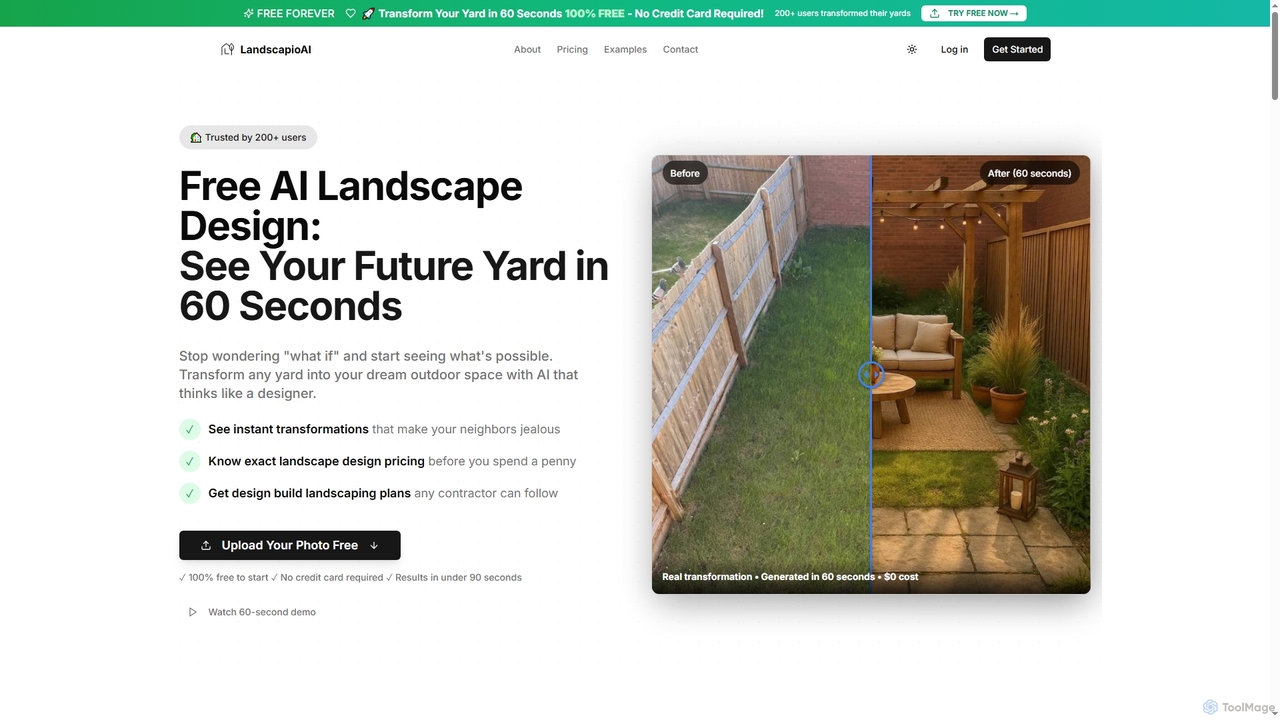
Garden Design AI tools are a category of software that leverage artificial intelligence to assist in the planning, visualization, and optimization of outdoor spaces. These tools utilize advanced algorithms for spatial analysis, plant selection, and 3D rendering, enabling users to create detailed and realistic garden layouts. They empower homeowners, landscape architects, and garden enthusiasts to design beautiful, functional, and sustainable outdoor environments with unprecedented ease and precision. By automating complex design tasks and offering data-driven recommendations, these AI solutions significantly enhance the creative process within the broader Home Improvement domain.
Core Features
- 3D Visualization & Rendering: Generate photorealistic 3D models and walkthroughs of proposed garden designs, including various lighting conditions.
- Intelligent Plant Selection: Recommend suitable plants based on local climate, soil type, sunlight exposure, water requirements, and aesthetic preferences.
- Automated Layout & Planning: Provide drag-and-drop interfaces for effortless arrangement of hardscaping, planting beds, water features, and outdoor furniture.
- Environmental Simulation: Simulate sun paths, shadow patterns, and water drainage to optimize plant placement and irrigation systems for sustainability.
- Material & Cost Estimation: Automatically calculate quantities of materials needed (e.g., paving, mulch, plants) and provide estimated project costs.
Applicable Scenarios
These tools are invaluable for homeowners undertaking DIY garden renovations, allowing them to experiment with different layouts and plant choices before committing. Professional landscape designers use them to create compelling client proposals with realistic visuals and detailed plans. Real estate developers can leverage AI garden design to showcase the potential outdoor living spaces of new properties, enhancing market appeal.
How to Choose
When selecting an AI garden design tool, prioritize the quality of its 3D visualization and rendering capabilities for realistic previews. Evaluate the depth and accuracy of its plant database, ensuring it offers diverse options relevant to your region. Consider the ease of use for your skill level, whether you're a beginner or a professional, and check for integration with other design software or export options for project collaboration. Finally, assess the pricing model against your budget and required feature set.