InSummary
InSummary is an AI-powered workforce analytics platform that provides objective visibility into team engagement and work patterns. It …
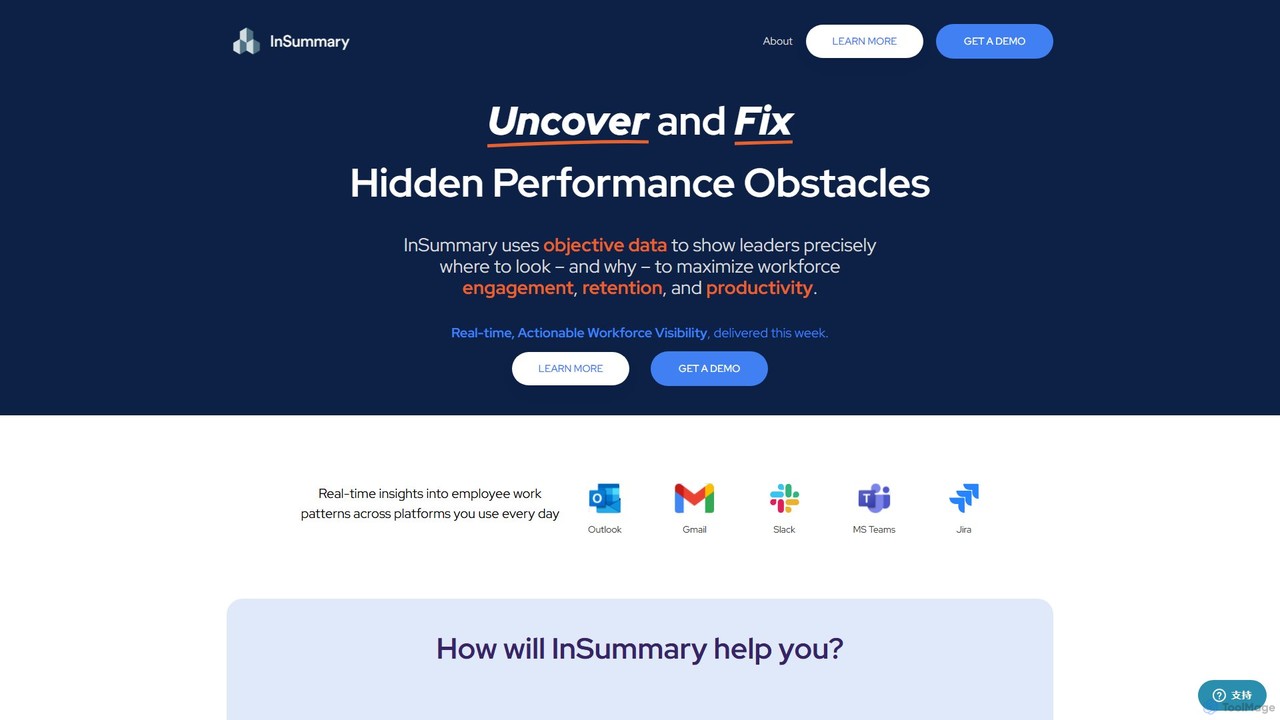
InSummary is an AI-powered workforce analytics platform that provides objective visibility into team engagement and work patterns. It integrates with tools like Slack, Jira, and Outlook to help leaders make data-driven decisions, reduce bias, and drive organizational change without micromanagement.
About Workforce Analytics
Workforce Analytics tools are a specialized category of HR software that use AI and data analysis to provide deep insights into an organization's people data. These platforms go beyond simple reporting by applying statistical models and machine learning to uncover trends, predict future outcomes, and identify the root causes of workforce challenges. They empower HR professionals and business leaders to make strategic, data-driven decisions about talent management, employee engagement, and organizational effectiveness. By transforming raw HR data into actionable intelligence, these tools help optimize everything from hiring and retention to productivity and diversity initiatives.
Core Features
- Predictive Analytics: Forecasts key metrics like employee turnover, high-performer attrition, and future skills gaps.
- Performance Driver Analysis: Identifies the key behaviors, skills, and environmental factors that correlate with top performance.
- Organizational Network Analysis (ONA): Maps communication and collaboration patterns to understand influence, information flow, and team dynamics.
- Sentiment Analysis: Processes employee feedback from surveys and communications to gauge morale and identify areas of concern.
- Skills Gap & Talent Mobility: Maps the current skills of the workforce against future needs to guide internal mobility and development programs.
Use Cases
These tools are invaluable for medium to large enterprises across all industries, particularly for roles like HR Business Partners, Talent Management specialists, and strategic planners. They are used to proactively address employee attrition by identifying at-risk individuals, optimize recruitment by pinpointing the most successful hiring sources, and design effective training programs by identifying critical skill gaps.
How to Choose
When selecting a Workforce Analytics tool, consider its integration capabilities with your existing HR systems (like HRIS and ATS). Evaluate the depth of its analytical models—does it offer predictive capabilities or just descriptive dashboards? Also, assess the user-friendliness of the interface for non-technical users and ensure the platform adheres to strict data privacy and security standards like GDPR.
Workforce AnalyticsUse Cases
Proactively Reducing Employee Turnover
An HR manager at a tech company notices a rising attrition rate. Using a Workforce Analytics tool, they analyze historical data including tenure, performance reviews, and compensation. The AI model identifies a key predictor: employees who haven't had a role change in 18 months are 3x more likely to leave. Armed with this insight, the HR team launches a targeted internal mobility program and career pathing discussions for long-tenured employees, reducing voluntary turnover by 15% within a year.
Optimizing High-Volume Recruitment
A retail chain's talent acquisition team needs to hire hundreds of store associates efficiently. They use a Workforce Analytics platform to analyze the performance data of their top 10% of current associates against their original application data. The analysis reveals that candidates from specific referral programs and those who highlighted teamwork skills have a 40% higher 1-year retention rate. The team reallocates their recruitment budget to these high-performing channels, improving the quality of hire.
Identifying and Closing Critical Skills Gaps
A manufacturing company is transitioning to automated systems. A strategic workforce planner uses an analytics tool to map the current skills of their production staff against the skills required for the new technology. The tool generates a clear 'skills gap' report, highlighting the most urgent training needs. This allows the Learning & Development department to design targeted upskilling programs, retaining valuable institutional knowledge and minimizing the need for external hires.
Ensuring Fair Compensation and Promotion Practices
A financial services firm's Chief Diversity Officer uses a Workforce Analytics tool to conduct a pay equity audit. The platform analyzes salary, bonuses, and promotion rates across different demographics, controlling for factors like experience and performance. The dashboard flags statistically significant pay gaps in a specific department. This data enables the leadership to make targeted salary adjustments and review promotion processes, reinforcing the company's commitment to diversity and inclusion.
Improving Team Collaboration and Innovation
A pharmaceutical research division wants to foster better cross-functional collaboration. Using an Organizational Network Analysis (ONA) feature, they analyze anonymized communication patterns. The analysis reveals that two critical research teams are operating in silos with very little interaction. Management uses this insight to restructure project teams and create dedicated forums for knowledge sharing, leading to a measurable increase in joint projects and accelerated discovery timelines.
Measuring the ROI of Leadership Training
The Head of L&D at a consulting firm needs to justify the budget for a high-cost leadership development program. They use a Workforce Analytics tool to connect training participation data with post-training business outcomes. The analysis shows that teams led by managers who completed the program exhibit 10% higher employee engagement scores and a 5% lower attrition rate over the following six months. This provides a clear, data-backed ROI, securing funding for the program's expansion.