Bunch
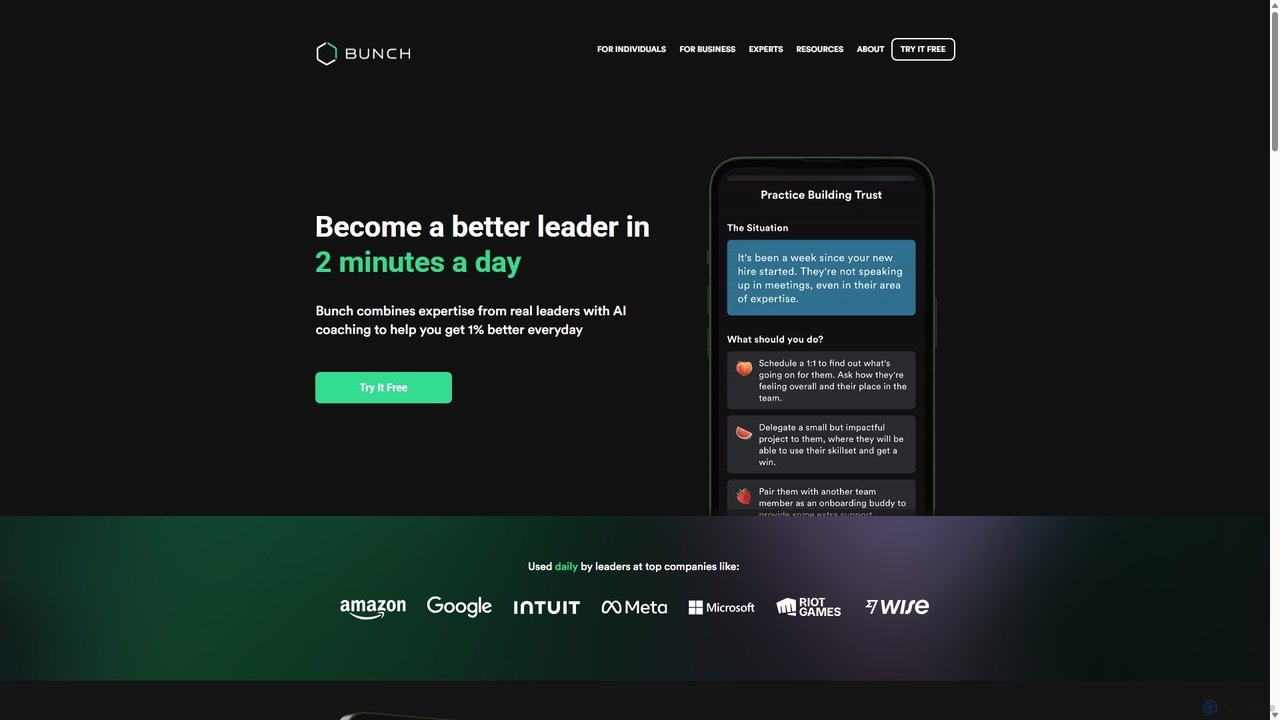
Bunch is an AI-powered leadership coach designed for managers and aspiring leaders. It delivers personalized, bite-sized daily tips …
Bunch is an AI-powered leadership coach designed for managers and aspiring leaders. It delivers personalized, bite-sized daily tips and 24/7 AI coaching to help you improve your leadership skills in just 2 minutes a day, fostering continuous professional growth.
Yuna
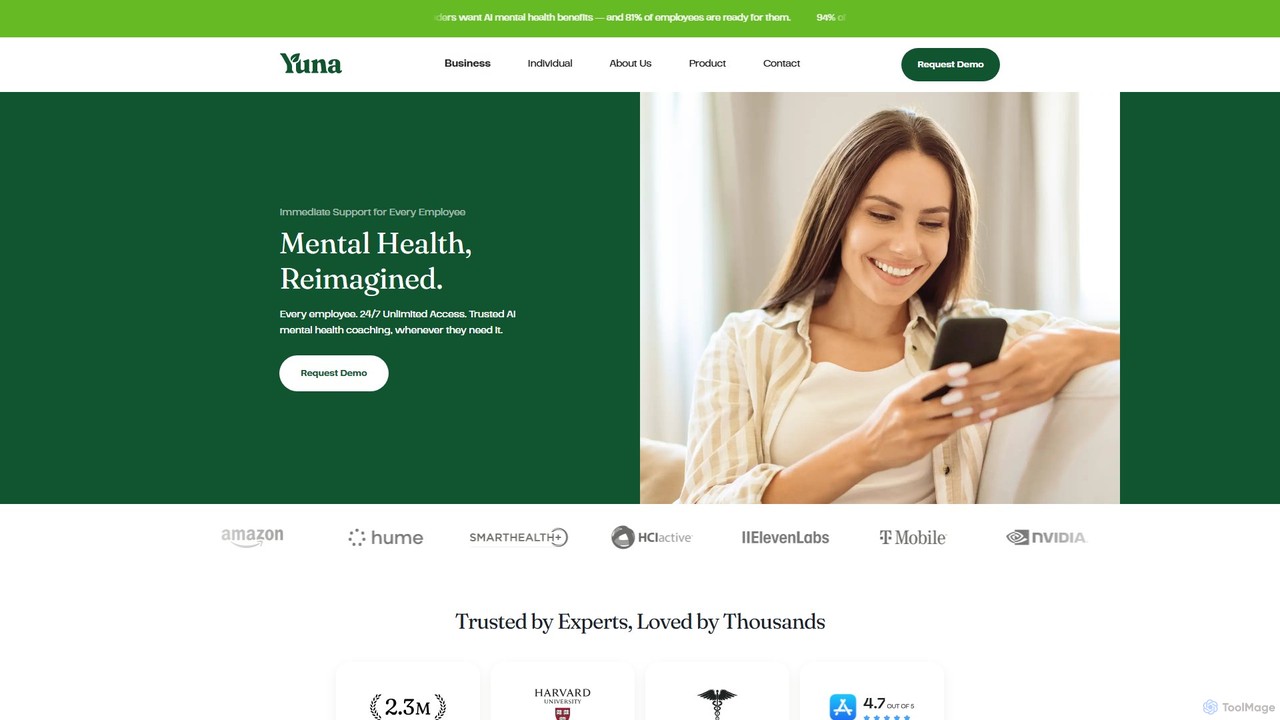
Yuna is an AI-powered mental health companion offering 24/7 confidential support. Using evidence-based techniques like CBT, it helps …
Yuna is an AI-powered mental health companion offering 24/7 confidential support. Using evidence-based techniques like CBT, it helps individuals manage stress, anxiety, and overthinking through voice or chat conversations. It also serves as a scalable employee wellness platform for businesses, providing anonymous insights into team well-being and promoting a healthier work culture.
wrenly
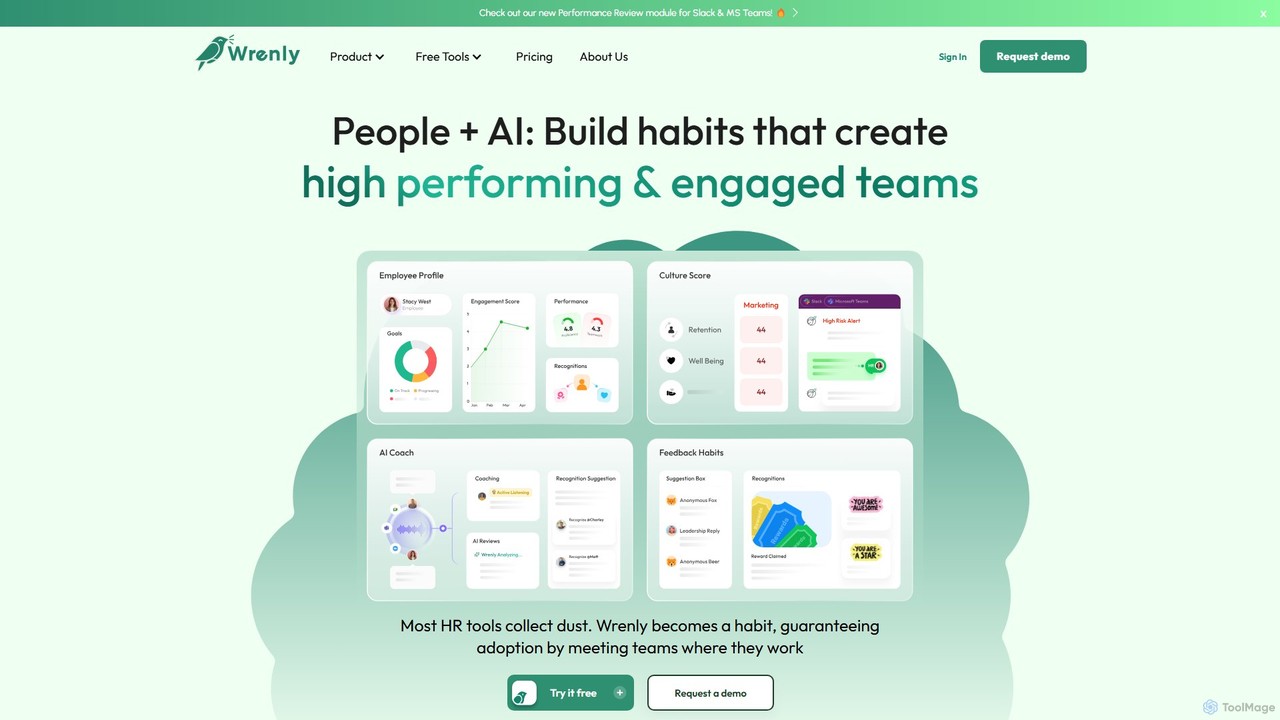
Wrenly is an AI-powered employee engagement platform for Slack and Microsoft Teams. It facilitates anonymous feedback, peer recognition, …
Wrenly is an AI-powered employee engagement platform for Slack and Microsoft Teams. It facilitates anonymous feedback, peer recognition, and engagement surveys to help build a more transparent and positive workplace culture, providing actionable insights through AI.

orgengage
orgengage is an AI-powered Slack application designed to enhance team engagement and build a strong company culture, especially …
orgengage is an AI-powered Slack application designed to enhance team engagement and build a strong company culture, especially for remote and distributed teams. It fosters meaningful connections by creating rich employee profiles, automating introductions, and facilitating team-building activities directly within Slack.
About Hr
AI HR tools are a class of software that leverages artificial intelligence to streamline and enhance human resources operations. They utilize machine learning, natural language processing (NLP), and predictive analytics to automate repetitive tasks, analyze workforce data, and provide data-driven insights. These tools are applied across the entire employee lifecycle, from sourcing candidates to performance tracking and improving employee experience. By handling administrative burdens and offering objective analysis, they enable HR professionals to focus on strategic initiatives and talent development.
Core Features
- Automated Recruiting: AI scans resumes and online profiles to identify, screen, and rank qualified candidates based on job requirements, significantly speeding up the hiring process.
- Performance & Engagement Analytics: Analyzes employee feedback, performance data, and communication patterns to identify trends, predict attrition risks, and suggest improvements.
- Intelligent Onboarding: Provides personalized onboarding checklists, automates paperwork, and uses AI chatbots to answer new hires' questions 24/7.
- HR Process Automation: Automates routine tasks like scheduling interviews, managing leave requests, and answering common policy questions via intelligent assistants.
- Skills Management: Maps current employee skills against future business needs to identify training gaps and guide internal career pathing.
Use Cases
AI HR tools are valuable across various industries. Large enterprises use them to manage high-volume recruiting for thousands of positions. Tech companies apply them to monitor developer engagement and prevent burnout. In any organization, HR departments can deploy AI chatbots to provide instant answers to payroll and benefits inquiries, improving employee satisfaction.
How to Choose
When selecting an AI HR tool, first consider its integration capabilities with your existing HRIS, ATS, and payroll software. Evaluate the scope of functionality—whether you need a comprehensive suite or a specialized tool for a specific area like recruitment. Prioritize platforms with robust data security and compliance with regulations like GDPR. Finally, assess the user experience for both HR managers and employees to ensure high adoption rates.
HrUse Cases
Automating High-Volume Candidate Screening
A recruiter at a large retail company is tasked with filling hundreds of seasonal positions. Instead of manually reviewing thousands of applications, they use an AI HR tool. The platform automatically parses resumes, scores candidates against key criteria like availability and relevant experience, and creates a shortlist of the top 10% most qualified applicants. This process reduces screening time from several weeks to just a few hours, allowing the recruitment team to focus their efforts on interviewing the best-fit candidates and improving the quality of hires.
Predicting and Reducing Employee Attrition
An HR Business Partner in a competitive tech firm wants to proactively address employee turnover. They deploy an AI analytics tool that analyzes anonymized data such as meeting patterns, project completion rates, and sentiment from engagement surveys. The tool identifies teams with a high risk of attrition without revealing individual data. Armed with this insight, HR can work with managers to implement targeted interventions, like adjusting workloads or offering new development opportunities, leading to a measurable decrease in voluntary turnover.
Streamlining the New Hire Onboarding Process
An onboarding specialist aims to create a consistent and engaging experience for all new hires, regardless of their location. They use an AI-powered onboarding platform that automates administrative tasks. The system sends welcome emails, assigns mandatory training modules, and schedules introductory meetings. A 24/7 AI chatbot is available to answer new employees' common questions about benefits, IT setup, and company policies. This automation reduces the HR team's administrative workload by over 50% and ensures new hires feel supported from day one.
Conducting Unbiased Performance Reviews
A department manager wants to ensure performance reviews are fair and data-driven. They use an AI tool that aggregates performance data from multiple sources, such as project management software, peer feedback systems, and sales CRMs. The AI uses natural language processing to analyze written feedback, summarizing key achievements and identifying areas for growth while flagging potentially biased language. This provides the manager with a comprehensive, objective summary, leading to more constructive and equitable performance conversations with their team members.
Personalizing Employee Learning and Development
A Learning & Development (L&D) manager needs to upskill the workforce to meet future business demands. They use an AI-driven platform that analyzes each employee's current role, skills profile, and stated career goals. Based on this data, the AI recommends personalized learning paths, suggesting relevant online courses, articles, and internal mentorship opportunities. This tailored approach increases employee engagement with training materials and helps the organization strategically close critical skills gaps, fostering a culture of continuous improvement.
Answering Employee Queries with an HR Chatbot
An employee needs to quickly find information about the company's parental leave policy. Instead of emailing HR and waiting for a response, they use the AI-powered HR chatbot integrated into the company's communication platform. The employee asks, "What is our parental leave policy?" The chatbot instantly accesses the knowledge base and provides a concise summary, along with a link to the full policy document. This provides immediate, 24/7 support to employees and frees up HR personnel from answering hundreds of repetitive questions each week.