FlowHireAIEngine
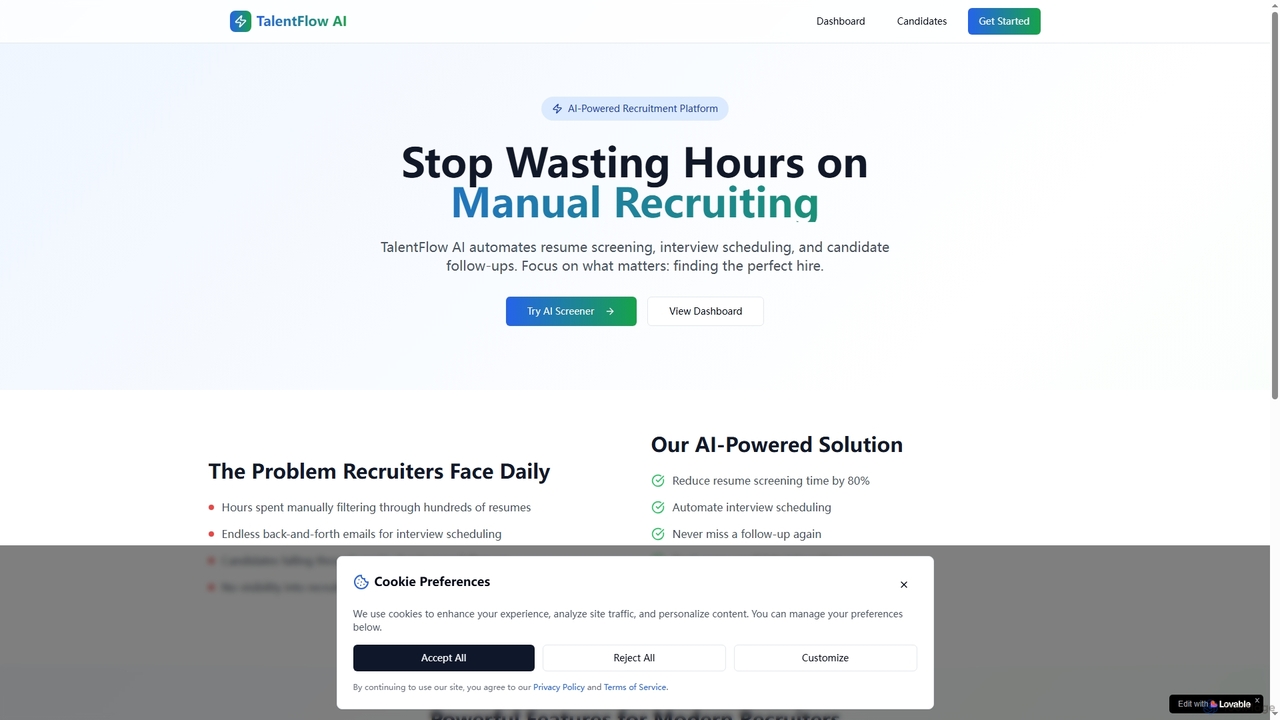
FlowHireAIEngine is an AI-powered recruitment platform designed to automate and streamline the entire hiring process. It helps recruiters …
FlowHireAIEngine is an AI-powered recruitment platform designed to automate and streamline the entire hiring process. It helps recruiters save hours by intelligently screening resumes, scheduling interviews, and managing candidate follow-ups, allowing them to focus on finding the perfect hire.
About Applicant Tracking
AI Applicant Tracking systems are specialized platforms designed to automate and streamline the entire recruitment lifecycle. These tools leverage artificial intelligence, particularly Natural Language Processing (NLP) and machine learning, to parse resumes, screen candidates, and match them to job descriptions. By centralizing candidate information and automating repetitive tasks, they significantly enhance hiring efficiency and improve the quality of hires. This technology allows recruitment teams to manage high volumes of applications, reduce manual data entry, and focus on strategic engagement with top talent.
Core Features
- AI-Powered Resume Parsing: Automatically extracts and categorizes key information from resumes, such as skills, experience, and education, into a structured database.
- Automated Candidate Screening: Uses predefined criteria and AI algorithms to rank and shortlist the most qualified candidates from a large applicant pool.
- Predictive Candidate Matching: Analyzes job requirements and candidate profiles to predict which applicants are most likely to succeed in a role.
- Automated Communication & Scheduling: Manages email templates, sends automated updates to candidates, and integrates with calendars to simplify interview scheduling.
- Recruitment Analytics & Reporting: Provides data-driven insights into key hiring metrics like time-to-hire, cost-per-hire, and source effectiveness.
Use Cases
These tools are essential for corporate HR departments, recruitment agencies, and rapidly growing companies. They are particularly effective in high-volume hiring scenarios, such as for retail or customer service roles, and for specialized technical recruiting where identifying specific skill sets is critical. Startups also use them to establish a structured hiring process from an early stage.
How to Choose
When selecting an AI Applicant Tracking tool, consider its integration capabilities with job boards, HRIS platforms, and assessment tools. Evaluate the sophistication of its AI matching and screening algorithms. Also, assess its scalability to grow with your company, its compliance with data privacy regulations like GDPR, and the user-friendliness of its interface for both recruiters and candidates.

Applicant TrackingUse Cases
Automating High-Volume Recruitment Screening
A corporate recruiter for a national retail chain needs to fill 200 customer service positions across multiple locations. They receive thousands of applications weekly. Using an AI Applicant Tracking system, the recruiter sets up automated screening rules based on minimum qualifications like experience and availability. The AI parses every resume, automatically shortlisting the top 20% of candidates who meet the criteria. This reduces manual review time from weeks to hours, allowing the recruiter to focus immediately on interviewing qualified applicants and accelerating the time-to-hire.
Identifying Niche Technical Talent
A tech recruiter is searching for a Senior Python Developer with experience in both machine learning and cloud platforms like AWS. This is a highly specific skill set. The recruiter uses an AI ATS to search their existing talent pool of thousands of past applicants. The AI's semantic search understands context, identifying candidates who have 'AWS SageMaker' or 'TensorFlow on EC2' in their resumes, even if they don't explicitly list 'cloud machine learning'. This uncovers qualified passive candidates who would be missed by simple keyword searches, creating a strong pipeline in minutes.
Enhancing Candidate Communication and Experience
A fast-growing startup wants to build a strong employer brand by providing an excellent candidate experience. Their AI ATS is configured to send automated yet personalized acknowledgements as soon as an application is received. It also sends automatic updates to candidates when their application status changes (e.g., 'Under Review', 'Interview Scheduled'). For rejected candidates, it sends a polite, pre-approved notification. This consistent communication prevents candidates from feeling ignored, improves the company's reputation, and encourages unsuccessful applicants to re-apply for future roles.
Reducing Unconscious Bias in Hiring
An organization is committed to Diversity, Equity, and Inclusion (DEI) initiatives. They use an AI Applicant Tracking system with features designed to reduce bias. The system can be set to anonymize resumes during the initial screening phase, hiding names, photos, and other demographic information. The AI focuses solely on skills, qualifications, and experience against the job requirements. This ensures that every candidate is evaluated on a level playing field, helping the hiring team build a more diverse shortlist based on merit alone and supporting the company's overall DEI goals.
Streamlining Interview Scheduling and Coordination
A hiring manager needs to schedule panel interviews with three team members and five candidates. Coordinating everyone's availability is a logistical challenge. The AI ATS integrates with the team's calendars (e.g., Google Calendar, Outlook). The recruiter selects the interviewers and candidates, and the system automatically finds and suggests common available time slots. Candidates can then choose a slot that works for them directly from a link, which automatically sends calendar invites to all participants. This eliminates endless back-and-forth emails and reduces scheduling time by over 80%.
Generating Data-Driven Hiring Insights
The Head of Talent Acquisition wants to understand which recruitment channels provide the best return on investment. They use the analytics dashboard in their AI ATS. The system tracks the source of every application (e.g., LinkedIn, company career page, employee referral). It generates reports showing which sources yield the most qualified candidates, have the highest offer acceptance rates, and the lowest cost-per-hire. Based on this data, the leader can reallocate their budget to the most effective channels, optimizing recruitment spending and improving the overall quality of hires.