ToolMage
Sign in

Best 1 Talent Acquisition AI tools for Recruitment

Popular Talent Acquisition AI tools in Recruitment include FlowHireAIEngine, helping you work more efficiently.

FlowHireAIEngine

FlowHireAIEngine

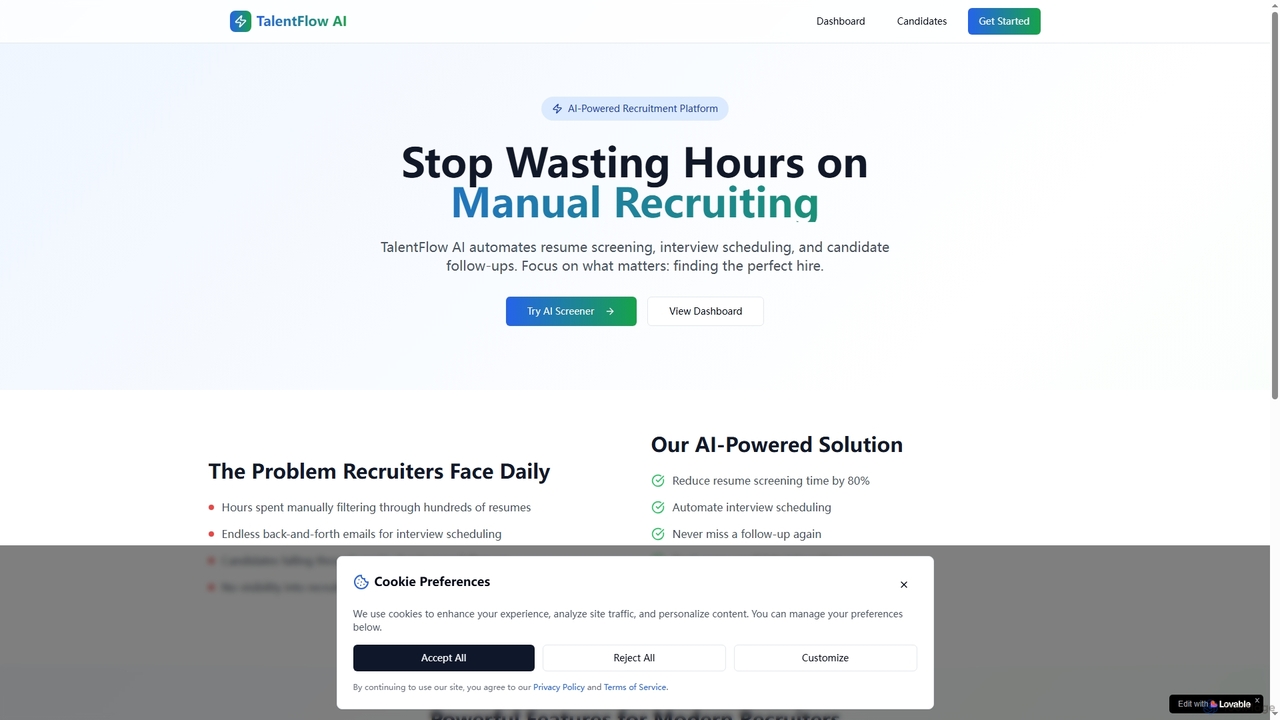
FlowHireAIEngine is an AI-powered recruitment platform designed to automate and streamline the entire hiring process. It helps recruiters save hours by intelligently screening resumes, scheduling interviews, and managing candidate follow-ups, allowing them to focus on finding the perfect hire.

Applicant Tracking
Visits 5.8KFavorites 126Likes 156

About Talent Acquisition

Talent Acquisition AI tools are specialized platforms that leverage artificial intelligence to streamline and enhance the strategic process of identifying, attracting, and hiring top talent. These tools utilize advanced algorithms for tasks like candidate sourcing, intelligent screening, and predictive analytics, significantly improving efficiency and decision-making in the hiring funnel. They empower organizations to build robust talent pipelines, reduce time-to-hire, and foster a more equitable and data-driven recruitment experience. By automating repetitive tasks and providing deep insights, they allow talent acquisition teams to focus on strategic engagement and relationship building.

Core Features

  • AI-Powered Candidate Sourcing: Automatically identifies and engages passive and active candidates across diverse platforms.
  • Intelligent Resume Screening: Analyzes resumes and applications for relevant skills, experience, and cultural fit, reducing manual review time.
  • Predictive Analytics for Hiring: Forecasts candidate success, retention rates, and potential flight risks based on historical data.
  • Automated Candidate Engagement: Personalizes communication, schedules interviews, and nurtures candidate relationships through chatbots and email sequences.
  • Bias Reduction Algorithms: Helps mitigate unconscious bias in screening and evaluation processes to promote diversity and inclusion.

Use Cases

These tools are invaluable for large enterprises managing high-volume hiring, startups seeking specialized technical talent, and organizations aiming to proactively build future talent pipelines. They are particularly effective in competitive markets where identifying and engaging top-tier candidates quickly is crucial, or for roles requiring a very specific skill set that traditional methods struggle to uncover.

How to Choose

When selecting a Talent Acquisition AI tool, consider its integration capabilities with existing Applicant Tracking Systems (ATS) and HRIS, the accuracy and transparency of its AI models, and its compliance with data privacy regulations. Evaluate the tool's scalability to match your organization's growth, its ability to customize screening criteria, and the level of support and training provided to ensure seamless adoption and maximum ROI.

Talent Acquisition use cases

1

Automated Sourcing of Passive Candidates

A corporate recruiter needs to fill a highly specialized senior engineering role. Instead of manually searching LinkedIn and other platforms, they use an AI talent acquisition tool. The tool leverages its algorithms to scan millions of profiles, identify individuals with the exact skill set and experience, and even predict their likelihood of being open to new opportunities. This proactive sourcing saves hundreds of hours, presenting a curated list of high-potential passive candidates who might otherwise be missed, significantly accelerating the initial pipeline building.

2

Intelligent Screening for High-Volume Applications

A large retail company receives thousands of applications for entry-level positions during peak hiring seasons. Manually reviewing each resume is time-consuming and prone to human error. An AI talent acquisition tool automatically screens applications, identifying candidates who meet minimum qualifications, possess relevant keywords, and demonstrate potential for growth based on predefined criteria. This intelligent filtering reduces the initial candidate pool by 70-80%, allowing recruiters to focus on interviewing the most promising candidates, thereby speeding up the hiring process for mass recruitment drives.

3

Personalized Candidate Relationship Management

A tech startup aims to build a strong employer brand and nurture relationships with potential future hires. They use an AI talent acquisition platform to automate personalized communication with candidates who have previously applied or shown interest. The AI sends tailored emails, shares relevant company news, and provides updates on career opportunities based on the candidate's profile and preferences. This continuous engagement keeps the company top-of-mind for high-potential individuals, creating a warm talent pipeline for future openings and significantly improving the candidate experience.

4

Predictive Analytics for Retention and Success

An HR department wants to reduce employee turnover and improve the long-term success of new hires. They implement an AI talent acquisition tool that analyzes historical data, including candidate profiles, interview feedback, and performance metrics of past employees. The AI generates predictive scores for each candidate, indicating their likelihood of success in a role and their potential for long-term retention. This data-driven insight helps hiring managers make more informed decisions, leading to a 15-20% improvement in new hire retention rates and better overall team performance.

5

Mitigating Bias in Candidate Evaluation

A company committed to diversity and inclusion wants to ensure its hiring process is fair and unbiased. They use an AI talent acquisition tool with built-in bias detection and mitigation features. The AI anonymizes candidate data during initial screening, flags potentially biased language in job descriptions, and provides objective scoring based purely on qualifications and skills. This helps reduce unconscious human bias in resume reviews and initial interviews, leading to a more diverse candidate pool and fairer hiring outcomes, aligning with the company's DEI goals.

6

Global Talent Pool Management and Engagement

A multinational corporation needs to manage a diverse global talent pool for various roles across different regions. An AI talent acquisition platform centralizes candidate data from multiple sources, automatically categorizes candidates by skills, location, and language proficiency, and facilitates personalized communication in their native languages. The AI can identify skill gaps within the organization and proactively suggest candidates from the global pool, enabling strategic workforce planning and ensuring the company can quickly tap into specialized talent worldwide, optimizing global hiring efforts.

Talent Acquisition FAQ

What are Talent Acquisition AI tools?

Talent Acquisition AI tools are software solutions that use artificial intelligence to automate, optimize, and enhance various stages of the strategic talent acquisition process. They go beyond traditional recruitment by focusing on proactive sourcing, candidate relationship management, and predictive analytics to identify, attract, and secure high-quality talent. These tools typically feature capabilities like intelligent resume screening, automated candidate outreach, and bias reduction algorithms, aiming to build a sustainable talent pipeline and improve hiring outcomes.

How do Talent Acquisition AI tools differ from general Recruitment software?

While both fall under the broader 'Recruitment' umbrella, Talent Acquisition AI tools are more strategic and proactive. General recruitment software (like ATS) primarily manages the application process, tracking candidates once they apply. Talent Acquisition AI, however, focuses on identifying and engaging talent *before* they apply, building long-term pipelines, and using predictive analytics for strategic workforce planning. It emphasizes employer branding, candidate experience, and data-driven insights to acquire specialized or high-potential talent, rather than just processing applications for immediate openings.

What are the main benefits of using AI in talent acquisition?

The main benefits of using AI in talent acquisition include significantly improved efficiency by automating repetitive tasks like resume screening and initial outreach, leading to faster time-to-hire. AI also enhances the quality of hires through data-driven insights and predictive analytics, identifying candidates with a higher likelihood of success and retention. Furthermore, it helps reduce unconscious bias in the hiring process, fostering greater diversity and inclusion, and provides a more personalized and engaging candidate experience, strengthening the employer brand.

How to choose the right AI tool for talent acquisition?

Choosing the right AI tool for talent acquisition involves several key considerations. First, assess its integration capabilities with your existing Applicant Tracking System (ATS) and HRIS to ensure seamless data flow. Second, evaluate the accuracy, transparency, and explainability of its AI models, especially regarding bias detection and mitigation. Third, consider the specific features offered, such as advanced sourcing, predictive analytics, or candidate engagement functionalities, and how they align with your strategic hiring goals. Finally, review data privacy compliance, scalability, vendor support, and pricing models to find a solution that fits your organizational needs and budget.

What are the ethical considerations when using AI in talent acquisition?

Ethical considerations when using AI in talent acquisition primarily revolve around fairness, transparency, and data privacy. There's a risk of algorithmic bias if AI models are trained on unrepresentative or biased data, potentially perpetuating discrimination. Transparency is crucial, meaning organizations should understand how AI makes decisions and be able to explain them to candidates. Data privacy and security are also paramount, as these tools handle sensitive personal information. Companies must ensure compliance with regulations like GDPR and CCPA, and implement robust security measures to protect candidate data from misuse or breaches.