Vancit
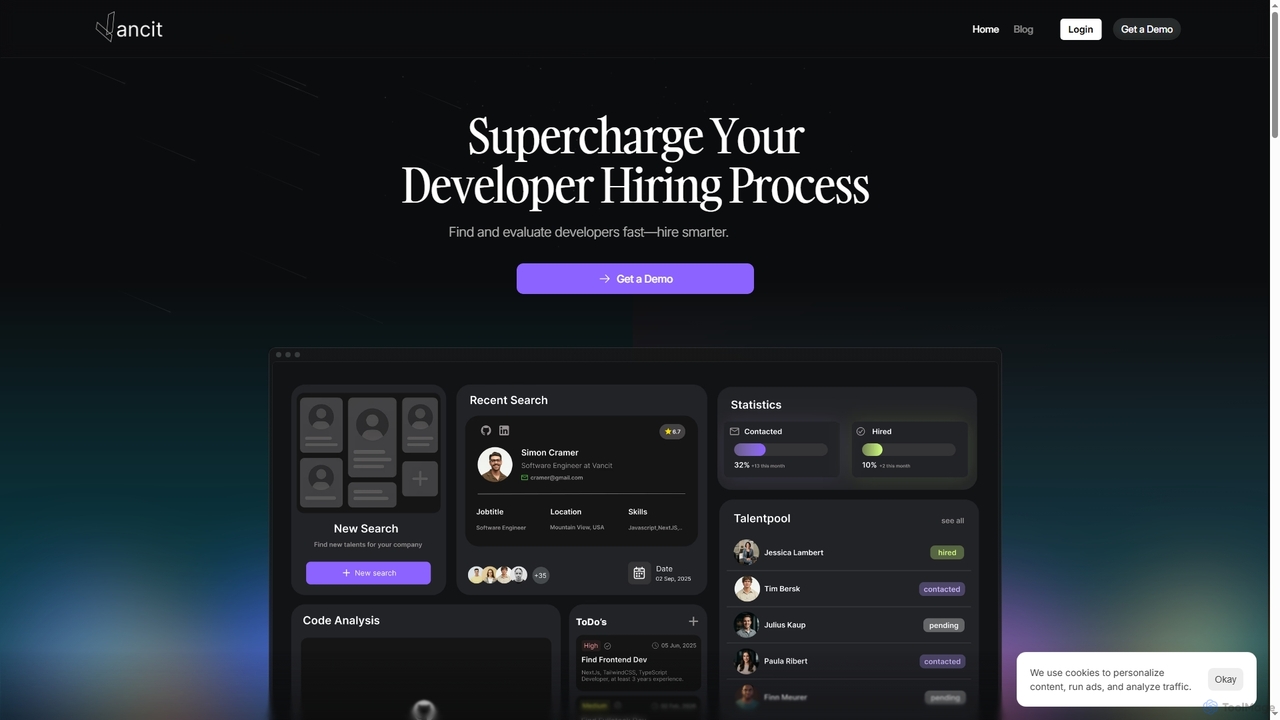
Vancit is an AI-powered platform designed to supercharge developer hiring by automating the screening process, providing real-time talent …
Vancit is an AI-powered platform designed to supercharge developer hiring by automating the screening process, providing real-time talent data, and enabling precise talent matching from a global pool of over 750 million developer profiles. It streamlines tech recruitment, helping companies find and evaluate developers faster and smarter.
Malloy
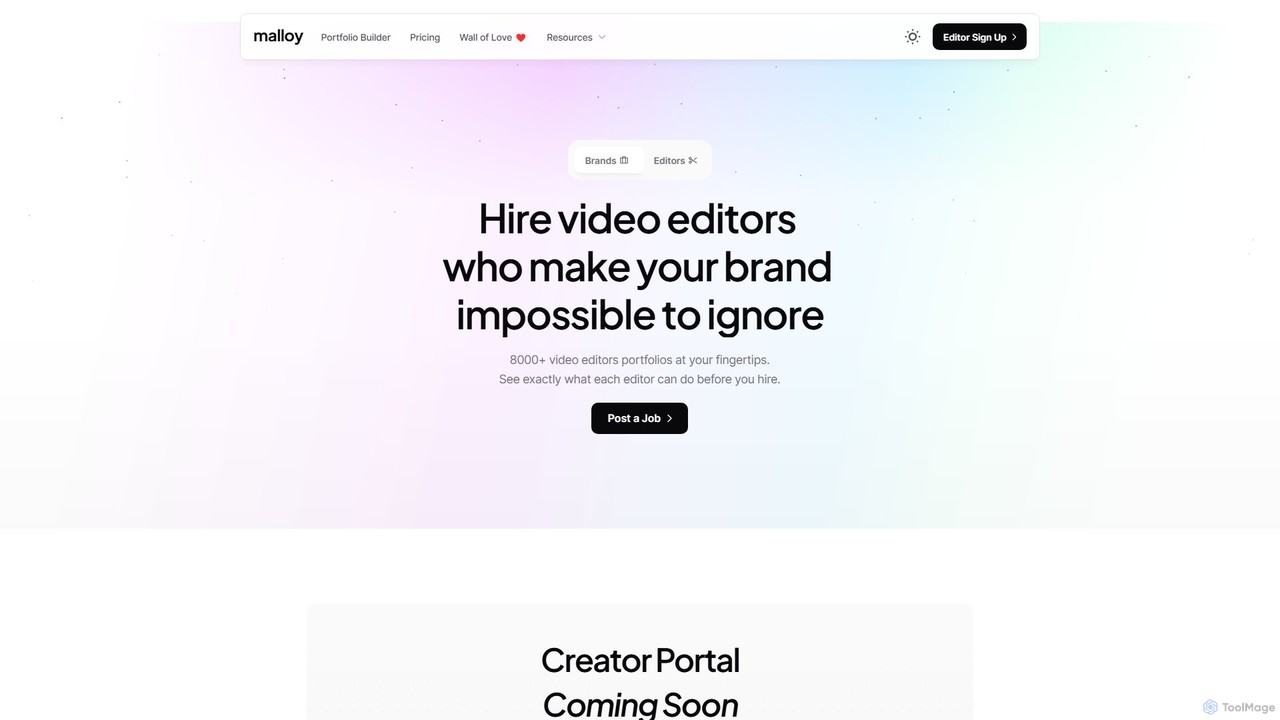
Malloy is a dual-purpose platform connecting brands with over 8,500 vetted video editors and empowering editors to build …
Malloy is a dual-purpose platform connecting brands with over 8,500 vetted video editors and empowering editors to build professional portfolios. It features an AI-powered search for hirers to find talent by niche and tools. For editors, it offers a quick portfolio builder with analytics, custom domains, and AI tools like a job scanner and creative prompts to streamline workflows and secure more clients.
About Talent Sourcing
Talent Sourcing tools are AI-powered platforms designed to proactively identify, engage, and build relationships with potential candidates, often before specific job openings arise. These tools leverage advanced algorithms, natural language processing, and machine learning to scan vast data sources, predict candidate fit, and automate initial outreach. Their primary value lies in creating a robust pipeline of qualified talent, significantly reducing time-to-hire and improving the quality of candidates for various roles within the broader recruitment process.
Core Features
- Automated Candidate Discovery: Scans professional networks, public profiles, and databases to identify passive and active candidates matching specific criteria.
- AI-Powered Matching: Uses machine learning to analyze resumes, job descriptions, and candidate profiles to predict the best fit for roles, often highlighting skills and experience not immediately obvious.
- Personalized Outreach: Generates and automates personalized email or message sequences to engage potential candidates, improving response rates.
- Pipeline Management: Organizes and tracks sourced candidates, allowing recruiters to nurture relationships over time and manage talent pools effectively.
- Diversity & Inclusion Analytics: Identifies potential biases in sourcing processes and helps broaden candidate pools to promote more diverse hiring.
Applicable Scenarios
Talent acquisition teams and recruiters utilize these tools to build strategic talent pipelines for hard-to-fill roles, scale hiring efforts for growing organizations, and proactively identify future leaders. They are essential for companies in competitive industries like tech, healthcare, and finance, where securing top talent requires continuous engagement and foresight.
How to Choose
When selecting a Talent Sourcing tool, consider its integration capabilities with existing ATS/CRM systems, the accuracy and breadth of its candidate matching algorithms, the level of personalization offered in outreach features, and its compliance with data privacy regulations (e.g., GDPR, CCPA). Evaluate the tool's ability to support your specific sourcing strategy, whether it's for niche roles or high-volume hiring.
Talent SourcingUse Cases
Building a Tech Talent Pipeline
A tech company's talent acquisition specialist uses an AI Talent Sourcing tool to identify software engineers with specific programming language skills and cloud experience. The tool proactively scans GitHub, LinkedIn, and other platforms, then automates personalized messages to engage these passive candidates, inviting them to join a talent community for future opportunities, even before a specific role is open.
Scaling Sales Team Recruitment
A rapidly growing SaaS startup needs to hire 50 sales representatives within six months. The HR team deploys an AI sourcing platform to quickly identify candidates with relevant sales experience and industry knowledge from various online sources. The tool prioritizes candidates based on engagement signals and automates initial qualification questions, allowing recruiters to focus on high-potential leads.
Proactive Executive Search
An executive search firm leverages AI Talent Sourcing to identify high-level candidates for C-suite positions. The tool analyzes leadership profiles, industry contributions, and career trajectories to pinpoint individuals with the precise experience and strategic vision required. It then assists in crafting highly tailored, discreet outreach messages to initiate confidential conversations.
Enhancing Diversity in Hiring
A large enterprise aims to increase diversity in its leadership roles. The talent sourcing team uses an AI tool with built-in diversity analytics to identify candidates from underrepresented groups who meet the qualifications. The tool helps broaden the search parameters beyond traditional networks, ensuring a more inclusive candidate pool for consideration.
Sourcing for Niche Healthcare Specialists
A hospital system struggles to find specialized medical professionals, such as rare disease researchers or specific surgical technicians. An AI Talent Sourcing platform is used to scour academic publications, medical forums, and professional associations to locate individuals with highly specific certifications and research backgrounds, facilitating direct and targeted engagement.
Reducing Time-to-Hire for High-Volume Roles
A retail chain frequently hires for customer service and store management positions. The talent sourcing team uses AI to automate the identification and initial screening of thousands of candidates from job boards and social media. This significantly reduces the manual effort in reviewing applications, allowing recruiters to quickly move qualified candidates to the interview stage and fill roles faster.