
Developer Tools Best in category 1 results Hiring Platforms AI Tool

Popular AI tools in the Hiring Platforms field of Developer Tools include Vancit, etc., helping you quickly improve efficiency.

Vancit

Vancit

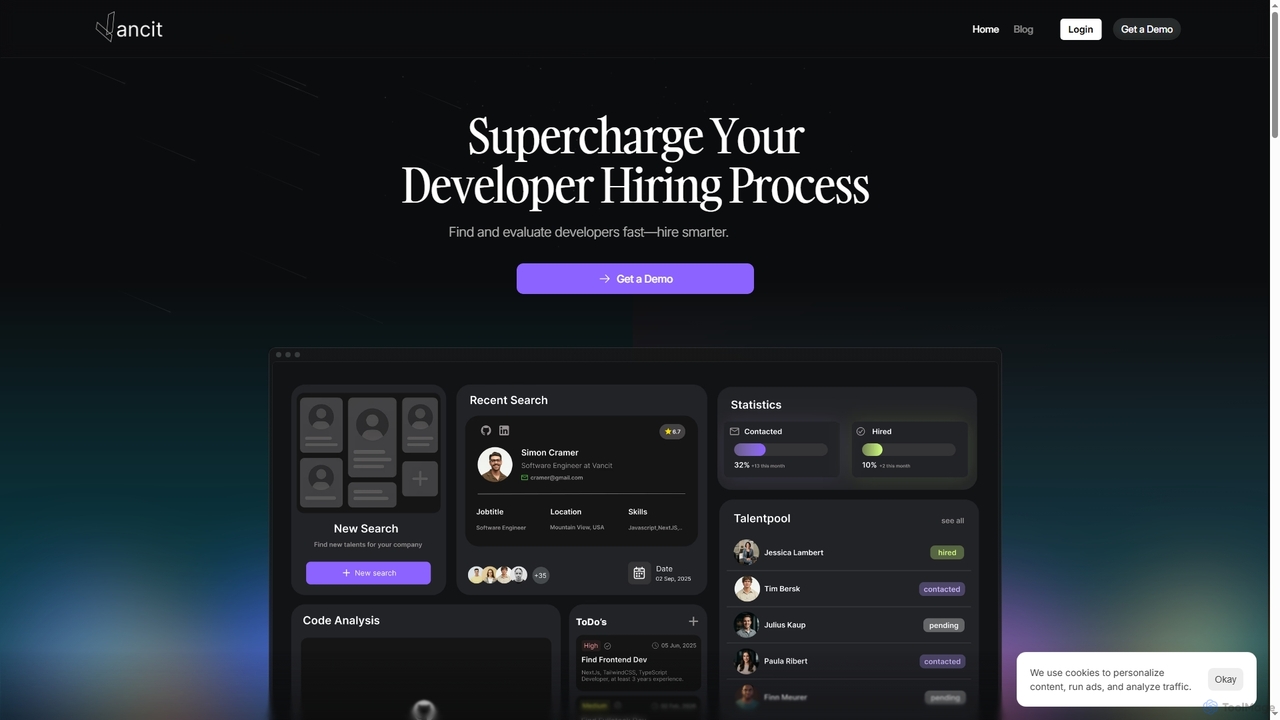
Vancit is an AI-powered platform designed to supercharge developer hiring by automating the screening process, providing real-time talent …

2.4K

About Hiring Platforms

Hiring Platforms are a specialized category of developer tools that use artificial intelligence to streamline and enhance the technical recruitment process. These platforms employ machine learning algorithms to automate candidate sourcing, screen resumes for specific coding languages and frameworks, and intelligently match developers to job roles. Their primary value lies in accelerating the hiring timeline, reducing unconscious bias, and improving the quality of candidate selection. Many of these tools integrate directly with code repositories and applicant tracking systems (ATS) to create a seamless workflow for recruiters and hiring managers.

Core Features

  • AI-Powered Candidate Matching: Automatically scores and ranks candidates based on their skills, experience, and code repository activity against job requirements.
  • Automated Technical Screening: Conducts initial assessments through coding challenges or technical questionnaires to validate skills early in the process.
  • Bias Reduction Tools: Anonymizes candidate information like name and gender to ensure evaluations are based purely on technical merit.
  • Predictive Analytics: Provides data-driven insights on candidate success potential and helps optimize the overall hiring strategy.
  • ATS & Calendar Integration: Seamlessly connects with existing Applicant Tracking Systems and calendars to automate interview scheduling and data synchronization.

Use Cases

These platforms are primarily used by tech companies, from startups to large enterprises, to scale their engineering teams. HR departments and technical recruiters use them to manage high volumes of applicants for roles like software engineer, data scientist, and DevOps specialist. Engineering managers also leverage these tools to design relevant technical assessments and participate in a more structured evaluation process.

How to Choose

When selecting an AI Hiring Platform, consider the quality and relevance of its technical assessments for your specific tech stack. Evaluate its integration capabilities with your existing tools, such as your ATS, HRIS, and platforms like GitHub. Assess the platform's features for reducing bias and ensuring a positive candidate experience. Finally, review the pricing model to ensure it aligns with your hiring volume and budget.

Hiring PlatformsUse Cases

1

Automating Technical Screening for Engineering Roles

A technical recruiter at a fast-growing SaaS company is tasked with hiring ten senior software engineers in one quarter. Manually reviewing hundreds of resumes and conducting initial phone screens is time-consuming. By using an AI Hiring Platform, the recruiter sets up an automated workflow. The platform scans resumes and GitHub profiles to shortlist candidates matching key criteria (e.g., Python, AWS, Kubernetes). It then automatically sends a standardized coding challenge to the shortlisted candidates. This process filters out unqualified applicants efficiently, allowing the recruiter to focus their time on engaging with the top 10% of candidates who passed the assessment, significantly reducing time-to-hire.

2

Reducing Unconscious Bias in Hiring

An enterprise technology firm aims to improve diversity in its engineering department. Hiring managers notice that traditional resume screening might introduce unconscious biases. They implement an AI Hiring Platform that anonymizes candidate profiles during the initial review stage. The platform hides names, photos, and universities, presenting only skills, experience, and assessment results. This forces evaluators to focus solely on technical qualifications. As a result, the company sees a 15% increase in candidates from underrepresented backgrounds advancing to the final interview stage, helping them build a more diverse and qualified team based on merit.

3

Predicting Candidate Success with Data Analytics

A large e-commerce company wants to improve its hiring accuracy for data science roles. They use an AI Hiring Platform's predictive analytics feature. The platform analyzes historical performance data of current employees and correlates it with their initial assessment scores and interview feedback. When new candidates apply, the AI model generates a 'success prediction score' based on these historical patterns. This score helps hiring managers identify candidates who not only have the right skills but also exhibit traits common among the company's top performers. This data-driven approach helps reduce hiring mistakes and improves long-term employee retention.

4

Streamlining Interview Scheduling Across Time Zones

A global tech company with distributed teams struggles with coordinating interviews for a DevOps Engineer role across different time zones. The hiring team, located in Europe, needs to schedule interviews with candidates in North America and Asia. They use an AI Hiring Platform with integrated calendar functionality. The platform automatically syncs with the interviewers' calendars, identifies mutual availability, and sends candidates a link to self-schedule a slot. It handles time zone conversions automatically. This eliminates endless back-and-forth emails, reduces scheduling errors, and provides a professional, efficient experience for candidates worldwide.

5

Sourcing Passive Technical Talent

A cybersecurity firm needs to hire a niche role: a Principal Security Engineer with experience in blockchain. This talent is scarce and rarely applies for jobs directly. The firm's talent acquisition team uses an AI Hiring Platform to source passive candidates. The AI scans millions of public profiles on platforms like GitHub, Stack Overflow, and technical blogs to identify individuals who demonstrate the required expertise through their code contributions and technical discussions. The platform then helps craft personalized outreach messages based on the candidate's specific projects, increasing the response rate and successfully building a pipeline of highly qualified, passive candidates.

6

Improving the Candidate Experience with Automation

A mid-sized gaming studio receives a high volume of applications for its game developer positions. In the past, many candidates reported a poor experience due to slow response times. To solve this, the studio adopts an AI Hiring Platform. The platform automatically sends a confirmation email upon application receipt and provides candidates with a portal to track their application status in real-time. For rejected candidates, it sends a polite, personalized rejection email at the appropriate stage. This level of automation ensures timely and transparent communication, significantly improving the candidate experience and protecting the studio's employer brand, even when managing hundreds of applications.

Hiring PlatformsFrequently Asked Questions