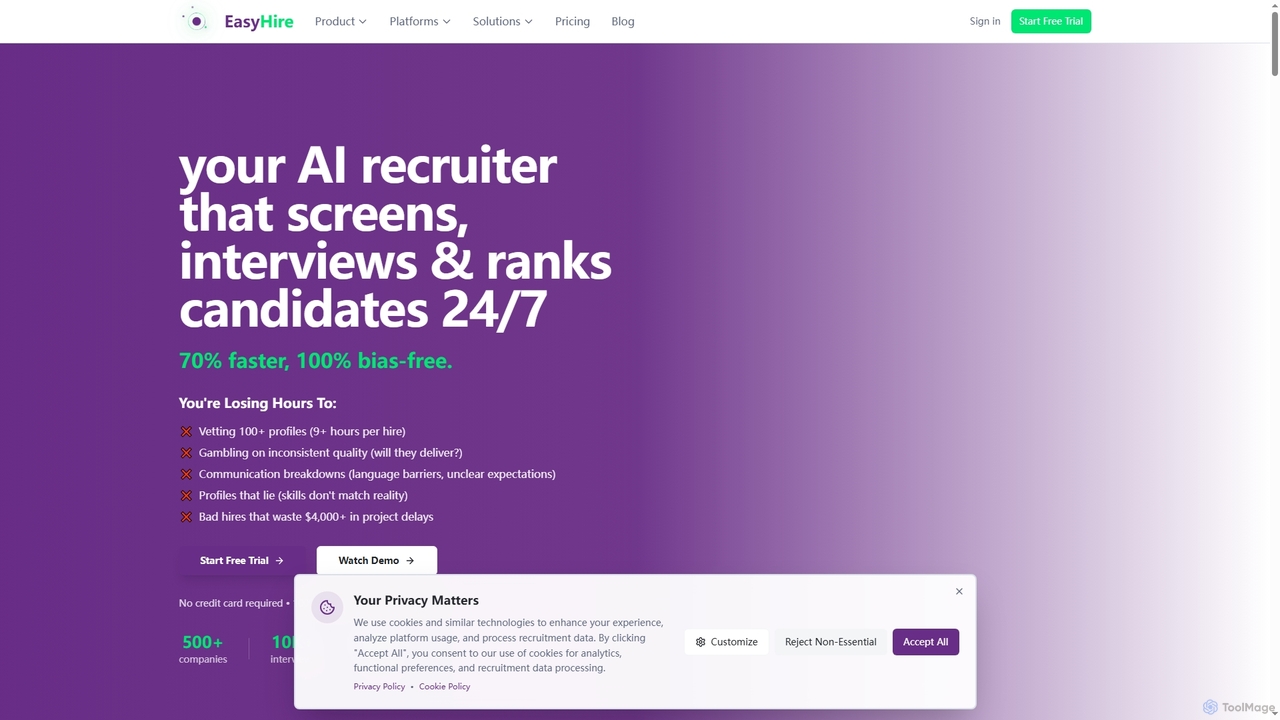
Applicant Tracking Systems (ATS) are AI-powered tools designed to streamline and manage the entire recruitment and hiring process, from initial application to onboarding. These systems leverage artificial intelligence for tasks like resume parsing, candidate screening, and automated communication, significantly reducing manual effort. By centralizing candidate data and automating repetitive tasks, ATS platforms help organizations efficiently identify, engage, and hire the best talent, improving both recruiter productivity and candidate experience within the broader recruitment lifecycle.
Core Features
- AI-Powered Resume Parsing: Automatically extracts and categorizes candidate information from resumes and applications, saving manual data entry time.
- Automated Candidate Screening: Uses AI to score and rank applicants based on predefined criteria, quickly identifying top-fit candidates.
- Personalized Candidate Communication: Sends automated, customizable emails and updates to applicants, keeping them informed throughout the hiring process.
- Interview Scheduling & Management: Integrates with calendars to simplify the coordination and booking of interviews for multiple stakeholders.
- Compliance & Reporting: Tracks hiring metrics and ensures adherence to regulatory requirements like EEO and GDPR, providing audit trails.
Applicable Scenarios
Applicant Tracking Systems are indispensable for organizations facing high-volume hiring, such as large enterprises, rapidly growing startups, and recruitment agencies. They enable HR teams to efficiently process thousands of applications, manage diverse talent pipelines, and maintain consistent communication with candidates. For companies expanding globally, an ATS helps standardize recruitment processes across different regions while ensuring local compliance.
How to Choose
When selecting an AI-powered Applicant Tracking System, consider its integration capabilities with existing HRIS or payroll systems to ensure seamless data flow. Evaluate the depth and accuracy of its AI screening and matching algorithms, as well as its customization options for workflows and branding. User-friendliness for both recruiters and candidates, robust reporting features, and compliance support for relevant regulations are also critical factors for making an informed decision.