Teamble
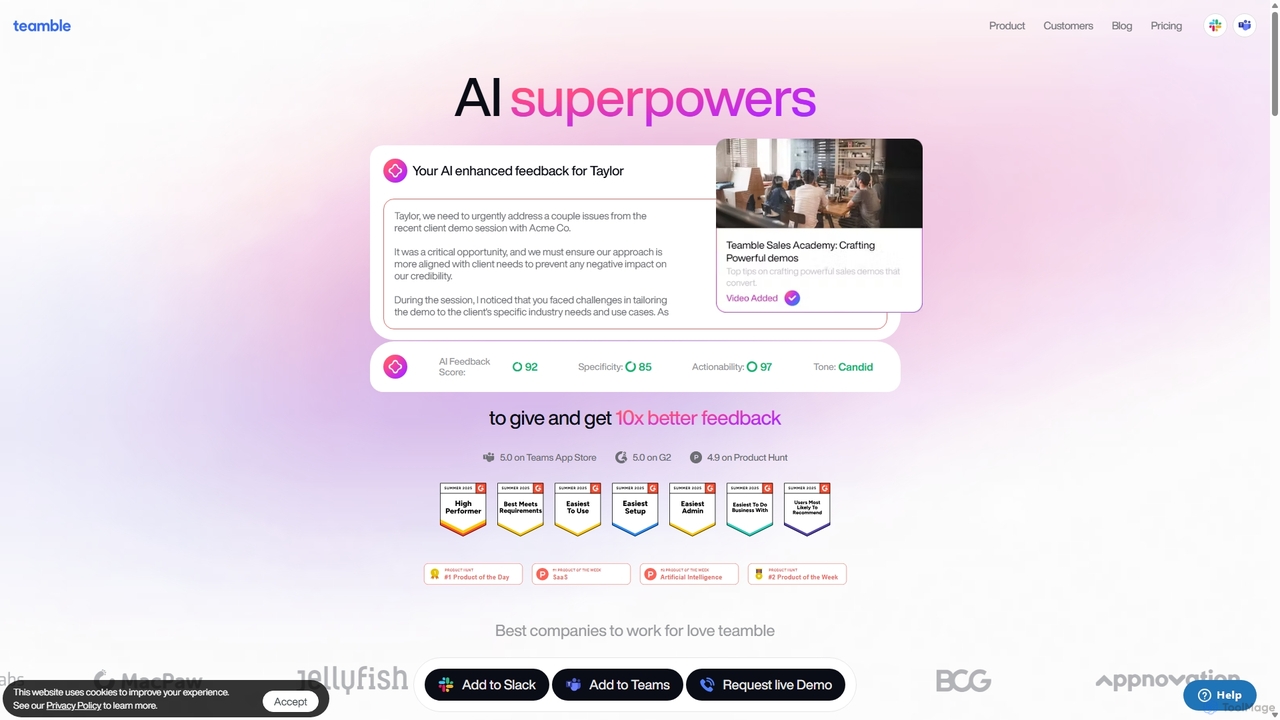
Teamble is an AI-powered employee feedback and performance management platform that integrates seamlessly with Slack and Microsoft Teams. …
Teamble is an AI-powered employee feedback and performance management platform that integrates seamlessly with Slack and Microsoft Teams. It helps companies foster a continuous feedback culture, streamline performance reviews, set and track goals (OKRs), and boost employee engagement, all within your existing workflow.
Coffice
Coffice is a completely free Slack tool designed to boost employee engagement and team morale. It facilitates peer-to-peer …
Coffice is a completely free Slack tool designed to boost employee engagement and team morale. It facilitates peer-to-peer recognition, celebrates milestones like birthdays and work anniversaries, and fosters a positive company culture through a system of points, rewards, and public leaderboards, all seamlessly integrated within your Slack workspace.
OrgaNice
OrgaNice is an AI-powered employee engagement platform designed for Slack-first teams. It automates HR tasks, builds dynamic org …
OrgaNice is an AI-powered employee engagement platform designed for Slack-first teams. It automates HR tasks, builds dynamic org charts, manages absences, and fosters a culture of recognition and feedback, all within Slack. This helps reduce administrative overhead for managers and increases employee engagement and connectivity.
Banter
Banter is a Slack bot designed to strengthen remote team bonds through fun, automated icebreakers and conversation starters. …
Banter is a Slack bot designed to strengthen remote team bonds through fun, automated icebreakers and conversation starters. It posts engaging prompts, brain teasers, and polls directly into your team channels, fostering a relaxed and inclusive environment for connection. Customize content, schedule posts, and even generate AI-powered jokes to keep your team culture vibrant and engaged.
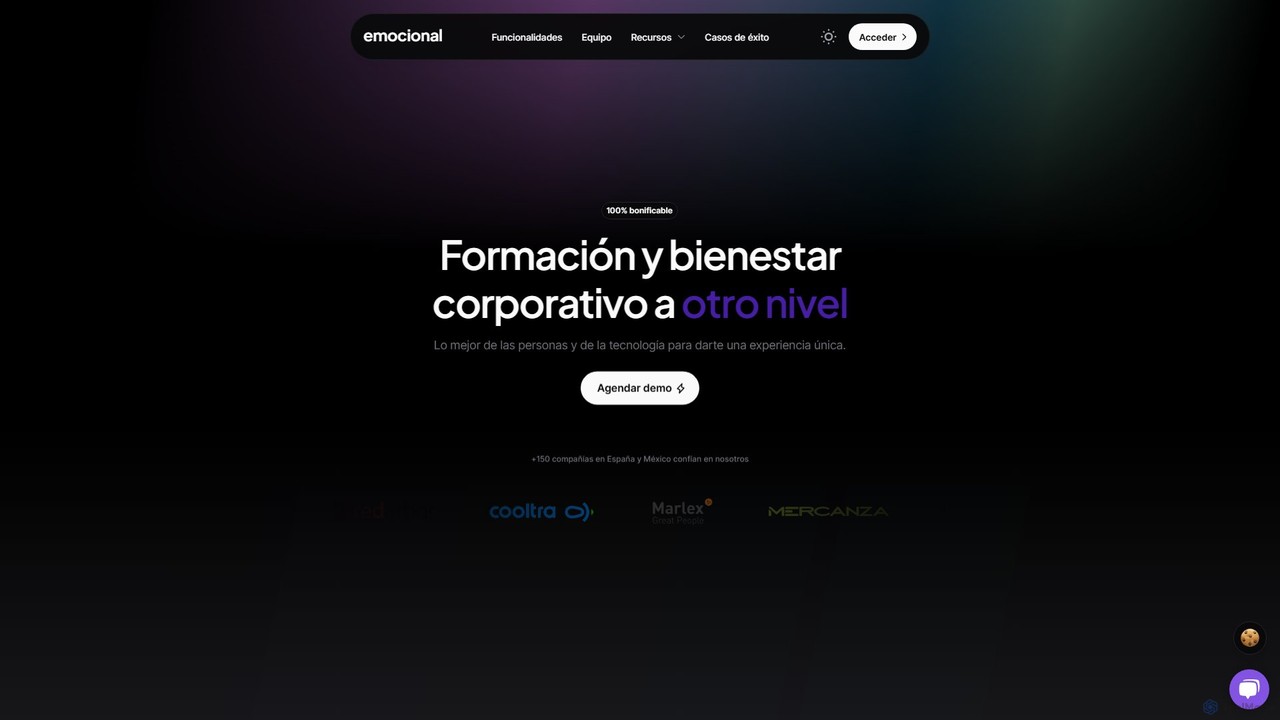
emocional
emocional is an AI-powered corporate well-being and training platform designed to enhance employee performance and engagement. It offers …
emocional is an AI-powered corporate well-being and training platform designed to enhance employee performance and engagement. It offers an integrated solution combining 360° training, therapy, coaching, and nutrition services. Featuring an AI assistant, Eva AI, it provides personalized development paths and fosters a positive company culture through gamification and community features.
About Employee Engagement
AI Employee Engagement tools are specialized platforms designed to measure, analyze, and enhance the connection employees have with their organization. These tools utilize technologies like Natural Language Processing (NLP) to analyze feedback and predictive analytics to identify disengagement risks. By providing real-time insights into morale, satisfaction, and motivation, they empower companies to proactively build a positive culture, reduce turnover, and improve overall performance. They transform employee feedback from static data into actionable intelligence for managers and HR leaders.
Core Features
- Sentiment Analysis: Automatically analyzes text from surveys, reviews, and communication channels to gauge employee mood and opinions.
- Predictive Attrition Analytics: Uses engagement data and other metrics to identify employees or teams at high risk of leaving.
- Automated Pulse Surveys: Deploys short, frequent surveys through channels like email or Slack to track engagement trends in real time.
- Recognition & Rewards Platform: Facilitates peer-to-peer and manager-led recognition to reinforce positive behaviors and company values.
- Actionable Recommendations: Provides data-driven suggestions and action plans for managers to improve their team's engagement.
Use Cases
These tools are primarily used by HR departments, people managers, and executive leadership in mid-to-large sized companies. They are particularly valuable for organizations focused on improving retention, managing remote or hybrid teams, and understanding the impact of organizational changes on employee morale. For instance, a manager can use the dashboard to understand their team's specific pain points, while leadership can track company-wide trends.
How to Choose
When selecting an Employee Engagement tool, consider its integration capabilities with your existing HRIS, communication platforms (like Slack or Teams), and performance management systems. Evaluate the depth of its analytics and the clarity of its reporting dashboards. Assess the platform's approach to employee anonymity and data privacy to ensure trust. Finally, consider the user experience for both employees providing feedback and managers accessing insights.
Employee EngagementUse Cases
Proactively Identifying Attrition Risks
An HR Business Partner at a large tech company notices a slight dip in sales performance in one region. Instead of waiting for exit interviews, they use an AI Employee Engagement tool to analyze recent pulse survey data and anonymous feedback. The platform's predictive analytics flags a specific team with a 45% higher attrition risk, correlating low scores on 'career growth' with manager feedback. The HR partner collaborates with the team's director to implement a new mentorship program and transparent career pathing, reducing the predicted attrition risk by 30% within one quarter.
Analyzing Open-Ended Survey Comments at Scale
A multinational corporation conducts its annual engagement survey, receiving over 20,000 open-ended comments in multiple languages. Manually analyzing this would take weeks. The People Analytics team feeds the raw text data into their engagement platform. The tool's NLP capabilities automatically categorize comments into themes like 'Compensation', 'Work-Life Balance', and 'Leadership'. It also performs sentiment analysis on each theme, revealing that while 'Compensation' is a frequent topic, 'Leadership' has the most negative sentiment. This allows the executive team to focus their efforts on leadership development programs immediately.
Fostering a Culture of Recognition in a Remote Team
A fully remote marketing agency struggles with team cohesion and celebrating wins. They implement an engagement tool with a built-in recognition feature integrated into Slack. Now, any team member can give public 'kudos' to a colleague for their help on a project, which is then posted in a dedicated Slack channel. Managers are allocated a small monthly budget for spot rewards (like coffee vouchers) tied to this recognition. After six months, pulse surveys show a 25% increase in scores related to 'feeling valued' and 'team collaboration'.
Empowering Managers with Actionable Team Insights
A retail company provides its store managers with access to a real-time engagement dashboard. A manager of a low-performing store sees that her team's engagement scores are consistently low, particularly in 'workload balance'. The tool provides AI-generated recommendations, such as 'reviewing shift scheduling patterns' and 'holding a team meeting to discuss task distribution'. The manager implements these suggestions. Over the next two months, the team's engagement score for workload balance improves by 15%, and the store's customer satisfaction ratings increase by 10%.
Measuring the Impact of a New Wellness Initiative
A company invests in a new mental health and wellness program to combat burnout. To measure its ROI, the HR team uses their engagement tool to track specific metrics before and after the launch. They set up a custom pulse survey focusing on stress levels, work-life balance, and perceived company support. After three months, the data shows a 20% reduction in employees reporting high stress levels and a 12% increase in favorable responses to 'the company cares about my well-being'. This data provides clear evidence to leadership of the program's positive impact.
Improving Onboarding with New Hire Feedback
A fast-growing startup experiences high turnover within the first 90 days. The HR team sets up an automated survey sequence using their engagement tool for all new hires. Surveys are sent at the 1-week, 30-day, and 90-day marks, asking specific questions about their onboarding experience, clarity of role, and initial manager support. The AI analysis of the feedback highlights a consistent issue: a lack of structured training in the second week. By revamping the onboarding process to address this, the company reduces its 90-day turnover rate by 40% over the next six months.