lastworkingday
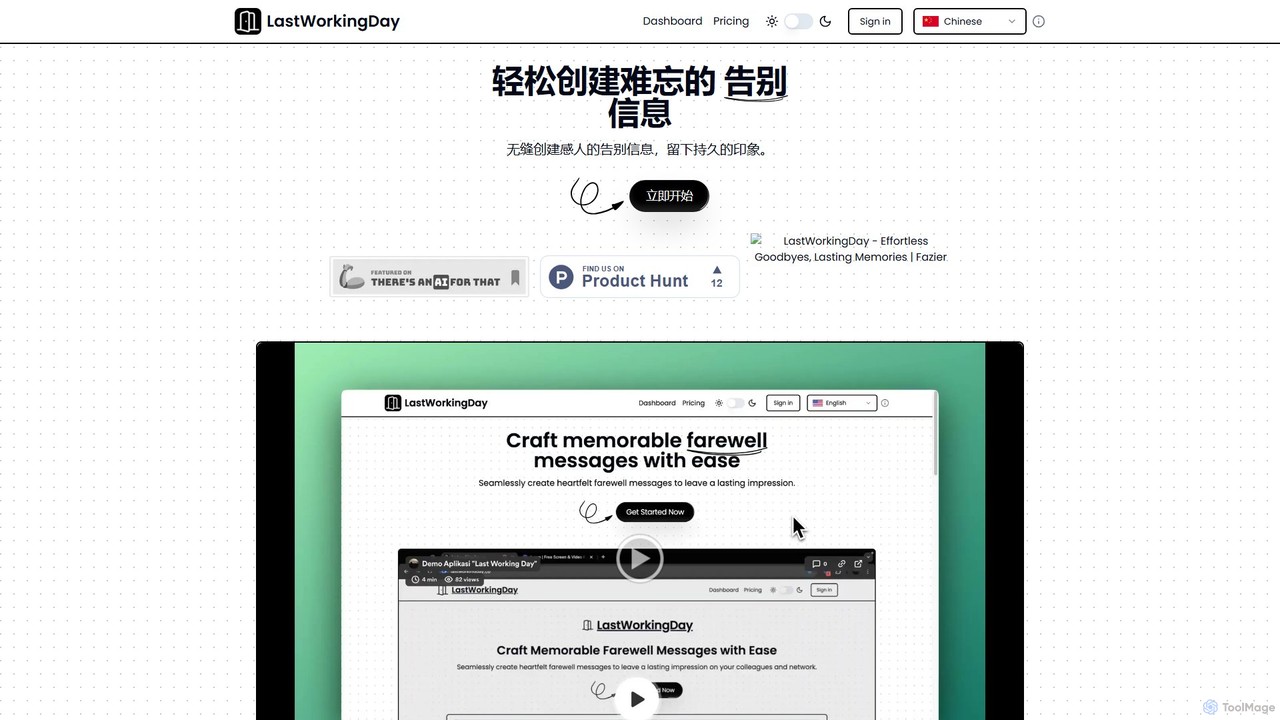
lastworkingday is an AI-powered tool designed to help you effortlessly create memorable and heartfelt farewell messages. Using GPT-4, …
lastworkingday is an AI-powered tool designed to help you effortlessly create memorable and heartfelt farewell messages. Using GPT-4, it generates personalized goodbye notes for colleagues, professional networks like LinkedIn, or custom recipients. Features include adjustable tones, voice input, and rich text editing, saving you time and stress during a job transition.
About Employee Offboarding
Employee Offboarding AI tools are specialized platforms designed to automate and streamline the complex process of an employee's departure from an organization. Leveraging artificial intelligence, these tools manage a wide array of tasks, from revoking system access and transferring knowledge to processing final payroll and benefits. They ensure compliance with legal requirements, significantly reduce administrative burden, and help maintain a positive employer brand throughout the transition. By integrating seamlessly with existing HRIS, IT, and payroll systems, these solutions provide a comprehensive, secure, and efficient offboarding experience for both the company and the departing employee.
Core Features
- Automated Task Orchestration: Systematically triggers and tracks all necessary offboarding tasks across departments (HR, IT, Payroll, Legal).
- Access Revocation Management: Automatically disables accounts, revokes software licenses, and removes access permissions across various platforms.
- Knowledge Transfer Facilitation: Guides departing employees to document critical information, projects, and processes for seamless handover.
- Exit Interview Analysis: Uses NLP to analyze qualitative feedback from exit interviews, identifying trends and actionable insights for retention.
- Compliance & Documentation: Ensures all legal and regulatory requirements are met, generating necessary documents and maintaining audit trails.
Applicable Scenarios
These tools are invaluable for large enterprises with high employee turnover, enabling them to manage hundreds of departures efficiently while ensuring consistency and compliance. HR departments in growing companies use them to reduce manual errors, free up staff from repetitive tasks, and focus on strategic initiatives. Organizations committed to enhancing the departing employee experience also leverage these tools to provide a structured, respectful, and supportive transition, protecting their employer brand and fostering positive alumni relations.
How to Choose
When selecting an Employee Offboarding AI tool, prioritize solutions with robust integration capabilities with your existing HRIS, IT, and payroll systems to ensure data flow and task automation. Evaluate its customization options to align with your specific company policies, legal requirements, and unique offboarding workflows. Strong security and data privacy features are paramount to protect sensitive employee information. Finally, consider its reporting and analytics functionalities to gain actionable insights from offboarding data, helping to improve retention and overall HR strategies.
Employee OffboardingUse Cases
Automating IT Access Revocation
An IT Administrator or HR Manager needs to ensure all system access is revoked promptly and securely upon an employee's departure. AI offboarding tools integrate with identity management systems to automatically disable accounts, revoke software licenses, and remove access permissions across various platforms. This process is triggered by the offboarding workflow, preventing security breaches, ensuring data integrity, and saving IT staff significant manual effort, thereby reducing potential risks and operational costs.
Streamlining Knowledge Transfer
A Department Head or HR Specialist aims to capture critical knowledge from departing employees and transfer it efficiently to successors or team repositories. AI-powered tools prompt departing employees to document key projects, processes, and contacts, often using structured templates or even AI-assisted summarization of past communications and documents. This minimizes business disruption, preserves institutional knowledge, and accelerates the onboarding process for new hires, ensuring continuity and reducing productivity gaps.
Analyzing Exit Interview Feedback
An HR Analyst or Senior Management seeks to gain actionable insights from exit interviews to identify trends in employee satisfaction, reasons for departure, and areas for improvement. AI tools process qualitative data from exit interviews (transcripts, survey responses) using natural language processing (NLP) to identify common themes, sentiment, and actionable insights. These are then presented in intuitive dashboards, providing data-driven recommendations for improving retention, workplace culture, and management practices, leading to a more engaged workforce.
Ensuring Compliance in Final Payroll & Benefits
A Payroll Specialist or HR Compliance Officer must accurately calculate final paychecks, unused leave payouts, and manage benefits cessation in accordance with labor laws and company policies. AI-driven systems integrate with payroll and benefits platforms to automate calculations, generate compliant final pay stubs, and manage COBRA/benefits continuation notifications. This significantly reduces the risk of errors and legal disputes, ensures legal compliance, avoids costly penalties, and provides a smooth financial transition for departing employees, enhancing trust and fairness.
Managing Company Asset Return
A Facilities Manager or HR Coordinator needs to track and facilitate the efficient return of company assets (laptops, phones, badges, keys) from departing employees. AI offboarding tools generate automated checklists, send timely reminders to employees and their managers, track the status of asset returns, and integrate with inventory systems to update asset records upon successful retrieval. This process significantly reduces the loss of company property, streamlines asset recovery, and maintains accurate inventory, leading to cost savings and better resource management.
Enhancing the Departing Employee Experience
An HR Business Partner or Employee Relations Specialist aims to provide a structured, supportive, and positive experience for employees leaving the company. AI-powered platforms offer personalized offboarding portals, automated communication sequences (e.g., farewell messages, benefits information), and self-service options for common queries, ensuring a respectful and smooth departure. This protects the employer brand, fosters positive alumni relations, and encourages future referrals, turning a potentially negative event into an opportunity for positive engagement.