
Best 2 Workforce Planning AI tools for Human Resources
Popular Workforce Planning AI tools in Human Resources include Agentnoon and Kepler, helping you work more efficiently.
Paid
Agentnoon
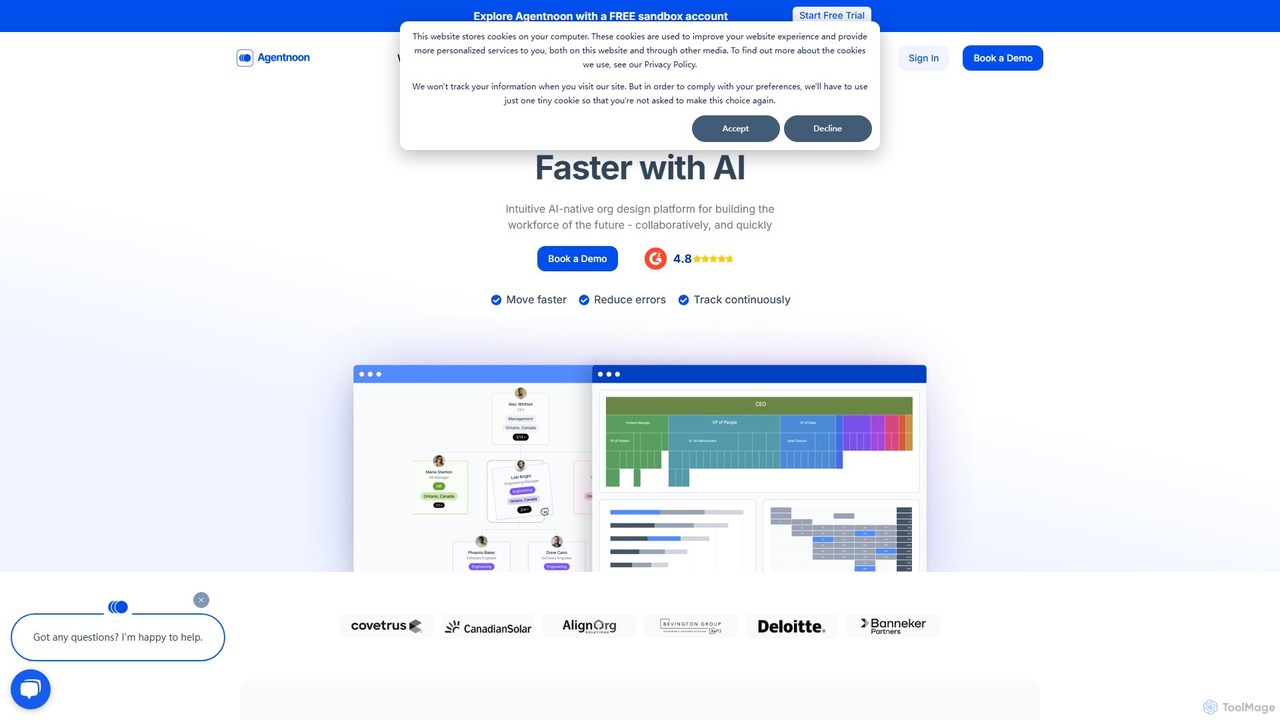
Agentnoon is an AI-powered platform for workforce planning and organizational design. It helps HR leaders and executives visualize, model, and execute complex organizational transformations like mergers and reorganizations. By leveraging real-time data and AI-driven insights, Agentnoon enables faster, data-driven decision-making, scenario modeling, and cost forecasting to build a future-ready workforce.
Organizational DesignVisits 6.7KFavorites 92Likes 96
About Workforce Planning
AI Workforce Planning tools are strategic platforms that use predictive analytics and machine learning to forecast future talent needs, identify skill gaps, and optimize staffing strategies. These tools analyze vast datasets, including internal employee data and external market trends, to provide data-driven recommendations for hiring, training, and internal mobility. By moving beyond reactive hiring, they enable organizations to proactively align their workforce with long-term business objectives. This results in reduced recruitment costs, improved talent retention, and enhanced organizational agility.
Core Features
- Predictive Demand Forecasting: Utilizes historical data and business goals to accurately project future headcount requirements by role, skill, and location.
- Skill Gap Analysis: Maps the current workforce's skills against future needs to pinpoint critical talent shortages and surpluses.
- Scenario Modeling: Allows users to simulate the impact of various business events, such as mergers, new product launches, or budget changes, on the workforce.
- Succession Planning: Identifies high-potential employees and models career pathways to build a robust leadership pipeline.
- Talent Mobility Recommendations: Suggests optimal internal moves, promotions, and reskilling opportunities to fill upcoming roles from within.
Applicable Scenarios
These tools are primarily used by strategic HR leaders, workforce analysts, and finance departments in medium to large enterprises. They are particularly valuable in dynamic industries like technology, healthcare, and finance, where business needs change rapidly. Common applications include planning for market expansion, managing organizational restructuring, and developing long-term talent strategies to maintain a competitive edge.
Selection Criteria
When choosing an AI Workforce Planning tool, consider its integration capabilities with your existing HRIS and ERP systems. Evaluate the sophistication and transparency of its predictive models. Assess the platform's flexibility for creating and comparing custom "what-if" scenarios. Finally, examine the clarity of its dashboards and reporting features, as these are crucial for communicating insights to executive stakeholders.
Workforce Planning use cases
1
Strategic Headcount Planning for Corporate Growth
A fast-growing technology company plans to expand into a new market within 18 months. The strategic HR team uses an AI Workforce Planning tool to model this growth. By inputting business targets and market data, the tool forecasts the need for 50 new roles, including software engineers with specific AI skills and a local sales team. It also projects the associated salary costs and creates a phased hiring timeline, allowing the company to secure budget and start recruiting proactively, ensuring the right talent is in place to support the launch.
2
Identifying and Closing Critical Skill Gaps
A manufacturing firm is transitioning to automated production lines. The workforce planning analyst uses an AI tool to analyze the current skills of its 2,000 employees against the skills required for operating and maintaining the new robotic systems. The platform identifies a critical gap in mechatronics and data analysis skills. Based on this insight, the company avoids costly mass layoffs by designing targeted reskilling and upskilling programs for 300 existing employees, ensuring a smooth transition and retaining valuable institutional knowledge.
3
Optimizing Staffing for a Retail Chain
A national retail chain faces challenges with overstaffing during slow periods and understaffing during peak seasons. A workforce analyst uses an AI planning tool that integrates sales data, local event calendars, and weather forecasts. The tool predicts customer foot traffic for each store with high accuracy. This allows store managers to create optimized weekly schedules that align staffing levels with anticipated demand, reducing unnecessary labor costs by 15% while improving customer service during busy hours.
4
Managing Post-Merger Workforce Integration
Following a major acquisition, an HR integration team is tasked with merging two distinct workforces. They use an AI Workforce Planning tool to consolidate employee data from both companies. The tool helps identify role redundancies, map skills across the combined entity, and pinpoint high-performing talent critical for retention. It allows leadership to model different restructuring scenarios, visualizing the impact on departmental structures and costs, which facilitates a more strategic and data-informed integration process.
5
Building a Data-Driven Leadership Pipeline
A global financial services firm wants to strengthen its succession planning for executive roles. The talent management team uses an AI platform to identify potential future leaders based on performance metrics, competencies, and career aspirations. The tool simulates career progression paths, highlights potential readiness gaps for key individuals, and recommends specific development actions, such as mentorship or project assignments. This creates a dynamic, data-driven succession pipeline that reduces leadership risk.
6
Modeling Scenarios for Economic Uncertainty
Facing a potential economic downturn, the executive team of a logistics company needs to prepare for various business scenarios. The finance and HR departments collaborate using a workforce planning tool to model the impact of a 10%, 15%, and 20% reduction in revenue. The tool simulates the effects of different cost-saving measures, such as hiring freezes, reduced hours, or targeted layoffs, on productivity and essential operations. This enables leadership to develop a strategic contingency plan rather than making reactive, uninformed decisions under pressure.
Related categories
Workforce Planning FAQ
What is AI Workforce Planning?
AI Workforce Planning is the use of artificial intelligence, particularly machine learning and predictive analytics, to forecast an organization's future talent needs and align its workforce strategy with business goals. Unlike traditional manual planning that relies on spreadsheets and historical averages, AI tools analyze complex internal and external data to identify future skill gaps, model various business scenarios, and recommend optimal staffing decisions. This provides a more dynamic, accurate, and strategic approach to managing human capital.
How do I choose the right AI Workforce Planning tool?
Choosing the right tool involves evaluating several key factors. First, assess its data integration capabilities—it should seamlessly connect with your existing systems like HRIS, ATS, and ERP. Second, examine the sophistication and transparency of its predictive models. Third, consider its scenario planning flexibility; you should be able to easily model different business futures. Finally, evaluate the quality of its analytics and visualization dashboards, as clear reporting is essential for gaining buy-in from leadership.
What's the difference between Workforce Planning and an HRIS?
The primary difference lies in their function. A Human Resource Information System (HRIS) is a system of record; it stores and manages current and historical employee data like payroll, benefits, and personal information. An AI Workforce Planning tool is a strategic, forward-looking platform. It uses the data from an HRIS and other sources to predict future trends, model "what-if" scenarios, and provide recommendations. In short, an HRIS tells you what your workforce looks like now, while a workforce planning tool tells you what it should look like in the future.
What are the main benefits of AI-powered workforce planning?
The main benefits include significantly improved accuracy in forecasting talent demand and supply. It enables proactive identification of skill gaps, allowing companies to build, buy, or borrow talent before a shortage impacts business. AI also facilitates data-driven decision-making for complex situations like restructuring or market expansion. Ultimately, it ensures that the company's most significant investment—its people—is strategically aligned with its long-term objectives, leading to better financial performance and agility.
Who in a company typically uses Workforce Planning tools?
These tools are typically used by a cross-functional group of strategic leaders. Key users include:
- Strategic HR Business Partners and Leaders: To develop long-term talent strategies.
- Workforce Planning Analysts: For deep-dive analysis, modeling, and forecasting.
- Finance Departments: To align headcount plans with financial budgets and forecasts.
- Senior Executives and C-Suite: To understand the workforce implications of strategic business decisions and review high-level dashboards.