TalentReview
TalentReview is an AI-powered platform designed to streamline the hiring process for businesses. It offers AI-driven resume review, …
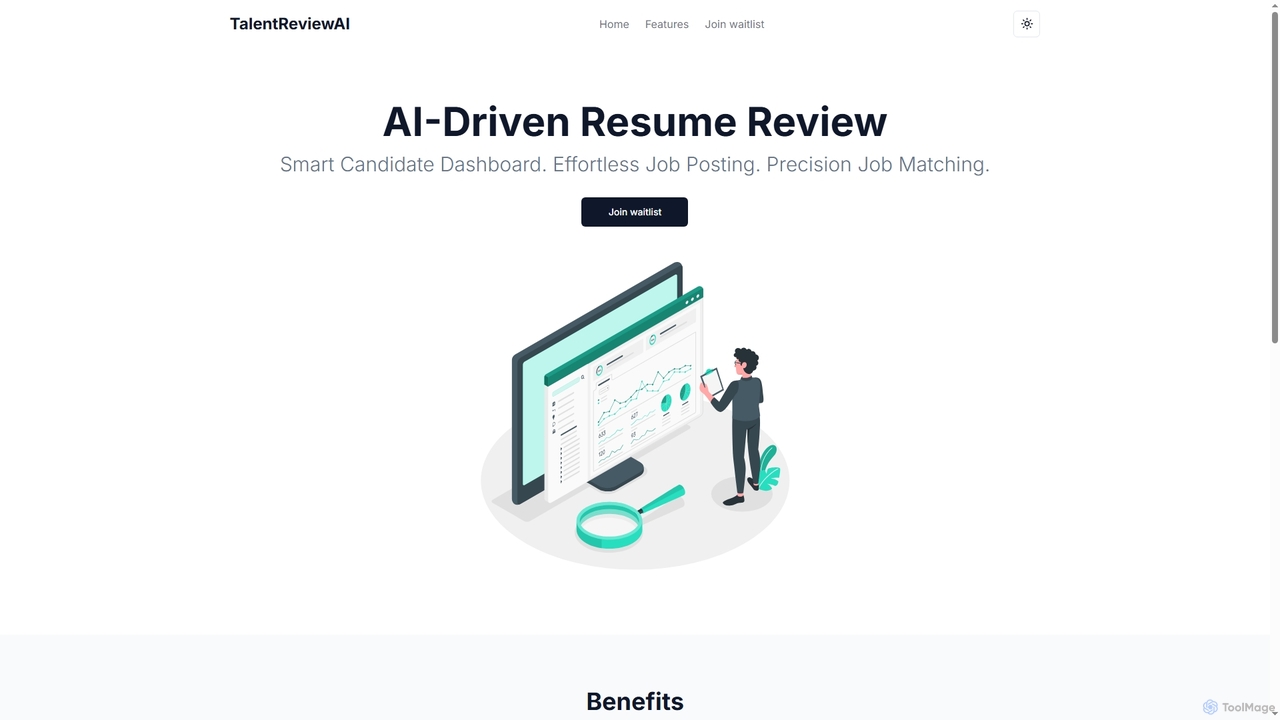
TalentReview is an AI-powered platform designed to streamline the hiring process for businesses. It offers AI-driven resume review, smart candidate dashboards, effortless job posting with AI-generated descriptions, and precision job matching, helping recruiters find the best talent efficiently.
About Humanresources
AI Human Resources tools are a class of software that leverages artificial intelligence to automate, streamline, and enhance HR functions across the entire employee lifecycle. These platforms use machine learning and natural language processing to analyze vast amounts of data, from resumes to employee feedback, enabling data-driven decision-making. They help organizations improve recruitment efficiency, personalize employee experiences, predict turnover, and ensure fair practices. By handling repetitive administrative tasks, these tools empower HR professionals to focus on strategic initiatives like talent development and building a stronger company culture.
Core Features
- Automated Candidate Sourcing & Screening: Uses AI to scan resumes and profiles to identify and rank the most qualified candidates for a role.
- Predictive Analytics for Attrition: Analyzes employee data to identify individuals at risk of leaving and suggests proactive retention strategies.
- Intelligent HR Chatbots: Provides 24/7 automated support to employees for common questions about policies, benefits, and leave requests.
- Performance & Engagement Analysis: Applies sentiment analysis to performance reviews and survey feedback to uncover trends and insights.
- Skills Gap Analysis: Maps current employee skills against future business needs to identify training and development opportunities.
Applicable Scenarios
These tools are widely used across industries like technology, finance, healthcare, and retail, especially in mid-to-large-sized companies with significant hiring volumes or complex workforce management needs. Recruiters use them for high-volume talent acquisition, HR business partners leverage them for retention and engagement strategies, and leadership uses the analytics for strategic workforce planning.
Selection Criteria
When choosing an AI HR tool, consider its integration capabilities with your existing HRIS and ATS. Evaluate the scope of its features—whether you need a point solution for recruiting or a comprehensive platform. Prioritize data security and compliance with regulations like GDPR. Finally, assess the user-friendliness for both HR administrators and employees, and ensure the vendor provides robust support and training.
HumanresourcesUse Cases
Automating High-Volume Candidate Screening
A corporate recruiter at a fast-growing tech company is tasked with filling multiple software engineer roles, receiving hundreds of applications daily. Instead of manually reviewing each resume, they use an AI HR tool. The tool automatically parses resumes, scores candidates against predefined criteria like programming languages and years of experience, and shortlists the top 10%. This process reduces screening time by over 80%, minimizes unconscious bias, and allows the recruiter to focus their efforts on engaging with the most qualified candidates, accelerating the hiring cycle.
Predicting and Reducing Employee Turnover
An HR Business Partner in a large retail chain wants to proactively address employee attrition. They use an AI platform that analyzes anonymized data points like tenure, promotion history, compensation, and engagement survey results. The tool generates a 'flight risk' score for each employee, highlighting individuals who are likely to leave. This allows managers to receive early warnings and actionable insights, such as initiating career development conversations or recognizing achievements. As a result, the company can reduce turnover by 15% in targeted departments by addressing issues before they escalate.
Personalizing the New Hire Onboarding Experience
An onboarding specialist at a global consulting firm needs to ensure hundreds of new hires each quarter have a smooth start. They implement an AI-powered onboarding platform. This platform delivers a personalized journey for each new hire, suggesting relevant training modules based on their role, connecting them with mentors, and using a 24/7 chatbot to answer common questions about company policies and IT setup. This approach improves new hire satisfaction scores by 25% and significantly accelerates their time-to-productivity by providing targeted, on-demand support.
Analyzing Employee Engagement Survey Feedback
A People Analytics Manager needs to process thousands of open-ended comments from the annual employee engagement survey. Manually coding this data would take weeks. Instead, they use an AI tool with Natural Language Processing (NLP). The tool analyzes all text feedback in hours, automatically identifying key themes (e.g., work-life balance, management, compensation), sentiment (positive, negative, neutral), and trends across different departments. This provides leadership with a comprehensive, data-backed report quickly, enabling them to address critical areas of concern and develop targeted action plans.
Ensuring Fair and Unbiased Compensation Reviews
A Compensation & Benefits Manager is conducting annual salary reviews and needs to identify potential pay gaps. They use an AI tool that analyzes salary data against performance ratings, job levels, location, and market benchmarks. The system flags anomalies and potential biases in compensation decisions, such as identifying if certain demographics are consistently paid less for similar roles. This data-driven approach helps the organization achieve pay equity, ensure compliance with regulations, and build trust with employees by demonstrating a commitment to fairness.
Streamlining Internal Talent Mobility
A Talent Management Director wants to encourage employees to find internal job opportunities. They deploy an AI-powered talent marketplace. This platform analyzes employee skill profiles derived from performance reviews, project history, and self-assessments. It then proactively matches these profiles with open internal roles, suggesting suitable opportunities and development paths to employees. This increases internal mobility by 30%, improves employee retention by showing clear career paths, and reduces the costs associated with external hiring.