TryHijab
TryHijab is an AI-powered tool that allows you to virtually try on a hijab using your selfies. Simply …
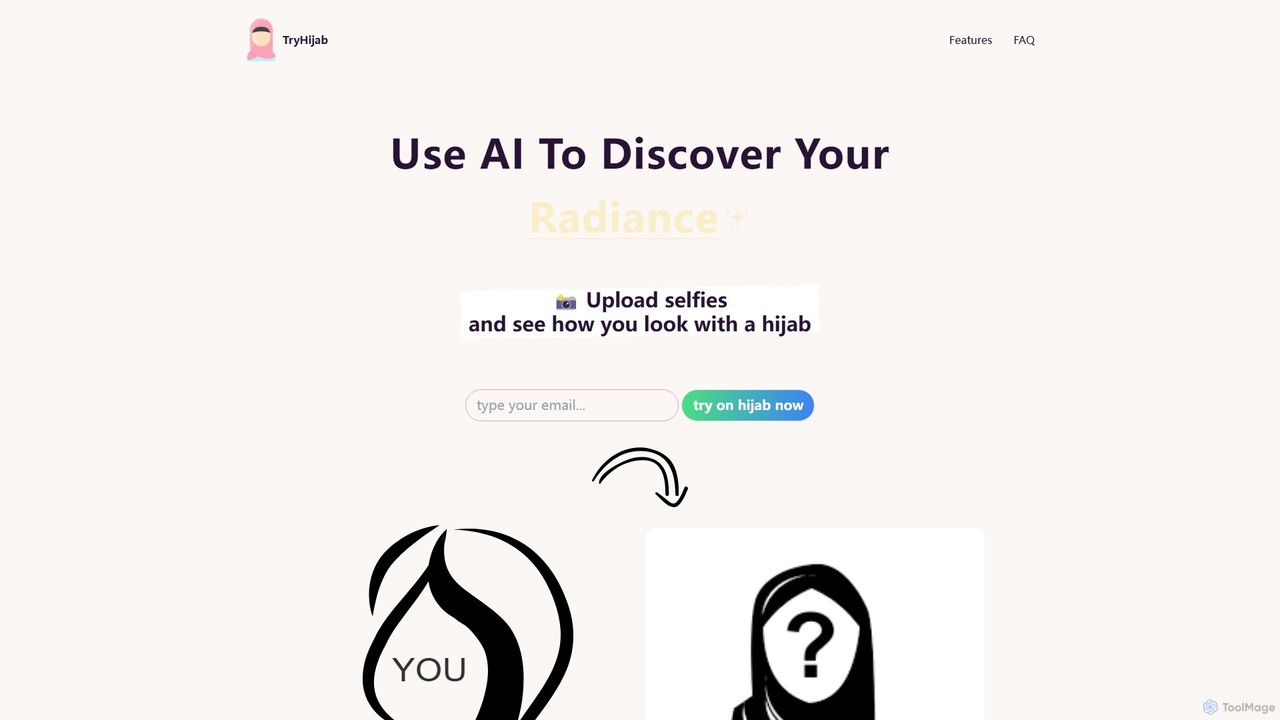
TryHijab is an AI-powered tool that allows you to virtually try on a hijab using your selfies. Simply upload a photo, and the AI will generate realistic, high-definition images of you wearing various beautiful hijab styles. It's a private and inspiring way to explore modest fashion, discover your unique radiance, and visualize a significant personal or spiritual choice without needing a physical hijab.
About Virtual Try On
Virtual Try On tools are AI-powered applications that allow users to digitally overlay products like clothing, accessories, or makeup onto their own photo or live video feed. These tools utilize a combination of augmented reality (AR), computer vision, and 3D rendering to accurately map items onto a user's body or face, simulating a realistic fitting experience. They are primarily designed to enhance the online retail experience, helping customers make more confident purchasing decisions and reducing return rates for businesses. Advanced solutions can even account for body dimensions and fabric physics to provide accurate size recommendations.
Core Features
- Real-time AR Try-On: Uses a device's camera to overlay products on a user's live video feed for an interactive experience.
- Photo-Based Try-On: Allows users to upload a static photo and apply different products to it.
- 3D Product Visualization: Renders products as realistic 3D models that conform to the user's body shape and movements.
- Size and Fit Recommendation: Analyzes user measurements or body shape to suggest the most appropriate product size.
- Multi-Product & Style Swapping: Enables users to instantly switch between different colors, styles, or even multiple items at once.
Applicable Scenarios
Virtual Try On technology is predominantly used in the e-commerce and retail sectors. Fashion brands use it to let customers try on apparel and accessories from home. Cosmetics companies implement it for virtual makeup testing of products like lipstick and eyeshadow. Eyewear retailers also leverage this technology to help shoppers find frames that best suit their face shape.
Selection Criteria
When choosing a Virtual Try On tool, consider the realism and accuracy of the simulation—how well it renders textures and fit. Evaluate its integration capabilities, whether it's a simple website widget, a full API, or an SDK for mobile apps. Also, assess its product compatibility (e.g., clothing, makeup, jewelry) and its performance on various devices, especially mobile, to ensure a smooth user experience.
Virtual Try OnUse Cases
Enhancing Online Fashion E-commerce
An online fashion retailer integrates a virtual try-on feature into their product pages. A customer looking for a dress can upload their photo or use their live camera. The AI tool then accurately maps the dress onto their body, simulating how it would fit and drape. The customer can instantly switch between sizes and colors, helping them visualize the product better than with static images alone. This leads to a higher purchase confidence, a 30% increase in conversion rates, and a significant reduction in returns due to sizing issues.
Virtual Makeup and Cosmetics Testing
A global cosmetics brand launches a virtual try-on feature on its website and mobile app. Users can use their device's camera to see how different shades of lipstick, eyeshadow, and foundation look on their face in real-time. The AR technology accurately tracks facial features, applying the digital makeup realistically even as the user moves their head. This interactive experience allows customers to experiment with dozens of products risk-free, leading to increased engagement, higher average order values, and stronger brand loyalty.
Choosing Eyewear Frames Online
An online eyewear store uses a photo-based virtual try-on tool to help customers select frames. A user uploads a clear, front-facing photo of themselves. The platform's AI measures their pupillary distance and face width to ensure the frames are scaled correctly. The user can then browse hundreds of frames and see them accurately positioned on their face. This removes the biggest uncertainty of buying glasses online, allowing customers to confidently choose a style that complements their facial features, drastically reducing exchanges and returns.
In-Store Smart Mirror Experience
A high-end department store installs smart mirrors in its retail space. These mirrors are equipped with cameras and AR technology. Shoppers can stand in front of the mirror and virtually try on items from the store's catalog without physically changing clothes. They can browse different outfits, mix and match pieces, and see recommendations on the screen. This creates a futuristic and efficient shopping experience, reducing fitting room queues and allowing staff to provide more personalized service based on the customer's virtual selections.
Virtual Jewelry and Watch Try-On
A luxury jewelry brand offers a virtual try-on for its collection of rings, necklaces, and watches. Using their smartphone's camera, a customer can see how a specific diamond ring looks on their own hand or how a watch fits their wrist. The AR technology renders the items with high fidelity, accurately capturing the sparkle of gemstones and the metallic sheen of the watch case. This allows customers to appreciate the scale and style of high-value items before making a significant online purchase, bridging the gap of not being able to physically handle the product.
AI-Powered Personal Styling Recommendations
A personal styling service uses a virtual try-on platform as its core technology. New users create a 3D avatar based on their body measurements. The AI stylist then curates outfits from various brands and shows the user how these clothes would look on their avatar. The user can mix and match items, receive real-time fit feedback ('this might be tight on the hips'), and purchase a fully styled look directly. This hyper-personalized approach transforms online shopping from a search-based activity to a discovery-driven experience.