Industry Best in category 1 results Manufacturing AI Tool

Popular AI tools in the Manufacturing field of Industry include bosch_ai, etc., helping you quickly improve efficiency.

bosch_ai

bosch_ai

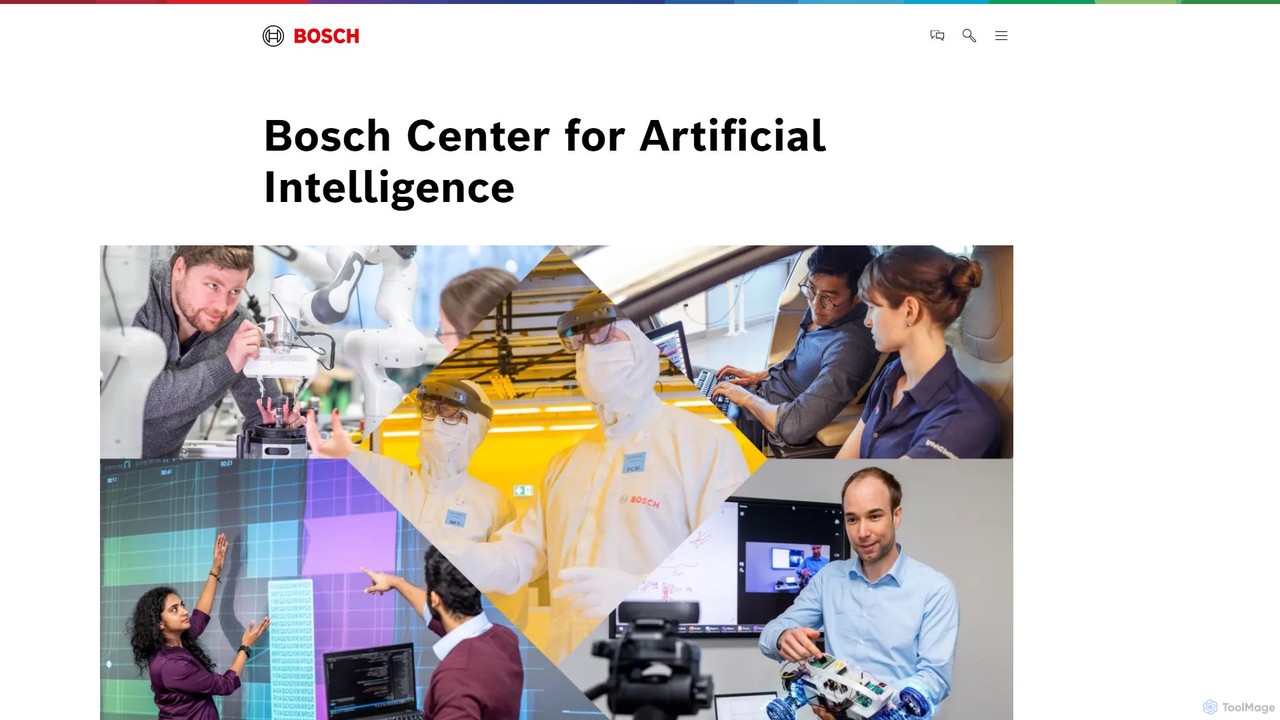
Bosch Center for Artificial Intelligence (BCAI) is Bosch's center of excellence for AI, driving the development and deployment …

2.8K

About Manufacturing

Manufacturing AI tools are a category of artificial intelligence applications designed to optimize and transform production processes within the manufacturing sector. These tools leverage machine learning, computer vision, and predictive analytics to enhance efficiency, quality control, and operational agility. They enable manufacturers to make data-driven decisions, reduce waste, and innovate across the entire product lifecycle, from design to delivery.

Core Features

  • Predictive Maintenance: Analyzes sensor data to forecast equipment failures, enabling proactive maintenance and minimizing downtime.
  • Automated Quality Inspection: Utilizes computer vision and AI algorithms to detect defects in products with high precision and speed.
  • Production Optimization: Dynamically adjusts production schedules and resource allocation based on real-time data to maximize throughput and efficiency.
  • Supply Chain Intelligence: Provides advanced forecasting and optimization for inventory management, logistics, and supplier relations.
  • Robotics & Automation Integration: Enhances the capabilities of industrial robots with AI for more adaptive and intelligent task execution.

Applicable Scenarios

Manufacturing AI tools are crucial for industries like automotive, electronics, aerospace, and consumer goods. They are used by plant managers to streamline operations, quality control specialists to ensure product consistency, and supply chain managers to optimize logistics. These tools are vital in environments requiring high precision, rapid production cycles, and complex operational management.

How to Choose

When selecting Manufacturing AI tools, consider their integration capabilities with existing ERP/MES systems, scalability to grow with production needs, and the vendor's expertise in your specific industry. Evaluate the accuracy of their predictive models, the robustness of their data security, and the level of technical support offered. Prioritize solutions that offer clear ROI potential and align with your long-term automation strategy.

ManufacturingUse Cases

1

Predictive Maintenance for Factory Equipment

A plant manager uses AI tools to monitor real-time sensor data from critical machinery on the factory floor. By analyzing patterns and anomalies, the AI predicts potential equipment failures days or weeks in advance. This allows maintenance teams to schedule proactive repairs during planned downtime, preventing unexpected breakdowns, reducing costly emergency repairs, and extending the operational lifespan of valuable assets, ultimately saving significant operational costs.

2

Automated Visual Quality Inspection

A quality control specialist deploys AI-powered computer vision systems on the assembly line to inspect products for defects. The AI system, trained on thousands of images of perfect and flawed products, can identify microscopic cracks, misalignments, or color variations far more consistently and rapidly than human inspectors. This leads to a significant reduction in defective products reaching the market, improves brand reputation, and frees up human workers for more complex tasks, ensuring higher overall product quality.

3

Optimizing Production Schedules

A production planner utilizes AI algorithms to dynamically optimize manufacturing schedules. The AI considers real-time factors such as machine availability, material supply fluctuations, urgent order priorities, and energy costs. By continuously re-evaluating and adjusting the schedule, the system minimizes bottlenecks, reduces idle time, and ensures that production targets are met efficiently. This results in faster lead times, lower operational costs, and increased overall factory output, adapting quickly to unforeseen disruptions.

4

Enhanced Supply Chain Demand Forecasting

A supply chain manager leverages AI tools to improve demand forecasting accuracy. The AI analyzes vast datasets including historical sales, market trends, seasonal variations, economic indicators, and even social media sentiment. This comprehensive analysis provides highly accurate predictions of future demand, enabling the manager to optimize inventory levels, reduce overstocking or stockouts, and negotiate better terms with suppliers. The result is a more resilient and cost-effective supply chain, minimizing waste and improving customer satisfaction.

5

AI-Powered Robotics for Assembly Lines

A manufacturing engineer integrates AI-powered robotics into complex assembly lines. These robots, equipped with advanced sensors and AI algorithms, can perform intricate tasks requiring fine motor skills and adaptive decision-making, such as precise component placement or delicate wiring. Unlike traditional robots, they can learn from experience, adapt to slight variations in materials or environments, and collaborate safely with human workers. This boosts production speed, reduces human error in repetitive tasks, and enhances overall operational safety and flexibility.

6

Energy Consumption Optimization in Factories

An operations manager uses AI tools to optimize energy consumption across the factory floor. The AI analyzes real-time data from various energy-intensive machines, HVAC systems, and lighting, identifying patterns of waste and inefficiencies. It then recommends adjustments to machine schedules, temperature settings, or lighting usage to minimize energy expenditure without compromising production quality or output. This leads to significant reductions in utility bills, contributes to sustainability goals, and provides a clearer understanding of energy usage patterns for future planning.

ManufacturingFrequently Asked Questions