ToolMage
Sign in

Best 1 Renewable Energy AI tools for Industry

Popular Renewable Energy AI tools in Industry include Jungle AI, helping you work more efficiently.

Jungle AI
Paid

Jungle AI

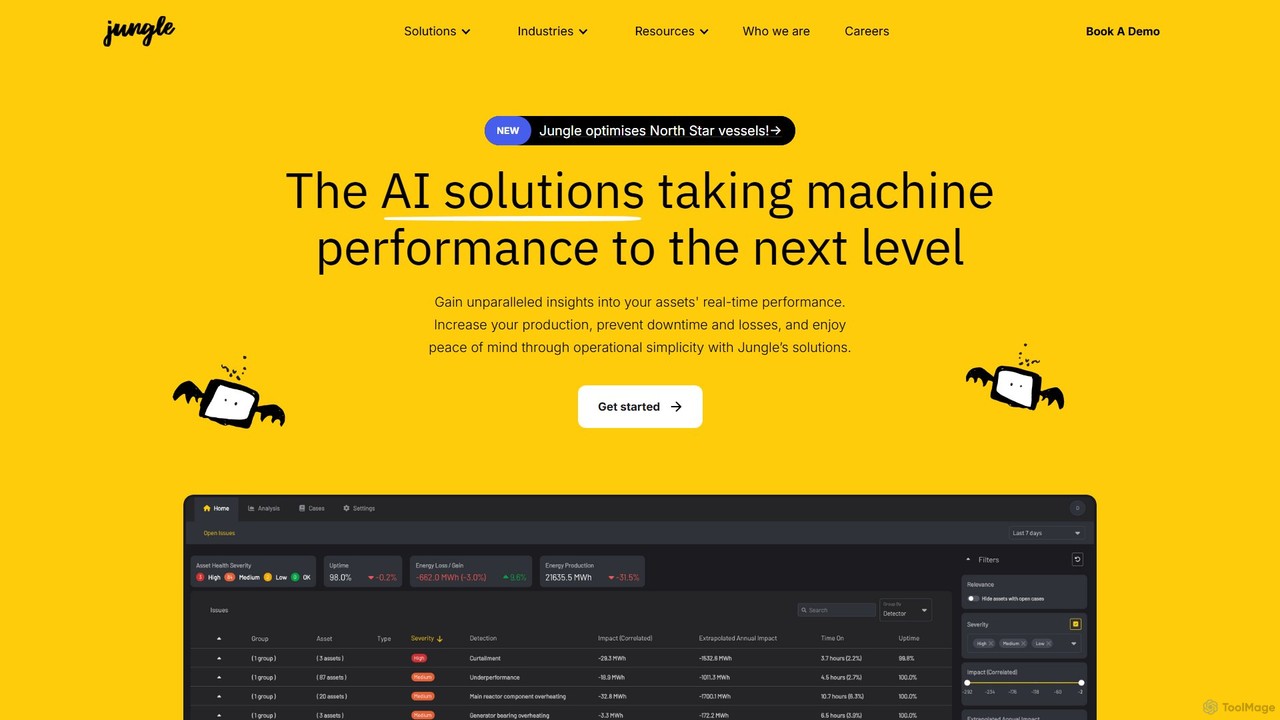
Jungle AI provides advanced AI solutions to optimize the performance and reliability of industrial assets, particularly in the renewable energy (wind, solar) and maritime sectors. Its platforms, Canopy and Toucan, offer predictive maintenance, performance monitoring, and power forecasting to prevent failures, reduce downtime, and maximize operational efficiency.

Predictive Analytics
Visits 18.6KFavorites 111Likes 95

About Renewable Energy

AI Renewable Energy tools are specialized platforms that use machine learning and data analytics to optimize the generation, distribution, and management of clean energy. These tools analyze vast datasets from sources like weather forecasts, IoT sensors, and grid infrastructure to improve efficiency and reliability. Their primary value lies in enabling predictive maintenance, accurate energy forecasting, and intelligent grid management, which are critical for integrating variable power sources like solar and wind. This data-driven approach helps reduce operational costs and accelerate the transition to a sustainable energy future.

Core Features

  • Energy Generation Forecasting: Predicts power output from solar or wind farms based on meteorological data and historical performance.
  • Predictive Maintenance: Analyzes sensor data from turbines and panels to forecast equipment failures before they occur.
  • Grid Management & Optimization: Balances energy supply and demand in real-time, managing storage and preventing instability.
  • Site Suitability Analysis: Uses geospatial and climate data to identify optimal locations for new renewable energy projects.
  • Asset Performance Management: Monitors the real-time efficiency of energy assets to detect anomalies and degradation.

Applicable Scenarios

These tools are essential for energy utility companies, grid operators, renewable asset managers, and project developers. For instance, a wind farm operator uses them to schedule maintenance based on failure predictions, while a national grid operator uses them to balance fluctuating solar input with consumer demand. Investment firms also leverage these tools for due diligence on new energy projects.

How to Choose

When selecting an AI Renewable Energy tool, consider its data integration capabilities with your existing systems (like SCADA). Evaluate the proven accuracy and transparency of its predictive models. Assess its scalability to handle the size of your operations, from a single facility to a regional grid. Finally, ensure the tool specializes in your specific energy source, whether it's solar, wind, hydro, or a hybrid system.

Renewable Energy use cases

1

Automating Wind Turbine Maintenance Scheduling

A wind farm operations manager uses an AI platform to continuously monitor data from hundreds of turbines, including vibration, temperature, and oil particle counts. The AI model detects a subtle anomaly in Turbine 72's gearbox, predicting a 90% probability of failure within the next 30 days. Instead of relying on a fixed maintenance schedule, the manager dispatches a crew for proactive service, replacing a bearing before a catastrophic failure occurs. This prevents costly downtime, extends the turbine's lifespan, and reduces overall maintenance expenses.

2

Optimizing Wind Turbine Predictive Maintenance

A wind farm operator uses an AI platform to continuously analyze vibration, temperature, and acoustic data from hundreds of turbines. The system detects subtle anomalies that precede gearbox or blade failures. This allows the maintenance team to schedule proactive repairs during low-wind periods, preventing catastrophic failures, reducing costly emergency downtime, and extending the operational life of the assets by up to 20%.

3

Optimize Wind Farm Energy Production

A wind farm operator uses an AI platform to analyze real-time weather forecasts and historical performance data. The system automatically recommends optimal yaw and pitch adjustments for each turbine, increasing the farm's overall energy capture by up to 5%. This leads to higher revenue and more reliable power generation without requiring new hardware investments.

4

Optimizing Wind Turbine Maintenance Schedules

An operations manager for a large offshore wind farm uses an AI platform to implement predictive maintenance. The system continuously analyzes real-time data from thousands of sensors on each turbine, monitoring factors like vibration, temperature, and rotational speed. By identifying subtle anomalies that precede component failure, the AI predicts that a specific turbine's gearbox bearing has a 95% probability of failing within the next 60 days. This allows the manager to schedule proactive maintenance during a calm weather window, preventing catastrophic failure and avoiding millions in lost revenue from unplanned downtime.

5

Predictive Maintenance for Wind Turbines

A wind farm operator utilizes an AI platform to continuously analyze vibration, temperature, and acoustic data from hundreds of turbines. The system detects subtle anomalies that indicate early-stage gear or bearing wear, which are invisible to traditional monitoring. It then automatically generates a maintenance ticket with a detailed diagnosis and recommended action. This allows the maintenance team to schedule repairs proactively, preventing catastrophic failures and reducing turbine downtime by up to 30%.

6

Forecasting Solar Power for Grid Stability

A national grid operator is tasked with balancing energy supply and demand. They use an AI forecasting tool that combines satellite imagery, local weather station data, and historical plant performance to generate highly accurate solar generation forecasts for the next 72 hours. When the model predicts a significant drop in solar output due to unexpected cloud cover, the system automatically recommends increasing output from hydroelectric plants and dispatching stored energy from battery facilities. This proactive balancing prevents grid instability and avoids the need to fire up expensive and polluting fossil fuel peaker plants.

7

Optimizing Solar Energy Trading Decisions

An energy trader at a utility company uses an AI forecasting tool to predict solar power generation for their entire portfolio of solar farms. The tool analyzes real-time weather satellite imagery, atmospheric dust levels, and panel degradation data to produce highly accurate 24-hour forecasts. Based on a predicted surge in solar output the next afternoon, the trader confidently sells excess energy forward on the spot market at a favorable price, maximizing revenue. Conversely, when the AI predicts a sudden drop due to cloud cover, they can procure power in advance to ensure grid stability.

8

Solar Power Generation Forecasting

A national grid operator employs an AI tool that integrates satellite imagery, local weather station data, and historical plant performance to generate highly accurate solar power forecasts. The platform predicts output in 15-minute intervals for the next 72 hours. This precise forecasting enables the operator to manage energy reserves more effectively, optimize the dispatch of other power sources, and reduce reliance on expensive fossil fuel peaker plants, ensuring grid stability.

9

Conduct Predictive Maintenance on Solar Farms

A maintenance manager for a large-scale solar plant uses an AI tool that analyzes drone imagery and sensor data. The system identifies hotspots, soil accumulation, and cell degradation patterns invisible to the human eye. This allows the team to dispatch crews to clean or repair specific panels proactively, preventing significant power loss and extending the lifespan of the assets.

10

Forecasting Solar Farm Energy Output

An energy utility company employs an AI platform that combines weather satellite imagery, historical performance data, and real-time sensor readings. This tool generates highly accurate 48-hour energy output forecasts for its solar farms. These predictions enable grid operators to better plan energy dispatch, optimize energy trading on the spot market, and manage grid reserves more effectively, improving overall grid stability.

11

Balance the Electrical Grid with Battery Storage

A national grid operator employs an AI-powered energy management system (EMS). The system forecasts both renewable energy supply fluctuations and consumer demand spikes with high accuracy. Based on these predictions, it autonomously decides when to charge large-scale battery storage units with surplus solar power and when to discharge them to stabilize the grid during peak evening demand, preventing outages.

12

Optimizing Battery Energy Storage Systems (BESS)

An energy company with a large-scale battery storage facility uses an AI system to maximize its profitability. The AI analyzes real-time electricity market prices, grid demand forecasts, and renewable energy production predictions. Based on this data, it automates charging and discharging cycles, charging the batteries when prices are low (or solar/wind generation is high) and selling power back to the grid when prices peak, significantly increasing the return on investment.

13

Identifying Optimal Locations for New Solar Farms

A renewable energy development company wants to build a new 500 MW solar farm. They use an AI-powered site selection tool that analyzes decades of historical solar irradiance data, topographical maps to avoid shadows, proximity to grid connection points, land acquisition costs, and environmental impact reports. The AI model processes thousands of potential locations, running simulations to calculate the projected Levelized Cost of Energy (LCOE) for each. It identifies three top-tier sites that offer the best balance of high energy yield and low development cost, reducing the project's financial risk and shortening the planning phase by months.

14

AI-Powered Grid Balancing and Demand Response

A national grid operator uses an AI system to manage the intermittency of renewables. The tool analyzes real-time supply from all sources, predicts consumer demand patterns, and automatically adjusts energy flow from various assets, including battery storage and hydropower. It can also trigger demand-response programs, incentivizing large industrial users to reduce consumption during peak times, ensuring grid stability without relying on fossil fuel peaker plants.

15

Balancing the Grid with AI-Powered Control

A national grid operator faces the challenge of integrating fluctuating renewable energy sources. They deploy an AI-powered grid management system that analyzes supply, demand, and grid frequency in real-time. When the system forecasts a drop in wind power coinciding with an evening demand peak, it automatically signals a large-scale battery storage facility to begin discharging power onto the grid. It also initiates a demand-response program, slightly reducing power to non-critical industrial users. This automated, split-second decision-making process maintains grid stability and prevents potential blackouts without manual intervention.

16

Site Selection for New Renewable Energy Projects

An investment firm uses an AI tool to identify optimal locations for new solar or wind farms. The platform analyzes vast geospatial datasets, including decades of weather patterns, land topography, grid proximity, and environmental regulations. It generates a ranked list of potential sites, calculating the projected energy yield, construction costs, and return on investment for each, significantly reducing research time and improving project viability.

17

Automate Renewable Energy Trading

An energy trading firm integrates an AI platform into its workflow. The tool continuously monitors market prices, grid conditions, and generation forecasts. It automatically executes buy-and-sell orders for renewable energy credits (RECs) and surplus electricity on the spot market, operating 24/7 to capitalize on favorable price movements and maximize profitability far more effectively than human traders.

18

Identifying High-Potential Solar Farm Locations

A renewable energy development company wants to expand its portfolio. Instead of months of manual research, they use an AI-powered site selection tool. The tool analyzes decades of solar irradiance data, topographical maps to avoid shadows, proximity to grid substations, land ownership records, and local zoning regulations. Within hours, the AI generates a ranked list of the top 10 most viable and cost-effective land parcels for a new 100-megawatt solar farm. This accelerates the project's initial planning phase by over 80% and significantly reduces the risk of choosing a suboptimal location.

19

AI-Powered Site Selection for New Solar Farms

An investment firm planning a new utility-scale solar project uses an AI analysis tool. The platform processes decades of solar irradiance data, topographical maps, land-use restrictions, environmental regulations, and proximity to grid infrastructure. It generates a detailed suitability map, ranking potential sites by expected energy yield, construction costs, and grid connection feasibility. This data-driven approach reduces planning time and de-risks the investment.

20

Automating Anomaly Detection in Solar Panel Fleets

A company managing hundreds of rooftop solar installations uses an AI tool to automate performance monitoring. Instead of manually checking each system, the AI continuously analyzes production data from every inverter. It automatically flags panels that are underperforming due to soiling, shading, or hardware defects. For example, it detects a 15% drop in output from one specific installation, correlates it with new tree growth from satellite imagery, and generates a work order for a maintenance team to trim the branches. This automated process ensures maximum energy production across the entire fleet without requiring extensive manual oversight.

21

Real-Time Anomaly Detection in Hydropower Plants

Engineers at a hydropower facility deploy an AI monitoring system connected to thousands of sensors on turbines, generators, and dam structures. The system establishes a baseline of normal operational parameters. It then provides real-time alerts for any deviations, such as unusual pressure fluctuations or turbine vibrations, that could indicate a potential malfunction. This enables rapid response to prevent equipment damage and ensure operational safety.

22

Optimizing Energy Trading Strategies

An energy trading firm specializing in renewables uses an AI platform to maximize profits. The model analyzes real-time market prices, grid demand forecasts, weather patterns, and the operational status of their wind and solar assets. Based on this complex data, the AI recommends the optimal times to sell energy to the grid or store it in batteries. For instance, it might advise storing wind energy generated during low-demand, low-price nighttime hours and selling it during the high-price afternoon peak. This automated, data-driven strategy consistently outperforms manual trading, increasing profitability by 5-10%.

23

Drone-Based Solar Panel Defect Detection

A maintenance technician at a utility-scale solar farm is tasked with inspecting thousands of panels. They use a drone equipped with a thermal camera and an AI-powered image recognition system. As the drone flies over the farm, the AI analyzes the thermal feed in real-time, automatically identifying and geotagging panels with anomalies like hot spots, soiling, or microcracks. The system generates a detailed report with the exact location and type of defect for each flagged panel, allowing the maintenance team to target repairs efficiently instead of conducting slow, manual inspections from the ground.

24

Identify Optimal Locations for New Projects

A renewable energy developer uses an AI site selection tool to plan a new solar project. The platform analyzes decades of satellite imagery, weather data, land-use regulations, and proximity to grid infrastructure. It generates a ranked list of the most suitable parcels of land, significantly reducing the time and cost of manual scouting and feasibility studies, and increasing the project's long-term viability.

25

Automating Aerial Inspection of Solar Panels

A large-scale solar farm operator uses drones equipped with thermal cameras and an AI analysis platform. The AI automatically processes thousands of aerial images to detect and classify defects like hotspots, soiling, or microcracks that are invisible to the human eye. This automates a previously manual and time-consuming inspection process, allowing for faster repairs and maximizing the farm's overall energy output.

26

Managing Distributed Energy Resources (DERs)

A utility company uses an AI-powered Virtual Power Plant (VPP) platform to manage thousands of distributed assets, including rooftop solar, residential batteries, and EV chargers. When grid demand peaks, instead of activating a fossil fuel plant, the AI system sends signals to these DERs. It might slightly reduce EV charging rates and draw a small amount of power from hundreds of home batteries simultaneously. This aggregation creates a significant, dispatchable energy resource that stabilizes the grid, reduces reliance on centralized power plants, and provides financial incentives to customers who participate in the program.

27

Managing Distributed Energy Resources (DERs)

A modern utility company uses an AI platform to manage a complex network of distributed energy resources, including rooftop solar panels, electric vehicles, and home batteries. The AI aggregates data from these diverse assets to create a 'virtual power plant.' It forecasts their collective energy generation and consumption, allowing the utility to use this distributed capacity to balance the grid, reduce peak load, and defer costly infrastructure upgrades.

28

Manage Home Energy Usage with Smart Systems

A homeowner with rooftop solar panels and a home battery uses a smart energy management app. The app's AI learns the household's consumption patterns and checks local weather forecasts. It intelligently decides whether to use solar power immediately, store it in the battery for later, or sell it back to the grid when rates are highest, effectively minimizing the owner's electricity bill.

29

Maximizing Hydropower Output with AI

Engineers at a hydropower facility use an AI optimization system to manage dam operations. The system ingests data on water inflow forecasts, real-time electricity market prices, downstream environmental regulations, and turbine efficiency curves. It then runs thousands of simulations to recommend an optimal schedule for water release and power generation for the next 48 hours. This approach allows the facility to generate more power during high-price periods while ensuring compliance with ecological water flow requirements, increasing overall revenue and operational efficiency compared to manual scheduling.

30

Optimizing Hydropower Plant Operations

A hydropower plant manager utilizes an AI system to maximize power generation. By analyzing real-time data on water inflow rates, reservoir levels, electricity market prices, and downstream environmental regulations, the AI recommends the most efficient water release schedules and turbine configurations. This dynamic optimization ensures the plant generates maximum revenue while adhering to complex operational and ecological constraints.

Renewable Energy FAQ

What are AI tools for Renewable Energy?

AI tools for Renewable Energy are specialized software applications that use artificial intelligence, particularly machine learning, to improve the performance of clean energy systems. They analyze large volumes of data to automate and optimize processes such as forecasting energy production, predicting equipment maintenance needs, and balancing the electrical grid. The primary goal is to make renewable energy sources like solar and wind more efficient, reliable, and cost-effective.

What are AI tools for Renewable Energy?

AI tools for Renewable Energy are specialized software applications that use machine learning and data analytics to improve the efficiency, reliability, and profitability of clean energy sources. They process complex data from weather, sensors, and markets to perform tasks like forecasting energy production, predicting equipment failures, and optimizing grid operations. Their main goal is to solve the challenges of intermittency and integration associated with sources like solar and wind power.

What are AI tools for Renewable Energy?

AI tools for Renewable Energy are specialized software platforms that use machine learning algorithms to analyze data and optimize the performance of clean energy systems. They process information from weather forecasts, equipment sensors, and grid operations to make intelligent decisions. Key applications include forecasting energy generation from wind and solar, predicting equipment maintenance needs to prevent downtime, and managing the flow of energy across the grid to ensure stability.

What are AI tools for Renewable Energy?

AI tools for Renewable Energy are software platforms that use artificial intelligence, particularly machine learning, to improve the efficiency and reliability of clean energy systems. They analyze vast amounts of data from sources like weather satellites, IoT sensors on turbines, and grid demand signals. Key functions include forecasting energy production, predicting equipment maintenance needs, and optimizing the flow of energy across the power grid to ensure stability.

What are AI tools for Renewable Energy?

AI tools for Renewable Energy are software platforms that apply machine learning and data analytics to improve the efficiency and reliability of clean energy systems. Their core functions include forecasting energy generation, predicting equipment failures, and optimizing grid operations. They are used by energy producers and grid operators to maximize output from sources like solar and wind.

How do I choose the right AI platform for renewable energy management?

To choose the right platform, first assess your primary need: is it generation forecasting, asset maintenance, or grid balancing? Then, evaluate the tool's data compatibility with your existing sensors and systems (e.g., SCADA). Key factors include the model's proven accuracy, its scalability to support future growth, and the level of technical support provided by the vendor.

How do I choose the right AI Renewable Energy tool?

Choosing the right tool depends on your specific needs. Consider these factors:

  • Data Integration: Ensure it can connect seamlessly with your existing hardware (SCADA, IoT sensors, meters).
  • Model Accuracy: Ask for case studies or performance data validating its forecasting and predictive capabilities.
  • Scalability: Confirm the platform can grow with your operations, from a single facility to a large portfolio of assets.
  • Specialization: Determine if you need a tool focused on a specific energy type (e.g., wind analytics) or a broader energy management platform.

How do I choose the right AI tool for my renewable energy assets?

Choosing the right tool depends on your specific needs. Consider the following factors:

  • Data Integration: Ensure the tool can connect seamlessly with your existing data sources, such as SCADA systems, weather APIs, and asset management software.
  • Model Accuracy: Look for platforms with proven, transparent models that provide verifiable accuracy for forecasting or failure prediction.
  • Scalability: Select a tool that can grow with your portfolio, whether you manage a single solar plant or a nationwide network of wind turbines.
  • Energy Source Specialization: Verify that the tool's algorithms are optimized for your specific type of renewable energy, be it solar, wind, hydro, or battery storage.
How to choose the right AI tool for a renewable energy project?

Choosing the right tool involves several key considerations. First, ensure the tool specializes in your specific energy source (e.g., solar, wind, hydro). Second, verify its integration capabilities with your existing hardware and software, such as SCADA systems or IoT sensors. Third, assess the accuracy and transparency of its AI models; look for case studies or performance benchmarks. Finally, consider its scalability to grow with your operations and the level of customer support and domain expertise offered by the provider.

How to choose the right AI tool for a renewable energy project?

Choosing the right tool depends on your specific needs. Consider these factors:

  • Energy Source Specificity: Ensure the tool is optimized for your energy type, whether it's solar, wind, hydro, or geothermal, as the data models differ significantly.
  • Integration Capability: Check if it can seamlessly integrate with your existing infrastructure, such as SCADA systems, data historians, and IoT sensors.
  • Model Accuracy: Ask for case studies or performance data that validate the accuracy of its predictive models for forecasting or maintenance.
  • Scalability: The tool should be able to scale from managing a single asset to an entire portfolio of power plants or a regional grid.
What's the difference between AI for Renewable Energy and traditional energy management software?

The key difference is predictive capability. Traditional energy management software (EMS) is often rule-based and reactive; it responds to events after they happen. AI tools are proactive and predictive. They use machine learning to learn from historical data and forecast future events, such as a drop in wind speed or an impending component failure. This allows operators to make optimized decisions in advance, rather than just reacting to current conditions.

What's the difference between AI-based energy forecasting and traditional weather models?

Traditional weather models provide general meteorological forecasts (e.g., temperature, cloud cover) for a region. AI-based energy forecasting tools take this a step further. They combine general weather data with site-specific information, such as the exact orientation of solar panels, historical performance data, and local microclimate effects. By learning from an asset's actual past performance under various weather conditions, AI models can generate much more accurate and granular power generation forecasts for that specific location, which is crucial for grid balancing and energy trading.

What's the difference between general industrial AI and AI for renewable energy?

General industrial AI focuses on broad manufacturing or supply chain optimization. AI for renewable energy is highly specialized, dealing with unique, volatile datasets like weather patterns and grid frequency. Its algorithms are specifically designed to handle the intermittency of sources like solar and wind and to solve challenges unique to the energy sector, such as real-time grid balancing and energy market trading.

What is the difference between AI for Renewable Energy and general industrial AI?

The key difference lies in their specialization and the data they handle. General industrial AI often focuses on optimizing manufacturing lines or supply chains with relatively predictable data. AI for Renewable Energy is specifically designed to manage the high variability and uncertainty of natural resources like sun and wind. It uses specialized algorithms for weather-based forecasting, grid balancing, and analyzing the performance of unique assets like wind turbines and solar inverters.

What are the main benefits of using AI in the renewable energy sector?

The main benefits of using AI in this sector are centered on efficiency and reliability. Key advantages include:

  • Increased Energy Output: Optimizing turbine angles or panel cleaning schedules to maximize generation.
  • Reduced Costs: Predictive maintenance lowers repair expenses and minimizes costly downtime.
  • Improved Grid Stability: AI helps manage the variable nature of renewables, preventing blackouts.
  • Faster Development: AI tools accelerate the process of finding and assessing new locations for wind and solar farms.
What are the main benefits of using AI in the renewable energy sector?

The primary benefits of applying AI in this industry are increased efficiency, reduced costs, and improved grid stability. AI maximizes energy output from existing assets (efficiency), predicts maintenance to avoid costly failures (cost reduction), and helps balance the variable nature of renewables with consumer demand (stability). This ultimately makes renewable energy more competitive with traditional power sources and accelerates its adoption.

What are the main benefits of using AI in the renewable energy sector?

The primary benefits of applying AI in renewable energy include significantly improved operational efficiency and cost reduction. Key advantages are:

  • Increased Production: Optimizing turbine pitch or panel angles to maximize energy capture.
  • Reduced Costs: Predictive maintenance minimizes downtime and expensive emergency repairs.
  • Enhanced Grid Stability: Accurate forecasting helps balance supply and demand, preventing blackouts.
  • Smarter Investment: Data-driven site selection and performance analysis lead to better financial returns.

Can AI help improve the safety of renewable energy operations?

Yes, AI significantly enhances safety in renewable energy operations. For instance, in wind energy, AI-powered drones can automate the inspection of turbine blades, identifying cracks or defects without requiring technicians to perform dangerous high-altitude work. In solar farms, AI can monitor thermal imaging data to detect overheating components that could pose a fire risk. By automating hazardous inspection tasks and predicting equipment failures that could lead to unsafe conditions, AI helps create a safer working environment for personnel.

How does AI-based energy forecasting differ from traditional methods?

Traditional forecasting methods often rely on historical averages and basic meteorological data, which can be less accurate for variable sources like wind and solar. AI-based forecasting uses more complex machine learning models that can analyze a wider range of real-time variables, including satellite imagery, atmospheric conditions, and the performance of individual assets. This allows AI models to learn complex patterns and adapt to changing conditions, resulting in significantly more accurate and reliable predictions of energy output.

What key features do AI renewable energy tools offer?

Key features typically include:

  • Forecasting Engines: Predicting solar irradiance and wind speed.
  • Asset Performance Management (APM): Monitoring equipment health and predicting maintenance needs.
  • Energy Management Systems (EMS): Optimizing the flow of energy between generation, storage, and the grid.
  • Market Trading Algorithms: Automating the buying and selling of energy on wholesale markets.
Who benefits from using AI in the renewable energy sector?

A wide range of stakeholders benefit. Energy Producers (e.g., solar and wind farm owners) increase their revenue and operational efficiency. Grid Operators enhance grid stability and reliability. Investors and Developers make better decisions on where to build new projects. Finally, Consumers benefit from a more stable and potentially cheaper supply of clean energy.

Who are the typical users of AI Renewable Energy tools?

These tools are used by a range of professionals across the energy industry. Typical users include:

  • Plant Operators: For day-to-day monitoring and performance optimization of wind or solar farms.
  • Grid Controllers: To manage energy flow and maintain stability across the electrical grid.
  • Maintenance Engineers: To schedule proactive repairs based on predictive alerts.
  • Energy Analysts and Investors: To assess the performance of assets and evaluate the viability of new projects.

Who typically uses AI tools in the renewable energy industry?

A wide range of professionals in the renewable energy sector use these tools. Key users include:

  • Grid Operators: For balancing supply and demand and ensuring grid stability.
  • Asset Managers: For monitoring the performance and health of wind and solar farms.
  • Maintenance Engineers: For scheduling proactive repairs based on predictive analytics.
  • Energy Traders: For making informed decisions based on accurate generation forecasts.
  • Project Developers: For identifying the most profitable and viable locations for new projects.
Who are the primary users of AI tools in the renewable energy industry?

The primary users span several key roles within the industry. These include:

  • Asset Managers & Operators: Who use AI for performance monitoring, predictive maintenance, and optimizing the output of wind or solar farms.
  • Grid Operators: Who rely on AI for load balancing, demand forecasting, and managing the integration of variable renewable sources to ensure grid stability.
  • Energy Traders: Who leverage AI to analyze market data and forecast prices, enabling more profitable trading strategies.
  • Project Developers: Who use AI for site selection and resource assessment to identify the most viable locations for new projects.
Who typically uses AI tools for Renewable Energy?

A wide range of professionals in the energy industry use these tools. Key users include:

  • Plant Operators: For monitoring asset health and optimizing real-time energy production.
  • Grid Managers: For balancing supply and demand across the entire power grid to prevent outages.
  • Maintenance Engineers: For scheduling proactive repairs based on predictive failure alerts.
  • Energy Traders: For making more accurate predictions about future energy supply to inform trading strategies.
  • Project Developers: For identifying the most promising locations for new wind or solar farms.