ToolMage
Sign in

Best 1 Autonomous Driving AI tools for Automotive

Popular Autonomous Driving AI tools in Automotive include bosch_ai, helping you work more efficiently.

bosch_ai

bosch_ai

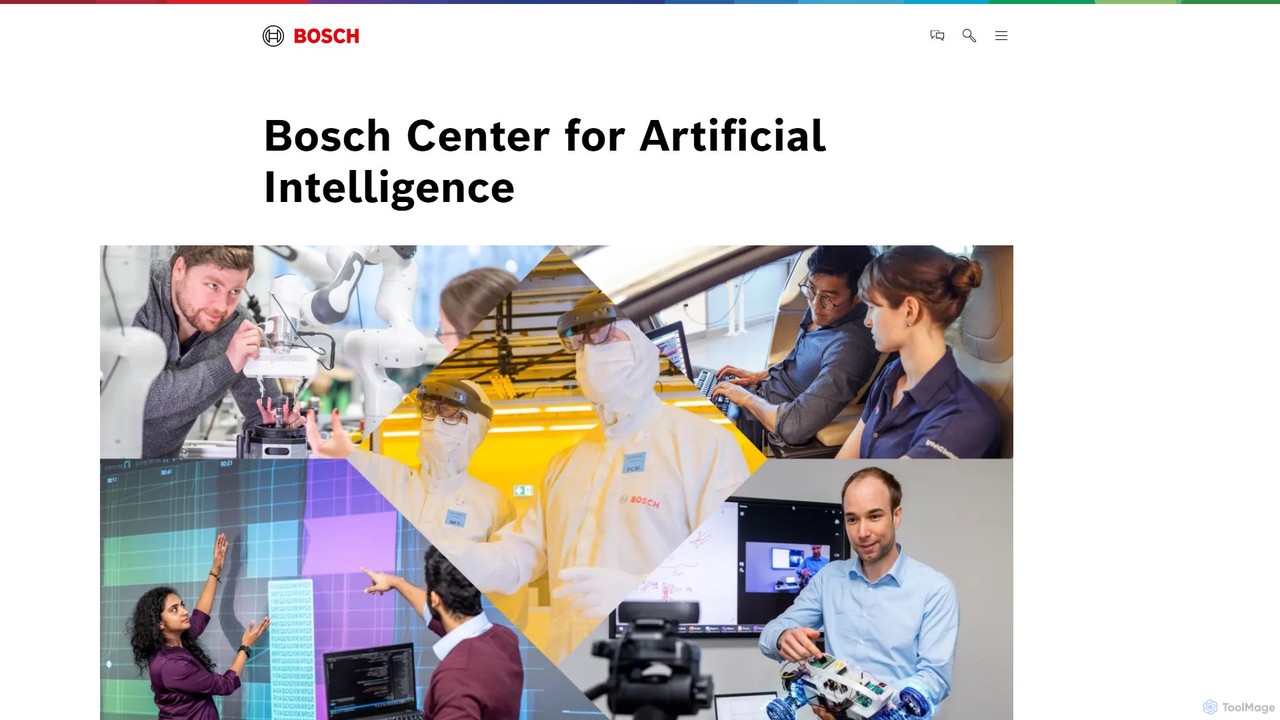
Bosch Center for Artificial Intelligence (BCAI) is Bosch's center of excellence for AI, driving the development and deployment of safe, robust, and explainable AI solutions across industrial sectors. It bridges fundamental research with real-world applications in manufacturing, automotive, and supply chain management.

Autonomous Driving
Visits 6.1KFavorites 114Likes 117

About Autonomous Driving

Autonomous Driving tools are AI-powered systems that enable vehicles to operate without human intervention, representing a significant leap in automotive technology. These sophisticated tools integrate advanced artificial intelligence, machine learning, computer vision, and sensor fusion to accurately perceive surroundings, predict behaviors, plan optimal paths, and execute precise driving maneuvers. They are indispensable for developing next-generation self-driving cars, optimizing smart logistics operations, and building intelligent transportation systems, ultimately aiming to enhance safety, improve traffic flow, and increase accessibility in future mobility solutions.

Core Features

  • Perception & Sensor Fusion: Real-time understanding of the vehicle's environment by combining data from cameras, LiDAR, radar, and ultrasonic sensors to detect objects, lanes, and potential hazards.
  • Path Planning & Navigation: Advanced algorithms that generate safe, efficient, and dynamic routes, adapting to real-time traffic conditions and unexpected obstacles.
  • Decision Making & Control: AI models that interpret perceived data and planned paths to make critical driving decisions, such as accelerating, braking, and steering, ensuring smooth and safe vehicle operation.
  • Localization & Mapping: Precise vehicle positioning within a few centimeters using GPS, IMU, and high-definition maps, crucial for accurate navigation and environmental understanding.
  • Human-Machine Interface (HMI): Intuitive systems designed for seamless interaction between the autonomous vehicle and its occupants, providing status updates, intervention requests, and control options.

Applicable Scenarios

Autonomous Driving tools are utilized across a broad spectrum of applications, from cutting-edge automotive research and development to practical deployment in various industries. They are essential for the creation and rigorous testing of Level 3-5 self-driving passenger vehicles, enabling automated material handling in complex industrial environments like factories and ports, and powering efficient robotic taxi fleets for urban mobility. These tools are fundamentally transforming how goods are transported and how people experience personal and public transit.

How to Choose

When selecting Autonomous Driving tools, it is crucial to consider the specific autonomy level (SAE L1-L5) you aim to achieve and ensure the tool's capabilities align with this goal. Evaluate its sensor integration compatibility with your chosen hardware (e.g., LiDAR, radar brands), the robustness of its safety and redundancy features to meet stringent automotive standards, and its adherence to evolving regulatory frameworks. Furthermore, assess the platform's simulation and real-world testing capabilities, along with its data processing and machine learning infrastructure, for comprehensive development and validation.

Autonomous Driving use cases

1

Designing & Testing Autonomous Passenger Vehicles

Automotive engineers utilize autonomous driving platforms to develop, simulate, and rigorously test AI algorithms for Level 3-5 self-driving cars. This involves refining perception systems, optimizing decision-making logic, and validating safety protocols in diverse virtual and real-world scenarios, accelerating the path to commercial deployment and ensuring robust performance.

2

Implementing Autonomous Logistics & Last-Mile Delivery

Logistics companies deploy autonomous driving solutions for automated material handling in warehouses, port operations, and last-mile delivery. These tools enable vehicles to navigate complex environments, load/unload goods, and deliver packages efficiently without human drivers, significantly reducing operational costs, improving delivery speed, and enhancing supply chain resilience.

3

Operating Robotic Taxi Fleets for Urban Mobility

Mobility service providers leverage autonomous driving technology to establish and manage fleets of robotic taxis. These vehicles offer on-demand, driverless transportation, optimizing route efficiency, reducing traffic congestion, and providing accessible mobility options in urban areas. This transforms public and private transport, offering convenience and environmental benefits.

4

Integrating Autonomous Vehicles with Smart City Systems

Urban planners and smart city developers use autonomous driving tools to integrate self-driving vehicles with intelligent traffic management systems, V2X (Vehicle-to-Everything) communication, and smart parking solutions. This fosters a cohesive urban ecosystem, improving traffic flow, reducing emissions, enhancing overall city safety, and preparing for future urban landscapes.

5

Deploying Autonomous Public Transport Shuttles

Municipalities and public transport operators implement autonomous driving technology for driverless shuttles and buses on fixed routes or within specific zones. These systems enhance service reliability, extend operational hours, and provide cost-effective public transit solutions, especially in areas with lower passenger density or for campus and airport environments, improving accessibility.

6

Enabling Autonomous Operations in Industrial & Off-Road Settings

Industries such as mining, agriculture, and construction utilize autonomous driving tools for heavy machinery and specialized vehicles. These solutions allow equipment to operate autonomously in hazardous or remote environments, performing tasks like excavation, harvesting, or material transport, boosting safety and productivity while significantly reducing human exposure to risk.

Autonomous Driving FAQ

What are Autonomous Driving tools?

Autonomous Driving tools are AI-powered software and hardware systems that enable vehicles to perceive their environment, plan paths, and execute driving maneuvers without human input. They integrate advanced technologies like computer vision, sensor fusion, machine learning, and high-definition mapping to achieve various levels of automation, from driver assistance to full self-driving capabilities.

How do Autonomous Driving systems perceive their environment?

Autonomous Driving systems perceive their environment through a sophisticated array of sensors, including cameras, LiDAR (Light Detection and Ranging), radar, and ultrasonic sensors. Data from these diverse sensors is continuously fused and processed by AI algorithms to create a real-time, 360-degree understanding of the vehicle's surroundings, accurately identifying objects, lanes, traffic signs, and potential hazards.

What are the different levels of Autonomous Driving?

Autonomous Driving is categorized into six levels (0-5) by SAE International. Level 0 signifies no automation, while Level 5 represents full automation, where the vehicle can handle all driving tasks under all conditions without any human intervention. Intermediate levels (1-4) involve varying degrees of driver assistance and conditional automation, with the driver still expected to monitor or intervene when necessary.

What are the main safety considerations for Autonomous Driving?

Safety is paramount for Autonomous Driving. Key considerations include the reliability of sensor data in adverse weather conditions, the robustness and explainability of AI decision-making algorithms, cybersecurity against potential hacks, and the ability to safely handle unforeseen "edge cases." Extensive testing, redundant systems, and strict validation processes are crucial to ensure the safety and trustworthiness of these technologies.

What is the future outlook for Autonomous Driving technology?

The future of Autonomous Driving involves widespread adoption in various sectors, from personal mobility to logistics and public transport. Continued advancements in AI, sensor technology, V2X (Vehicle-to-Everything) communication, and regulatory frameworks will enhance capabilities and safety. This evolution is expected to lead to more efficient, safer, and accessible transportation systems globally, transforming urban and rural landscapes.