Aiviue
Aiviue is an AI hiring copilot designed to automate and accelerate recruitment for frontline teams across various industries. …
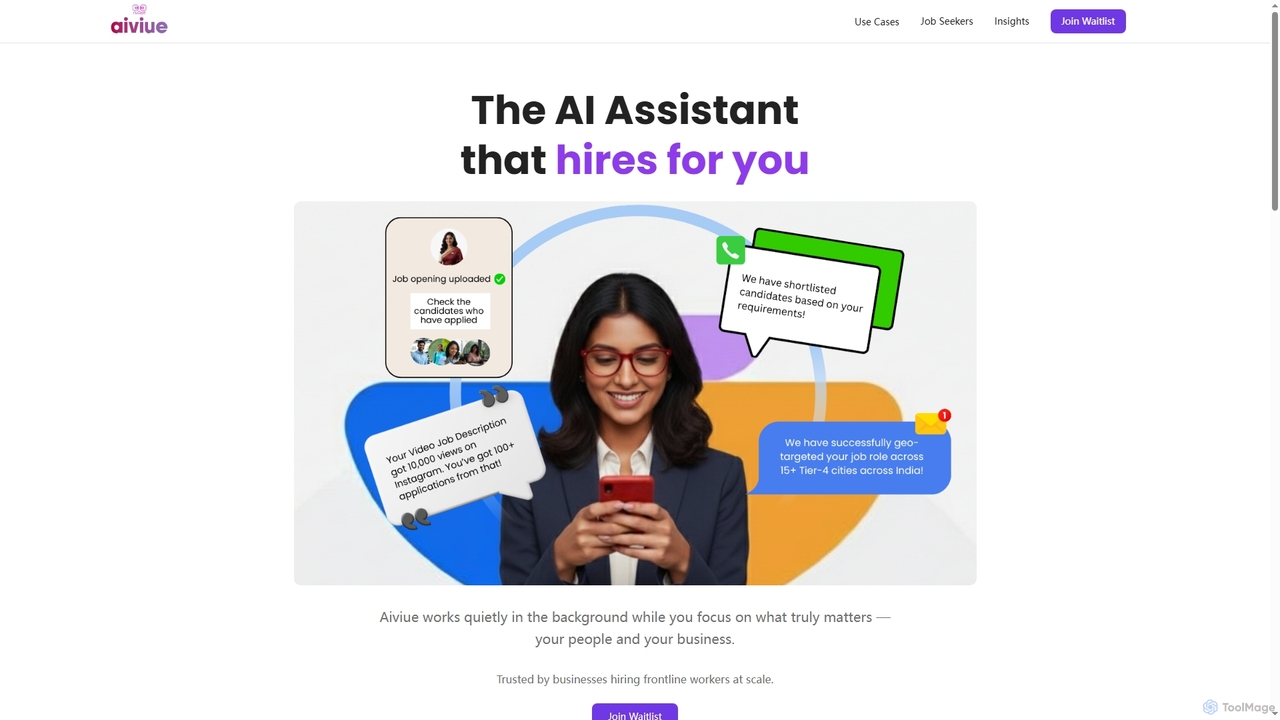
Aiviue is an AI hiring copilot designed to automate and accelerate recruitment for frontline teams across various industries. It instantly screens, engages, and shortlists high-fit candidates using AI-powered conversations, multilingual support, and geo-targeted campaigns, helping businesses hire faster and smarter.
About Qsr & Hospitality
Qsr & Hospitality AI tools are specialized artificial intelligence solutions designed to optimize operations, enhance customer experiences, and improve efficiency within the quick service restaurant (QSR) and broader hospitality sectors. These tools leverage machine learning, natural language processing, and computer vision to automate routine tasks, provide data-driven insights, and personalize service delivery. They address the unique challenges of high-volume transactions, perishable inventory, and dynamic customer demands, enabling businesses to streamline workflows and boost profitability.
Core Features
- Automated Order Taking: AI-powered voice assistants or kiosks for efficient and accurate order processing, reducing wait times.
- Personalized Recommendations: Algorithms analyze customer preferences and purchase history to suggest menu items or services, increasing upsell opportunities.
- Predictive Demand Forecasting: Machine learning models predict future demand for food items or room bookings, optimizing inventory and staffing levels.
- Intelligent Inventory Management: AI tracks stock levels, monitors spoilage, and automates reordering to minimize waste and ensure freshness.
- Staff Scheduling Optimization: AI analyzes demand patterns, staff availability, and skill sets to create efficient schedules, reducing labor costs.
Applicable Scenarios
These AI tools are invaluable for QSR chains, independent restaurants, cafes, hotels, and catering services aiming to modernize their operations. They are particularly useful for managers seeking to reduce operational costs, improve service speed, and enhance customer satisfaction in fast-paced environments. From automating drive-thru orders to optimizing hotel room pricing, Qsr & Hospitality AI tools provide solutions for various operational pain points.
How to Choose
When selecting Qsr & Hospitality AI tools, consider the specific operational challenges you aim to solve, such as reducing labor costs, improving order accuracy, or minimizing food waste. Evaluate the tool's integration capabilities with existing POS systems and other hospitality software. Assess its scalability to grow with your business and its ability to provide actionable insights. Finally, compare pricing models and ensure the vendor offers robust support and training for your staff.
Qsr & HospitalityUse Cases
Automating Drive-Thru Order Taking
QSR operators can deploy AI voice assistants at drive-thru lanes to accurately take customer orders, process payments, and upsell items. This reduces human error, speeds up service during peak hours, and allows staff to focus on food preparation and delivery, significantly cutting labor costs and improving throughput.
Personalizing Hotel Guest Experiences
Hotels can use AI to analyze guest preferences from past stays, booking patterns, and loyalty program data. This enables personalized recommendations for room upgrades, local attractions, or dining options via chatbots or in-app notifications, enhancing guest satisfaction and fostering loyalty.
Optimizing Restaurant Inventory & Waste Reduction
Restaurant managers utilize AI-powered inventory systems that track ingredient usage, predict future demand based on sales data and external factors (weather, events), and automate reordering. This minimizes food spoilage, ensures fresh stock, and reduces overall food costs by preventing overstocking or stockouts.
Dynamic Pricing for Hotel Rooms & Menu Items
Hospitality businesses, especially hotels and restaurants, can implement AI algorithms to dynamically adjust pricing for rooms or menu items in real-time. The AI considers factors like demand, competitor pricing, local events, and historical data to maximize revenue and occupancy rates, ensuring optimal profitability.
Efficient Staff Scheduling in Cafes
Cafe owners can leverage AI-driven scheduling tools to create optimal staff rotas. The AI considers predicted customer traffic, employee availability, skill sets, and labor laws to ensure adequate staffing levels at all times, minimizing overtime costs and improving employee satisfaction by providing fair and predictable shifts.
AI-Powered Customer Service Chatbots for Resorts
Resorts can deploy AI chatbots on their websites or messaging platforms to handle common guest inquiries 24/7, such as booking modifications, amenity information, or local recommendations. This frees up front desk staff for more complex issues, provides instant support to guests, and improves overall service responsiveness.