Industry Specific Best in category 1 results Retail Staffing AI Tool

Popular AI tools in the Retail Staffing field of Industry Specific include Aiviue, etc., helping you quickly improve efficiency.

Aiviue

Aiviue

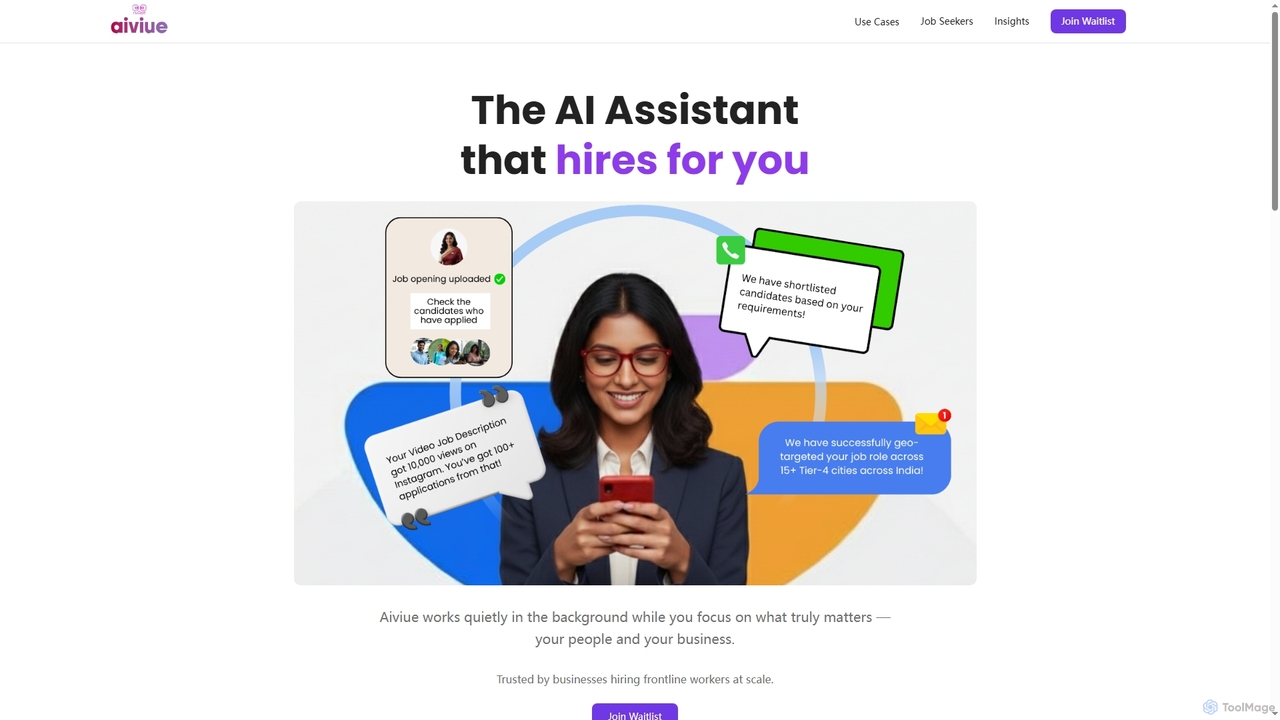
Aiviue is an AI hiring copilot designed to automate and accelerate recruitment for frontline teams across various industries. …

3.0K

About Retail Staffing

AI Retail Staffing tools are specialized platforms that use machine learning to optimize workforce scheduling and management in retail environments. These tools analyze historical sales data, foot traffic patterns, weather forecasts, and promotional events to accurately predict staffing needs. By automating schedule creation and task allocation, they help retailers ensure optimal store coverage, reduce labor costs, and enhance the customer experience. This data-driven approach moves beyond simple rota planning to dynamic, responsive workforce management.

Core Features

  • Predictive Demand Forecasting: Uses AI to forecast customer traffic and sales volume for specific hours, days, and seasons.
  • Automated Scheduling: Generates optimized shift schedules based on demand forecasts, employee availability, skills, and labor regulations.
  • Real-time Task Management: Assigns and tracks in-store tasks, allowing managers to redeploy staff to high-priority areas dynamically.
  • Labor Compliance Engine: Automatically ensures schedules adhere to local, state, and national labor laws, including break times and overtime rules.
  • Performance Analytics: Provides dashboards with key metrics like sales per labor hour, conversion rates, and wage costs to measure efficiency.

Use Cases

These tools are primarily used by store managers, regional directors, and operations departments in various retail sectors, including fashion, electronics, grocery, and specialty stores. They are essential for managing staffing across multiple locations with fluctuating demand, such as during holiday seasons or major sales events. The focus is on aligning labor expenditure directly with revenue opportunities on the sales floor.

How to Choose

When selecting an AI Retail Staffing tool, consider its integration capabilities with your existing Point of Sale (POS) and HR systems. Evaluate the accuracy and granularity of its forecasting model. Assess the user-friendliness of the mobile app for employees to view schedules and swap shifts. Finally, verify the robustness of its compliance engine to ensure it covers all relevant jurisdictions for your business.

Retail StaffingUse Cases

1

Optimize Holiday Season Staffing

A department store manager prepares for the annual holiday rush. Instead of relying on last year's schedules, they use an AI Retail Staffing tool. The AI analyzes sales data from the past five years, local event calendars, and marketing promotions to forecast customer traffic with hourly precision. Based on this forecast, it automatically generates an optimized schedule that places more staff, especially those with high sales conversion rates, during peak shopping hours. This results in a 15% increase in sales per labor hour and a significant reduction in customer wait times at checkout.

2

Automate Fair Weekly Shift Scheduling

The owner of a multi-location coffee shop chain spends hours each week creating schedules manually, trying to balance employee availability, skills (e.g., barista vs. cashier), and fairness. By implementing an AI scheduling tool, they can now input all employee constraints and preferences. The AI generates fair and compliant schedules for all locations in minutes. It automatically ensures baristas are on duty during morning peaks and avoids 'clopening' shifts. This reduces scheduling time by 90% and improves employee satisfaction, leading to lower staff turnover.

3

Manage Real-time In-Store Task Allocation

In a large electronics store, a manager needs to ensure tasks like restocking shelves, cleaning displays, and assisting customers are handled efficiently. Using an AI staffing tool's mobile app, the manager can see a real-time map of staff locations. When a customer needs help in the laptop section, the manager uses the app to assign the task to the nearest available associate with product expertise. The AI logs the task completion time, providing data to optimize future task assignments and identify training needs, improving overall store operational efficiency.

4

Ensure Labor Law Compliance Across States

A national retail chain operates in multiple states, each with unique labor laws regarding meal breaks, overtime, and predictive scheduling. Their central HR team uses an AI staffing platform with a built-in compliance engine. When creating schedules, the AI automatically applies the correct rules for each store's location. It flags potential violations before a schedule is published, such as an employee scheduled for six consecutive days in a state that requires a day of rest. This proactive approach minimizes legal risks and avoids costly fines associated with non-compliance.

5

Reduce Employee Turnover with Flexible Scheduling

A fast-fashion retailer is struggling with high employee turnover, often cited due to unpredictable schedules. They adopt an AI staffing tool that allows employees to set their availability preferences and easily swap shifts via a mobile app. The AI scheduler prioritizes these preferences when generating schedules, creating a better work-life balance. It also offers open shifts to qualified employees, giving them opportunities for more hours. After six months, the retailer sees a 25% reduction in voluntary turnover, saving significant costs in recruitment and training.

6

Analyze Staff Performance Against Sales Data

A regional manager for a luxury goods brand wants to understand the link between staff presence and sales performance. They use an AI staffing tool's analytics dashboard, which integrates with the POS system. The dashboard visualizes sales data against staffing levels for each hour of the day. The manager discovers that having a product specialist on the floor between 2 PM and 4 PM correlates with a 30% increase in sales of high-margin items. Using this insight, they adjust the standard scheduling template for all stores in the region to maximize profitability.

Retail StaffingFrequently Asked Questions