ToolMage
Sign in

Best 1 Curation AI tools for Information Management

Popular Curation AI tools in Information Management include Heyscottie, helping you work more efficiently.

Heyscottie
Paid

Heyscottie

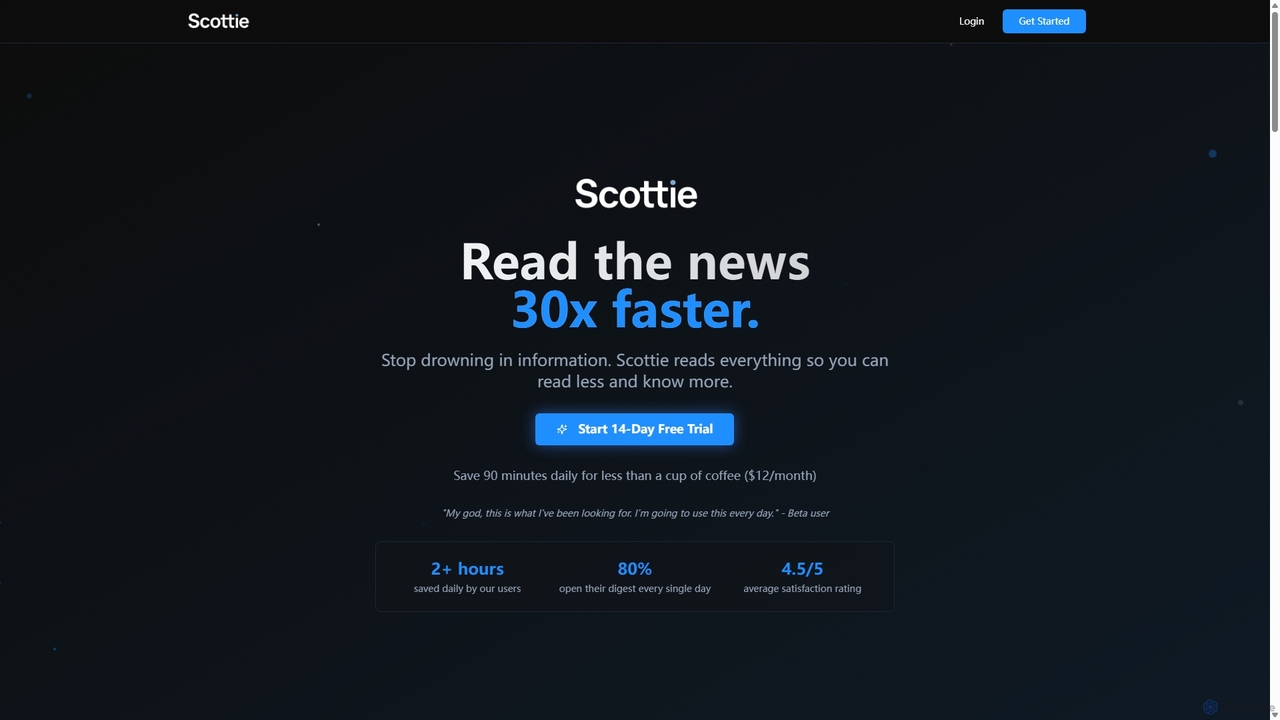
Heyscottie is an AI-powered service that transforms your cluttered newsletter inbox into a concise, 5-minute daily brief. It connects to your Gmail, analyzes your subscriptions to understand your interests, and delivers personalized key insights. This allows you to save over 90 minutes daily, combat information overload, and stay informed on what truly matters without the noise.

Curation
Visits 4.2KFavorites 122Likes 115

About Curation

AI Curation tools are intelligent systems designed to automatically discover, filter, and organize relevant information from a vast sea of digital content. They leverage Natural Language Processing (NLP) and machine learning to understand topics, assess relevance, and eliminate noise, going far beyond simple bookmarking. These tools empower users to build focused knowledge bases, monitor industry trends, and share valuable insights with minimal manual effort. By transforming information overload into structured intelligence, they serve as a critical component within the broader field of Information Management.

Core Features

  • Automated Content Discovery: Actively scans websites, social media, and news feeds based on user-defined topics and keywords.
  • AI-Powered Filtering: Uses semantic analysis to score content for relevance, quality, and sentiment, removing duplicates and irrelevant items.
  • Intelligent Organization: Automatically suggests tags, categorizes content into folders, and creates structured collections.
  • Summarization & Insight Extraction: Generates concise summaries of articles or reports, highlighting the most important information.

Use Cases

Ideal for market analysts tracking competitor moves, content marketers seeking inspiration, and research teams building a literature database. They are also valuable for consultants and product managers who need to stay informed about industry developments and technological advancements without spending hours on manual searches.

How to Choose

When selecting an AI Curation tool, consider the breadth of its source integrations (web, social, RSS, APIs), the sophistication of its filtering and AI models, collaboration features for team use, and the available export or integration options (e.g., newsletters, Slack, Notion).

Featured tool rankings

Curation use cases

1

Automating Market Intelligence Reports

A business analyst needs to track industry trends, competitor announcements, and technological shifts. Instead of manually scouring dozens of news sites and blogs daily, they use an AI Curation tool. The tool is configured to monitor specific companies, keywords like 'supply chain innovation', and tech publications. Each morning, it delivers a digested feed with the most relevant articles, already summarized. The analyst can quickly assemble a weekly intelligence report, saving over 80% of their research time and ensuring no critical information is missed.

2

Fueling Content Marketing Ideation

A content marketing team struggles to find fresh ideas for blog posts and social media. They use an AI Curation tool to follow industry influencers, top-performing content in their niche, and customer conversations on social platforms. The AI filters for engaging and relevant content, presenting it in an 'idea board' format. The team can see what topics are trending and what questions customers are asking. This provides a constant stream of data-backed inspiration, reducing time spent on brainstorming and increasing the relevance of their content calendar.

3

Building a Personal Knowledge Management System

A PhD student is researching a complex topic and needs to build a comprehensive knowledge base. They use an AI Curation tool to automatically pull in academic papers from Google Scholar, articles from specific journals, and relevant discussions from research forums. The tool deduplicates sources, tags them by sub-topic, and generates a summary for each entry. This creates a centralized, searchable, and constantly updated digital library. It transforms the literature review process from a scattered collection of PDFs and bookmarks into a structured and intelligent system.

4

Creating a Shared Team Knowledge Hub

A product development team needs a central place to store research on user needs, competitor features, and design best practices. They set up a shared AI Curation space. Team members can add articles and reports, but the AI also automatically pulls in relevant content from tech blogs and UX design communities. The AI categorizes everything, making it easy for a new team member to get up to speed or for a designer to find inspiration for a new feature. This shared hub prevents knowledge silos and ensures everyone is working from the same, up-to-date information.

5

Curating Engaging Social Media Feeds

A social media manager for a B2B tech company wants to share valuable third-party content to build authority, not just promote their own products. They use an AI Curation tool to find insightful articles, industry reports, and infographics related to their field. The AI filters out overly promotional or low-quality content. The manager can then easily schedule a mix of curated and original content, maintaining an active and valuable social media presence with significantly less time spent on content discovery.

6

Streamlining Academic Literature Reviews

An academic researcher beginning a new project faces the daunting task of reviewing hundreds of existing papers. Using an AI Curation tool connected to academic databases, they set up queries for their research area. The AI gathers relevant papers, automatically filters out those from low-impact journals or outside a specific date range, and groups the rest by methodology or key findings. It also generates summaries for the most cited papers, allowing the researcher to quickly grasp the state of the field and identify gaps for their own contribution, accelerating the initial research phase significantly.

Curation FAQ

What are AI Curation tools?

AI Curation tools are software applications that use artificial intelligence, particularly Natural Language Processing (NLP), to automate the process of finding, filtering, and organizing digital content. Unlike manual bookmarking, they proactively discover information from various sources based on your interests. Their core function is to analyze content for relevance and quality, helping you overcome information overload and build a focused, valuable collection of knowledge on any topic.

How do I choose the right AI Curation tool?

To choose the right tool, consider these factors:

  • Source Integration: Does it connect to the sources you need (e.g., specific websites, social media platforms, academic databases, RSS feeds)?
  • Filtering Capabilities: How sophisticated is the AI? Can you fine-tune the filtering criteria based on keywords, relevance, and quality?
  • Organizational Features: Does it offer flexible ways to organize content, such as tags, folders, collections, or mind maps?
  • Collaboration and Sharing: If you work in a team, check for features like shared spaces, commenting, and integrations with tools like Slack or Notion.
  • Output Formats: Can you easily export your curated content into formats like newsletters, reports, or social media posts?
What's the difference between AI Curation and a simple RSS reader?

The key difference lies in intelligence and proactivity. An RSS reader is a passive tool; it only shows you content from sources you explicitly subscribe to. An AI Curation tool is proactive; it actively discovers new content and sources based on topics and keywords, not just fixed URLs. Furthermore, AI Curation tools use semantic analysis to filter out noise, remove duplicates, and rank content by relevance, whereas an RSS reader simply presents a chronological feed that you must filter manually.

Who can benefit from using AI Curation tools?

A wide range of professionals and individuals can benefit. This includes:

  • Market Analysts & Strategists: To track competitors, industry news, and market shifts.
  • Content Marketers: To find inspiration, discover trending topics, and source third-party content.
  • Researchers & Academics: To automate literature reviews and build comprehensive knowledge bases.
  • Consultants & Advisors: To stay on top of the latest trends and developments in their clients' industries.
  • Product Managers: To gather user feedback, monitor feature requests, and research competitor products.
  • Lifelong Learners: To create personalized learning feeds on any subject of interest.
How do AI Curation tools ensure the quality of discovered content?

AI Curation tools use a combination of techniques to assess content quality. They employ Natural Language Processing (NLP) to understand the topic and coherence of an article. Many tools also analyze signals like social media engagement (shares, likes), author authority, and the reputation of the source domain. Some advanced systems can even detect sentiment (positive, negative, neutral) and filter out overly promotional or 'clickbait' content. By combining these signals, they create a relevance score that helps prioritize high-quality, insightful information over digital noise.