The Record
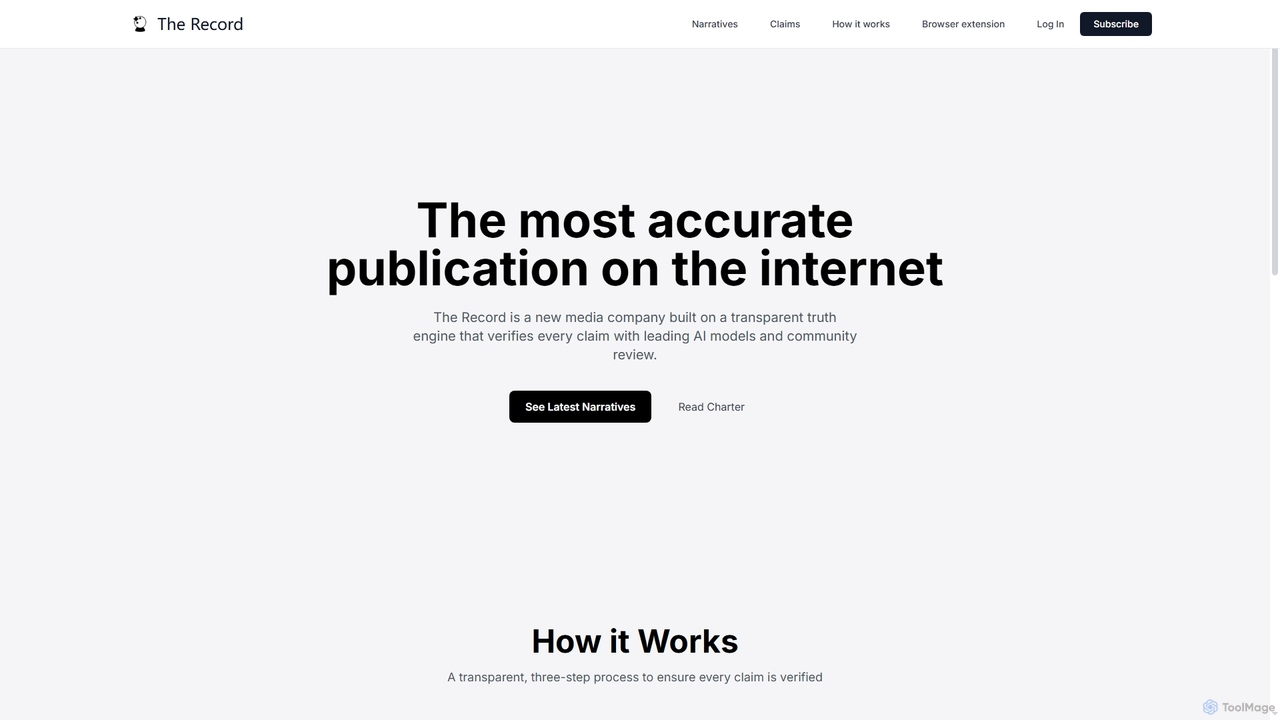
The Record is a new media platform that leverages advanced AI models and community review to verify claims, …
The Record is a new media platform that leverages advanced AI models and community review to verify claims, providing a transparent truth engine for online information. It compiles highly accurate narratives and assigns credibility scores to users, aiming to be the most accurate publication on the internet.
FactTracker
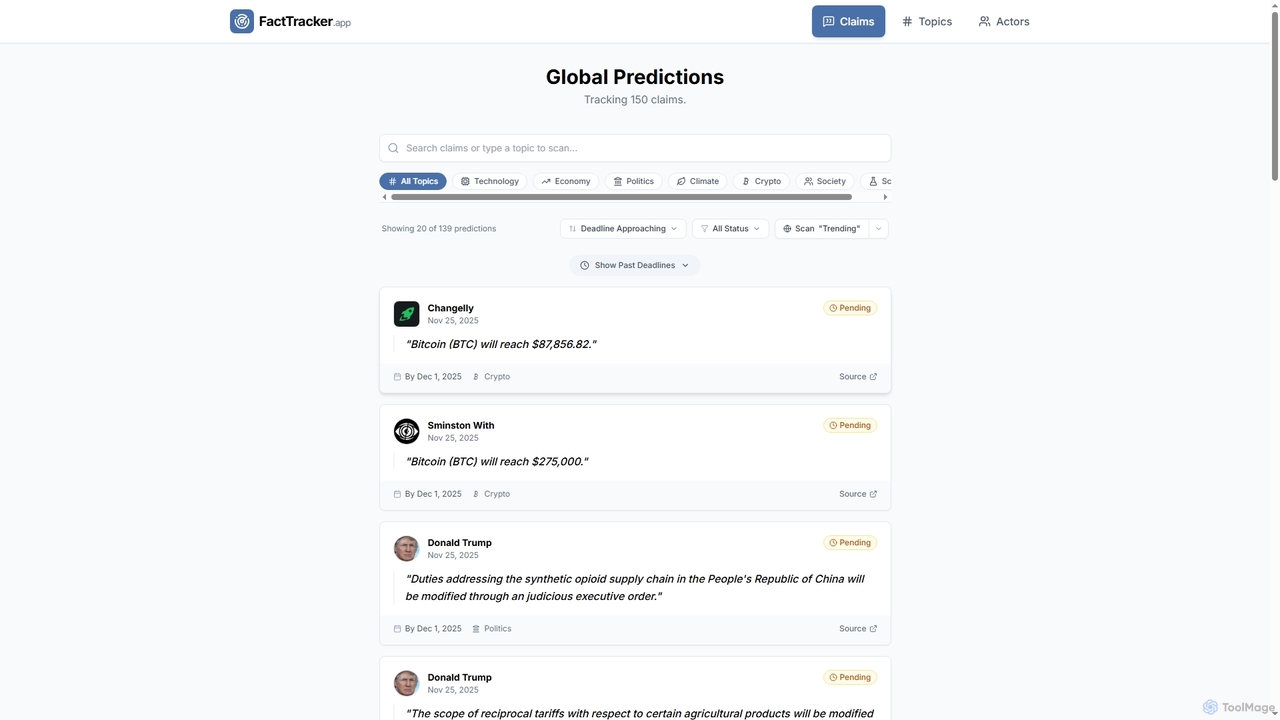
FactTracker is a platform that monitors and evaluates predictions and claims made by various sources across diverse global …
FactTracker is a platform that monitors and evaluates predictions and claims made by various sources across diverse global topics. It tracks these claims against real-world outcomes to reveal who consistently gets reality right, providing transparency and accountability for forecasts.
About Information Verification
Information Verification tools are AI-powered solutions designed to assess the accuracy, authenticity, and reliability of various forms of data and content. These tools leverage advanced machine learning, natural language processing, and computer vision to analyze information from diverse sources. Their primary purpose is to combat misinformation, ensure data integrity, and support informed decision-making across industries. They offer a critical layer of scrutiny in an increasingly complex digital landscape.
Core Features
- Fact-Checking: Automatically cross-references claims against reputable databases and verified sources to identify inaccuracies.
- Source Analysis: Evaluates the credibility and bias of information sources, including websites, publications, and social media accounts.
- Deepfake Detection: Utilizes computer vision to identify manipulated images, videos, and audio, distinguishing them from authentic media.
- Data Validation: Checks the consistency, completeness, and correctness of structured data sets for errors or anomalies.
- Content Originality: Scans text for plagiarism and verifies the uniqueness of written content against vast online repositories.
Use Cases
Information Verification tools are indispensable for professionals in fields like journalism, research, and corporate intelligence. They enable journalists to quickly verify breaking news, images, and videos, ensuring factual reporting. Researchers use them to validate data sets and academic sources, maintaining scientific rigor. Businesses apply these tools for due diligence, verifying information about partners, markets, and regulatory compliance to mitigate risks.
How to Choose
When selecting an Information Verification tool, prioritize its accuracy rate and the breadth of its data sources, ensuring it covers relevant domains. Consider its real-time processing capabilities for time-sensitive tasks and its integration options with existing workflows. Evaluate the user interface for ease of use and the tool's compliance with data privacy regulations. Scalability and the ability to handle various content formats (text, image, video) are also crucial factors.
Information VerificationUse Cases
Journalists Verifying News & Media Content
Journalists and media professionals utilize information verification tools to rapidly fact-check breaking news stories, images, and videos before publication. By cross-referencing claims with verified sources and detecting manipulated media like deepfakes, they ensure the accuracy and authenticity of their reports. This process helps prevent the spread of misinformation and maintains journalistic integrity, saving significant time compared to manual verification.
Businesses Conducting Due Diligence
Corporate intelligence teams and business analysts leverage information verification tools for thorough due diligence processes. They validate financial reports, company profiles, market research data, and regulatory compliance documents to assess potential risks with partners, investments, or mergers. These tools enhance decision-making by providing a reliable assessment of information accuracy, reducing exposure to fraudulent claims or misleading data.
Social Media Content Moderation
Social media platforms and brand managers employ information verification tools to moderate user-generated content effectively. These tools automatically identify and flag false narratives, hate speech, and deepfake media that violate platform guidelines. By rapidly processing vast amounts of content, they help maintain a safe and trustworthy online environment, protecting users from harmful misinformation and preserving brand reputation.
Academic Research and Publication Integrity
Researchers, academics, and journal editors utilize information verification tools to ensure the integrity and originality of scholarly work. These tools can validate data sets, cross-reference citations, and detect plagiarism in manuscripts before publication. By maintaining high standards of academic rigor and ethical conduct, they help prevent scientific misconduct and uphold the credibility of research findings across various disciplines.
Legal Professionals Validating Case Information
Legal professionals, including lawyers and paralegals, employ information verification tools to validate facts, dates, and references within legal documents, contracts, and case files. These tools help ensure the accuracy of evidence, witness statements, and legal precedents, minimizing errors that could impact legal proceedings. By streamlining the verification process, they enhance efficiency and bolster the reliability of legal arguments.
Financial Analysts Ensuring Data Integrity
Financial analysts and auditors rely on information verification tools to ensure the integrity and accuracy of financial data. They use these tools to cross-check market reports, company statements, transaction records, and regulatory filings for discrepancies or potential fraud. This rigorous verification process helps maintain compliance, supports sound investment decisions, and protects against financial risks, enhancing trust in financial reporting.