Estimote
Estimote provides advanced UWB (Ultra-Wideband) tags for inch-level precision location tracking and IoT applications. These programmable devices, equipped …
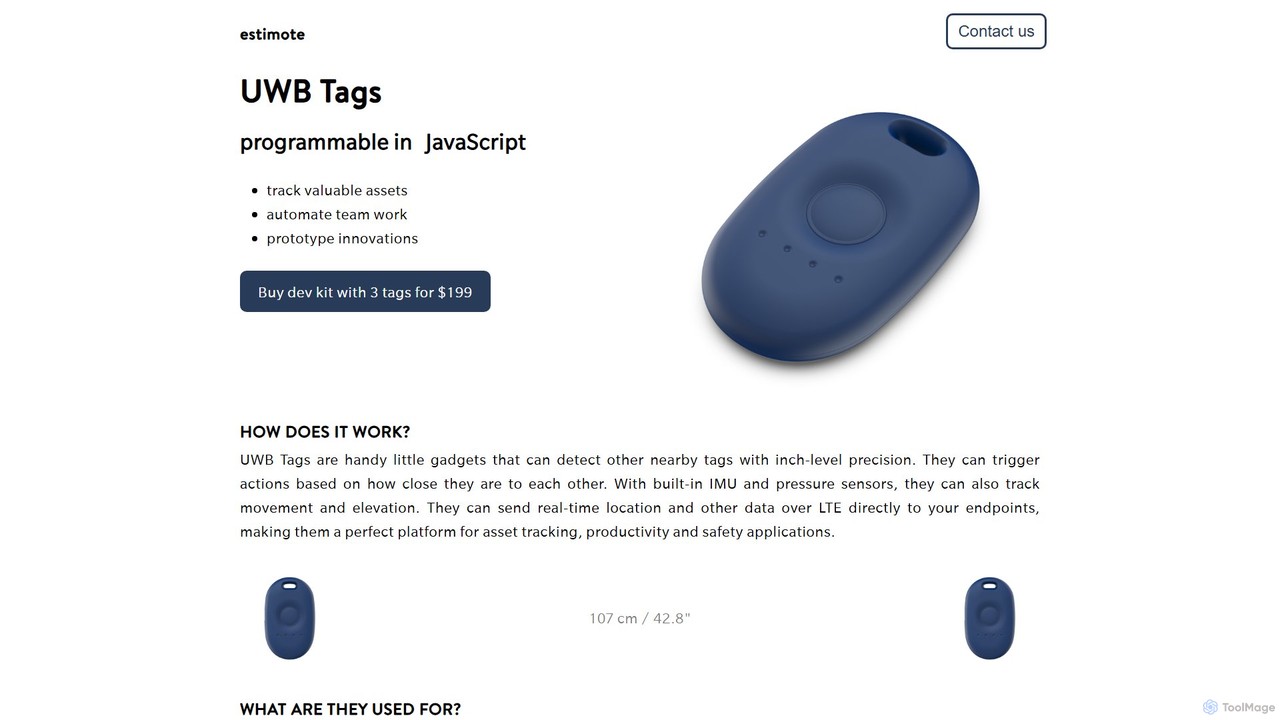
Estimote provides advanced UWB (Ultra-Wideband) tags for inch-level precision location tracking and IoT applications. These programmable devices, equipped with sensors and LTE connectivity, enable developers to build sophisticated asset tracking, automation, and safety solutions using JavaScript. They are designed for rapid prototyping and scalable deployment across various industries.
About Location Tracking
Location Tracking tools are AI-powered solutions within the Internet of Things (IoT) ecosystem that precisely determine and monitor the real-time physical position of assets, vehicles, or individuals. These tools leverage various sensor technologies like GPS, Wi-Fi, Bluetooth, and cellular networks, often integrating AI for advanced data analysis, predictive insights, and automated alerts. They provide critical visibility and control, enabling businesses and individuals to optimize operations, enhance security, and improve safety across diverse environments.
Core Features
- Real-time Positioning: Provides instantaneous and continuous updates on the exact location of tracked entities.
- Geofencing: Allows users to define virtual geographic boundaries and receive automated alerts upon entry or exit.
- Historical Data & Analytics: Records past movement patterns, offering insights into routes, dwell times, and operational efficiency.
- Asset & Fleet Management: Enables comprehensive oversight of vehicles, equipment, and inventory for better utilization and security.
- Environmental Integration: Combines location data with other sensor inputs (e.g., temperature, humidity) for richer contextual monitoring.
Applicable Scenarios
Location Tracking is indispensable in logistics for optimizing delivery routes and managing fleets, in smart cities for monitoring public assets and services, and in healthcare for tracking medical equipment or vulnerable patients. It also plays a vital role in industrial settings for asset security and operational efficiency.
How to Choose
When selecting a Location Tracking solution, consider the required accuracy (e.g., meter vs. centimeter level), coverage area (indoor, outdoor, global), battery life of tracking devices, integration capabilities with existing systems, and the robustness of data security and privacy features. Evaluate the specific environment and the type of assets to be tracked to ensure optimal performance and cost-effectiveness.

Location TrackingUse Cases
Fleet Management & Logistics Optimization
Logistics managers and fleet operators utilize Location Tracking to monitor the real-time position of delivery vehicles, optimize routes for efficiency, and track driver behavior. This leads to reduced fuel consumption, improved delivery times, and enhanced security for goods in transit, significantly lowering operational costs and increasing customer satisfaction.
High-Value Asset Tracking in Construction
Construction site managers deploy Location Tracking devices on expensive machinery, tools, and materials. This prevents theft, ensures equipment is available where needed, and provides historical data on asset utilization. It streamlines inventory management and reduces losses, improving project timelines and budget adherence.
Personal Safety & Emergency Response
Caregivers and employers use Location Tracking to monitor vulnerable individuals (e.g., elderly, children) or lone workers in hazardous environments. In emergencies, precise location data enables rapid response, significantly enhancing safety and providing peace of mind for families and organizations.
Smart City Public Asset Monitoring
Urban planners and municipal services leverage Location Tracking to manage public assets like shared bicycles, waste bins, or public transport vehicles. This allows for efficient resource allocation, proactive maintenance, and optimized service delivery, contributing to a more sustainable and responsive urban environment.
Livestock Monitoring & Agricultural Management
Farmers employ Location Tracking on livestock to monitor grazing patterns, detect unusual behavior, and prevent theft across vast agricultural lands. This improves animal welfare, optimizes land use, and provides early warnings for potential health issues or escape attempts, leading to better farm productivity.
Retail Inventory & Customer Flow Analysis
Retailers use Location Tracking, often via RFID or BLE tags, to monitor the movement of high-value inventory within stores or warehouses. Additionally, it can analyze customer flow patterns to optimize store layouts, improve product placement, and enhance the overall shopping experience, boosting sales and operational efficiency.