Coira
Coira is an AI-powered cryptocurrency analysis platform designed to democratize market intelligence for retail investors. It distills complex …
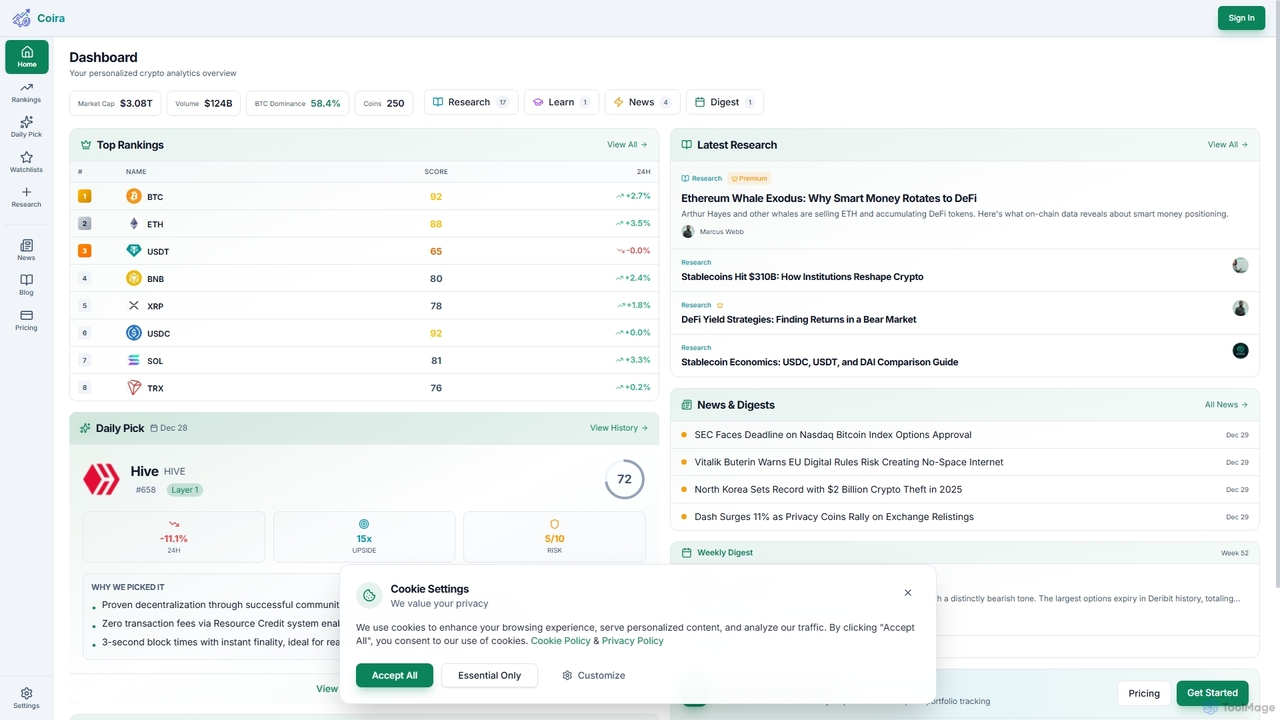
Coira is an AI-powered cryptocurrency analysis platform designed to democratize market intelligence for retail investors. It distills complex on-chain data, market sentiment, and project fundamentals into actionable insights, helping users navigate the digital asset landscape with confidence.
AIBFarm
AIBFarm is an intelligent trading assistant designed for quantitative trading, offering automated strategies and stress-free market participation. It …
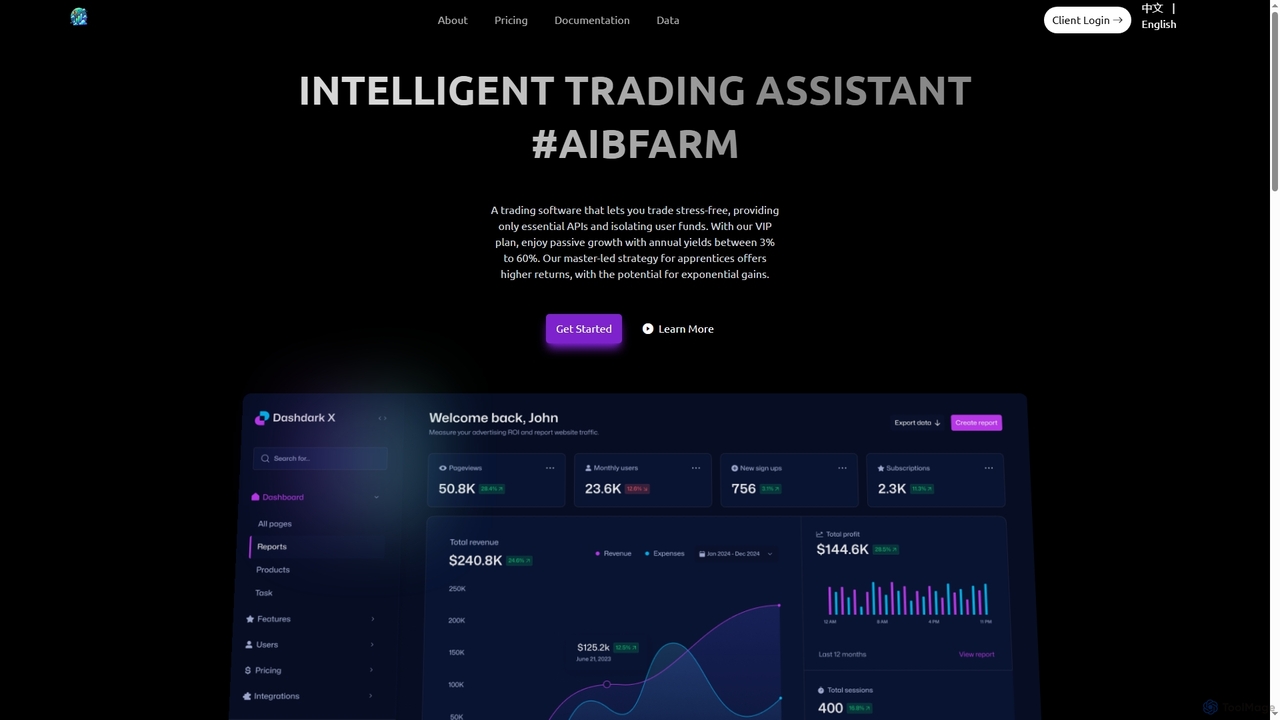
AIBFarm is an intelligent trading assistant designed for quantitative trading, offering automated strategies and stress-free market participation. It provides essential APIs while isolating user funds, enabling 24/7 market monitoring and lightning-fast order execution for passive growth.
Rivellium
Rivellium is an online investment platform enabling individuals to become co-owners of small and medium-sized operating businesses. It …
Rivellium is an online investment platform enabling individuals to become co-owners of small and medium-sized operating businesses. It offers opportunities to invest in diverse sectors like AgriTech, Healthcare, and Real Estate, with potential for significant annual payouts. The platform emphasizes transparency, secure payment processing, and rigorous project verification, making alternative investments accessible from as little as $15.
OXin Agent
OXin Agent is an AI-powered strategist designed for cryptocurrency investors to manage and optimize their portfolios. It analyzes …
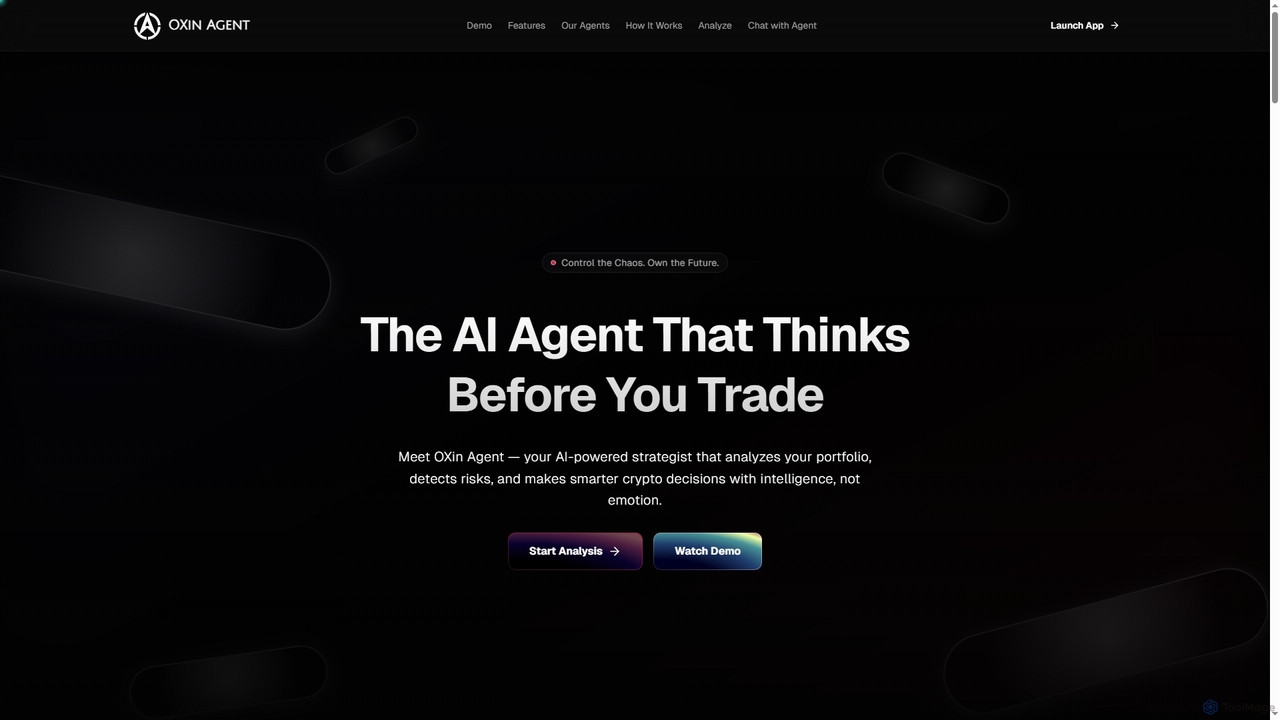
OXin Agent is an AI-powered strategist designed for cryptocurrency investors to manage and optimize their portfolios. It analyzes holdings, identifies risks, and provides intelligent, emotion-free trading recommendations, leveraging real-time data and advanced AI models to enhance decision-making.
About Investment
Investment AI tools are a category of sophisticated software that leverage artificial intelligence, machine learning, and advanced algorithms to analyze financial data, predict market trends, and automate investment decisions. These tools process vast amounts of information, from historical stock prices and economic indicators to news sentiment and social media trends, providing investors with data-driven insights and strategic advantages. They empower individuals and institutions to make more informed decisions, optimize portfolio performance, and manage risk effectively across various asset classes.
Core Features
- Market Analysis & Prediction: Utilizes AI to analyze real-time and historical market data, identifying patterns and predicting future price movements or market shifts.
- Portfolio Optimization: Employs algorithms to construct and rebalance investment portfolios, aiming to maximize returns while minimizing risk based on user-defined parameters.
- Automated Trading: Executes trades automatically based on predefined strategies, market signals, or AI-generated recommendations, often at high speeds.
- Risk Management: Assesses and quantifies various investment risks, providing alerts and recommendations to mitigate potential losses or exposure.
- Sentiment Analysis: Analyzes news articles, social media, and other textual data to gauge market sentiment towards specific assets or the overall market.
Use Cases
Investment AI tools are widely adopted by financial analysts, portfolio managers, individual traders, and wealth management firms. They are used for tasks such as identifying undervalued stocks, optimizing asset allocation for retirement planning, executing high-frequency trading strategies, and gaining an edge in volatile markets by reacting swiftly to data-driven insights.
How to Choose
When selecting an Investment AI tool, consider its analytical capabilities, including the breadth of data sources it processes and the sophistication of its predictive models. Evaluate its customization options for strategy implementation and risk tolerance. Assess the user interface for ease of use, especially for non-technical investors, and verify its integration capabilities with existing brokerage accounts or financial platforms. Finally, review its historical performance metrics and the transparency of its underlying algorithms.

InvestmentUse Cases
Automated Portfolio Rebalancing
A wealth manager uses an Investment AI tool to automatically rebalance client portfolios. Based on market fluctuations and the client's risk profile, the AI identifies deviations from target asset allocations and executes necessary trades to restore the desired balance, ensuring portfolios remain optimized without constant manual oversight.
Real-time Market Trend Prediction
An institutional investor leverages AI to predict short-term market trends for specific sectors. The tool analyzes news sentiment, trading volumes, and macroeconomic indicators in real-time, providing actionable insights that allow the investor to anticipate market shifts and position their holdings strategically before major movements occur.
Algorithmic High-Frequency Trading
A quantitative trading firm deploys an Investment AI for high-frequency trading strategies. The AI monitors thousands of financial instruments simultaneously, identifies fleeting arbitrage opportunities or micro-trends, and executes trades within milliseconds, capitalizing on tiny price discrepancies across markets.
Identifying Undervalued Stocks
An individual investor uses an AI-powered stock screener to identify potentially undervalued companies. The tool sifts through vast financial statements, analyst reports, and historical performance data, flagging stocks that meet specific fundamental criteria and have a high probability of future growth, saving hours of manual research.
Risk Assessment for New Investments
A corporate treasury department utilizes an Investment AI to assess the risk profile of potential new investments. The AI simulates various market scenarios, stress-tests the investment's resilience to adverse conditions, and quantifies potential downside risks, aiding in more robust capital allocation decisions.
Personalized Financial Planning Recommendations
A financial advisor employs an AI tool to generate personalized investment recommendations for clients. By inputting client financial goals, income, expenses, and risk tolerance, the AI suggests optimal asset allocations, savings strategies, and investment products tailored to achieve long-term financial objectives.