Portkey
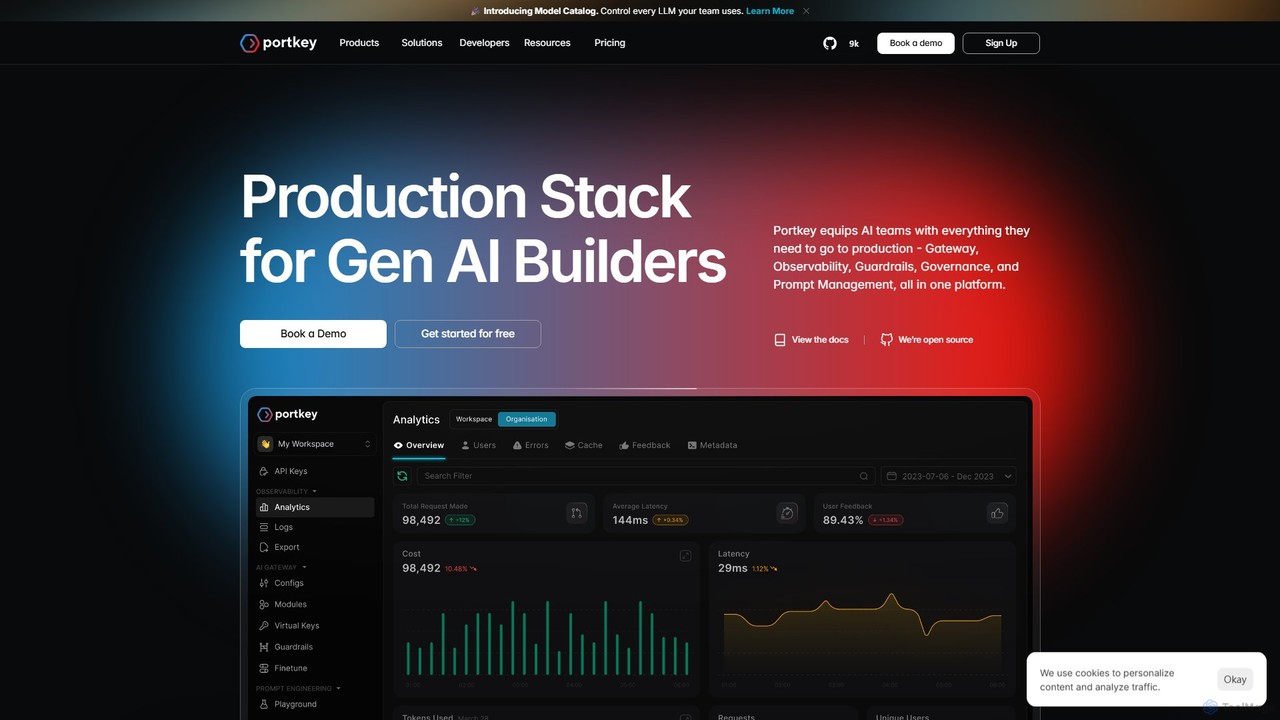
Portkey is a comprehensive LLMOps platform for GenAI developers. It provides a unified AI Gateway to access over …
Portkey is a comprehensive LLMOps platform for GenAI developers. It provides a unified AI Gateway to access over 1600 models, along with tools for observability, prompt management, cost control, and security. Streamline your AI application development from prototype to production with enhanced reliability, scalability, and governance, all in one place.
About Cost Management
Cost Management AI tools are specialized platforms that leverage artificial intelligence to analyze, track, and optimize an organization's expenditures. These tools utilize machine learning algorithms to identify spending patterns, predict future costs, and uncover opportunities for financial efficiency. They empower businesses to gain granular insights into their budget allocation, reduce unnecessary spending, and make data-driven financial decisions, particularly within complex IT environments.
Core Features
- Automated Expense Tracking: Automatically categorize and monitor spending across various departments and projects.
- Predictive Cost Analytics: Forecast future expenses based on historical data and market trends, aiding proactive budgeting.
- Anomaly Detection: Identify unusual spending spikes or deviations from budget, flagging potential issues for investigation.
- Resource Optimization Recommendations: Suggest ways to reallocate resources or reduce consumption, especially for cloud services and IT infrastructure.
- Vendor Contract Analysis: Analyze vendor agreements to identify cost-saving opportunities or renegotiation points.
Applicable Scenarios
These AI-powered tools are indispensable for finance departments, IT managers, and procurement teams aiming to control operational costs. They are particularly valuable in scenarios involving complex cloud infrastructure billing, managing multiple software subscriptions, or optimizing large-scale project budgets where manual tracking is inefficient and prone to errors.
How to Choose
When selecting a Cost Management AI tool, consider its integration capabilities with existing financial and IT systems, the depth of its analytics and reporting features, and its ability to provide actionable recommendations. Evaluate the tool's scalability to handle your organization's data volume and its specific focus on areas like cloud cost optimization or software license management. User-friendliness and robust security features are also crucial for effective adoption.

Cost ManagementUse Cases
Optimizing Cloud Infrastructure Spending
IT operations teams use AI cost management tools to analyze cloud resource usage (AWS, Azure, GCP), identify underutilized instances, and receive recommendations for rightsizing or shutting down idle services. This proactive approach significantly reduces monthly cloud bills by ensuring resources are aligned with actual demand, preventing unnecessary expenditure on over-provisioned or unused services.
Automating Software License Management
Procurement departments leverage these tools to track software subscriptions across the organization, detect unused licenses, and consolidate redundant services. By providing a centralized view of all software assets and their usage, the AI ensures compliance with licensing agreements while eliminating unnecessary recurring costs for licenses that are no longer needed or are duplicated.
Predicting Project Budget Overruns
Project managers integrate AI cost tools to monitor real-time project expenditures against planned budgets. The AI identifies potential overruns early by analyzing spending trends, resource allocation, and task progress. This allows for timely corrective actions, such as reallocating resources or adjusting project scope, preventing significant financial deviations and ensuring projects stay within their allocated budget.
Identifying Unnecessary Operational Expenses
Finance teams deploy AI to scrutinize general ledger data, automatically categorizing expenses and flagging unusual or non-essential spending patterns. This capability allows organizations to pinpoint areas of waste, such as duplicate subscriptions, excessive travel costs, or inefficient procurement, leading to targeted cost-cutting initiatives across various departments and improving overall financial health.
Negotiating Better Vendor Contracts
Procurement specialists utilize AI to analyze historical vendor invoices, contract terms, and market benchmarks. The tool provides data-backed insights into pricing discrepancies, potential savings from volume discounts, or clauses that can be renegotiated. This empowers procurement teams with strong evidence to secure more favorable terms and pricing, leading to significant long-term cost reductions with suppliers.
Enhancing IT Asset Lifecycle Cost Control
IT asset managers use AI to track the total cost of ownership for hardware and software assets from acquisition to disposal. This includes maintenance, energy consumption, depreciation, and end-of-life costs. By providing a comprehensive financial overview, the AI informs strategic decisions on upgrades, replacements, or retirement of assets, ensuring optimal value and minimizing unnecessary expenditures throughout their lifecycle.