
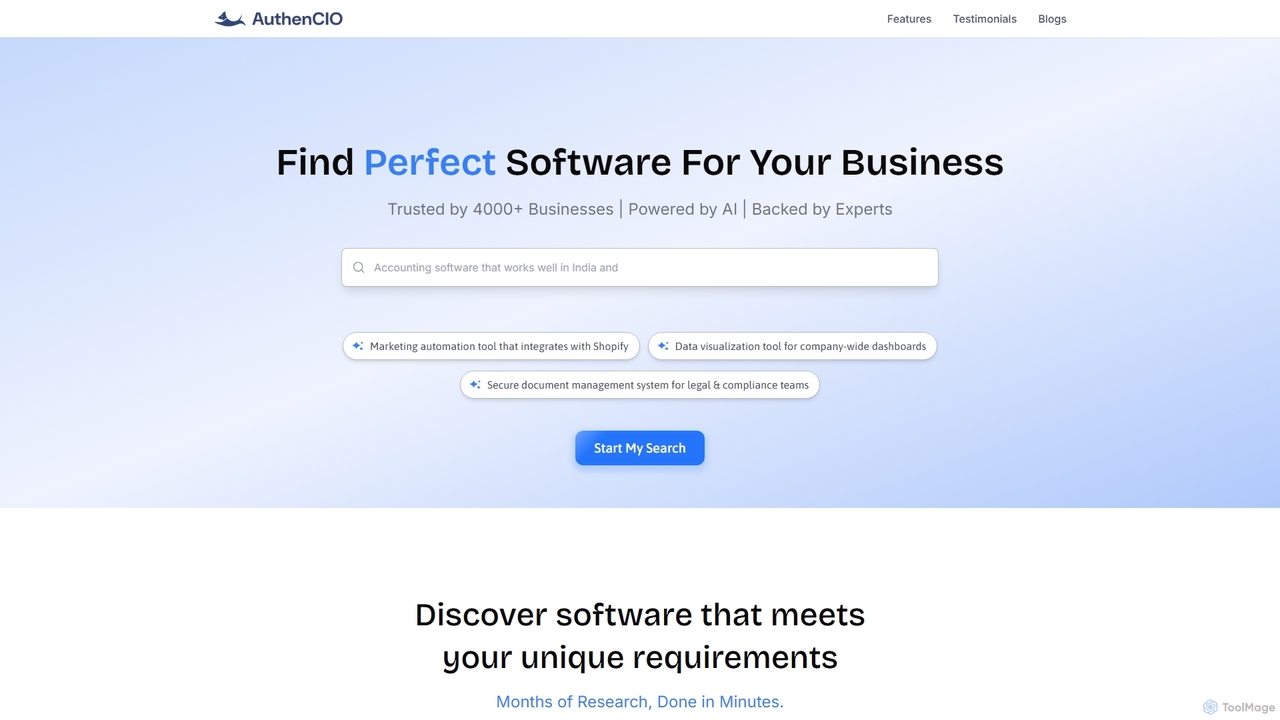
It Best in category 1 results Procurement AI Tool

Popular AI tools in the Procurement field of It include Authencio, etc., helping you quickly improve efficiency.

Authencio

Authencio

Authencio is an AI-powered platform designed to help businesses discover and evaluate the perfect software for their unique …

10.3K

About Procurement

Procurement AI tools are specialized solutions that leverage artificial intelligence to optimize and automate various stages of the purchasing process. These tools utilize machine learning, natural language processing, and data analytics to transform traditional procurement functions. They enhance efficiency, reduce costs, mitigate risks, and improve strategic decision-making across sourcing, purchasing, and supplier management.

Core Features

  • Spend Analysis: Automatically categorizes and analyzes spending data to identify savings opportunities and improve budget control.
  • Supplier Management: Evaluates supplier performance, risk, and compliance using AI-driven insights for better vendor selection.
  • Contract Automation: Automates the creation, review, and monitoring of contracts, ensuring compliance and timely renewals.
  • Demand Forecasting: Predicts future purchasing needs based on historical data, market trends, and internal factors to optimize inventory.
  • Automated Sourcing: Identifies and recommends optimal suppliers for specific goods or services, streamlining the tender process.

Use Cases

Businesses across various sectors, from manufacturing to retail and services, utilize AI procurement tools. Procurement managers leverage these tools to gain deeper insights into spending patterns, while supply chain professionals use them to predict demand and manage inventory more effectively. They are also crucial for finance teams looking to control costs and ensure compliance.

How to Choose

When selecting an AI procurement tool, consider its integration capabilities with existing ERP or accounting systems, the breadth of its spend analysis and forecasting features, and its ability to manage supplier relationships and contracts. Evaluate the user interface for ease of adoption and assess the vendor's data security protocols and scalability options to match your organization's growth.

ProcurementUse Cases

1

Optimize Supplier Selection and Risk Assessment

Procurement managers and supply chain analysts frequently need to evaluate new or existing vendors by analyzing vast amounts of data, including financial reports, performance records, and market news. AI procurement tools automatically gather and analyze this data, generating risk scores and recommendation indices. This helps managers quickly identify the most suitable and lowest-risk suppliers, significantly shortening the evaluation cycle and ensuring reliable purchasing decisions.

2

Automating Vendor Selection and Onboarding

For procurement managers, AI tools analyze vast datasets of potential suppliers, evaluating their performance, compliance history, and pricing against specific criteria. This automates the initial screening and onboarding process, reducing manual effort and ensuring selection of the most suitable vendors, saving weeks in the sourcing cycle.

3

Optimizing Supplier Selection and Onboarding

Procurement managers use AI tools to analyze vast datasets of potential suppliers, including their historical performance, pricing, reliability, and compliance records. The AI identifies and recommends the best-fit vendors for specific purchasing needs, significantly reducing the manual effort in supplier vetting and accelerating the onboarding process. This ensures that only high-quality, compliant suppliers are engaged, leading to better contract terms and reduced supply chain risks.

4

Automate Purchase Order and Contract Management

Procurement specialists and contract administrators often handle numerous repetitive tasks, such as creating purchase orders and verifying contract terms. AI systems, based on predefined rules and historical data, automatically generate purchase orders and intelligently match contract templates, identifying potential clause deviations. This accelerates the approval process, drastically reduces manual input errors, ensures contract accuracy, and frees up staff for more complex tasks.

5

Optimizing Spend Analysis and Cost Reduction

Finance departments utilize AI procurement platforms to automatically categorize and analyze all company expenditures. The AI identifies anomalies, potential areas of overspending, and opportunities for consolidated purchasing or renegotiation, leading to significant cost savings and more strategic budget allocation.

6

Automating Purchase Order and Invoice Processing

Finance and procurement teams leverage AI to automate the entire procure-to-pay cycle. AI tools can automatically generate purchase orders based on inventory levels and demand forecasts, match invoices with POs and goods receipts, and flag discrepancies for review. This automation drastically reduces manual data entry errors, accelerates payment cycles, and frees up staff to focus on more strategic tasks, ensuring greater accuracy and efficiency in financial operations.

7

Accurately Forecast Procurement Needs and Optimize Inventory

Inventory managers and operations directors struggle with precise material demand forecasting, leading to overstocking or stockouts that impact production and cash flow. AI procurement tools analyze historical sales data, market trends, and seasonal factors using machine learning models to provide highly accurate demand predictions. Based on these forecasts, they recommend optimal purchasing quantities and timings, effectively lowering inventory costs and improving turnover rates.

8

Streamlining Contract Management and Compliance

Legal and procurement teams deploy AI to automate the creation, review, and management of procurement contracts. The AI can flag non-standard clauses, ensure compliance with internal policies and external regulations, and track key dates for renewals or renegotiations, minimizing legal risks and administrative overhead.

9

Enhancing Contract Compliance and Risk Management

Legal and procurement departments utilize AI to manage complex contract portfolios. AI tools can analyze contract terms, identify potential compliance risks, alert teams to upcoming renewals or expirations, and even extract key clauses for quick review. This proactive approach ensures adherence to contractual obligations, minimizes legal exposure, and helps organizations avoid penalties or missed opportunities, leading to robust risk management within the procurement lifecycle.

10

Support Smart Negotiation and Bargaining Strategies

Procurement negotiation experts require quick access to market prices, competitor quotes, and historical transaction data during complex negotiations. AI procurement tools analyze market dynamics and supplier data in real-time, offering optimal bargaining ranges, alternative solution suggestions, and even simulating negotiation outcomes. This empowers procurement teams with robust data support, increasing negotiation success rates and securing more favorable terms and cost savings.

11

Predicting Demand and Optimizing Inventory

Operations and supply chain planners leverage AI procurement tools to forecast future demand for raw materials or finished goods. By analyzing historical data, market trends, and external factors, the AI provides accurate predictions, allowing for optimized inventory levels and just-in-time purchasing, reducing holding costs and stockouts.

12

Strategic Spend Analysis for Cost Reduction

CFOs and procurement strategists deploy AI procurement tools to conduct deep-dive spend analysis across the entire organization. The AI categorizes all expenditures, identifies patterns, highlights off-contract spending, and uncovers opportunities for consolidation or negotiation. This granular insight enables businesses to make data-driven decisions for cost reduction, optimize budgeting, and improve overall financial performance by securing better deals and eliminating wasteful spending.

13

Monitor Procurement Spending and Ensure Compliance

Financial auditors and compliance managers must ensure all purchasing activities adhere to company policies and industry regulations, identifying abnormal expenditures or potential fraud. AI procurement tools continuously monitor all transactions, automatically flagging spending that exceeds budgets, violates policies, or exhibits unusual patterns. They generate detailed compliance reports, enhancing transparency, preventing irregularities, and ensuring responsible financial management.

14

Identifying and Mitigating Supply Chain Risks

Risk management specialists use AI to continuously monitor the supply chain for potential disruptions, such as geopolitical events, natural disasters, or vendor financial instability. The AI provides early warnings and suggests alternative sourcing strategies, enabling proactive risk mitigation and ensuring business continuity.

15

Predictive Demand Forecasting for Inventory Optimization

Supply chain managers utilize AI procurement tools for advanced demand forecasting. By analyzing historical sales data, market trends, seasonal variations, and even external factors like weather or economic indicators, AI can accurately predict future purchasing needs for raw materials, components, or finished goods. This capability minimizes stockouts, reduces excess inventory, and optimizes warehousing costs, leading to a more agile and cost-effective supply chain operation.

16

Enhance Global Supply Chain Resilience and Sustainability

Supply chain directors and CSR managers need to assess global suppliers' Environmental, Social, and Governance (ESG) performance and supply chain disruption risks. AI procurement tools integrate data from third-party sources (e.g., carbon emission reports, labor audits, geopolitical risk analysis) to evaluate ESG scores and risk exposure. They recommend suppliers aligned with sustainability goals, improving brand image, meeting regulatory requirements, and fostering responsible procurement practices.

17

Enhancing Negotiation Strategies with Data Insights

Procurement officers employ AI tools to gather and analyze real-time market intelligence, supplier performance data, and historical negotiation outcomes. This data empowers them with stronger insights into fair pricing and optimal terms, significantly improving their leverage and success rates during vendor negotiations.

18

Identifying and Mitigating Supply Chain Risks

Risk management professionals and procurement leaders employ AI to proactively identify and assess supply chain risks. AI tools can monitor global news, geopolitical events, supplier financial health, and logistics data to flag potential disruptions such as natural disasters, bankruptcies, or port delays. This allows organizations to implement contingency plans, diversify suppliers, or adjust purchasing strategies before issues escalate, ensuring supply chain resilience and business continuity.

ProcurementFrequently Asked Questions