
Knowledge Management Best in category 1 results Internal Knowledge Base AI Tool

Popular AI tools in the Internal Knowledge Base field of Knowledge Management include Faqally, etc., helping you quickly improve efficiency.

Faqally

Faqally

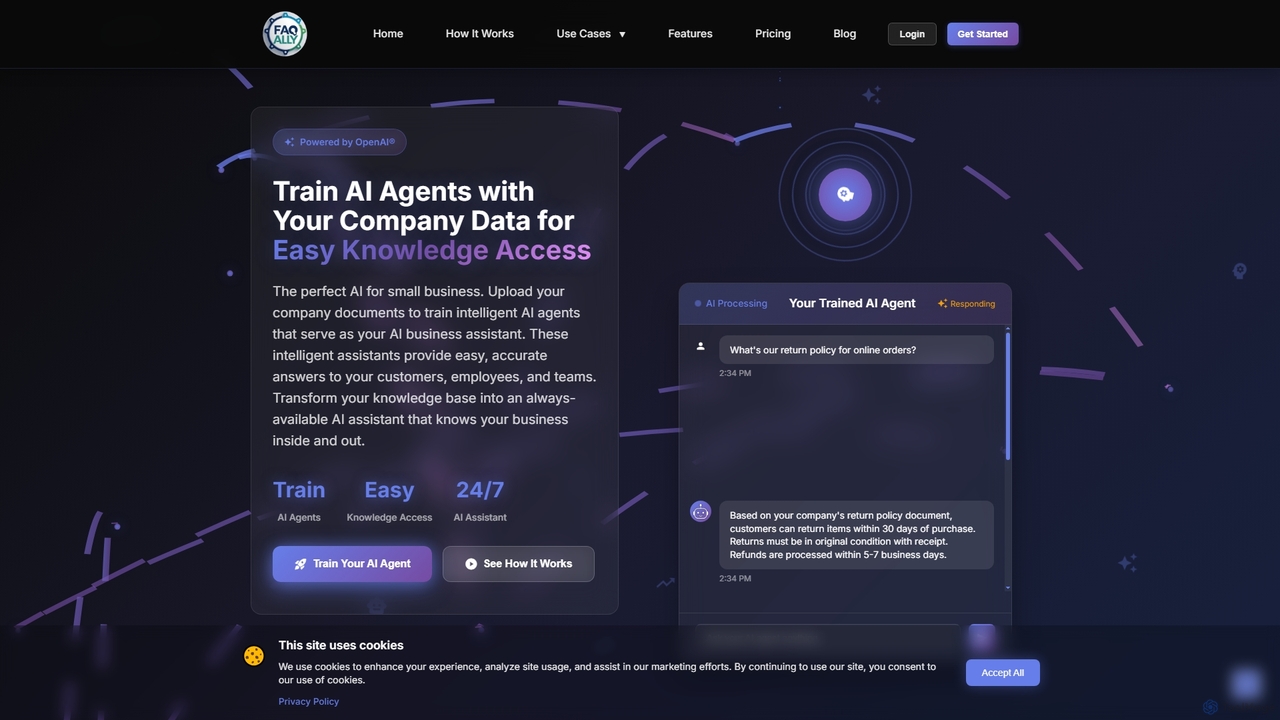
Faqally is an AI-powered knowledge platform designed for small businesses to transform their company data into intelligent AI …

3.2K

About Internal Knowledge Base

Internal Knowledge Base tools are AI-powered platforms designed to centralize, organize, and make internal company information easily accessible to employees. Leveraging advanced natural language processing and semantic search, these systems transform disparate data into a unified, searchable repository. They significantly enhance employee self-service, streamline information retrieval, and foster organizational learning within the broader context of knowledge management.

Core Features

  • AI-Powered Semantic Search: Enables employees to find relevant information using natural language queries, understanding intent beyond keywords.
  • Automated Content Organization: Automatically tags, categorizes, and deduplicates content, maintaining a clean and structured knowledge base.
  • Intelligent Content Suggestions: Proactively suggests relevant articles or identifies knowledge gaps based on user queries and content usage patterns.
  • Access Control & Permissions: Ensures secure access to sensitive information with granular user roles and permissions.
  • Seamless Integrations: Connects with existing business tools like CRM, project management, and communication platforms for a unified workflow.

Use Cases

These tools are invaluable for HR departments to streamline new employee onboarding, providing instant access to policies and training. Customer support teams utilize them to quickly find solutions to complex queries, reducing resolution times. Development teams maintain up-to-date technical documentation, ensuring consistent access to codebases and API guides.

How to Choose

When selecting an Internal Knowledge Base, prioritize tools with robust AI search capabilities and strong integration options with your existing tech stack. Evaluate scalability to accommodate future growth and assess the user interface for ease of content contribution and retrieval. Security features and compliance standards are also crucial for protecting sensitive company data.

Internal Knowledge BaseUse Cases

1

Streamlining New Employee Onboarding

HR managers and team leads utilize Internal Knowledge Base tools to create a structured onboarding experience for new hires. By centralizing company policies, training modules, FAQs, and departmental guides, new employees can independently access critical information from day one. This reduces the burden on HR staff, accelerates the learning curve, and ensures consistent information delivery, helping new team members become productive faster.

2

Empowering Customer Support Agents with Instant Answers

Customer support agents often face a wide array of complex inquiries. An Internal Knowledge Base, powered by AI, allows agents to quickly search and retrieve accurate solutions, product specifications, and troubleshooting steps using natural language queries. This significantly reduces average handling time, improves first-call resolution rates, and ensures consistent, high-quality support across all customer interactions, leading to higher customer satisfaction.

3

Facilitating Cross-Departmental Collaboration and Information Sharing

Teams across different departments frequently need to share project documentation, research findings, and best practices. An Internal Knowledge Base provides a central repository where marketing, sales, product, and engineering teams can store and access relevant information securely. This breaks down information silos, fosters better collaboration, and ensures that all team members are working with the most current and accurate data, improving overall project efficiency.

4

Centralizing Technical Documentation for Development Teams

Software development teams require constant access to up-to-date technical specifications, API documentation, code snippets, and troubleshooting guides. An Internal Knowledge Base serves as a single source of truth for all technical assets. Developers can quickly search for specific functions or solutions, contribute new documentation, and ensure that critical knowledge is preserved and easily discoverable, accelerating development cycles and reducing errors.

5

Enabling Employee Self-Service for HR and IT Queries

Employees frequently have questions regarding HR policies, benefits, IT support, or company procedures. An AI-powered Internal Knowledge Base allows them to find answers independently through a self-service portal. This reduces the volume of repetitive inquiries directed to HR and IT departments, freeing up their time for more strategic tasks. Employees benefit from instant access to information 24/7, improving their overall experience and productivity.

6

Capturing and Preserving Institutional Knowledge

As experienced employees retire or move on, critical institutional knowledge can be lost. An Internal Knowledge Base provides a systematic way to capture, document, and preserve this valuable expertise. Employees can contribute articles, best practices, and lessons learned, ensuring that this collective wisdom remains accessible to the entire organization. This safeguards against knowledge loss, supports continuous learning, and maintains operational continuity.

Internal Knowledge BaseFrequently Asked Questions