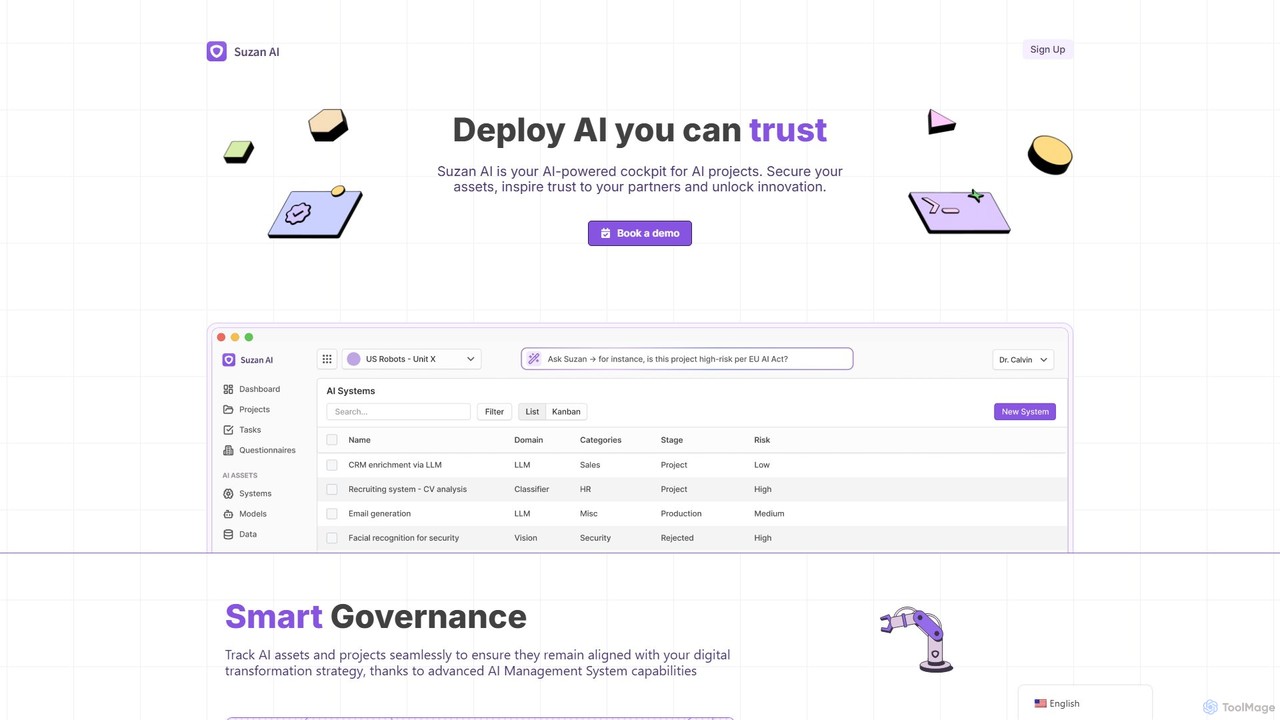
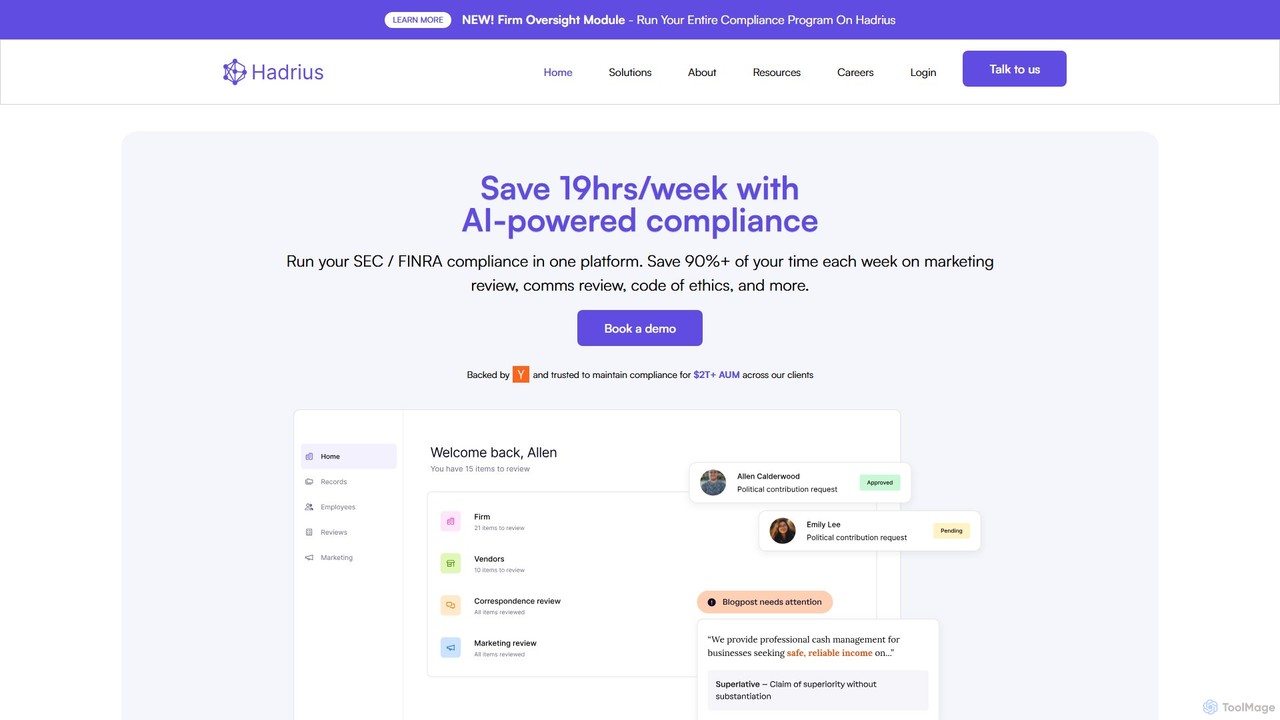
Regulatory Tech, or RegTech, refers to AI-powered tools designed to help organizations manage and comply with regulatory requirements more efficiently. These solutions leverage technologies like machine learning, natural language processing, and big data analytics to automate compliance processes, monitor risks, and generate reports within the broader legal technology landscape. By streamlining complex legal and financial regulations, RegTech tools enhance transparency, reduce operational costs, and mitigate compliance risks for businesses across various sectors.
Core Features
- Automated Compliance Monitoring: Continuously track regulatory changes and assess adherence to internal policies and external laws.
- Risk Assessment & Prediction: Identify potential compliance breaches and forecast regulatory risks using data analytics.
- Regulatory Reporting: Generate accurate and timely reports required by regulatory bodies, reducing manual effort.
- Policy Management: Centralize, update, and disseminate internal policies, ensuring employee awareness and adherence.
- Transaction Monitoring: Analyze financial transactions in real-time to detect suspicious activities indicative of fraud or money laundering.
Applicable Scenarios
RegTech tools are crucial for industries facing stringent regulations, such as finance, healthcare, and energy. Financial institutions use them for anti-money laundering (AML) and know-your-customer (KYC) checks, while healthcare providers deploy them to ensure patient data privacy (e.g., HIPAA, GDPR). Corporations also leverage RegTech to manage environmental, social, and governance (ESG) compliance and internal policy adherence across global operations.
How to Choose
When selecting a RegTech solution, consider its regulatory scope and coverage for your specific industry and jurisdiction. Evaluate its integration capabilities with your existing IT infrastructure and data sources. Assess the robustness of its data security and privacy features, as well as its scalability to handle growing data volumes and evolving regulatory landscapes. Finally, examine its reporting and audit trail functionalities to ensure transparency and accountability.