RideReply
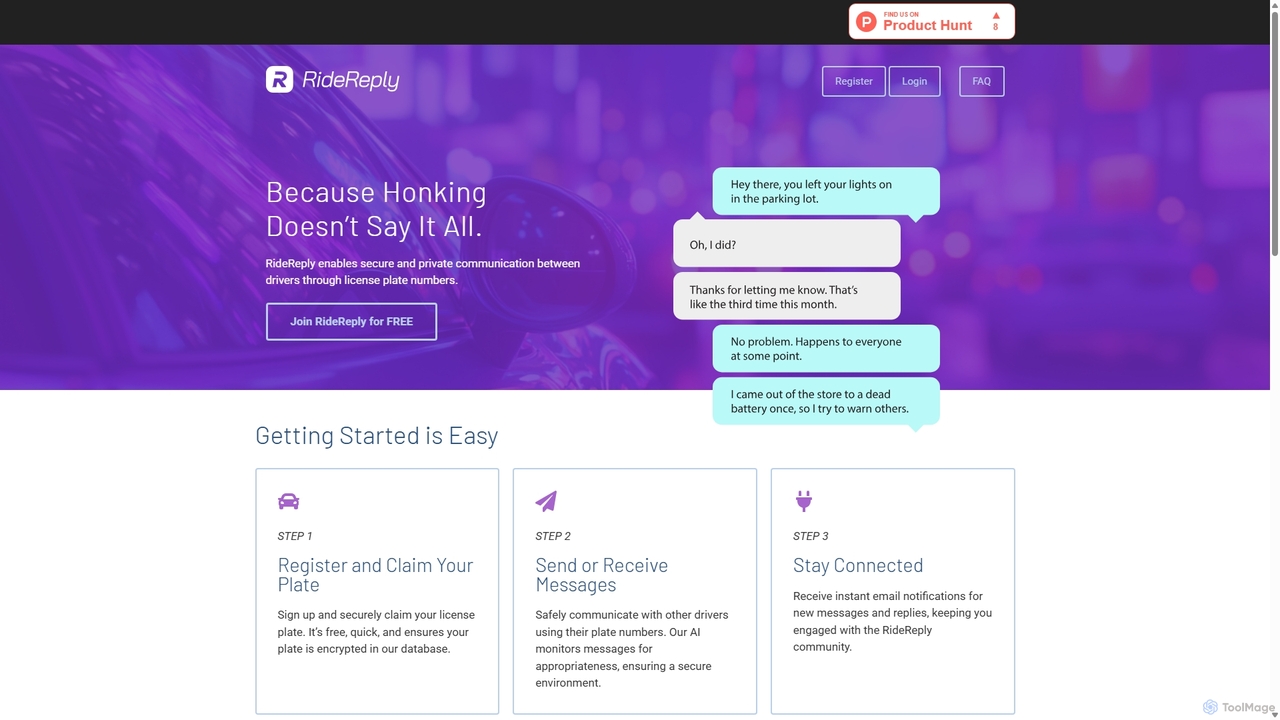
A secure communication platform enabling drivers to send and receive anonymous messages using only license plate numbers. Powered …
A secure communication platform enabling drivers to send and receive anonymous messages using only license plate numbers. Powered by AI for content moderation, it ensures safe, private, and appropriate interactions on the road for non-urgent notifications.

Jerry
Jerry is an AI-powered AllCar™ app that simplifies car ownership. It acts as a personal assistant, helping users …
Jerry is an AI-powered AllCar™ app that simplifies car ownership. It acts as a personal assistant, helping users save money on car insurance, manage repairs and maintenance, and improve driving habits. It compares quotes from over 55 insurers without spam calls, provides repair estimates, and offers telematics-based driving insights.

Mechanic For A Chat
An AI-powered chatbot providing 24/7 expert assistance for car problems. Instantly diagnose issues like warning lights or strange …
An AI-powered chatbot providing 24/7 expert assistance for car problems. Instantly diagnose issues like warning lights or strange noises, get repair advice, and manage your vehicle's maintenance schedule, all through a simple chat interface.

Momento Seguros
Momento Seguros is an AI-powered Insurtech platform revolutionizing car insurance in Mexico. It offers a fully digital experience, …
Momento Seguros is an AI-powered Insurtech platform revolutionizing car insurance in Mexico. It offers a fully digital experience, allowing users to get personalized quotes, customize flexible policies, and manage claims efficiently through its website and mobile app. It focuses on transparency, speed, and user control.
About Automotive
Automotive AI tools are specialized artificial intelligence applications designed to enhance various aspects of the automotive industry, from vehicle design and manufacturing to driving experience and maintenance. These tools leverage machine learning, computer vision, and natural language processing to create smarter, safer, and more efficient vehicles and related services. They play a crucial role in advancing autonomous driving, improving vehicle performance, and personalizing the in-car environment, seamlessly integrating into the broader lifestyle of modern transportation.
Core Features
- Autonomous Driving Assistance: Enables features like adaptive cruise control, lane-keeping, and advanced parking systems through real-time environmental perception and decision-making.
- Predictive Maintenance: Analyzes sensor data to anticipate potential vehicle failures, scheduling maintenance proactively to prevent costly breakdowns and extend vehicle lifespan.
- Intelligent Infotainment Systems: Powers voice-activated controls, personalized media recommendations, and seamless smartphone integration, enhancing driver and passenger convenience.
- Optimized Manufacturing & Design: Utilizes AI for generative design, quality control, and robotic automation in production lines, streamlining processes and improving product quality.
Use Cases
These tools are indispensable for automotive manufacturers in developing next-generation vehicles, for fleet managers optimizing logistics and vehicle uptime, and for individual drivers seeking enhanced safety and personalized experiences. They are applied in areas like real-time traffic analysis for route optimization and in-cabin monitoring for driver fatigue detection.
How to Choose
When selecting Automotive AI tools, consider the specific application area (e.g., ADAS, manufacturing, customer service), the level of data integration required with existing systems, compliance with safety and regulatory standards, and the scalability of the solution to meet future demands. Evaluate the accuracy of AI models and the robustness of their underlying algorithms.
AutomotiveUse Cases
Predictive Vehicle Maintenance
Fleet managers use AI to analyze telematics data from vehicles, predicting component failures before they occur. This allows for proactive scheduling of repairs, minimizing downtime and reducing operational costs by up to 20% by preventing costly breakdowns and extending vehicle lifespan.
Enhanced In-Car Voice Assistants
Drivers interact with AI-powered voice assistants to control navigation, media, and climate settings hands-free. This improves safety by reducing driver distraction and offers a personalized experience based on user preferences and habits, making daily commutes more convenient and enjoyable.
Autonomous Driving Feature Development
Automotive engineers utilize AI for training and validating self-driving algorithms. By simulating millions of driving scenarios, AI accelerates the development of robust perception, planning, and control systems for autonomous vehicles, significantly reducing testing time and improving reliability before real-world deployment.
Optimized Fleet Route Planning
Logistics companies deploy AI tools to analyze real-time traffic, weather, and delivery schedules. The AI generates optimal routes, reducing fuel consumption by 15% and ensuring timely deliveries, especially for large commercial fleets, leading to significant operational savings and improved customer satisfaction.
AI-Powered Vehicle Design & Prototyping
Designers leverage generative AI to explore thousands of design variations for vehicle components, optimizing for aerodynamics, weight, and material usage. This significantly shortens the design cycle, enhances innovation, and allows for rapid prototyping of complex automotive parts, leading to more efficient and aesthetically pleasing vehicles.
Driver Behavior Monitoring for Safety
Insurance companies and fleet operators use AI to monitor driver behavior, detecting signs of fatigue, distraction, or aggressive driving. This helps in providing personalized feedback, reducing accident rates, and potentially lowering insurance premiums, contributing to safer roads and more responsible driving habits across the board.