
TailoredMindfulness
TailoredMindfulness is an AI-powered wellness platform that creates personalized mindfulness and meditation plans. It combines guided sessions with …
TailoredMindfulness is an AI-powered wellness platform that creates personalized mindfulness and meditation plans. It combines guided sessions with community-based activities like group hikes to offer a holistic approach to mental well-being, helping users reduce stress, improve focus, and connect with nature and others.
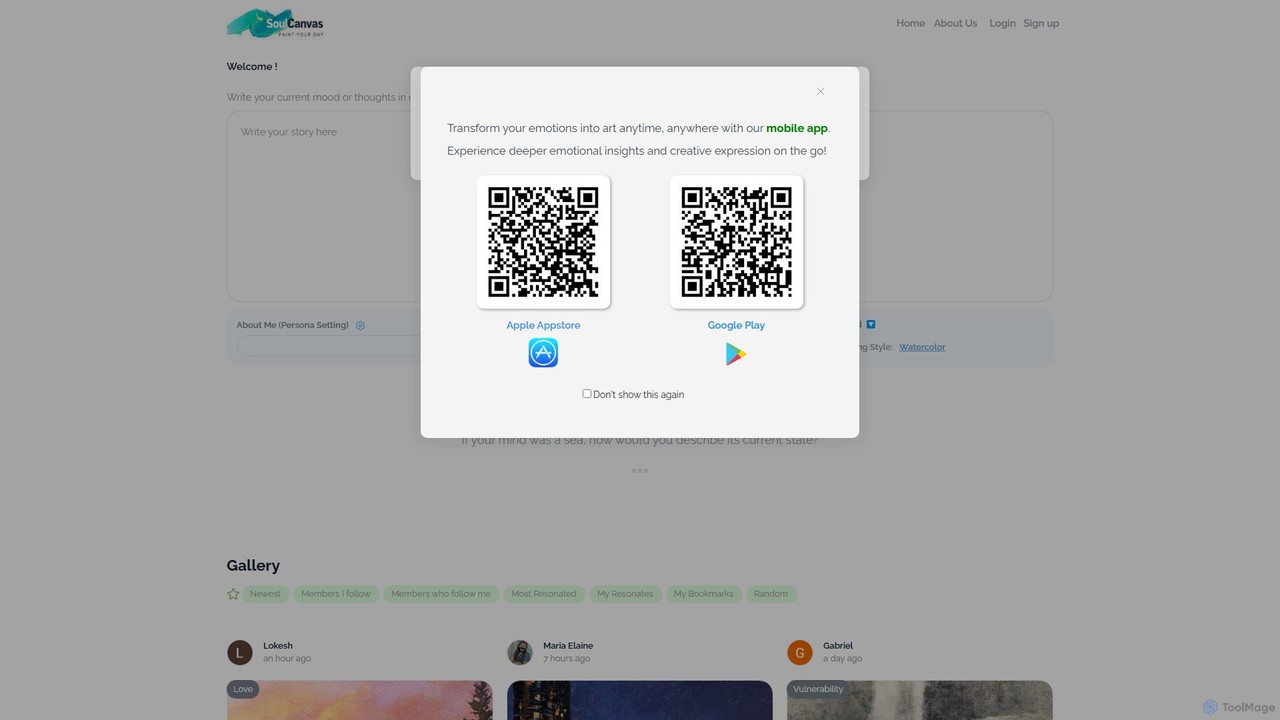
SoulCanvas
SoulCanvas is a unique AI art journal that transforms your daily moods and thoughts into beautiful, unique illustrations. …
SoulCanvas is a unique AI art journal that transforms your daily moods and thoughts into beautiful, unique illustrations. It combines the therapeutic practice of journaling with the power of generative art, allowing you to visually document your emotional journey and connect with a supportive community.
About Mental Health
AI Mental Health tools are applications that leverage artificial intelligence to provide accessible support for emotional well-being. These tools often use Natural Language Processing (NLP) for empathetic conversations and machine learning to personalize guided exercises. They offer a private, on-demand space for users to engage with mindfulness practices, Cognitive Behavioral Therapy (CBT) techniques, and mood journaling. As part of the broader Lifestyle category, they specifically focus on proactive mental wellness and emotional regulation.
Core Features
- Conversational AI Companion: Offers a non-judgmental chatbot for users to express thoughts and feelings, providing empathetic responses.
- Mood Tracking and Analysis: Allows users to log their emotions and activities, with AI identifying patterns and potential triggers over time.
- Guided Therapeutic Exercises: Provides structured, evidence-based techniques from CBT, DBT, and mindfulness for managing stress, anxiety, and negative thoughts.
- Personalized Content Delivery: Adapts meditations, exercises, and resources based on the user's reported mood and progress.
- Crisis Support Information: Offers immediate access to contact information for professional help and crisis hotlines, though not a replacement for them.
Use Cases
These tools are valuable for individuals seeking to manage daily stress, anxiety, or low moods. They are used by people looking for an introduction to mindfulness and meditation, as well as by those who wish to supplement traditional therapy with daily practice. Students managing academic pressure and professionals dealing with workplace stress also find them beneficial for building emotional resilience.
How to Choose
When selecting an AI Mental Health tool, prioritize those based on established therapeutic methods like CBT. Scrutinize the privacy policy to ensure your sensitive data is protected. Consider the degree of personalization—a good tool should adapt to your needs. Finally, evaluate the user interface; it should be calming and easy to navigate, not a source of additional frustration.
Mental HealthUse Cases
Daily Stress and Anxiety Management
A marketing professional feeling overwhelmed by deadlines uses an AI mental health app during their lunch break. They engage in a 10-minute guided breathing exercise to calm their nervous system. Afterwards, they use the AI chatbot to articulate their anxieties about a project. The chatbot responds with empathetic prompts and helps them reframe their negative thoughts into actionable steps, reducing their immediate stress level and allowing them to return to work with a clearer mind.
Identifying Mood Patterns and Triggers
A university student uses an AI tool to log their mood, sleep hours, and daily activities like studying and socializing for a month. At the end of the month, the app's AI analyzes the data and generates a report. The report visualizes a clear correlation between nights with less than 6 hours of sleep and days with reported low mood and irritability. This insight empowers the student to prioritize their sleep schedule to improve their overall emotional well-being during a stressful semester.
Practicing Cognitive Behavioral Therapy (CBT) Skills
An individual struggling with social anxiety uses an AI-powered app to practice CBT techniques before a networking event. The app guides them through a 'thought record' exercise. They input an automatic negative thought, like 'Everyone will think I'm awkward.' The AI then prompts them to identify the cognitive distortion (e.g., mind-reading) and helps them formulate a more balanced, alternative thought. This structured, interactive practice helps build confidence and reduces anticipatory anxiety in a safe environment.
Guided Meditation for Sleep Improvement
Someone experiencing difficulty falling asleep opens an AI mental health app before bed. Based on their logged high-stress day, the AI recommends a 20-minute guided 'body scan' meditation specifically designed to promote relaxation and sleep. The user follows the calming vocal instructions, which helps them shift their focus away from racing thoughts and onto physical sensations. This routine helps them unwind mentally and physically, making it easier to fall asleep naturally without relying on medication.
Building Emotional Vocabulary and Awareness
A user who finds it hard to name their feelings uses an AI journaling tool. Instead of a blank page, the tool prompts them with questions like, 'What was the high point of your day?' and 'What challenged you today?'. After they write a response, the AI suggests a list of emotion words that might match their experience (e.g., 'frustrated,' 'accomplished,' 'anxious'). This process helps the user build a richer emotional vocabulary and improves their ability to identify and communicate their feelings over time, enhancing their emotional intelligence.
Supplementary Support Between Therapy Sessions
A patient in weekly therapy uses an AI companion app as a supplementary tool. Between sessions, when a distressing thought arises, they can immediately open the app and use its journaling feature to document the situation and their feelings. They also practice grounding exercises recommended by the AI when feeling anxious. During their next session with their human therapist, they can review the app's logs, providing concrete examples for discussion and helping them make more focused progress in their treatment.